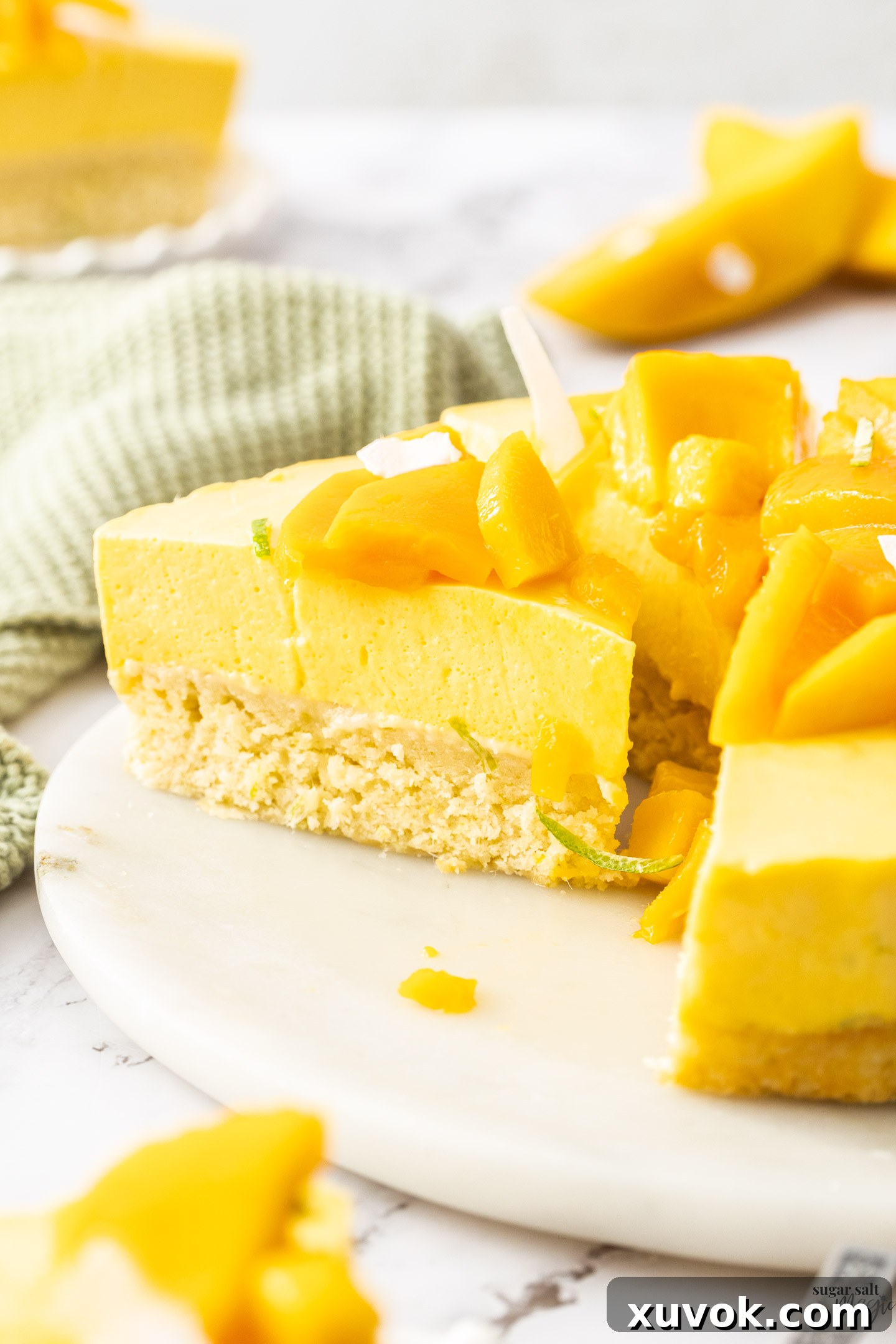
Indulge in Tropical Bliss: The Ultimate Mango Mousse Cake with Coconut-Lime Base
Prepare to be enchanted by this exquisite Mango Mousse Cake – a luxurious yet surprisingly simple dessert that perfectly captures the essence of summer. Featuring a rich, moist coconut-lime cake base crowned with a feather-light, intensely flavored mango mousse, this elegant creation is easier to master than its stunning appearance suggests. It’s the ideal way to utilize those gloriously sweet summer mangoes, transforming them into an unforgettable treat.
Why You’ll Adore This Mango Mousse Cake:
- Explosion of Tropical Flavors: Experience a delightful symphony of sweet mango, aromatic coconut, and zesty lime, transporting your taste buds to a sun-drenched paradise.
- Velvety Smooth Mousse: The topping is a dreamy, creamy mango cloud that melts in your mouth, offering pure mango indulgence.
- Perfectly Moist Cake: The coconut cake base is tender, soft, and beautifully moist, with a subtle density that provides a fantastic contrast to the airy mousse.
- Effortlessly Elegant: Despite its sophisticated look, both layers are incredibly straightforward to prepare, making it accessible for bakers of all skill levels.
- Ideal for Advance Preparation: This cake is a dream for entertaining, as it can be easily made a day or even two ahead of time, allowing you to relax and enjoy your event.
Once you’ve baked the aromatic coconut base and carefully poured over the luscious mango mousse filling, all that’s left is the delightful anticipation as it chills. A minimum of 6 hours, or preferably overnight, allows the mousse to set beautifully, creating perfect slices. Garnish simply with fresh mango slices, a sprinkle of lime zest, and delicate shaved coconut for a dessert that is both visually stunning and irresistibly delicious.
If you’re a fan of these vibrant flavors, you’ll also love our Mango Coconut Cheesecake and this rich Chocolate Raspberry Mousse Cake.
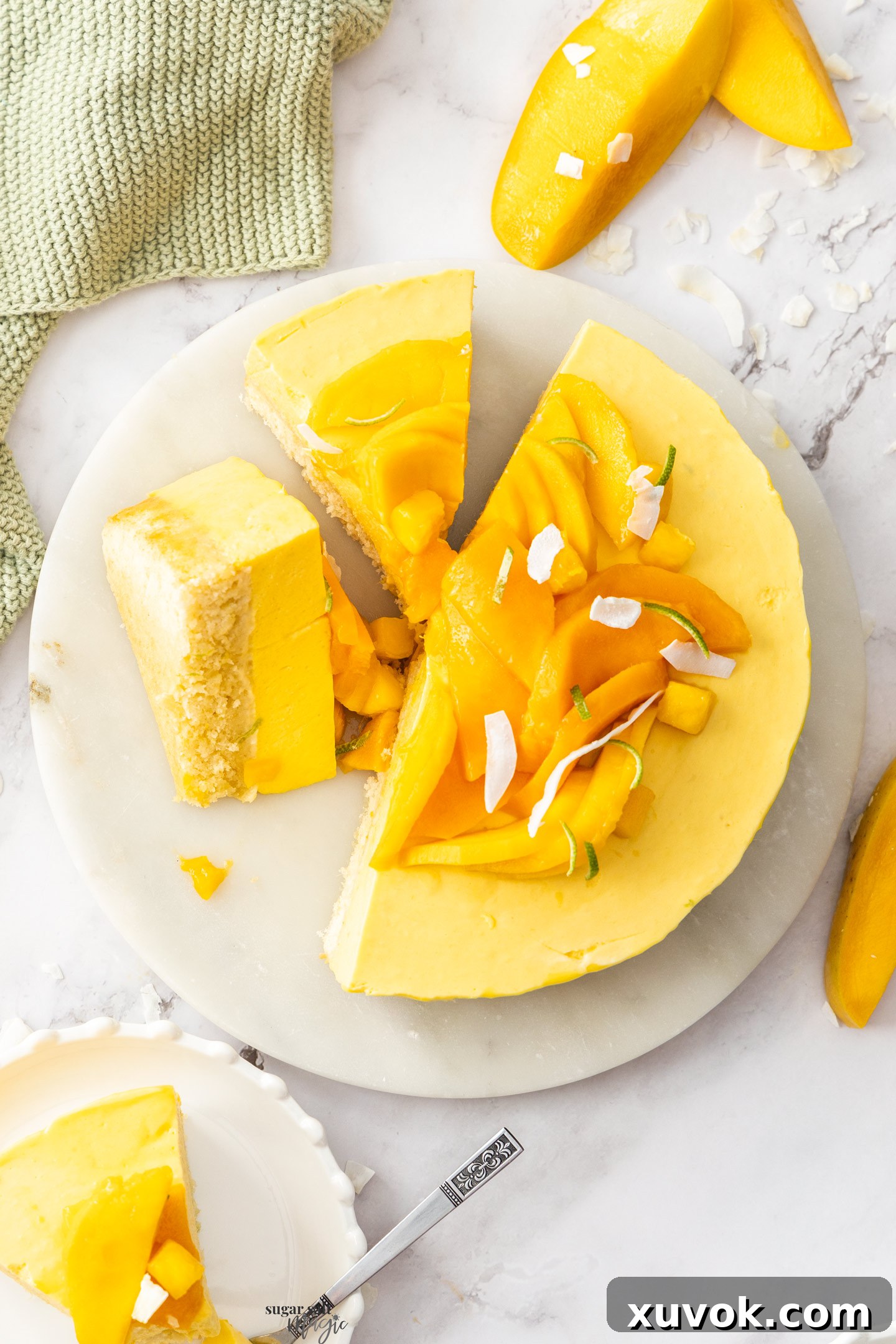
Table of Contents
- What is Mousse Cake?
- The Anatomy of Our Mango Mousse Cake
- The Luscious Coconut-Lime Cake Base
- For the Irresistible Mango Mousse
- How to Create This Stunning Mango Mousse Cake (Step-by-Step)
- Crafting the Coconut-Lime Cake
- Preparing the Silky Mango Mousse
- Expert Tips and Tricks for Mousse Cake Perfection
- Yield, Storage, and Make-Ahead Guide
- More Tropical and Elegant Desserts You’ll Love
Never Miss a Recipe!
Get the latest, most delectable recipes straight to your inbox and elevate your baking game!
What is Mousse Cake?
A mousse cake is a sophisticated dessert that artfully combines the airy, light texture of mousse with the structural integrity of a cake. At its heart, it’s a dessert where mousse is skillfully crafted and set in a way that allows it to be neatly sliced, just like a traditional cake. This delightful dessert typically features a foundational base upon which the ethereal mousse rests. While various bases can be employed – from delicate cookie crusts to sturdy brownie layers – our mango mousse cake utilizes a rich and deeply satisfying coconut sponge cake. This base not only provides a delicious counterpoint to the vibrant mousse but also ensures a stable and elegant presentation. The key to a successful mousse cake lies in achieving that perfect balance: a firm yet tender base supporting a cloud-like, intensely flavored mousse that delivers a truly luxurious mouthfeel.
Unlike many traditional cakes, a mousse cake often focuses on fewer, highly impactful flavors, allowing each element to shine. The contrasting textures and temperatures (especially when served chilled) make it a truly dynamic and impressive dessert, perfect for any special occasion or simply as a delightful indulgence.
The Anatomy of Our Mango Mousse Cake: What’s Inside?
While many classic French mousse recipes traditionally rely on uncooked eggs to achieve their characteristic fluffy texture, this particular mango mousse cake recipe is designed to be completely eggless in its mousse portion. This ensures a lighter, fresher taste and is perfect for those who prefer to avoid raw eggs in their desserts. The only eggs in this recipe are safely baked within the cake base, contributing to its rich structure. Let’s explore the key components that bring this tropical dream to life.
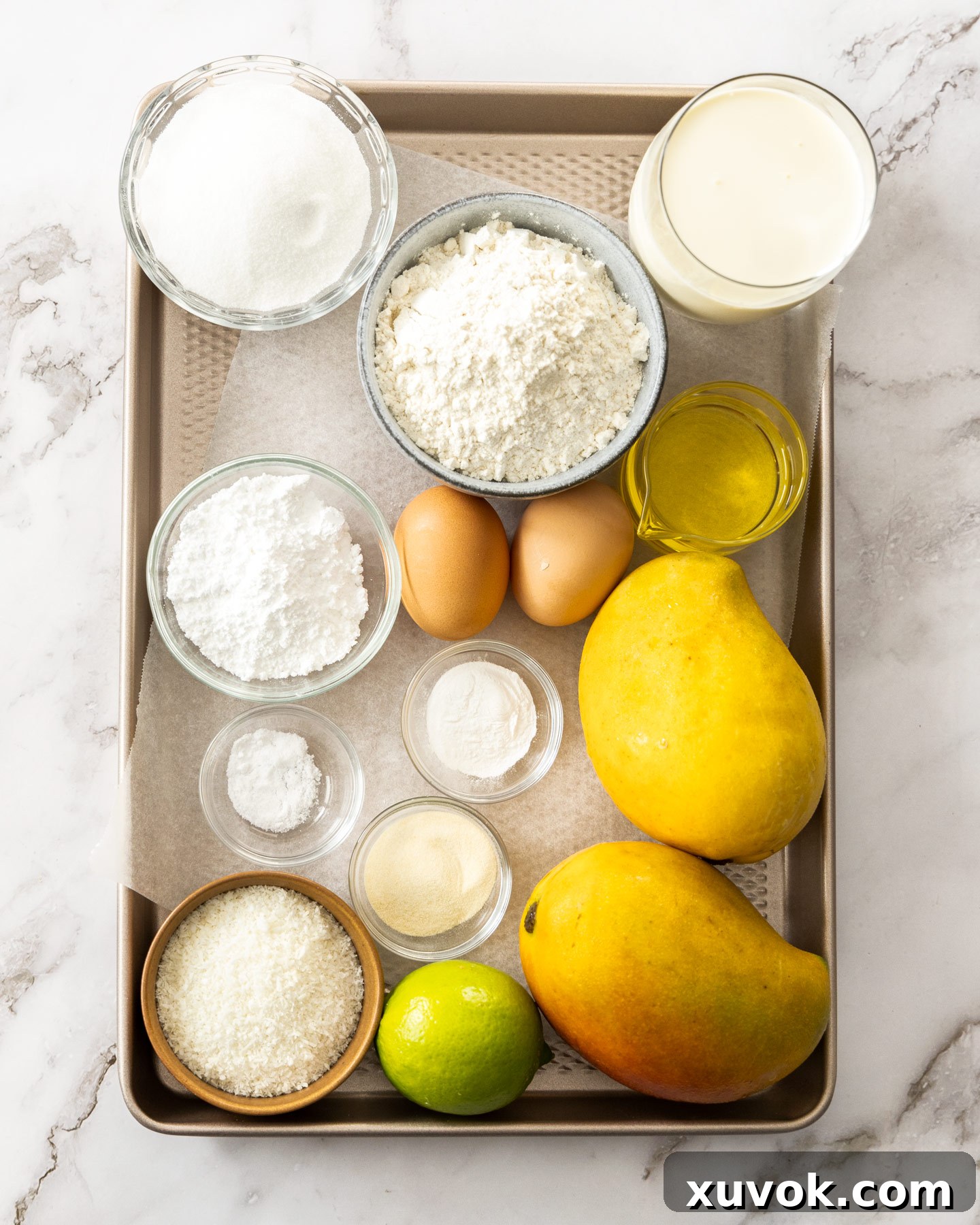
Jump to the full recipe card for precise measurements and detailed instructions.
The Luscious Coconut-Lime Cake Base
The foundation of this incredible dessert is a tender, flavorful coconut cake, infused with a hint of vibrant lime. Here’s what you’ll need to create this delicious base:
- Basic Cake Staples: You’ll start with essential baking ingredients such as fresh eggs (which add structure and richness), all-purpose flour (plain flour), baking powder (for lift), and granulated white sugar (for sweetness and moisture).
- Neutral-Flavored Oil: A good quality neutral oil, like vegetable or canola oil, is crucial here. It contributes significantly to the cake’s exceptional moisture and creates a tender crumb, ensuring the cake remains soft even after chilling.
- Desiccated Coconut: Fine desiccated coconut is essential for both flavor and texture. It imparts that unmistakable tropical coconut essence and adds a delightful chewiness to the cake, complementing the mango mousse beautifully.
- Fresh Lime Zest: The zest of one large, vibrant lime is a game-changer. It introduces an irresistible zingy, aromatic freshness that cuts through the sweetness and elevates the tropical profile of the cake, perfectly setting the stage for the mango.
Each ingredient plays a vital role in creating a cake base that is not just a carrier for the mousse, but a delicious dessert in its own right.
For the Irresistible Mango Mousse
The star of the show is, of course, the mango mousse – light, creamy, and bursting with tropical flavor. Here’s what you’ll need for this dreamy layer:
- Fresh Mangoes: For the most vibrant flavor and color, two very large, perfectly ripe mangoes are recommended. Ripe mangoes will yield a sweeter, more aromatic puree. While you can use frozen mango, be aware that its flavor and color might not be as intense as fresh, especially when mixed with other ingredients. If using frozen, ensure it’s fully thawed and drained before pureeing.
- Cream: You’ll need cold thickened cream, heavy cream, or heavy whipping cream. The high-fat content of these creams is essential for whipping to stiff peaks, which forms the airy base of the mousse. Make sure it’s well-chilled for optimal whipping.
- Gelatine Powder: This is the secret to a perfectly set mousse that’s firm enough to slice but still incredibly soft and airy. Gelatine helps to stabilize the whipped cream and mango puree, ensuring your mousse holds its elegant shape without becoming rubbery. We’ll use just the right amount to achieve that delicate, melt-in-your-mouth texture.
- Icing Sugar: Also known as powdered sugar, icing sugar provides the necessary sweetness to balance the tartness of the mango and lime. Its fine texture ensures it dissolves seamlessly into the mousse mixture, preventing any grittiness.
- Fresh Lime Zest: A final touch of lime zest in the mousse itself amplifies the overall freshness and tropical zing. It brightens the mango flavor and adds another layer of aromatic complexity, making each bite truly sensational.
How to Create This Stunning Mango Mousse Cake (Step-by-Step)
Don’t let the elegant appearance of this mango mousse cake intimidate you – it’s surprisingly straightforward to prepare! The recipe breaks down into two simple stages: a fuss-free, one-bowl coconut cake, and a silky mango mousse that comes together in mere minutes. Follow these steps for a show-stopping dessert.
Jump to the recipe card below for a comprehensive list of ingredients and detailed instructions.
Crafting the Coconut-Lime Cake
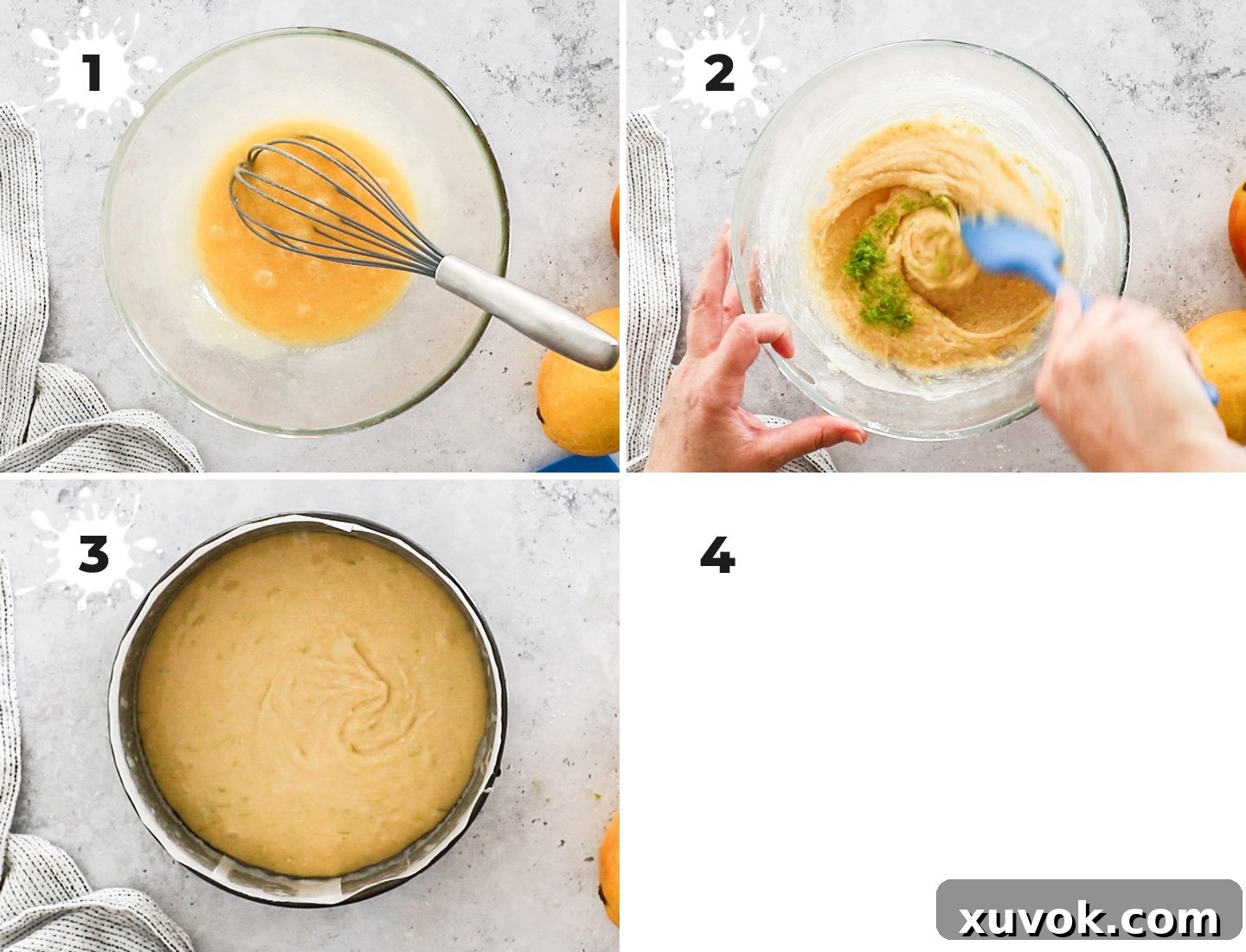
- Prepare the Wet Ingredients: In a generously sized mixing bowl, begin by combining the granulated sugar, room temperature eggs, neutral-flavored oil, and milk. Whisk these wet ingredients together thoroughly until they are well integrated and appear smooth. This forms the foundational liquid component of your cake batter (refer to photo 1 for visual guidance).
- Incorporate Dry Ingredients: Directly into the same bowl, add your all-purpose flour, desiccated coconut, baking powder, and a pinch of salt. Don’t forget to include the finely grated lime zest at this stage. Gently mix all the ingredients using your whisk or a spatula until they are just combined. Be careful not to overmix; overmixing can lead to a tough cake. Stop as soon as no streaks of dry flour remain (as shown in photo 2).
- Bake to Perfection: Prepare an 8-inch springform pan by lining its base with baking paper and greasing the sides. Pour the thick cake batter evenly into the prepared pan (see photo 3). Use a spatula to level the top surface. Bake in a preheated oven until a toothpick inserted into the center comes out with a few moist crumbs attached, indicating it’s cooked through but still tender.
- Flatten for a Smooth Surface: This step is key for a beautifully presented mousse cake. As cakes often form a slight dome in the oven, you’ll want to gently flatten it while it’s still warm. Immediately after removing the cake from the oven, lightly press down on the top with the bottom of a flat glass or another smooth object. This not only creates a perfectly level surface for your mousse but also gives the cake a slightly denser, more “mud cake-like” texture, which is incredibly pleasant and pairs wonderfully with the light mousse. Allow the cake to cool completely in the pan before proceeding.
Preparing the Silky Mango Mousse
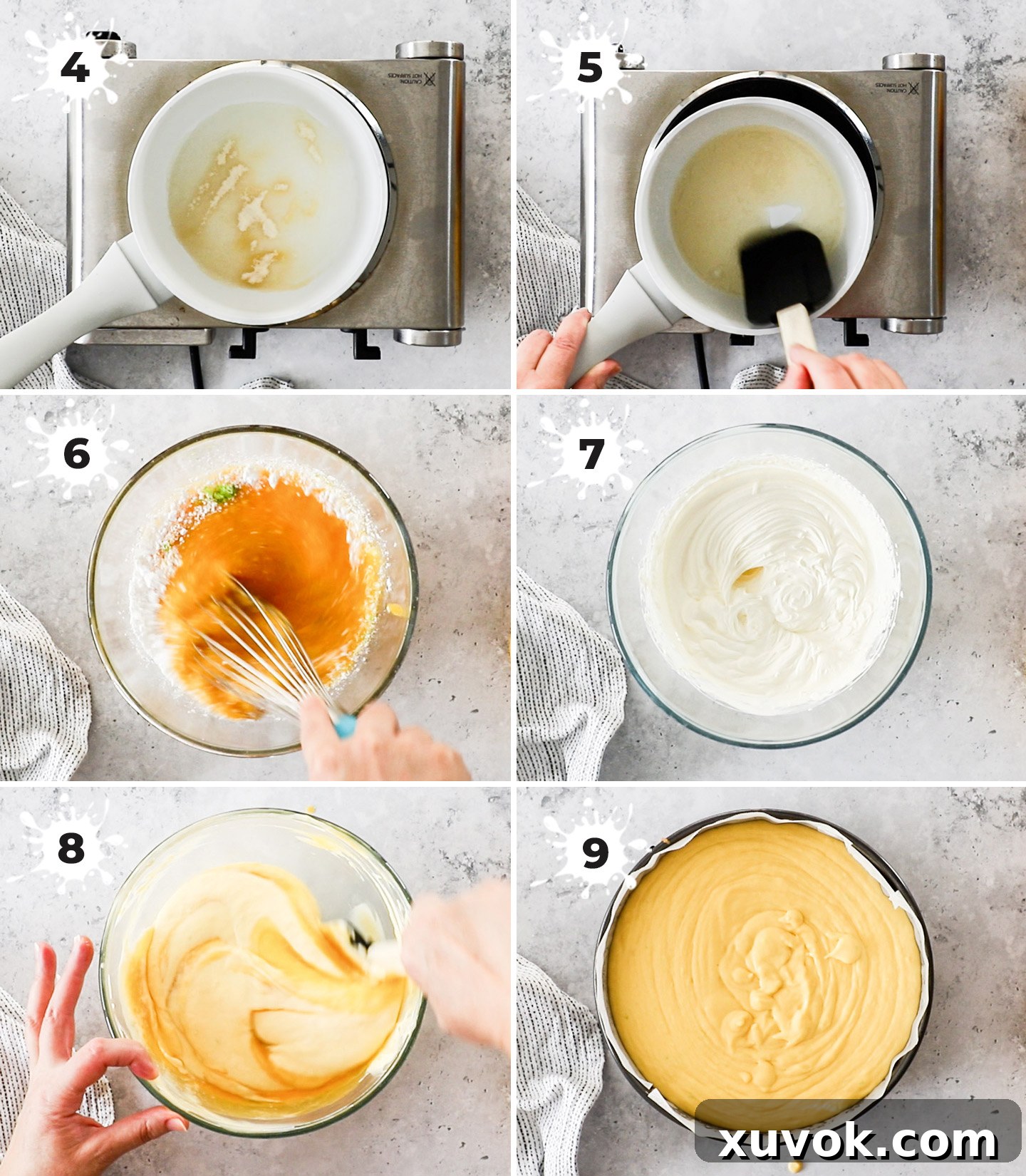
- Bloom and Dissolve Gelatine: In a very small saucepan, sprinkle the powdered gelatine evenly over cold water (photo 4). Allow it to sit undisturbed for 3-4 minutes to “bloom” or soften. This crucial step prevents lumps. Then, gently heat the saucepan over low heat, stirring constantly, until the gelatine is completely dissolved (photo 5). Be careful not to boil the mixture, as this can reduce the gelatine’s setting power. Remove from heat immediately once clear.
- Mango Puree Base: Peel and pit your ripe mangoes, then place the fresh mango flesh into a blender or food processor. Blend until you achieve a perfectly smooth and lump-free puree. Pour the measured mango puree into a separate bowl. Into this puree, whisk in the icing sugar, fresh lime zest, and the dissolved gelatine mixture until thoroughly combined (photo 6).
- Whip the Cream: In a clean, medium-sized bowl, pour the very cold thickened cream (or heavy cream). Using an electric mixer, whip the cream until it forms stiff peaks (photo 7). Be vigilant and stop just as the peaks hold their shape; overwhipping will result in a grainy texture. Chill the whipped cream until ready to use.
- Gently Fold Together: This step requires a delicate touch. Add about a quarter of the mango-gelatine mixture to the whipped cream. Using a rubber spatula, very gently fold the mango into the cream with an upward motion, being careful not to deflate the air you’ve incorporated into the cream. Continue adding the mango mixture in portions, folding gently until everything is just combined and no streaks remain (photo 8). The goal is a light, airy, and uniform mousse.
- Assemble and Chill: Carefully pour the freshly prepared mango mousse over your cooled coconut cake base in the springform pan (photo 9). Gently shake the pan to evenly distribute the mousse and create a smooth top surface. Transfer the cake to the refrigerator and chill for a minimum of 6 hours, or ideally overnight, to allow the mousse to fully set and firm up. This patience will be rewarded with perfectly clean slices.
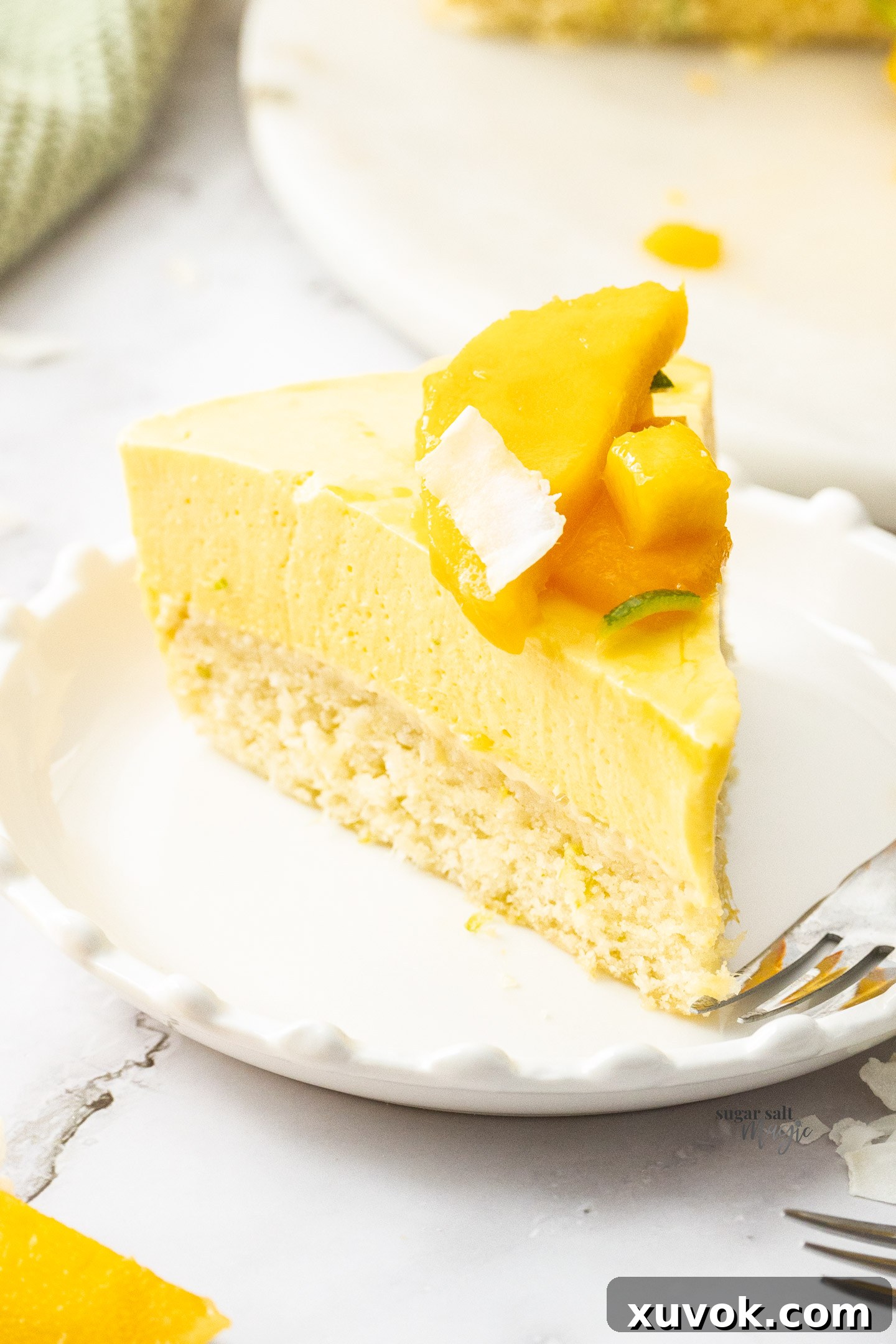
For simplicity, I typically line my springform pan with baking paper for both the base and sides. While effective, this can sometimes leave slight ridges on the sides of the mousse when unwrapped. I usually smooth these out gently with a warm, offset spatula. For those seeking perfectly smooth, professional-looking sides, consider using acetate strips. These are readily available at most cake supply stores and provide an impeccably clean edge. Simply line your cooled cake base with these strips before pouring the mousse.
Expert Tips and Tricks for Mousse Cake Perfection
- Avoid Overwhipping the Cream: This is a common pitfall that can lead to a grainy, rather than smooth, mousse. Whipping cream too far transforms it into butter, ruining the light texture. Keep a close eye on your cream; as soon as you see distinct lines forming that don’t immediately disappear, reduce your hand mixer to its lowest setting. Continue whipping briefly, checking frequently, until the cream holds stiff peaks. It should look thick and fluffy, not curdled.
- For Impeccably Straight Sides: To achieve truly professional, smooth sides on your mousse, invest in acetate strips (also known as cake collars). After your coconut cake base has cooled, carefully remove the baking paper from the sides of your springform tin, but keep the outer ring locked. Then, slide the acetate strips snugly around the inside perimeter of the tin, directly against the cake. Pour your mousse over the cake as usual. Once the mousse has completely set, simply release the springform ring and gently peel away the acetate strips to reveal perfectly smooth, unblemished sides.
- Choosing the Right Mangoes: The quality of your mangoes profoundly impacts the flavor of your mousse. Opt for large, ripe mangoes that yield slightly to gentle pressure and have a fragrant, sweet aroma. Avoid mangoes that are too hard or have a sour smell. If fresh mangoes are not in season or hard to find, high-quality frozen mango chunks can be used, but ensure they are fully thawed and any excess liquid is drained to prevent a watery mousse.
- Ensuring Gelatine Dissolves Completely: Lumps of undissolved gelatine can ruin the texture of your mousse. After blooming the gelatine in cold water, heat it over very low heat, stirring constantly until it becomes perfectly clear and no granules are visible. If it starts to bubble, remove it from the heat immediately, stir, and allow it to cool slightly before continuing. This step is critical for a smooth, uniform mousse.
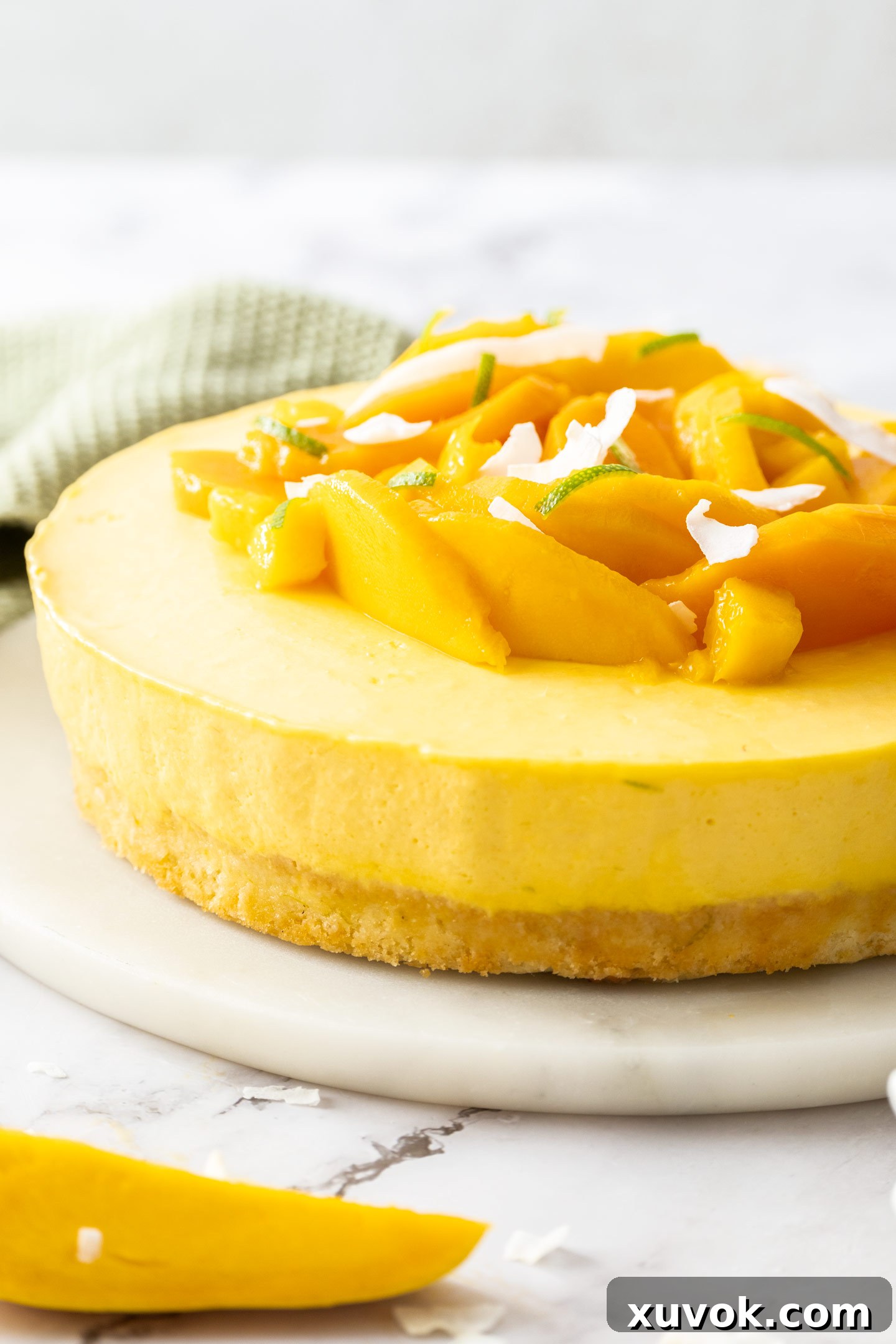
- Decorate with Flair: I typically adorn my mango mousse cake simply with elegant slices of fresh mango, a sprinkle of vibrant lime zest, and delicate shaved coconut – a classic combination that highlights the cake’s flavors. However, feel free to get creative! You could drizzle it with a homemade mango curd for an extra layer of mango intensity, or enhance the zesty notes with a tangy lime curd. A sprinkle of toasted coconut flakes or a few fresh mint leaves can also add visual appeal and complementary flavors.
- Ensure Cake is Fully Cooled: Before pouring the mousse over the cake base, ensure the cake is completely cooled to at least room temperature. If the cake is even slightly warm, it can cause the mousse to melt or set improperly, leading to a messy rather than layered dessert. For faster cooling, you can transfer the still-in-pan cake to the fridge after it has cooled for about 10-15 minutes on the counter.
Yield, Storage, and Make-Ahead Guide
This delightful recipe is designed to yield between 10 to 12 generous slices, making it perfect for family gatherings, dinner parties, or simply to enjoy over a few days. The exact number of servings will depend on how thinly you slice it.
Storing Leftovers:
Any leftover mango mousse cake should be stored promptly in the refrigerator within an airtight container. When properly refrigerated, the cake will maintain its delicious flavor and texture for 2 to 3 days. The duration depends largely on how far in advance you initially prepared the cake; ideally, consume it within 3-4 days of assembly for optimal freshness.
Make-Ahead Mastery:
This mango mousse cake is an exceptional make-ahead dessert, making it a fantastic choice for busy hosts or those who appreciate efficient meal prep. While the assembled mousse cake is best enjoyed within a few days of preparation and does not freeze well (the mousse portion tends to lose its delicate texture upon thawing), the coconut sponge cake base is freezer-friendly! You can bake the coconut cake in advance, allow it to cool completely, wrap it tightly in plastic wrap, and then in foil. It will keep beautifully in the freezer for up to 3 months. This means you can have your cake base ready and waiting, significantly reducing your prep time on the day you plan to assemble and serve your stunning mango mousse cake. Simply thaw the frozen cake base in the refrigerator overnight before proceeding with the mousse layer.
More Tropical and Elegant Desserts You’ll Love
- Mango Coconut Cheesecake
- Coconut Lime Cake
- Mango Pavlova
- Mango Mousse
- Coconut Mango Crumble
- Chocolate Raspberry Mousse Cake
Did you try this delightful mango mousse cake recipe?
We’d love to hear from you! Please leave a rating and comment below the recipe. Your feedback is incredibly helpful!
Hungry for more culinary inspiration? Subscribe to our newsletter for free, delicious recipes delivered straight to your inbox. Also, connect with us on Facebook, Pinterest, and Instagram for daily inspiration!
Mango Mousse Cake
Plan ahead for a minimum of 6 hours chilling time.
Rate
Pin
Ingredients
FOR THE CAKE
- ¾ cup white granulated sugar (150g / 5.3oz)
- 2 large eggs, room temperature
- ⅓ cup neutral flavoured vegetable oil
- 1 tablespoon milk (notes 1)
- 165 g plain flour (all purpose flour) (1 ¼ cups / 5.8oz)
- ⅓ cup desiccated coconut (30g/1oz)
- 1 teaspoon baking powder
- ¼ teaspoon salt
- Zest of one large lime
FOR THE MOUSSE
- 1 cup thickened cream (or whipping cream or heavy cream), cold (250ml)
- 2 large ripe mangoes (you’ll need 2 ¼ cups puree)
- ¼ cup icing sugar (powdered sugar) (33g / 1.2oz)
- 1 teaspoon lime zest
- ¼ cup cold water (60ml) (notes 1)
- 2 teaspoons powdered gelatine
- mango slices and shaved coconut for topping
For best results, always weigh ingredients where a weight is provided
Equipment
- Electric mixer or stand mixer with whisk attachment
- 8 inch springform pan or cake ring
- mixing bowls
- baking paper
- acetate strips/acetate cake collar – if you want a smoother outside to the mousse
Instructions
-
FOR THE LIME COCONUT CAKE BASE: Preheat the oven to 160C (140C fan) / 325F. Line the base of an 8 inch springform pan, then grease the sides and line those with baking paper too.
-
In a large bowl, combine the eggs and sugar and whisk until combined. Add the oil and milk and whisk to combine thoroughly.
-
Add the flour, coconut, baking powder, and salt to the bowl. Use the whisk to mix until just combined, ensuring no dry streaks remain. Add the lime zest and use a spatula to gently stir it in, avoiding overmixing.
-
Pour the thick batter into the prepared pan and bake for 30-35 minutes or until a toothpick comes out with a moist crumb or two attached.
-
As soon as you take it out of the oven, gently press down the top of the cake with a flat-bottomed glass or similar object to flatten it out slightly. This creates a perfectly level surface for the mousse to sit on and gives the cake a delightful, slightly dense texture.
-
Carefully release the spring clip but do not remove the outer ring of the pan. Leave it in place while the cake cools to at least room temperature before proceeding. (You can speed up cooling by placing it on a plate and chilling in the fridge after it has cooled for 5-10 minutes on the counter).
-
FOR THE MANGO MOUSSE: Pour the cold cream into a large mixing bowl and use an electric beater to beat to stiff peaks. Be careful not to overwhip it, as it will become grainy. Chill until required.
-
Cut the flesh from the ripe mangoes and add to a blender or food processor. Blend until you achieve a smooth puree. Measure out 2 ¼ cups of mango puree into a separate bowl and set aside.
-
In a very small saucepan or milk pan, pour the cold water, then sprinkle the gelatin powder evenly over the top. Let it sit for 3-4 minutes to soften (bloom).
-
Turn the heat on low under the pan and stir constantly until the gelatine has completely dissolved and the mixture is clear. Press any undissolved granules against the bottom of the pan to help them dissolve. Ensure it does not come to a boil; remove from heat immediately if you see any bubbles. Proper dissolution prevents lumps in your mousse.
-
Add the icing sugar, lime zest, and the dissolved gelatine mixture to the mango puree. Whisk thoroughly to combine all ingredients.
-
Pour about a quarter of the mango mixture into the chilled whipped cream. Using a rubber spatula, gently fold it together with an upward motion, being careful not to deflate the cream. When only a few streaks remain, add the next portion of mango. Repeat this process until all the mango mixture is fully folded into the cream, ensuring you scrape from the bottom of the bowl to incorporate everything evenly.
-
If using acetate strips for perfectly smooth sides, carefully remove the baking paper from around the inside edges of the springform pan (if you used it for the cake sides) and lock the ring back up. Slide the acetate strips down the sides of the cake, ensuring they form a neat barrier all the way around.
-
Gently tip the mousse mixture onto the cooled cake base. Give the pan a gentle shake to help the mousse level out and create a smooth top surface. Chill for at least 6 hours, or ideally overnight, until the mousse is completely set.
-
To serve, if you used baking paper, run a warm offset spatula gently around the cake between the paper and the tin. Carefully unlock the spring clip and lift off the outer ring. Now, gently peel off your baking paper or acetate strips.Decorate with fresh mango slices, lime zest, and shaved coconut, then slice and serve this exquisite dessert.
-
Please take a moment to leave a comment & rating if you enjoyed this recipe. Your feedback is greatly appreciated and very helpful!
Notes
- Tablespoons: Please note that I use a standard Australian 20ml tablespoon in this recipe, which is equivalent to 4 teaspoons globally. Many countries, particularly in North America, use a 15ml tablespoon (3 teaspoons). Be sure to check your tablespoon size to ensure accurate measurements for the best results.
- Lime Juice Variation: For an even more pronounced lime flavor in your mousse, feel free to substitute some of the cold water (up to 1 tablespoon) with freshly squeezed lime juice. This will add an extra layer of zest and brightness.
- For Perfect Straight Sides: As mentioned in the main article, if you desire impeccably smooth and straight sides for your mousse layer, use acetate strips (available at most cake supply shops). After your cake base has baked and cooled, remove the baking paper from the tin’s sides and re-lock the springform tin. Insert the acetate strips snugly around the perimeter of the cake. Once the mango mousse has set, you can easily remove the tin ring and gently peel away the acetate strips to reveal a flawless finish.
EXPLORE MORE STUNNING CAKE RECIPES HERE!
Have you tried this recipe?
Don’t forget to leave a rating and comment below and let me know how it was! I love hearing from you. Nutrition information is approximate and derived from an online calculator. The brands you use may cause variations.
Calories from Fat 171