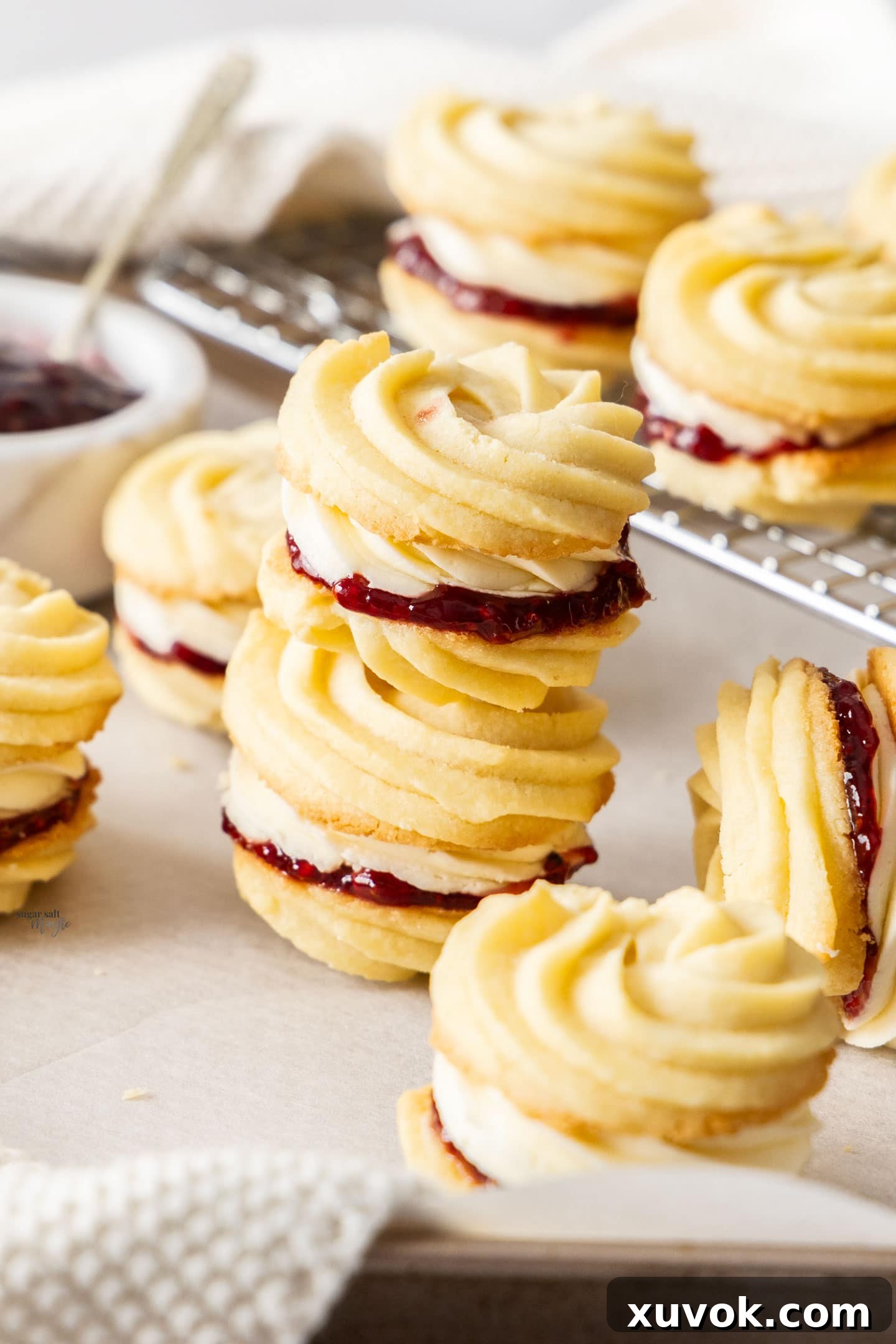
Viennese Whirls: The Ultimate Guide to Classic British Biscuits
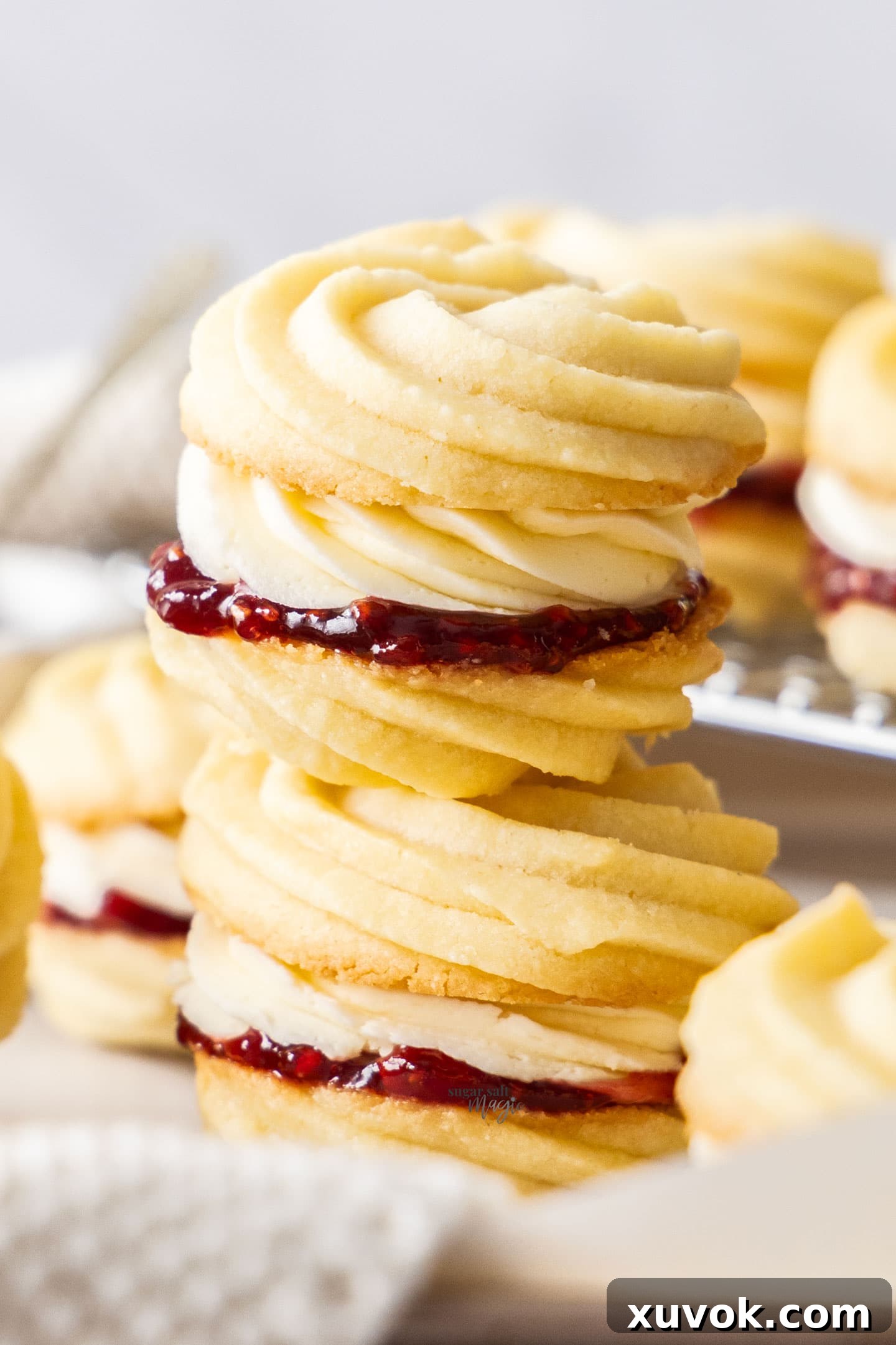
Step into the delightful world of Viennese Whirls, a beloved classic British biscuit (or cookie, for our American friends) that promises a truly melt-in-the-mouth experience. These elegant treats feature two tender, buttery shortbread biscuits embracing a luscious filling of creamy vanilla buttercream and sweet, tangy raspberry jam. Much like their equally delightful cousins, melting moments cookies, Viennese Whirls are not just a feast for the eyes but an absolute joy to the palate, perfect for elevating any morning tea or afternoon gathering.
While these exquisite cookies are a proud staple of British baking, their intriguing name hints at a connection to the culinary traditions of Vienna. It’s widely believed that they draw inspiration from the rich, buttery cookies discovered in the Austrian capital, possibly descendants of pastries like the Linzer Kipferl. Regardless of their exact lineage, one bite will convince you of their irresistible charm and timeless appeal, making them an ideal choice for any elegant occasion.
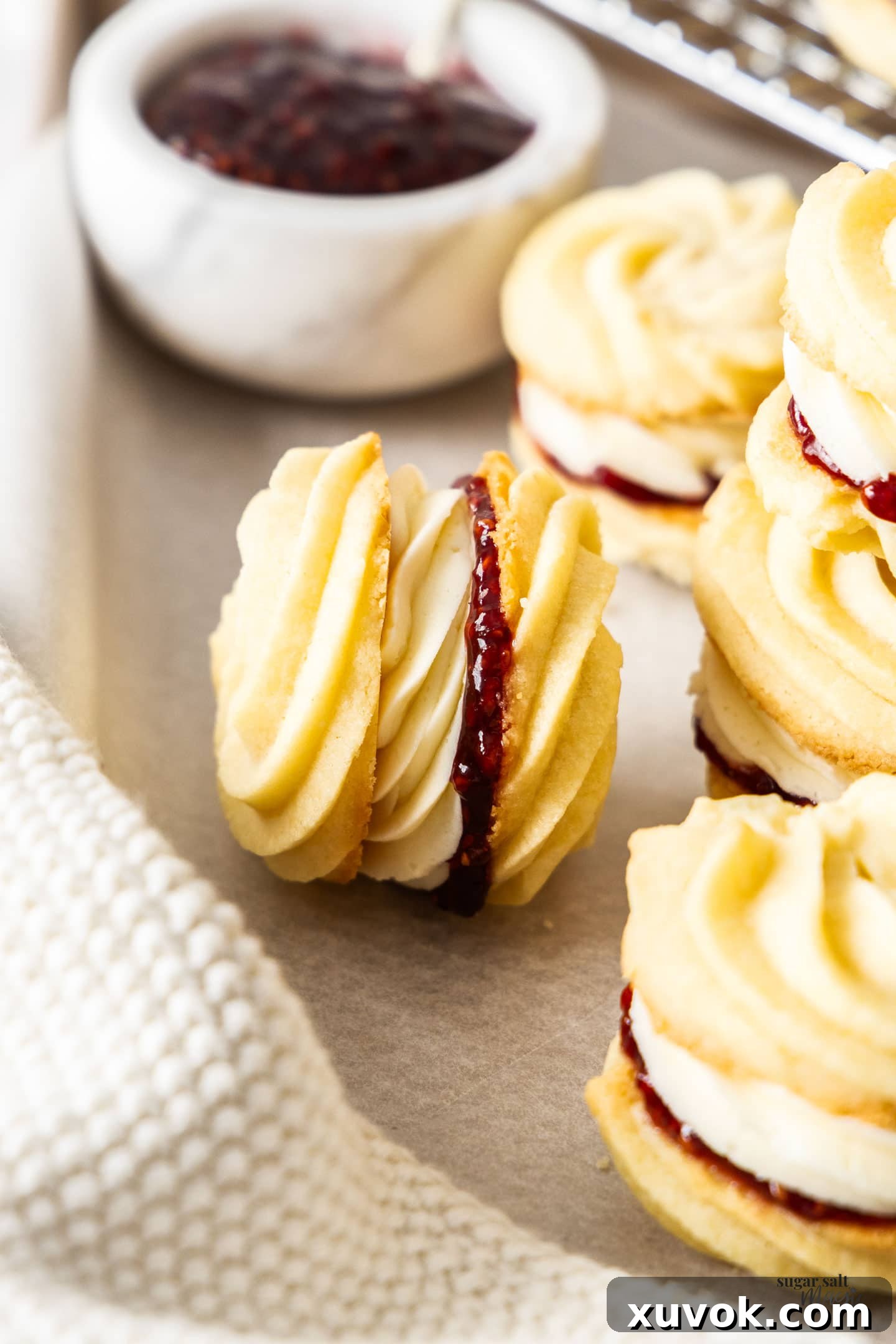
Table of Contents
- Ingredients Overview
- How to Master Viennese Whirls
- Seasonal Baking Tips
- Expert Tips and Tricks
- Delicious Variations
- Storage and Freezing
- Frequently Asked Questions
- More Irresistible Recipes You’ll Love
Never Miss a Delicious Recipe!
Get the latest, most delectable recipes delivered straight to your inbox. Join our community of baking enthusiasts today!
Subscribe by entering your email:
Ingredients Overview: Crafting the Perfect Viennese Whirl
The magic of Viennese Whirls lies in their simplicity, requiring only a handful of common pantry staples to achieve extraordinary results. Just like traditional Danish butter cookies, the delicate biscuit dough is a harmonious blend of butter, sugar, flour, and a touch of cornflour (known as cornstarch in the US). This unique addition is key to their signature melt-in-your-mouth texture. The exquisite filling is equally straightforward, combining a vibrant raspberry jam with a classic, velvety vanilla buttercream made from just a few essential components.
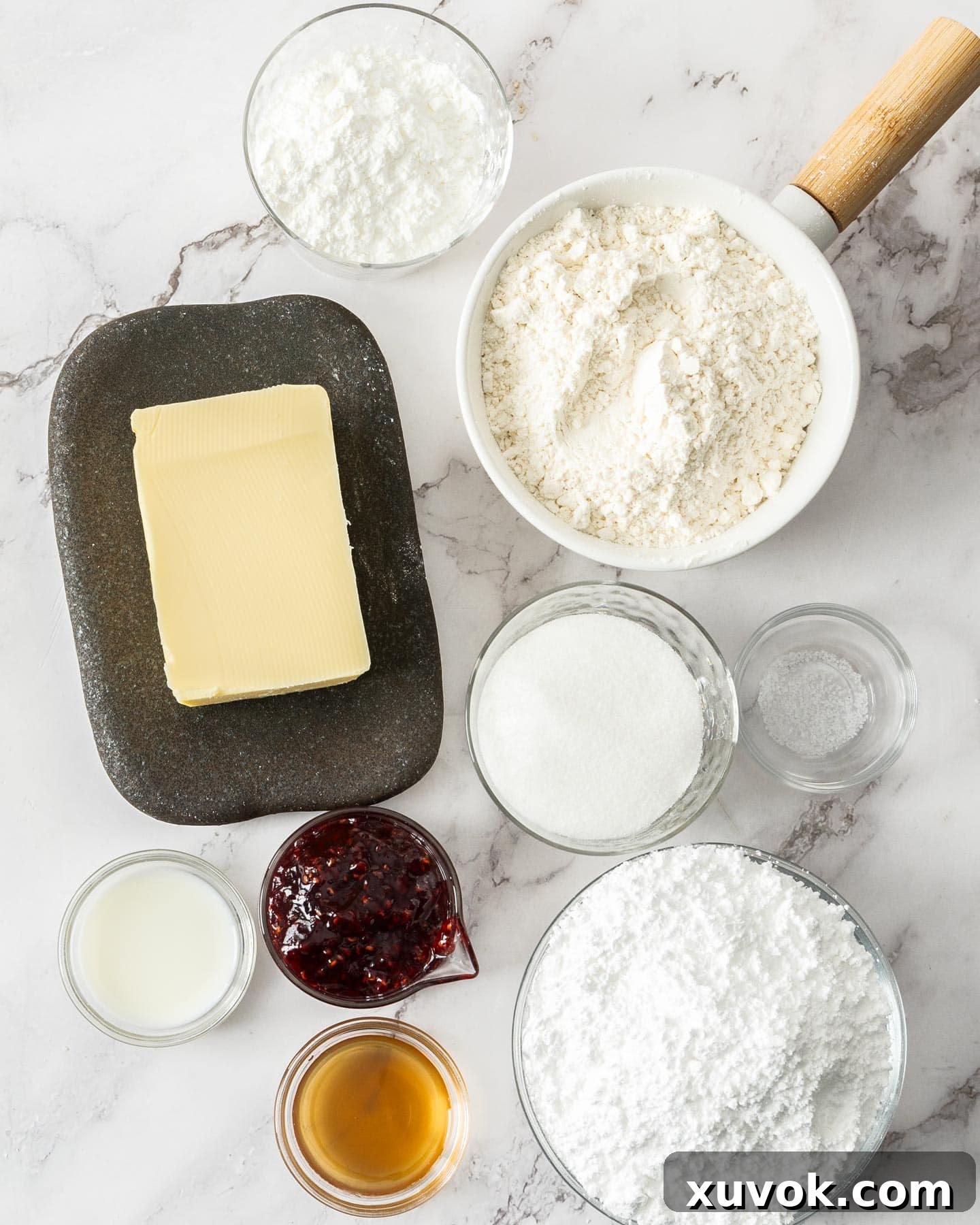
Jump to the full recipe card for precise measurements and detailed instructions.
- Unsalted Butter: Butter is the star of this recipe, lending its rich flavor and tender texture to the shortbread biscuits. Using unsalted butter allows you to control the overall saltiness of your cookies. It’s crucial for the butter to be very soft, but not melted, which ensures easy piping and a smooth dough. Aim for room temperature, where it yields easily to a gentle press.
- Plain Flour / All-Purpose Flour: Standard plain flour is all you need for the structure of these delightful biscuits. No special flours required!
- Cornflour (US Cornstarch): This seemingly small ingredient plays a monumental role in creating the iconic melt-in-your-mouth texture of Viennese Whirls. Adding cornflour (or cornstarch) reduces gluten formation, resulting in a remarkably tender, almost powdery biscuit that truly lives up to its name.
- Caster Sugar (Superfine Sugar) (for the cookie dough): For the biscuit dough, caster sugar (also known as superfine sugar) is preferred over granulated sugar or powdered sugar. Its finer crystals dissolve more readily into the butter, contributing to a smoother dough and a more delicate crumb. If caster sugar isn’t readily available, you can easily make your own by pulsing regular granulated white sugar in a food processor for a few seconds until it’s slightly finer.
- Milk: The dough for Viennese Whirls is intentionally stiff to hold its beautiful piped shape during baking. A small amount of milk is added to achieve the perfect pipeable consistency, loosening the dough just enough without compromising its structure.
- Icing Sugar (Powdered Sugar) (for the buttercream): For the silky-smooth buttercream, fine icing sugar (powdered sugar) is essential. It dissolves effortlessly, creating a lump-free, airy frosting that perfectly complements the biscuits.
- Vanilla Extract: Pure vanilla extract is incorporated into both the cookie dough and the buttercream, infusing these treats with a warm, inviting aroma and a classic, comforting flavor. Always opt for pure vanilla extract over synthetic vanilla essence for the best taste.
- Raspberry Jam: A good quality raspberry jam, with its sweet and tart notes, provides the perfect contrast to the rich, buttery biscuits and creamy vanilla filling. Look for a jam with a good consistency – not too runny – to ensure it stays neatly in place once sandwiched.
How to Master Viennese Whirls: A Step-by-Step Guide
This Viennese Whirl recipe is surprisingly straightforward, delivering stunning results with minimal fuss. The dough is designed to be quite stiff – a crucial characteristic that allows it to maintain its elegant swirled shape as it bakes. This stiffness does mean you’ll need a little arm strength when piping, but the beautiful outcome is well worth the effort. If piping feels daunting, don’t worry! You can achieve a charming alternative by simply rolling small mounds of dough and gently pressing them with a fork, much like these delightful raspberry melting moments.
Jump to the recipe card for a complete list of ingredients and detailed instructions.
1. Prepare the Viennese Whirl Dough
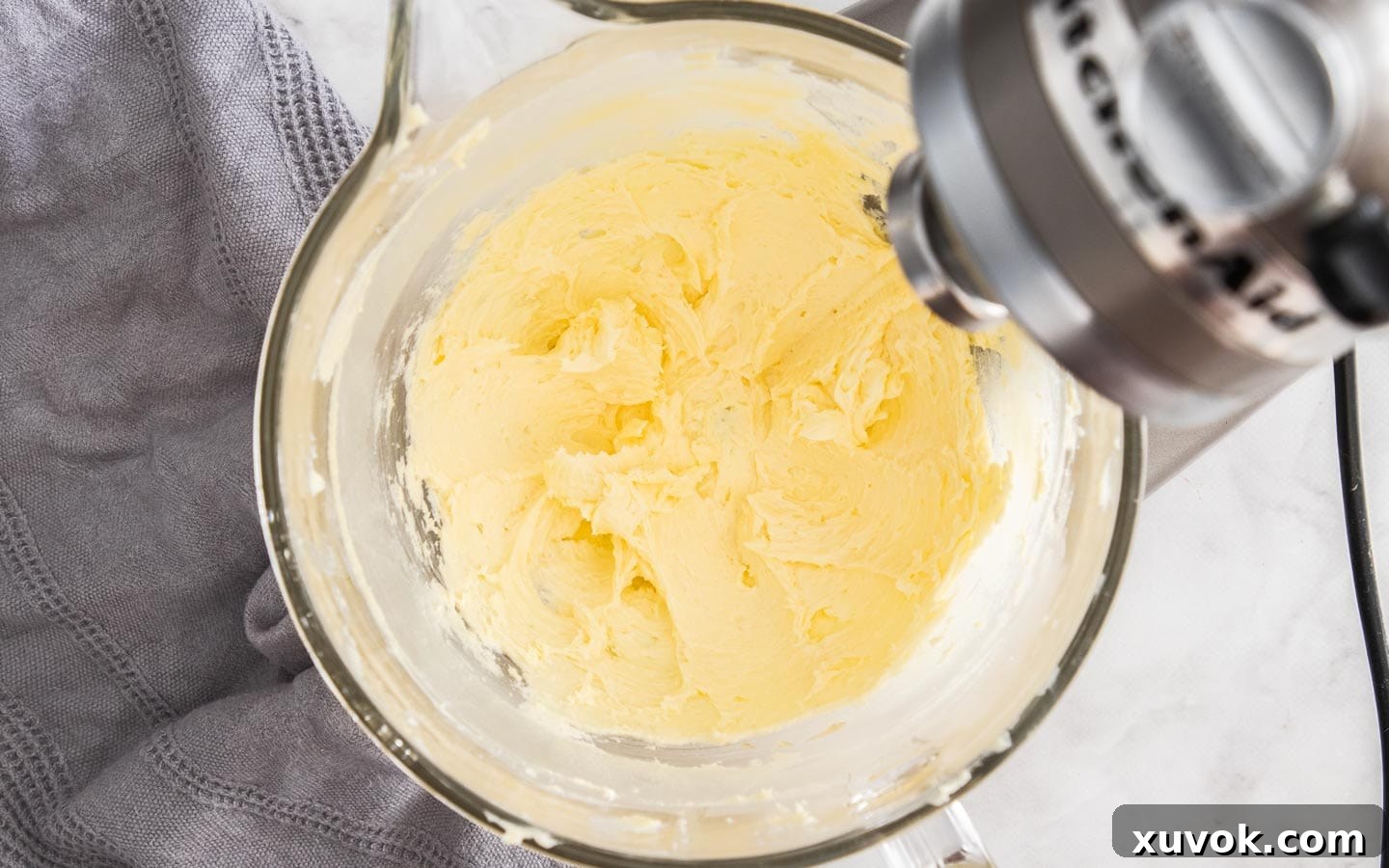
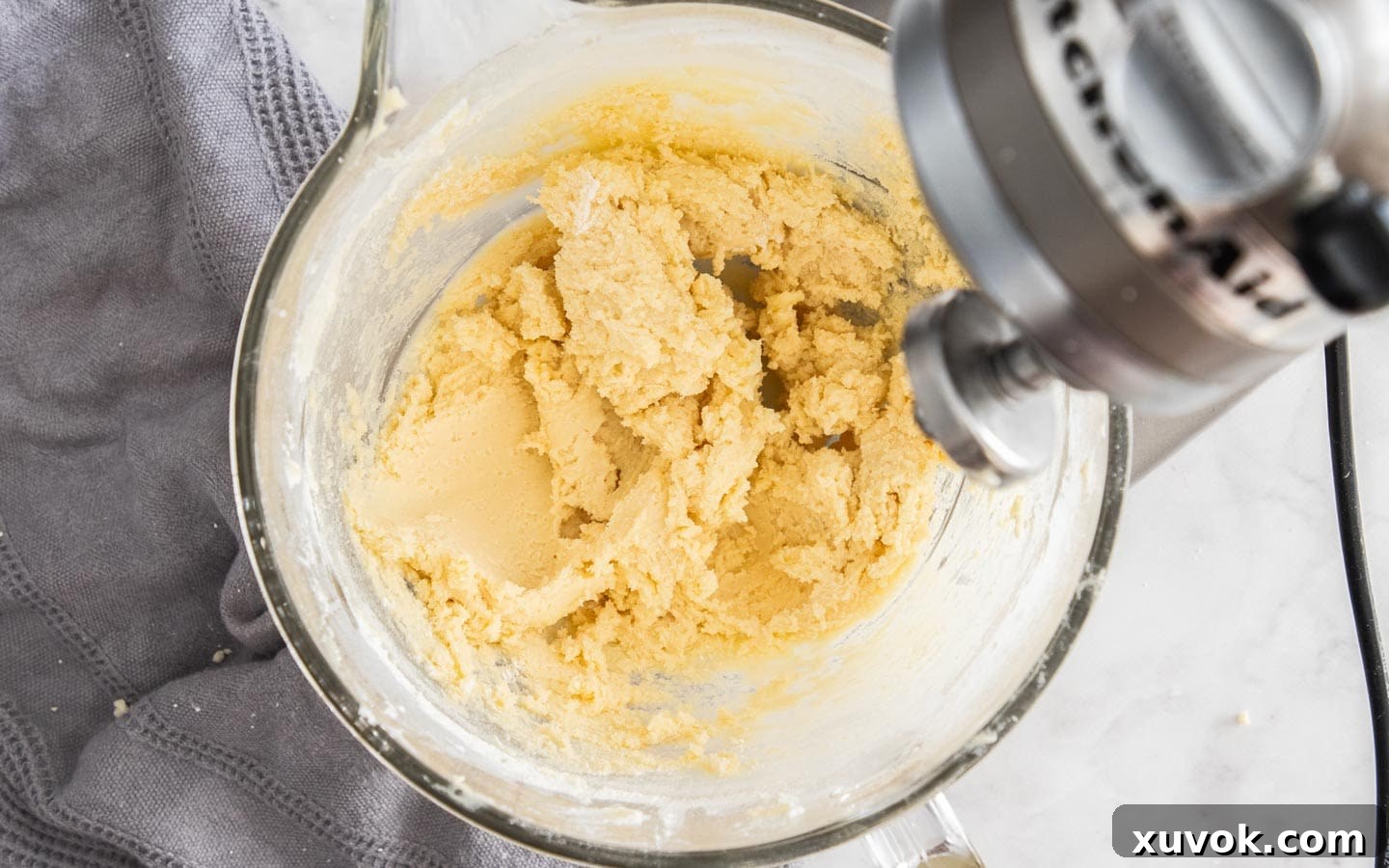
The foundation of a perfect Viennese Whirl is a light and airy dough. Begin by creaming together the very soft butter, caster sugar, and milk. Beat them vigorously for a good 4-5 minutes until the mixture becomes noticeably pale and fluffy, signifying that air has been incorporated. This aeration is key to a tender biscuit. Next, stir in the pure vanilla extract for that classic flavor. Finally, gradually add the whisked dry ingredients (flour and cornflour) and mix on a low speed until just combined. Be careful not to overmix, which can lead to tough biscuits.
2. Expertly Pipe Your Viennese Whirls
Achieving the signature swirled shape of Viennese Whirls requires a dough that is firm yet pipeable. Don’t be alarmed by its stiffness; this is intentional and ensures the cookies hold their intricate pattern through the baking process. You will need to apply steady, firm pressure to your piping bag. For those who might find piping challenging, a delightful alternative is to simply roll small balls of dough and gently flatten them with the tines of a fork – they’ll still be wonderfully delicious!
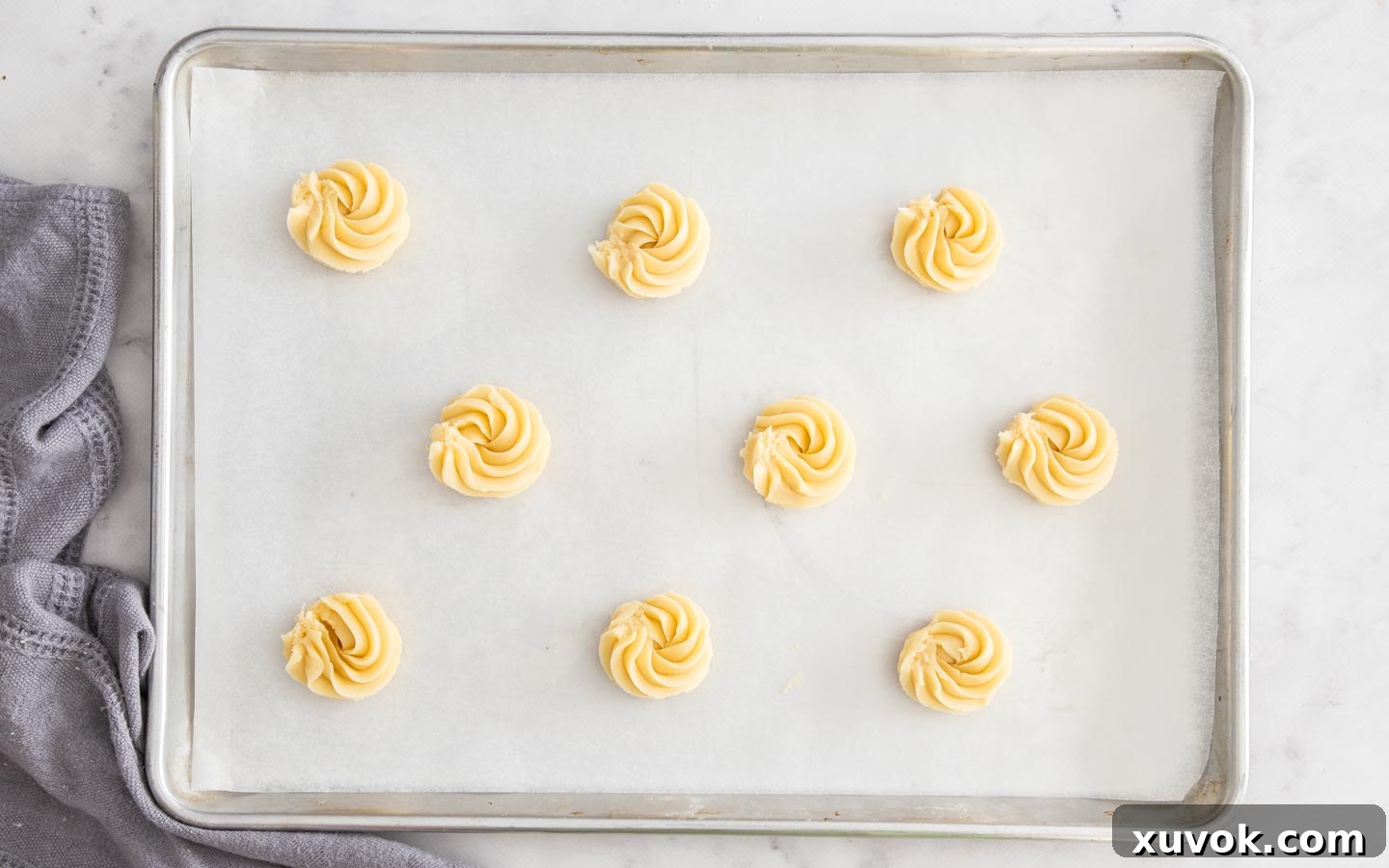
Carefully transfer the prepared cookie dough into a large piping bag fitted with a large open star nozzle. This type of nozzle is crucial for creating those beautiful, defined swirls. Pipe uniform rosettes or swirls, approximately 4cm (1.5 inches) wide, onto a baking sheet lined with baking paper. Remember to leave about a 2-inch gap between each cookie, as they will spread slightly while baking, ensuring they don’t merge into one giant biscuit.
3. Chill and Bake for Perfect Shape
Patience is a virtue, especially when baking Viennese Whirls! With their generous butter content, skipping the chilling step would lead to excessive spreading in the oven, causing them to lose their beautiful piped definition. Therefore, chilling the piped biscuits for at least 30 minutes in the refrigerator is absolutely essential. This allows the butter to firm up again, solidifying the cookie’s structure and ensuring it retains its exquisite shape and crisp edges during baking.
Once properly chilled, these delicate biscuits bake surprisingly quickly. Place them in the center of your preheated oven for just 12-14 minutes, or until their edges begin to turn a very light golden brown. It’s important not to overbake them, as they should remain pale for that classic Viennese Whirl look and tender texture. After baking, allow the biscuits to cool on the baking sheet for a few minutes to firm up before carefully transferring them to a wire cooling rack to cool completely. This prevents them from breaking and ensures they develop a lovely crispness.
4. Craft the Velvety Buttercream Filling
While your beautifully baked biscuits are cooling, it’s the perfect time to prepare the luscious vanilla buttercream. In a large mixing bowl, combine the softened butter and icing sugar (powdered sugar). Start by gently mixing them with a spatula or wooden spoon to prevent a cloud of sugar from erupting when you turn on your mixer. Once loosely combined, switch to a handheld beater or stand mixer. Beat the mixture for several minutes until it transforms into a light, airy, and wonderfully fluffy consistency. This aeration is what makes the buttercream so delightful. Finally, beat in the pure vanilla extract for an extra layer of fragrant sweetness and a small pinch of salt to balance the flavors. Though a photo of this step might be missing, trust that the process is incredibly simple and yields a perfectly creamy filling.
5. Assemble Your Exquisite Viennese Whirls
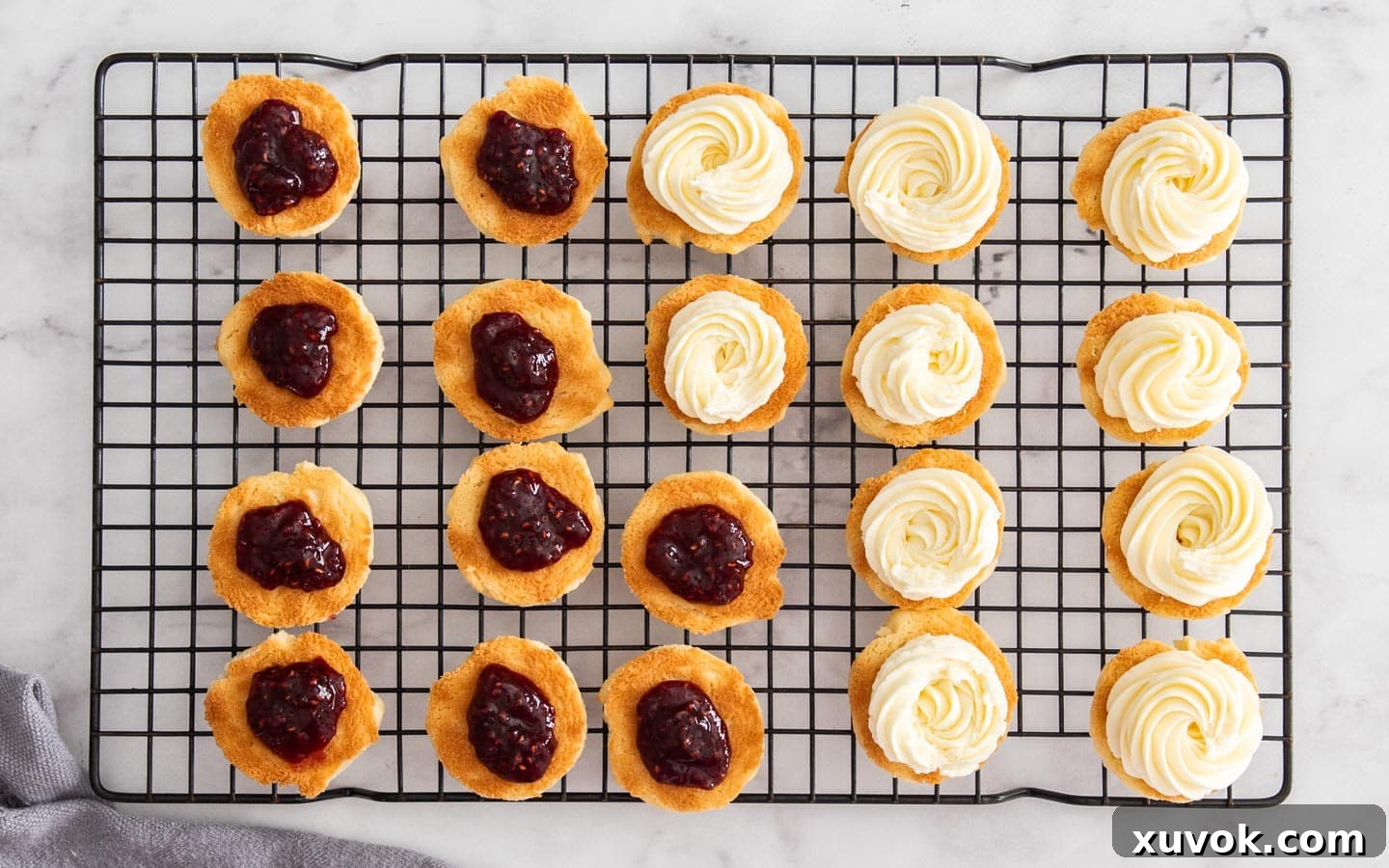
With your perfectly baked biscuits cooled and your velvety buttercream ready, it’s time for the final, most satisfying step: assembly! You’ll want a fresh piping bag and a clean, preferably slightly smaller, medium star nozzle for piping the buttercream filling. Carefully transfer your prepared buttercream into the piping bag. On the flat underside of half of your cooled biscuits, pipe elegant little swirls of buttercream, creating a beautiful mound. These will form the base of your Viennese Whirls.
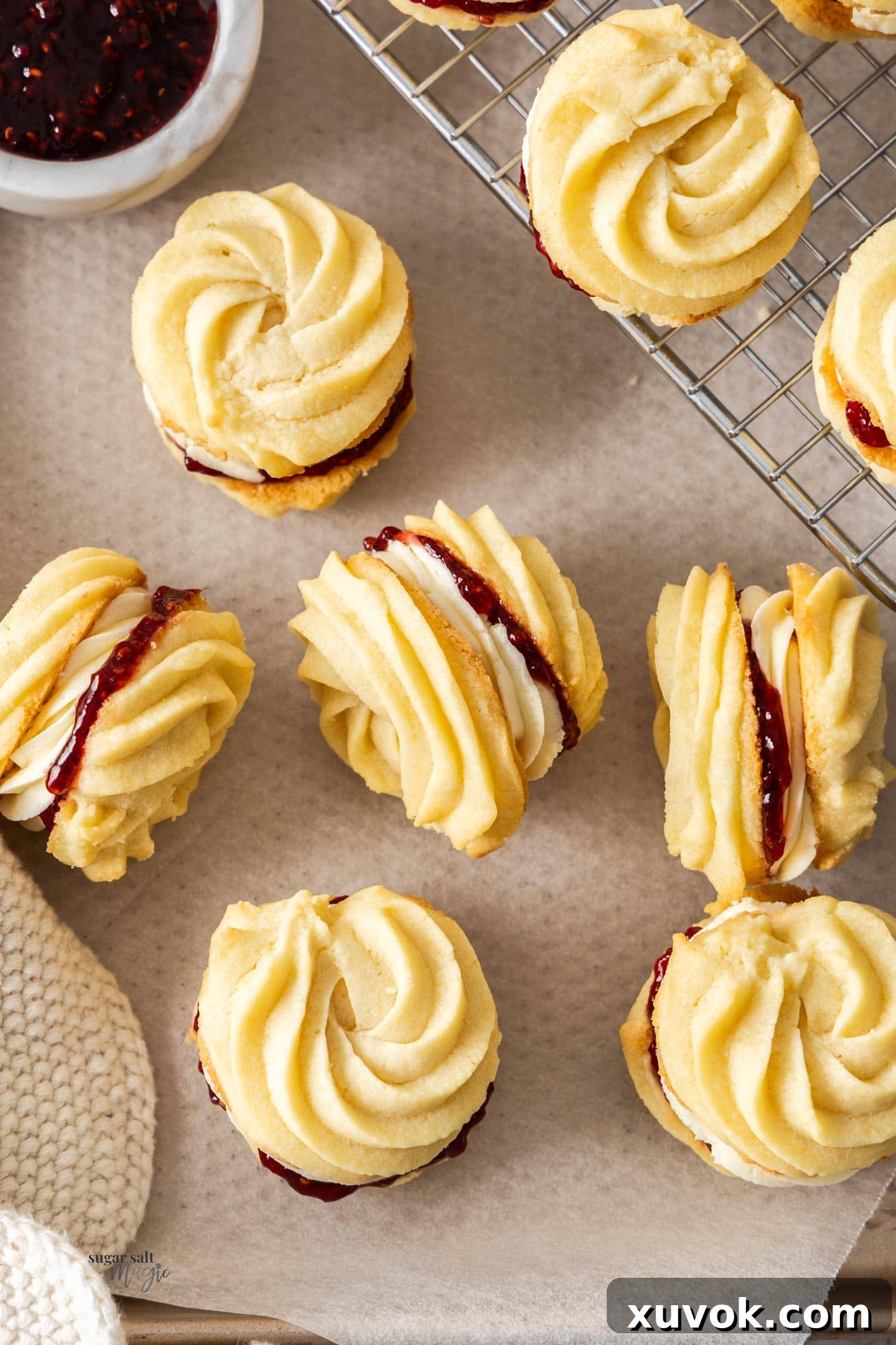
For the remaining half of the biscuits, gently spread a thin, even layer of raspberry jam onto their flat undersides. The jam should be thick enough to stay in place without oozing. Now, with both halves prepared, it’s time to bring them together! Carefully place a jam-covered biscuit on top of a buttercream-covered biscuit, pressing very gently to sandwich them. The result is a stunning, multi-layered treat that is as beautiful to look at as it is delicious to eat. Your homemade Viennese Whirls are now complete and ready to be enjoyed!
Seasonal Baking Tips for Viennese Whirls
The temperament of your Viennese Whirl dough can be surprisingly influenced by the seasons, primarily due to variations in ambient temperature and humidity. Understanding these nuances will help you achieve consistent, perfect results year-round. In the warmer months of summer, when butter is naturally softer and the air holds more moisture (as sugar is hygroscopic and readily absorbs humidity), you’ll often find that the dough requires less milk. This is because the butter already contributes significant softness, and the absorbed moisture from the air helps to loosen the dough. Too much milk in summer can lead to excessive spreading and a loss of the beautiful piped shape.
Conversely, during the cooler, drier days of winter, the butter remains firmer, and the air is less humid. In this environment, the dough tends to be stiffer and less pliable, necessitating the addition of slightly more milk to achieve a pipeable consistency. Despite these seasonal adjustments, the crucial step of chilling the piped dough in the refrigerator before baking remains constant. This ensures the butter re-solidifies, locking in the intricate piped patterns and preventing the cookies from spreading too much in the oven, regardless of the outside temperature. Always observe your dough’s consistency and adjust the milk quantity incrementally to find its ideal pipeable state.
Expert Tips and Tricks for Flawless Viennese Whirls
- Prevent Air Pockets in Piping Bag: When loading your dough into the piping bag, press it down firmly to eliminate any air pockets. Air bubbles can be incredibly frustrating, causing inconsistent piping and sudden bursts, especially with a stiff dough. Work the dough towards the nozzle gradually for a smooth, uninterrupted flow.
- Embrace a Kitchen Scale: For baking, precision is paramount, and nowhere is this truer than with a delicate recipe like Viennese Whirls. While approximate cup measurements are provided, a kitchen scale offers unparalleled accuracy. It’s a small investment that will drastically improve your baking consistency and results across all recipes. Weighing ingredients, particularly flour and butter, ensures the perfect dough consistency every time.
- Understand Dough Stiffness: The dough for Viennese Whirls is intentionally stiff. This characteristic is vital for the cookies to hold their intricate piped swirl shape during baking. If you find the dough too challenging to pipe, don’t despair! Return it to your mixer and add a minimal amount of milk, perhaps 1-2 teaspoons, beating it through until just combined. Test the consistency, and if needed, add another teaspoon. Remember, adding too much milk will make the dough too soft, causing the swirls to lose their definition.
- Adjust Milk According to Climate: As mentioned in our seasonal notes, the amount of milk needed can vary significantly. In cooler, less humid weather, you may need a little more milk to achieve a pipeable consistency. Conversely, in warm or humid conditions, start with the minimum amount of milk and add more sparingly if necessary, observing how the dough behaves.
- Ensure Butter is Properly Softened: For ideal incorporation and a smooth dough, your unsalted butter must be very soft – but not melted. If it’s too cold, it won’t cream properly, and if it’s melted, the dough will be greasy and impossible to pipe. Leave it out at room temperature for a couple of hours or gently warm it until it’s pliable.
- Don’t Overmix the Flour: Once you add the flour and cornflour mixture, mix on low speed only until just combined. Overmixing develops gluten, which can lead to tough, chewy biscuits instead of the desired tender, melt-in-your-mouth texture.
Delicious Variations to Explore
While the classic raspberry and vanilla combination is undeniably perfect, Viennese Whirls are versatile enough to invite creative twists. Don’t hesitate to experiment with different flavors to suit your palate or occasion:
- Alternative Jams: The raspberry jam can easily be swapped for other delightful flavors. Consider apricot, strawberry, blackcurrant, or even a mixed berry preserve. The key is to choose a jam that is relatively thick; a runnier jam might seep out of the biscuits, compromising their neat presentation.
- Zesty Lemon Twist: For a burst of citrusy brightness, introduce a lemon variation. Replace the raspberry jam with a tangy lemon curd and incorporate some finely grated lemon zest into your vanilla buttercream. This creates a wonderfully refreshing and sophisticated lemon Viennese Whirl.
- Unfilled Simplicity: These buttery shortbread biscuits are incredibly delicious even without the filling. Enjoy them plain as a simple, melt-in-your-mouth shortbread cookie, perfect for dipping in tea or coffee. They’re a testament to the quality of the biscuit dough itself.
- Indulgent Chocolate Dip: For chocolate lovers, a luxurious chocolate coating is a must-try. Whether you choose to fill them or keep them plain, dipping one side of each baked and cooled biscuit in melted dark or milk chocolate adds a rich, decadent touch. Allow the chocolate to set completely on a wire rack before serving.
- Spice it Up: For a warming, festive touch, consider adding a pinch of ground cinnamon or a touch of finely grated orange zest to the biscuit dough. These subtle additions can transform the classic flavor into something new and exciting, especially during holidays.
Storage and Freezing Guidelines
One of the many charms of Viennese Whirls is their excellent keeping quality, making them perfect for preparing in advance or gifting. Store your freshly assembled Viennese Whirls in an airtight container at room temperature, ideally in a cool, dry place like your pantry. They will remain wonderfully fresh and delicious for 7-10 days, allowing you to savor them over a week or prepare them well ahead of an event.
For longer storage, Viennese Whirls freeze exceptionally well. If you’re planning to make a large batch for future enjoyment or for holiday gifting, you can easily freeze them. Place the assembled cookies in a single layer on a baking sheet and flash-freeze them until solid. Once frozen, transfer them to an airtight freezer-safe container or a heavy-duty freezer bag, separating layers with parchment paper to prevent sticking. They can be stored in the freezer for up to 3 months. To enjoy, simply thaw them at room temperature for an hour or two; they’ll be as tender and flavorful as if they were freshly baked.
Frequently Asked Questions About Viennese Whirls
Despite their European-sounding name, Viennese Whirls are a classic British biscuit. They are a beloved treat deeply rooted in English culinary tradition, often found in bakeries and tea rooms across the UK.
While the exact reason remains a bit of a culinary mystery, it’s widely believed that these delightful biscuits were named after similar, rich butter cookies found in Vienna, Austria. British bakers likely adapted the concept, giving it a distinctive swirled shape and a British twist, while paying homage to their continental inspiration.
Several factors can cause Viennese Whirls to lose their beautiful swirl and flatten. The most common culprit is a dough that is too soft or warm. A high proportion of butter means the dough needs to be quite stiff when piped, requiring firm pressure on the piping bag. Crucially, chilling the piped dough for at least 30 minutes in the refrigerator before baking is essential. This allows the butter to re-solidify, which helps the cookies hold their shape and maintain the crisp definition of their piped pattern in the heat of the oven. If your butter was too soft to begin with, or if your kitchen is very warm, the dough might spread more easily.
Not all biscuit and cookie doughs require chilling, but for recipes like Viennese Whirls that have a high butter content or where maintaining a distinct shape (like piped swirls) is important, chilling is highly recommended. The cold helps the butter firm up, preventing the dough from spreading excessively in the oven and preserving its intricate design. It also allows the flour to fully hydrate, often leading to a more tender and flavorful cookie.
Absolutely! If you don’t have a piping bag or prefer not to pipe, you can still enjoy these delicious cookies. Simply roll small portions of the dough into balls, then gently flatten them with the back of a fork to create a decorative pattern. While they won’t have the classic “whirl” shape, they will still be incredibly tender, buttery, and perfect for filling.
More Irresistible Recipes You’ll Love
If you’ve enjoyed baking these classic Viennese Whirls, you’re sure to adore these other delightful biscuit and cookie recipes:
- Danish Butter Cookies: Another buttery classic, perfect for any occasion.
- Raspberry Melting Moments: Similar in texture, these tender cookies are filled with a luscious raspberry buttercream.
- All Butter Shortbread (Petticoat Tails): The quintessential Scottish shortbread, simple and utterly delicious.
- Baci di Dama (Italian Almond Shortbread Cookies): Elegant Italian “lady’s kisses” filled with chocolate ganache.
- Ginger Shortbread: A warming, spiced twist on the classic shortbread.
- Classic Chocolate Chip Cookies: Everyone’s favorite, made to perfection.
⭐⭐⭐⭐⭐
Did you try this Viennese Whirls recipe? We’d love to hear from you! Share your thoughts and show it some love in the comments below.
Hungry for more? Subscribe to our newsletter for free, delicious recipes delivered straight to your inbox. Also, follow along and get inspired on Facebook, Pinterest, and Instagram!
Classic Viennese Whirls
10
biscuits
25 minutes
12 minutes
30 minutes
1 hour
7 minutes
Rate
Pin
Ingredients
FOR THE BISCUITS
- 225 g unsalted butter very soft (8oz / 1 cup / 2 sticks)
- 100 g caster sugar (superfine sugar) (½ cup / 3 ½ oz)
- 3-5 teaspoons milk (notes 1& 2)
- 1 ½ teaspoons vanilla extract
- 225 g plain flour (all-purpose flour) (1 ¾ cups / 8oz)
- 70 g cornflour (US cornstarch) (½ cup / 2 ½oz)
FOR THE FILLING
- ¼ cup raspberry jam (60ml)
- 100 g unsalted butter (3 ½oz)
- 170 g icing sugar (powdered sugar) (6oz / 1 ⅓ cup)
- 1 teaspoon vanilla extract
- pinch of salt
For best results, always weigh ingredients where a weight is provided
Equipment
-
Stand mixer or handheld mixer
-
Piping bag
-
Large open star tip
-
2 Large baking sheets
Instructions
-
Preheat your oven to 180C (160C fan forced) / 350F. Line 2 large baking sheets with baking paper, ensuring a non-stick surface for your delicate biscuits.
-
In a medium bowl, thoroughly whisk together the plain flour and cornflour until they are perfectly combined and evenly dispersed. Set this dry mixture aside.
-
Using a stand mixer fitted with a paddle attachment, or a handheld electric beater, beat together the very soft butter, caster sugar, and milk until the mixture becomes remarkably pale and creamy. This should take a good 4-5 minutes. Remember to scrape down the sides and bottom of the bowl a couple of times with a silicone spatula to ensure everything is evenly incorporated.
-
Beat in the vanilla extract until it is fully combined, infusing the dough with its fragrant aroma.
-
Gradually add the prepared flour mixture to the wet ingredients, beating on a very low speed. Start by pulsing gently to prevent the flour from scattering out of the bowl, then continue mixing until the dough just comes together. Avoid overmixing to keep the biscuits tender.
-
Carefully transfer the stiff biscuit dough into a large piping bag that has been fitted with a large open star tip.
-
Pipe the dough into neat rosettes, approximately 4cm (1 ½ inches) wide, onto your prepared baking sheets. Ensure you leave about a 2-inch gap between each biscuit as they will expand slightly during baking. You will need to apply firm and consistent pressure to the piping bag due to the dough’s stiffness, which is essential for maintaining their swirl shape. If you find the dough too difficult to pipe, you can return it to the mixer and add an additional 1-2 teaspoons of milk (refer to notes 1 & 2 in the recipe card for guidance).
-
Once piped, chill the biscuits in the refrigerator for a minimum of 30 minutes. This crucial step prevents them from spreading too much and helps them retain their delicate shape during baking.
-
Bake the chilled biscuits for 12-14 minutes, or until their edges are just beginning to turn a very light golden brown. Keep a close eye on them to prevent over-browning. Allow them to cool on the baking tray for a few minutes to set, then use a thin spatula to carefully transfer the delicate biscuits to a wire rack to cool completely. They must be entirely cool before filling.
-
While the biscuits are cooling, prepare the rich and fluffy buttercream filling. In a large mixing bowl, combine the softened butter and icing sugar. Start by stirring them together with a spatula or wooden spoon until just combined, which helps prevent a cloud of powdered sugar. Then, switch to a handheld mixer and beat for several minutes until the mixture is lightened, airy, and wonderfully fluffy. Incorporate the vanilla extract and a pinch of salt, beating again until thoroughly mixed and smooth.
-
Transfer the prepared buttercream to a clean piping bag fitted with a large star tip (a slightly smaller star tip than for the biscuits works well here). Pipe elegant swirls of buttercream onto the flat underside of half of your completely cooled biscuits.
-
On the flat underside of the remaining biscuits, spread a small amount of raspberry jam. Ensure the jam is spread evenly and not too thickly. Now, carefully sandwich the jam-covered biscuits on top of the buttercream-covered biscuits, pressing gently to secure them.
-
Your exquisite Viennese Whirls are now ready to be enjoyed! Please take a moment to leave a comment & rating on this recipe. Your feedback is greatly appreciated and helps other bakers.
Notes
- This dough is intentionally stiff, which is key to maintaining its beautiful swirl shape during baking. If you find it too challenging to pipe, you can return the dough to your mixer and incrementally add 1-2 teaspoons more milk. Beat it through, then try piping again. Be cautious, as adding too much milk will result in less defined swirls after baking.
- The amount of milk needed can vary with temperature and humidity. In very cold weather, you’ll likely need the full 4-5 teaspoons of milk to achieve a pipeable consistency. In warm or humid weather, start with just 3 teaspoons and add more only if absolutely necessary. Always ensure your butter is very soft to begin with, but never melted.
- The initial softness of your butter significantly impacts how pipeable the dough will be. Aim for butter that is at true room temperature – soft enough to easily indent with a finger, but not greasy or melted.
- If piping isn’t an option, don’t worry! You can simply roll portions of cookie dough into small balls and then gently press a pattern into the top using the tines of a fork. While they won’t be traditional swirls, they will still be charming and delicious.
- For the most accurate and consistent results, always weigh your ingredients, especially flour and sugar. Kitchen scales are affordable and invaluable tools for baking. If you must use cup measurements, employ the ‘spoon and level’ method (lightly spoon flour into a measuring cup and level with a straight edge, rather than scooping directly from the bag).
- Remember that oven temperatures can vary. It’s always a good practice to check for doneness 3-4 minutes before the recommended baking time to prevent over-baking.
- The provided nutrition details are approximate and are derived from an online calculator. Variations in the brands of ingredients you use may cause slight differences in the final nutritional information.
DISCOVER MORE DELICIOUS COOKIE RECIPES!
493
kcal
Marie Roffey
Dessert
British, English
Have you tried this recipe?
Don’t forget to leave a rating and comment below and let me know how it was! I love hearing from you. Nutrition information is approximate and derived from an online calculator. The brands you use may cause variations.
Calories from Fat 252