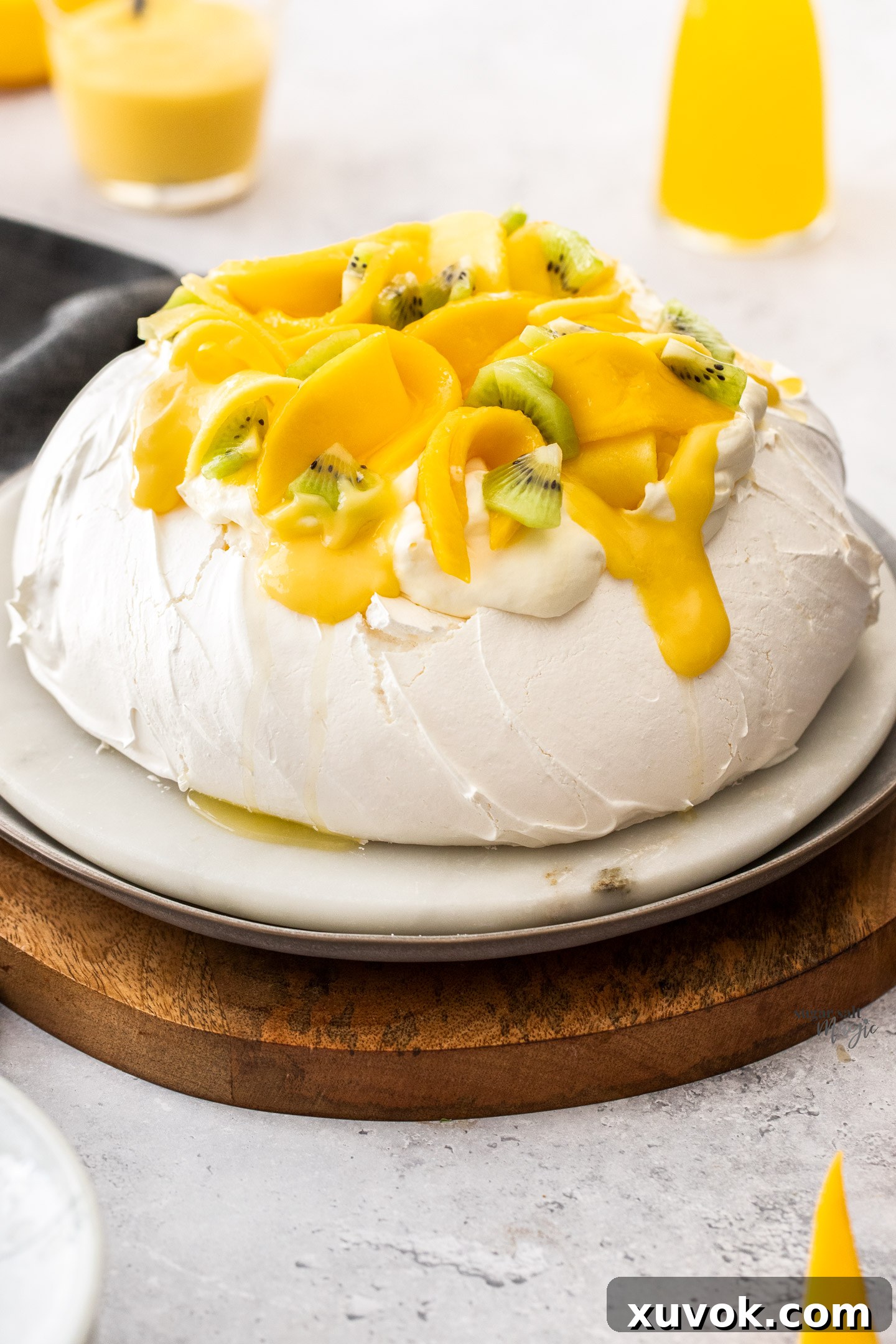
Exquisite Mango Pavlova: A Tropical Dream Dessert
Prepare to be enchanted by this stunning Mango Pavlova – a dessert that’s as beautiful to behold as it is delightful to eat. Imagine a cloud-like meringue, impossibly crisp on the outside, yielding to a divinely soft, marshmallow-like interior. Crowned with luscious mangoes, silky whipped cream, and a vibrant mango curd, each bite transports you to a sun-drenched tropical paradise. This isn’t just a dessert; it’s an experience, a celebration of textures and flavors designed to impress.
The journey to this ethereal creation begins with mastering the perfect pavlova recipe. The foundation demands a meringue with a thick, satisfyingly crunchy crust, while the core must remain wonderfully soft and fluffy. Once this delicate balance is achieved, it’s time for the decadent toppings. For this tropical twist, we generously layer it with fresh mango, homemade mango curd, and a delicate drizzle of fragrant mango syrup, creating an intense, multilayered mango experience.
While often associated with summer, this Mango Pavlova transcends seasons. Fresh mangoes are undoubtedly ideal for topping, but their availability shouldn’t limit your enjoyment. Tinned mango slices offer a convenient alternative, and for the mango curd, frozen mango works beautifully, ensuring you can whip up this tropical delight any time of year. Don’t hesitate to experiment with other fruits if mango isn’t available – the versatility of pavlova allows for endless delicious variations.
If you’re new to pavlova making or seeking to perfect your technique, my comprehensive perfect pavlova recipe guide offers a fool-proof approach, packed with essential tips, tricks, and a detailed troubleshooting section. It’s designed to empower you to create your own show-stopping pavlova with confidence, right in your home kitchen.
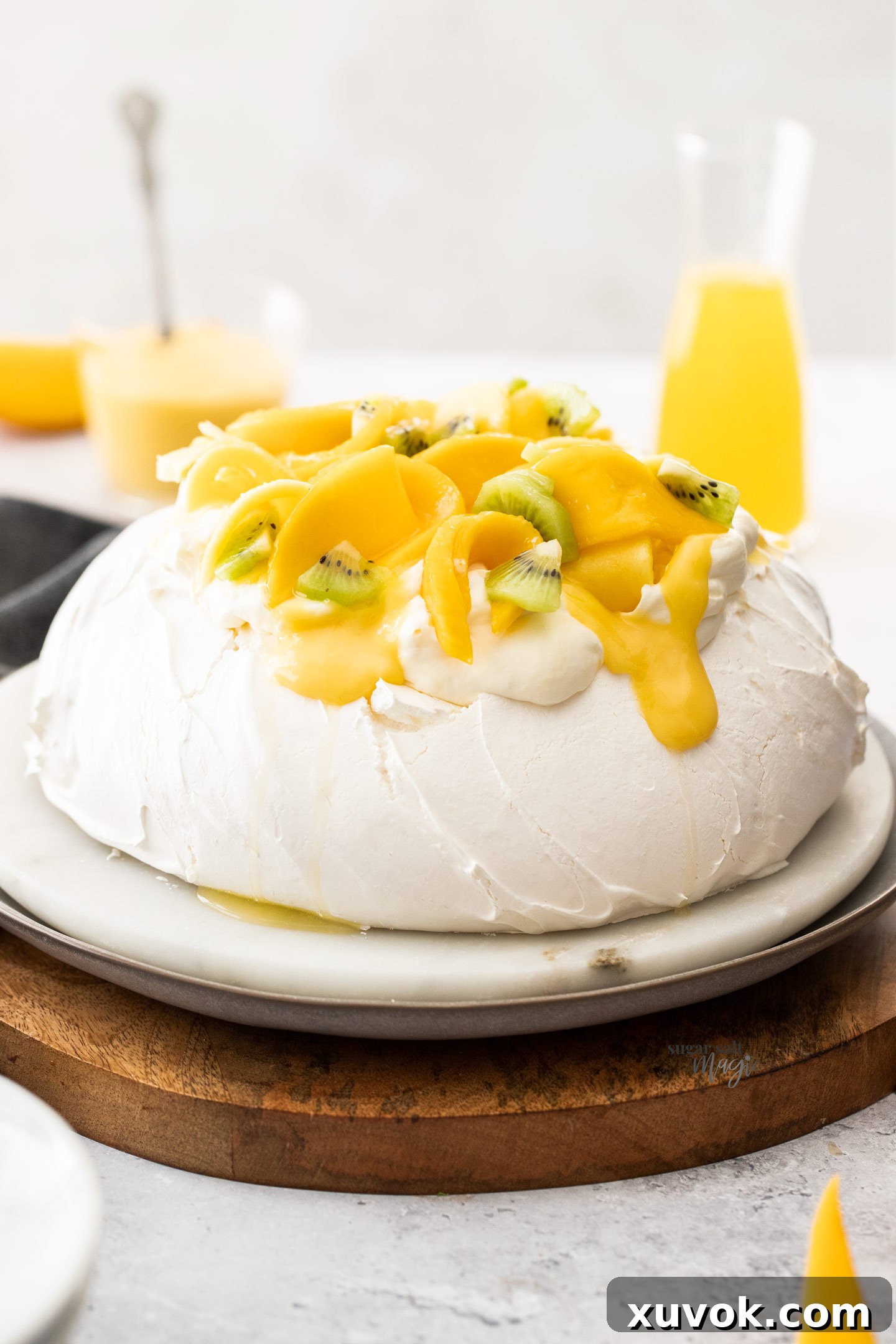
Table of Contents
- The Art of Pavlova: What Makes It Special?
- Key Ingredients for a Flawless Pavlova
- Mastering Pavlova: A Step-by-Step Guide
- Expert Tips for Pavlova Perfection
- Beautifully Cutting Mango for Pavlova
- Frequently Asked Questions About Pavlova
- Yield and Storage Guidelines
- More Irresistible Recipes You’ll Love
Never Miss a Recipe!
Get the latest recipes straight to your inbox!
The Art of Pavlova: What Makes It Special?
Before we dive into the ingredients, let’s appreciate what makes a pavlova truly unique. Often confused with a simple meringue, a pavlova distinguishes itself with its remarkable textural contrast. While a traditional meringue is crisp and dry all the way through, a pavlova boasts a delicate, crackling crust that shatters to reveal a pillowy-soft, almost marshmallow-like center. This magical transformation is largely due to the addition of cornflour and an acid, which contribute to its distinctive chewiness and stability.
Named in honor of the Russian ballerina Anna Pavlova during her tours of Australia and New Zealand in the 1920s, this dessert has become an iconic staple in Australasian cuisine. It symbolizes elegance, lightness, and celebratory joy – qualities perfectly suited for its namesake. Understanding these characteristics is key to appreciating and successfully creating this beautiful dessert.
Key Ingredients for a Flawless Pavlova
The beauty of pavlova lies in its simplicity, requiring just a handful of base ingredients to create a truly spectacular dessert. The magic happens when these humble components are treated with care and precision, resulting in that iconic crisp shell and soft, chewy interior. Then, the real fun begins with the toppings!
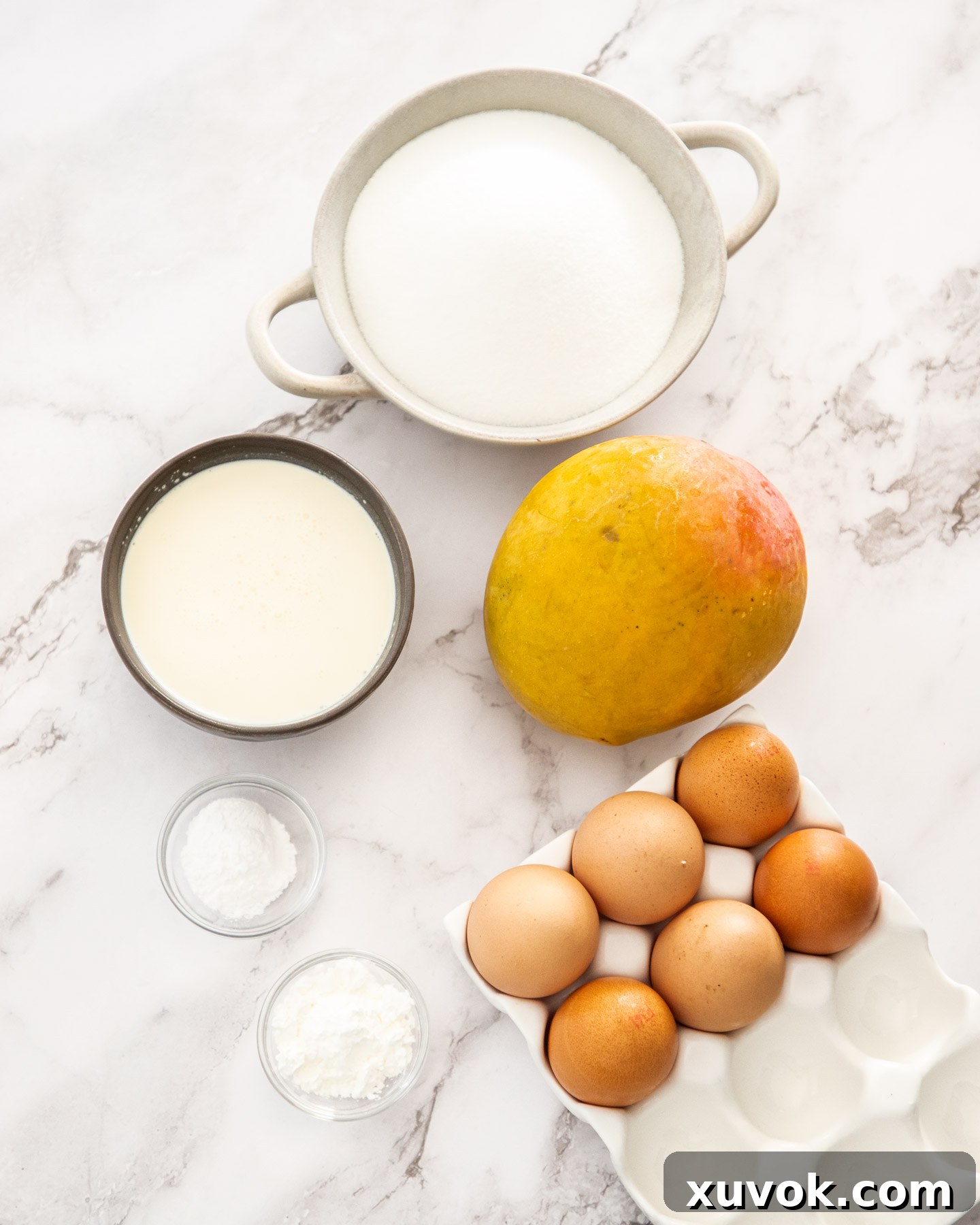
Detailed quantities and instructions can be found in the recipe card below.
- Eggs: The star of the show! For the best volume and stability, use egg whites from eggs that are a little older (a few days old) rather than freshly laid ones. Room temperature eggs are also crucial as they whip up more easily and to a greater volume. Ensure you measure them precisely into a ¾ cup measure to get the correct volume for a perfectly balanced meringue. Separate them carefully, ensuring absolutely no trace of yolk gets into the whites, as fat can prevent them from whipping properly.
- Sugar: Caster sugar, also known as superfine sugar, is the only choice for pavlova. Its fine grain dissolves quickly and thoroughly into the egg whites, creating a smooth, stable, and glossy meringue. Avoid icing sugar (powdered sugar), granulated sugar, or brown sugar. Granulated sugar’s larger crystals may not fully dissolve, leading to a grainy texture, and could require overwhipping, which compromises the meringue’s structure.
- Cream of Tartar: This acidic ingredient is a secret weapon for pavlova stability. It helps the egg whites hold their structure, preventing collapse and weeping. While lemon juice or vinegar can be used as alternatives, cream of tartar is preferred because it’s a dry ingredient, avoiding the introduction of additional liquid that could affect the meringue’s consistency.
- Cornflour / Cornstarch: Known as cornstarch in the US, cornflour is typically used as a thickening agent. In pavlova, it plays a dual role: it further aids in the stability of the meringue and is responsible for that signature soft, fluffy, marshmallow-like interior. Ensure you use a gluten-free variety if catering to dietary restrictions.
- Toppings: This is where you can truly customize your pavlova!
- Unsweetened Whipped Cream: An absolute must-have. Its rich, plain flavor perfectly balances the sweetness of the meringue. Whip it to soft peaks for a luscious, cloud-like texture.
- Fresh Fruit: While we’re celebrating mango here, the options are endless. Mango is a fantastic choice, and we amplify its flavor by adding homemade mango curd and a drizzle of mango syrup. For visual appeal and a touch of tartness, kiwi fruit is a wonderful addition, as are strawberries, raspberries, passionfruit, or a medley of seasonal berries.
- Additional Embellishments: Consider a sprinkle of toasted coconut for extra tropical flair, a few fresh mint leaves for color and aroma, or a light dusting of icing sugar just before serving.
Mastering Pavlova: A Step-by-Step Guide
Despite its impressive appearance, making pavlova is far from daunting. It’s a forgiving dessert that rewards patience and adherence to a few key steps. Follow this guide, and you’ll achieve a stunning result every time!
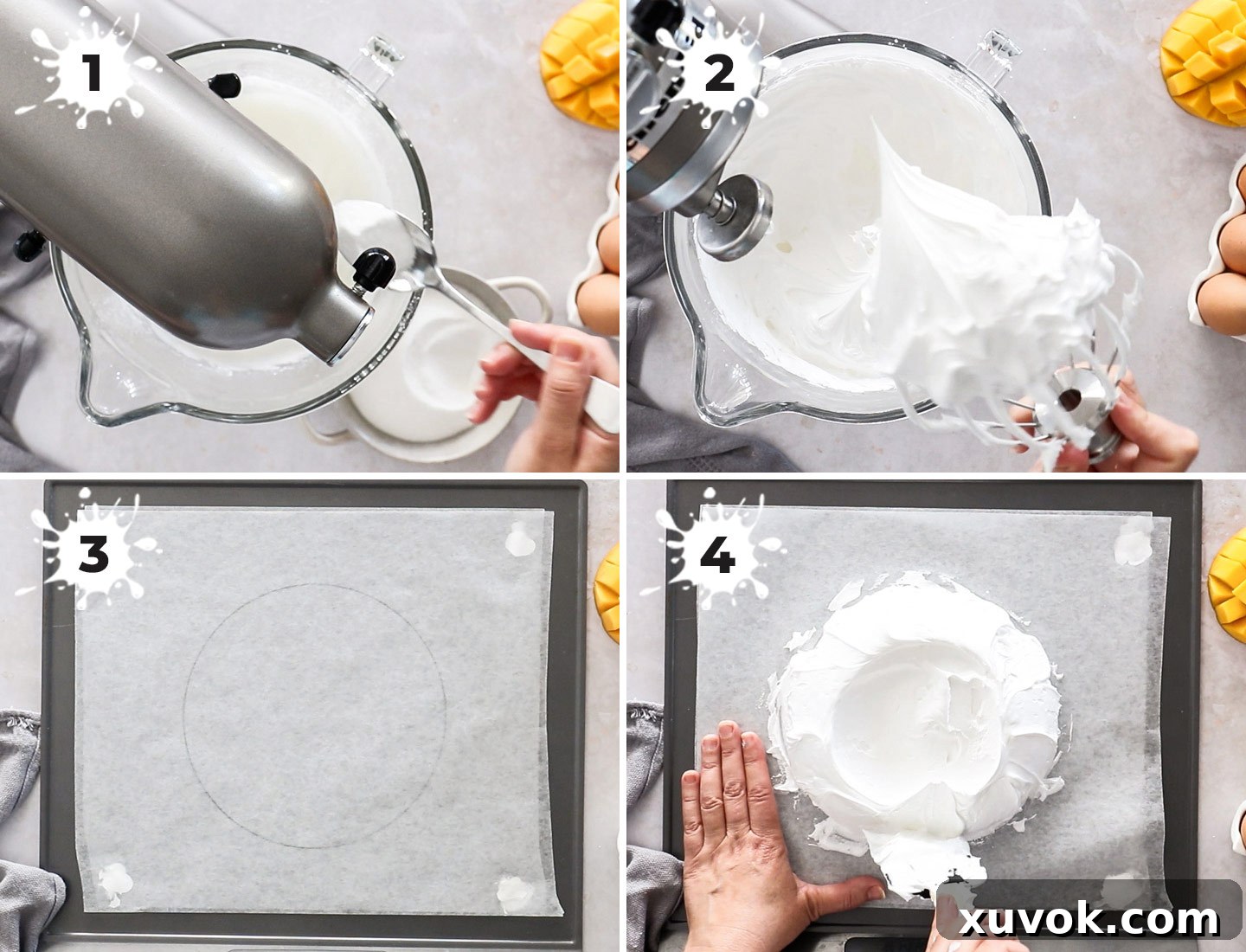
For precise quantities and detailed instructions, refer to the recipe card below.
- Achieve Soft Peaks with Egg Whites: Begin by beating your room-temperature egg whites in a very clean bowl (free from any grease). Start on a low-medium speed to allow air to incorporate gradually. Continue beating until you achieve soft, billowy white peaks – this usually takes about 2-3 minutes. The mixture should hold its shape somewhat but still have a gentle curve at the tip.
- Incorporate Cream of Tartar and Cornflour: Once soft peaks are formed, stop the mixer. Sift the cream of tartar and cornflour directly over the egg whites. This ensures they are evenly distributed. Turn the mixer back to low speed to gently combine these stabilizing agents.
- Slowly Add Sugar: This is a critical step for a stable, glossy pavlova. With the mixer still on low, begin adding the caster sugar, one tablespoon at a time. It’s vital to add it very slowly, counting to 20 seconds between each addition. This deliberate pace allows the sugar crystals ample time to dissolve into the egg whites, preventing a grainy texture and promoting a strong, stable meringue structure. This step might take 7-10 minutes, but it’s worth every second.
- Beat to Stiff, Glossy Peaks: After all the sugar has been incorporated, increase the mixer speed to medium-high (avoid the highest setting, as this can overbeat the mixture quickly). Continue beating until the meringue is incredibly thick, brilliantly glossy, and forms stiff, upright peaks when you lift the whisk. To test for dissolved sugar, rub a tiny bit of the meringue between your thumb and forefinger; it should feel perfectly smooth, with no gritty sugar crystals remaining.
- Shape the Pavlova: Prepare a baking tray lined with baking paper, marked with an 8-inch circle as a guide. Carefully spoon the meringue mixture onto the center of the circle. Using a spatula, gently coax the meringue into your desired circular shape, building up the sides slightly higher than the center to create a natural well for toppings. You can make small decorative sweeps from the bottom to the top all the way around for an elegant finish.
- Bake Low and Slow: Place the shaped meringue into a preheated oven set to a low temperature (120C / 245F / 110C fan forced). Bake for 1 ½ hours. The low temperature allows the pavlova to dry out and crisp up without browning too quickly, creating that perfect crunchy shell.
- Slow Cooling is Key: Once the baking time is complete, turn off the oven but leave the pavlova inside, undisturbed. Let it cool completely in the cooling oven for at least 2 hours, or even overnight. This gradual cooling process is crucial for preventing cracks and ensuring the meringue sets properly, resulting in that delightful soft center. Once fully cooled, you can either leave it in the oven (with the door slightly ajar if it’s a very humid environment) or transfer it to a cool, dry place like a pantry (never the fridge before topping, as humidity can soften it).
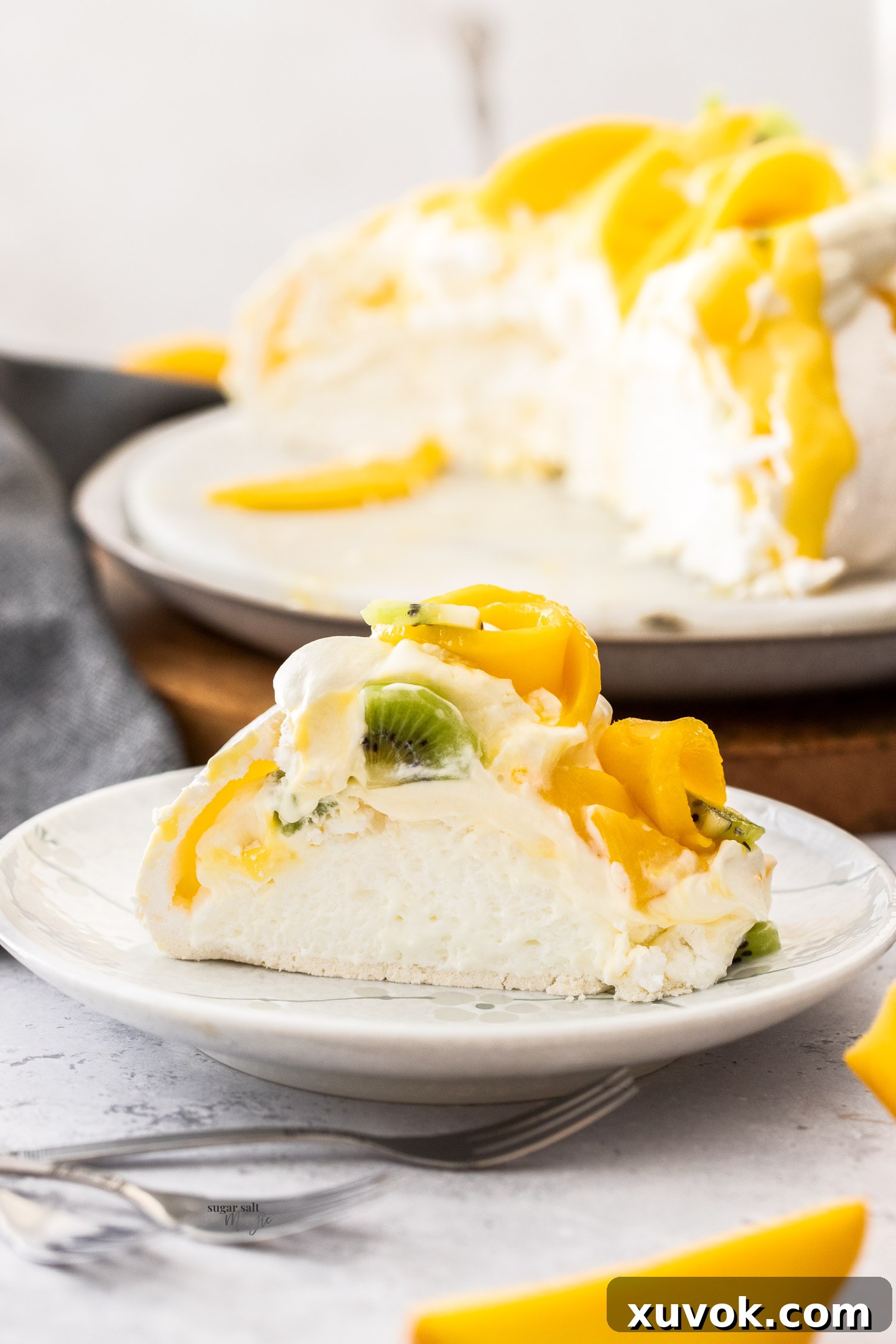
- Decorate with Delightful Toppings: When ready to serve, gently whip cold thickened cream (or heavy cream) to soft peaks. Remember, don’t sweeten the cream, as the pavlova itself provides ample sweetness. For this mango pavlova, gently fold most of the vibrant homemade mango curd into the whipped cream, then dollop generously onto the cooled meringue shell. Artistically arrange slices of fresh mango and kiwi fruit on top, then finish with a final drizzle of the remaining mango curd.
Expert Tips for Pavlova Perfection
- Avoid Overbeating: It might seem counterintuitive, but you can overbeat pavlova. Whipping egg whites on too high a speed for too long can result in an unstable meringue with a coarse texture, which leads to cracking and “weeping” (sugar syrup leaking out) during baking. Instead, opt for low to medium speeds over a longer duration for a fine, stable foam.
- Timing is Everything for Sugar Addition: Don’t rush to add the sugar. The egg whites need to develop some initial structure before sugar is introduced. Wait until they reach the soft peak stage; this provides a stable base for the sugar to dissolve into gradually.
- Slow and Steady Wins the Sugar Race: As emphasized in the step-by-step guide, adding sugar one tablespoon at a time, with a 20-second pause between additions, is paramount. This slow, deliberate method ensures the sugar fully dissolves, resulting in a smooth, stable, and glossy meringue that’s less prone to cracking. This step alone can elevate your pavlova from good to exceptional.
- Cleanliness is Next to Pavlova-ness: Ensure your mixing bowl and whisk attachment are impeccably clean and completely grease-free. Even a tiny speck of fat (from residual butter, oil, or egg yolk) can prevent egg whites from whipping up properly, resulting in a flat, dense meringue. Wipe your bowl and whisk with a paper towel dipped in lemon juice or vinegar for extra assurance.
- Oven Temperature is Crucial: Pavlova bakes best at a low, consistent temperature. A too-hot oven will cause the exterior to brown too quickly and crack excessively, while the interior may remain uncooked or dense. A low temperature allows the meringue to dry out slowly and evenly, developing that desired crisp crust and soft center.
- Resist the Urge to Peek: Opening the oven door frequently, especially during the baking and cooling phases, can cause drastic temperature fluctuations that lead to cracking and collapse. Trust the process and keep the oven door closed until the specified cooling time has passed.
For even more in-depth tips, tricks, and a comprehensive troubleshooting guide, be sure to check out my dedicated post on how to make perfect pavlova.
Important note: Pavlovas crack, and that is absolutely fine and expected! By design, achieving a large pavlova with absolutely no cracks is nearly impossible. While following the steps closely can minimize large, dramatic fissures, some cracking is inevitable and even adds to its rustic charm. Often, there’s a natural gap between the crunchy outer shell and the soft filling, leading the top to gently crack and settle. Embrace these imperfections; they are part of the pavlova’s unique character. Don’t let anyone tell you that a truly perfect pavlova must be crack-free!
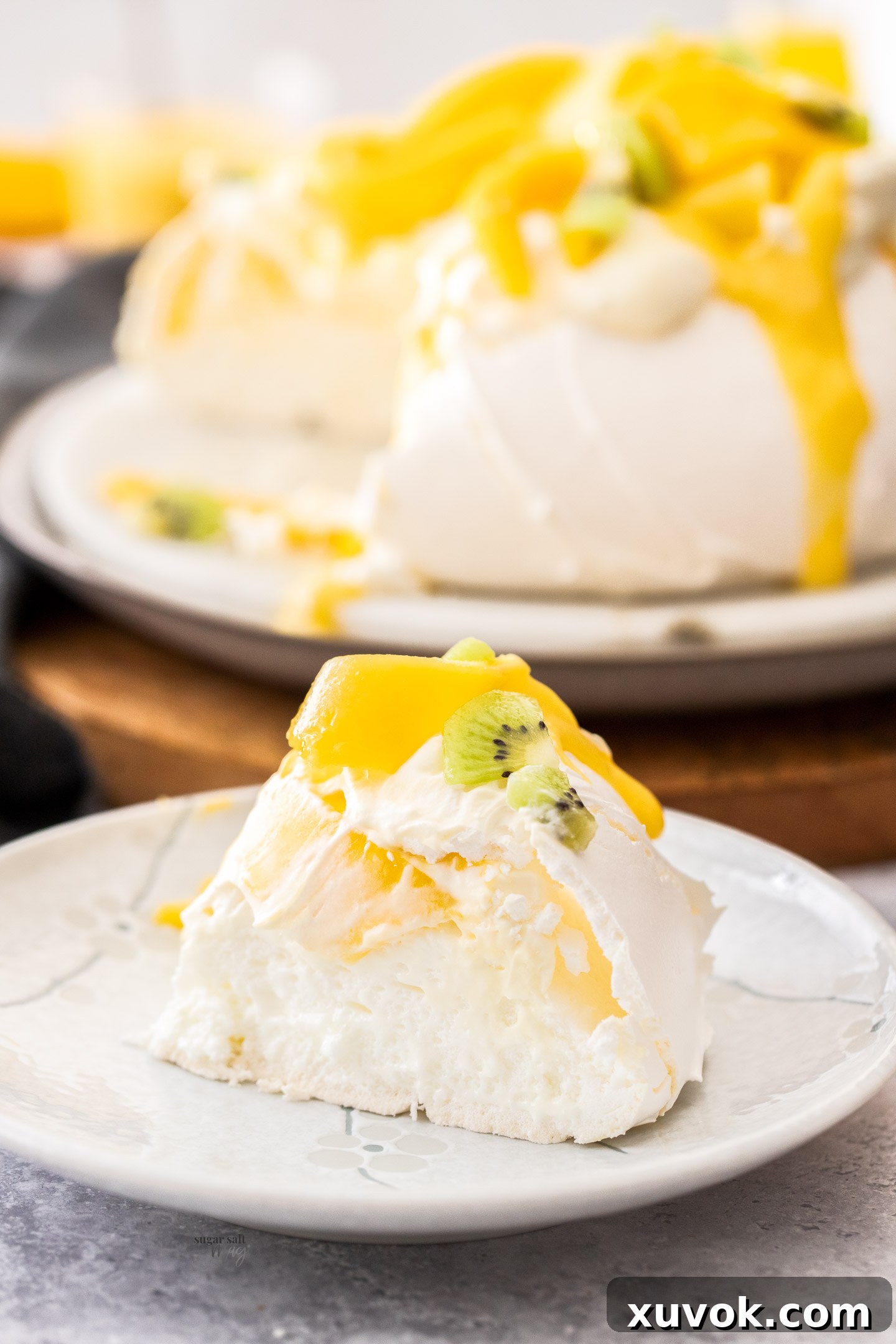
Beautifully Cutting Mango for Pavlova
The presentation of your pavlova is key, and perfectly cut mangoes can make all the difference. Here are several elegant ways to prepare your mango for topping, ensuring both beauty and ease of eating:
- Cubes (Diced Mango): This is a popular and straightforward method. First, slice off the “cheeks” of the mango by cutting down past the large, flat seed. With the flesh-side up, gently score the mango flesh in a grid pattern using a small, sharp knife, being careful not to cut through the skin. Then, simply push the skin from the outside in, causing the scored cubes to pop up. Slice the cubes off with your knife and arrange them artfully on your pavlova.
- Elegant Slices: For a more dramatic and swirled effect, thin mango slices are ideal. After slicing off the mango cheeks, gently separate the flesh from the skin using a spoon or a thin, flexible knife. Place the mango flesh flat on a cutting board and slice it thinly into elegant strips or crescent shapes. These can then be artfully arranged or gently swirled into the cream on your pavlova for a truly sophisticated look. You can also use the “glass method”: cut the cheek off a mango, then place the edge of the mango flesh onto the rim of a sturdy glass. Press down firmly, allowing the flesh to fall into the glass while the skin is peeled away on the outside. Then, simply use a sharp knife to slice it thinly.
- Attractive Wedges: For a more substantial and rustic presentation, mango wedges work wonderfully. Again, start by slicing off the mango cheeks. Then, cut each cheek into 3-4 lengthwise wedges. Carefully run a knife between the flesh and the skin to separate them. These plump wedges can be fanned out or arranged dynamically on your pavlova, offering a generous burst of tropical flavor.
Frequently Asked Questions About Pavlova
Yes, this mango pavlova recipe is inherently gluten-free, provided you ensure that the cornflour (cornstarch) you use is certified gluten-free. Most cornflour products are naturally gluten-free, but it’s always wise to check the packaging to avoid cross-contamination if catering to strict dietary needs.
The name “Pavlova” refers to a grand dessert created in honor of the renowned Russian ballerina Anna Pavlova during her tours of Australia and New Zealand in the 1920s. While historical debates continue over its exact origin, the dessert as we know it today – a large meringue with a crisp crust, soft, fluffy interior, and lavish fruit and cream toppings – embodies the grace and lightness associated with the ballerina herself. It has become a beloved national dish in both Australia and New Zealand.
While pavlova is indeed a type of meringue, there’s a crucial distinction in the final product. Traditional meringues are typically smaller, baked until they are dry and crisp all the way through, dissolving instantly in your mouth. A pavlova, on the other hand, is characterized by its unique dual texture: a beautifully crisp, brittle outer shell that encases a distinctly soft, chewy, and marshmallow-like interior. This texture is achieved through the addition of cornflour and an acidic agent, which influence the meringue’s structure during baking.
Absolutely, and in many cases, it’s highly recommended! Making the pavlova shell the day before is ideal. The crucial point is to allow the meringue to cool completely and slowly in the turned-off oven. Once cooled, store the undecorated shell in an airtight container in a cool, dry place (like a pantry) for up to 1-2 days. Avoid storing it in the refrigerator as humidity can soften the crisp shell. Only add the whipped cream and fresh fruit toppings just before serving to maintain the textural integrity of the pavlova.
Yes, mini pavlovas are a fantastic option for individual servings and often result in fewer cracks! Follow the same recipe, but pipe or spoon smaller mounds onto your baking paper. Adjust baking time accordingly; they will likely bake faster (around 45-60 minutes) but still require slow cooling in the oven.
Yield and Storage Guidelines
This magnificent pavlova is designed to generously serve 8-10 people, making it an ideal centerpiece for gatherings, celebrations, or simply a luxurious treat for a smaller group with delightful leftovers.
For the best possible texture and appearance, it is paramount not to decorate your pavlova until closer to the moment of serving. Whipped cream and fresh fruit, while delicious, will gradually soften the delicate, crunchy meringue shell over time. To preserve that irresistible crisp exterior, assemble your pavlova within 1-2 hours of serving.
If you happen to have any delectable leftovers of the decorated pavlova, store them promptly in an airtight container in the refrigerator. While the meringue will soften over time once topped, it will remain delicious for up to 3 days. The flavors will meld beautifully, offering a slightly different but still enjoyable experience.
The pavlova shell itself, prior to being adorned with cream and fruit, is remarkably robust for make-ahead convenience. You can prepare the shell a day or two in advance and store it in an airtight container in a cool, dry place, such as a pantry or a cool cupboard. It will maintain its crispness and soft interior perfectly. For longer storage, the pavlova shell can also be frozen for up to 3 months in an airtight container. Thaw it at room temperature before decorating.
More Irresistible Recipes You’ll Love
If you’ve fallen in love with the magic of pavlova and meringues, or if you simply adore tropical flavors, explore these other delightful recipes:
- Mango Mousse Cake: Light, airy, and bursting with mango flavor.
- Chocolate Pavlova: A rich and decadent twist on the classic.
- Pavlova Roll: An elegant rollable meringue, perfect for slicing.
- Pavlova Grazing Board: A fun, customizable dessert experience for entertaining.
- Chocolate Meringue Cake: Layers of crispy meringue and creamy chocolate delight.
- Pavlova Wreath: A beautiful, festive presentation for any occasion.
- Swirled Chocolate Meringues: Bite-sized crispy treats with a chocolatey swirl.
Did you try this mango pavlova recipe?
Leaving a rating and comment below the recipe is so helpful!
Hungry for more? Subscribe to the newsletter for free recipes straight to your inbox. Also, follow along on Facebook, Pinterest and Instagram.
Mango Pavlova
10
serves
15
minutes
1
hour
30
minutes
3
hours
4
hours
45
minutes
Rate
Pin
Ingredients
FOR THE PAVLOVA BASE
- ¾ cup egg whites (approximately 6 large eggs), room temp
- 1 ½ cups caster sugar (superfine sugar ) (300g / 10.5oz) (notes)
- 3 teaspoons corn flour (cornstarch)
- 1 ½ teaspoons cream of tartar (notes)
FOR TOPPING
- 1 cup thickened cream (or whipping cream / heavy cream) (250ml)
- 1 large mangos, peeled and sliced thinly
- ⅓ cup mango curd, optional
For best results, always weigh ingredients where a weight is provided
Equipment
-
Stand mixer with whisk attachment (best)
-
Electric mixer and large bowl (second best)
-
Spatula
-
Baking sheet
Instructions
-
Preheat oven to 120C / 245F / 110C fan forced. Trace around an 8 inch cake tin with pencil onto a sheet of baking paper. Place another sheet on top and set aside.
-
In the bowl of a stand mixer, with the whisk attachment (or using a handheld beater), beat the egg whites on low-medium until soft peaks form. About 5 minutes.
-
Turn the mixer down a little and begin adding the sugar, one tablespoon at a time, counting to 20 between each addition. Once all the sugar is all added, increase the speed to medium-high (not highest setting) and continue to whisk until the egg whites are thick and glossy and at stiff peak stage. Test the mixture by rubbing a little between your finger and thumb. It should be smooth. If it is still grainy, keep beating until it is smooth when you test it.
-
Sift over the corn flour and cream of tartar and whisk for a few seconds, just long enough to incorporate it in.
-
Take the sheet of baking paper with the circle on it and dot little bits of meringue under the corners and press it down onto the tray. Do the same with the second sheet and place that on top.
-
Use a spatula to spoon the mixture onto the prepared baking tray and gently coax it into the shape of a circle using the drawn line as a guide. Now make small sweeps from the bottom to the top all the way round and finally level the top out.
-
Place in the oven and bake for 1 ½ hours then turn the heat off and leave the pavlova in the oven, undisturbed, for at least 2 hours (notes).
-
You can make the mango curd, while the pavlova bakes.
-
Use a handheld electric beater or balloon whisk to whip the cream to soft peaks. Chill until required.
-
Fold most of the mango curd through the cream then dollop gently on top of the pavlova. Top with the sliced mango and kiwi fruit, then drop over the remaining curd.
-
Please take a moment to leave a comment & rating. It’s appreciated and so helpful.
Notes
- If you’re using an electric hand mixer instead of a stand mixer, you might find it easier to split the egg whites into two batches and whip them separately, then gently combine them. Whipping 6 egg whites at once can be challenging for some handheld mixers.
- Oven temperatures can vary significantly. If you notice your pavlova starting to turn golden during baking, your oven may be running too hot. Reduce the temperature slightly to prevent over-browning.
- Always use caster sugar (superfine sugar) exclusively for pavlova. Icing sugar (powdered sugar), granulated sugar, or brown sugar will not yield the correct texture or stability. Caster sugar dissolves quickly, preventing overbeating of the egg whites.
- Cream of tartar can be substituted with an equal amount (1:1 ratio) of white vinegar or lemon juice if you don’t have it on hand.
- For topping ideas, embrace seasonal fruits! Beyond mango, classic choices include strawberries, kiwi fruit, passion fruit, and raspberries. Don’t shy away from blueberries, blackberries, or even delicate slices of citrus fruits with a hint of zest for a vibrant touch.
- To save time on serving day, you can bake your pavlova shell in the evening and leave it in the turned-off oven overnight to cool completely. This ensures maximum crispness and stability.
- For further guidance and solutions to common pavlova issues, refer to the detailed tips, tricks, and troubleshooting section earlier in this post.
More Information
These links will take you up to the post – just scroll down to get back to the recipe card.
- Step-by-step photos
- Tips and tricks
- How to cut mango for pavlova
- FAQs
- Yield and storage
MORE AUSSIE DESSERTS
244
kcal
Marie Roffey
Dessert
Australian
Have you tried this recipe?
Don’t forget to leave a rating and comment below and let me know how it was! I love hearing from you. Nutrition information is approximate and derived from an online calculator. The brands you use may cause variations.
Calories from Fat 99