An Irresistibly Decadent Caramel Crème Brûlée Tart Recipe
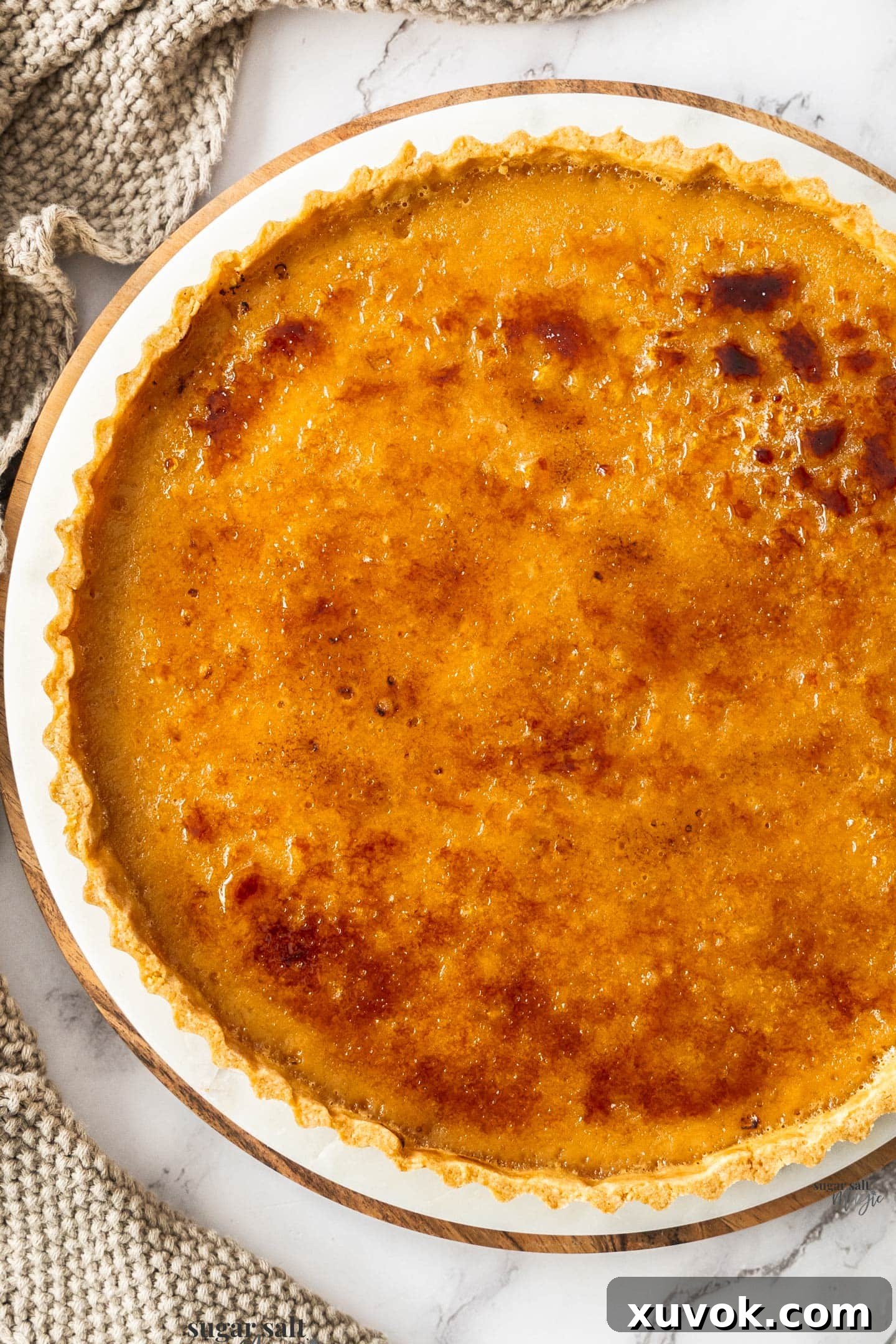
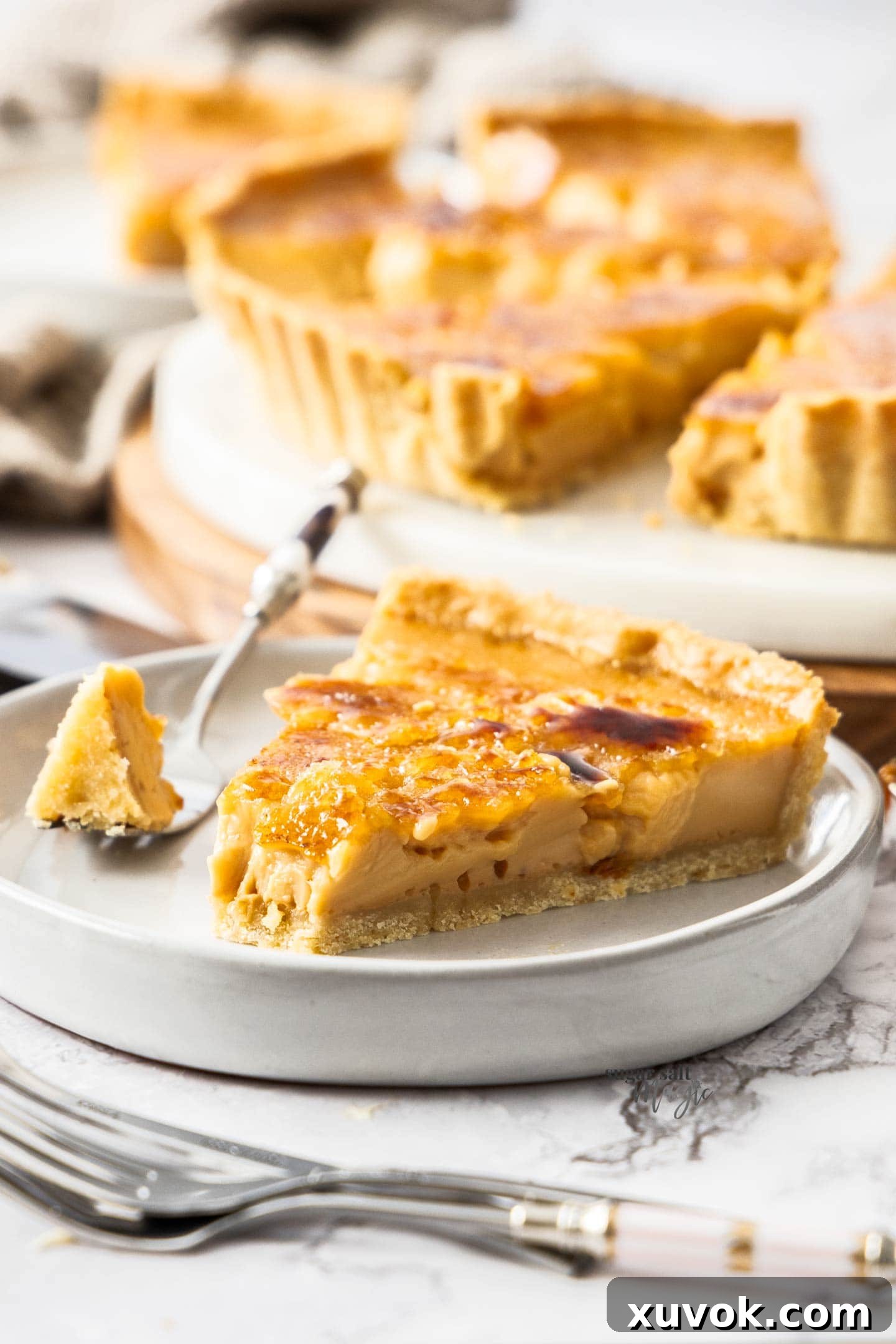
Prepare to elevate your dessert game with this stunning Caramel Crème Brûlée Tart. This isn’t just any dessert; it’s a masterpiece that promises a luxurious experience with every bite, making you feel as though you’ve indulged at a Michelin-star restaurant right from the comfort of your home. Its visual appeal is undeniable, boasting a perfectly golden, crackable sugar crust atop a silky-smooth caramel custard, all nestled within a crisp, buttery pastry shell.
Imagine the delightful contrast: the satisfying *crack* of caramelized sugar giving way to a rich, creamy, caramel-infused custard. This exquisite filling melts in your mouth, offering a symphony of sweet and subtly salty notes. The foundation of this indulgence is a simple yet incredibly flaky and tender pastry crust, providing the ideal counterpoint to the decadent filling. What might seem like a complex creation is, in fact, surprisingly achievable for any home baker.
My culinary journey with crème brûlée has been extensive, featuring beloved variations such as my rich chocolate crème brûlée and aromatic coffee crème brûlée. For this tart iteration, I envisioned a distinct caramel flavor – a personal favorite – enhanced with just a hint of salt. Drawing inspiration from my popular salted caramel pots de creme, this recipe perfects the balance, delivering a dessert that is both deeply comforting and sophisticated.
This comprehensive guide will walk you through each step, from crafting the ideal pastry crust to achieving that iconic brûléed top. We’ll explore ingredient choices, essential techniques, and clever time-saving tips, ensuring your Caramel Crème Brûlée Tart is nothing short of perfection. Get ready to impress your guests, or simply treat yourself to a slice of pure culinary magic.
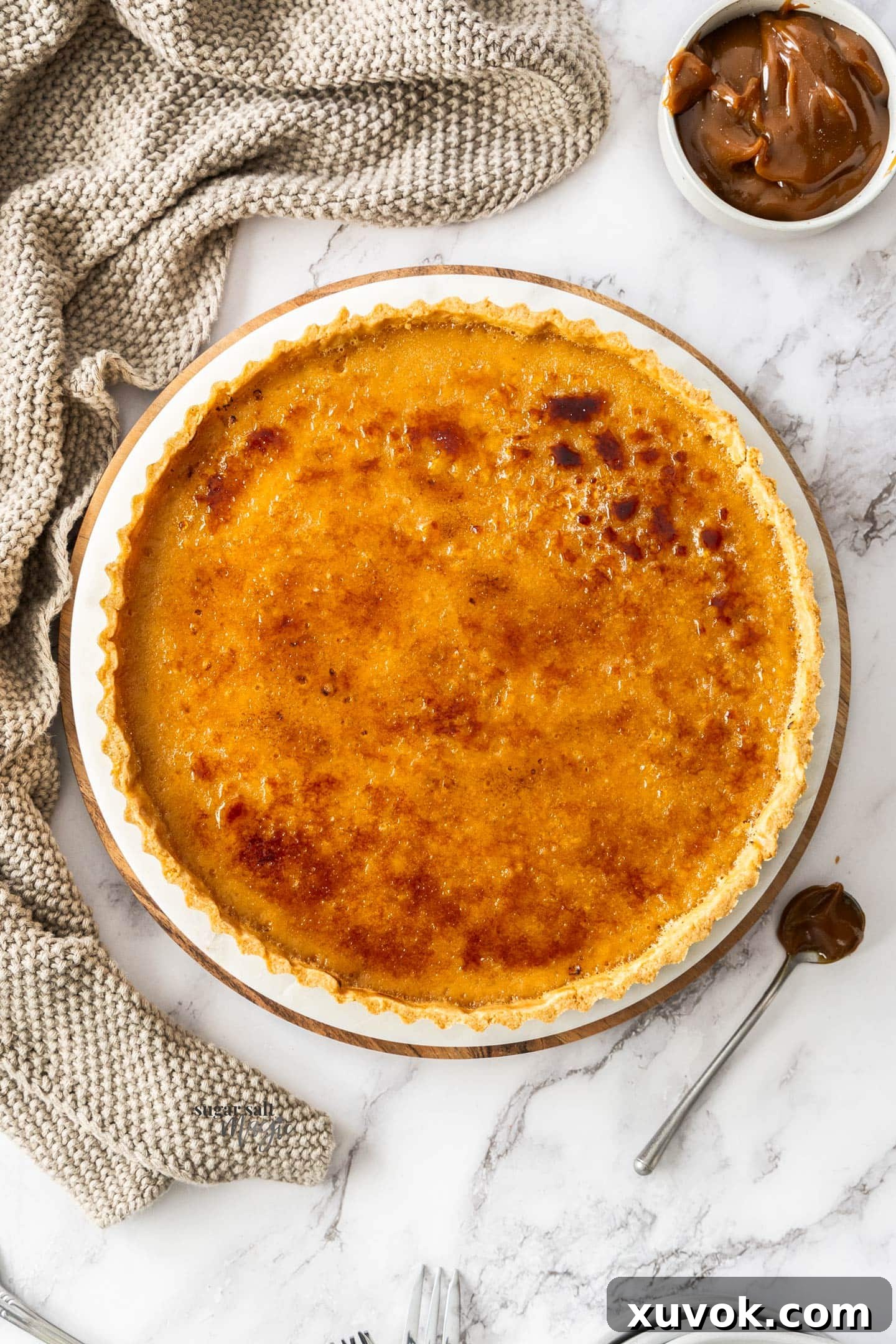
Table of contents
- The Magic Behind the Caramel Crème Brûlée Tart
- Essential Ingredients for Your Tart
- Step-by-Step Guide to Crafting Your Caramel Crème Brûlée Tart
- 1. Mastering the Tart Crust Dough
- 2. Shaping and Preparing the Crust
- 3. The Art of Blind Baking
- 4. Creating the Silky Caramel Filling
- 5. Filling and Baking Your Tart
- 6. Achieving the Perfect Brûlée Top
- Expert Tips and Tricks for Perfection
- ⏰ Time-Saving Strategies for Busy Bakers!
- Storage and Make-Ahead Advice
- More Irresistible Dessert Recipes You’ll Love
Never Miss a Recipe!
Unlock a world of deliciousness! Get the latest, most mouth-watering recipes straight to your inbox and be the first to know about new culinary adventures. Join our community of passionate food lovers today!
Sign up for our newsletter to receive exclusive recipes and baking tips!
Essential Ingredients for Your Caramel Crème Brûlée Tart
Crafting this exquisite caramel crème brûlée tart relies on a handful of high-quality, yet readily available ingredients. While using store-bought pastry is an option for convenience, I highly recommend making your own from scratch. The difference in taste and texture is profound, yielding a delicate, flaky crust that perfectly complements the rich filling. Plus, you’ll find that homemade pastry is far simpler to prepare than you might imagine.
Each ingredient plays a crucial role in achieving the perfect balance of flavor and texture. Let’s delve into what you’ll need to create this show-stopping dessert, along with a few insights to ensure your success.
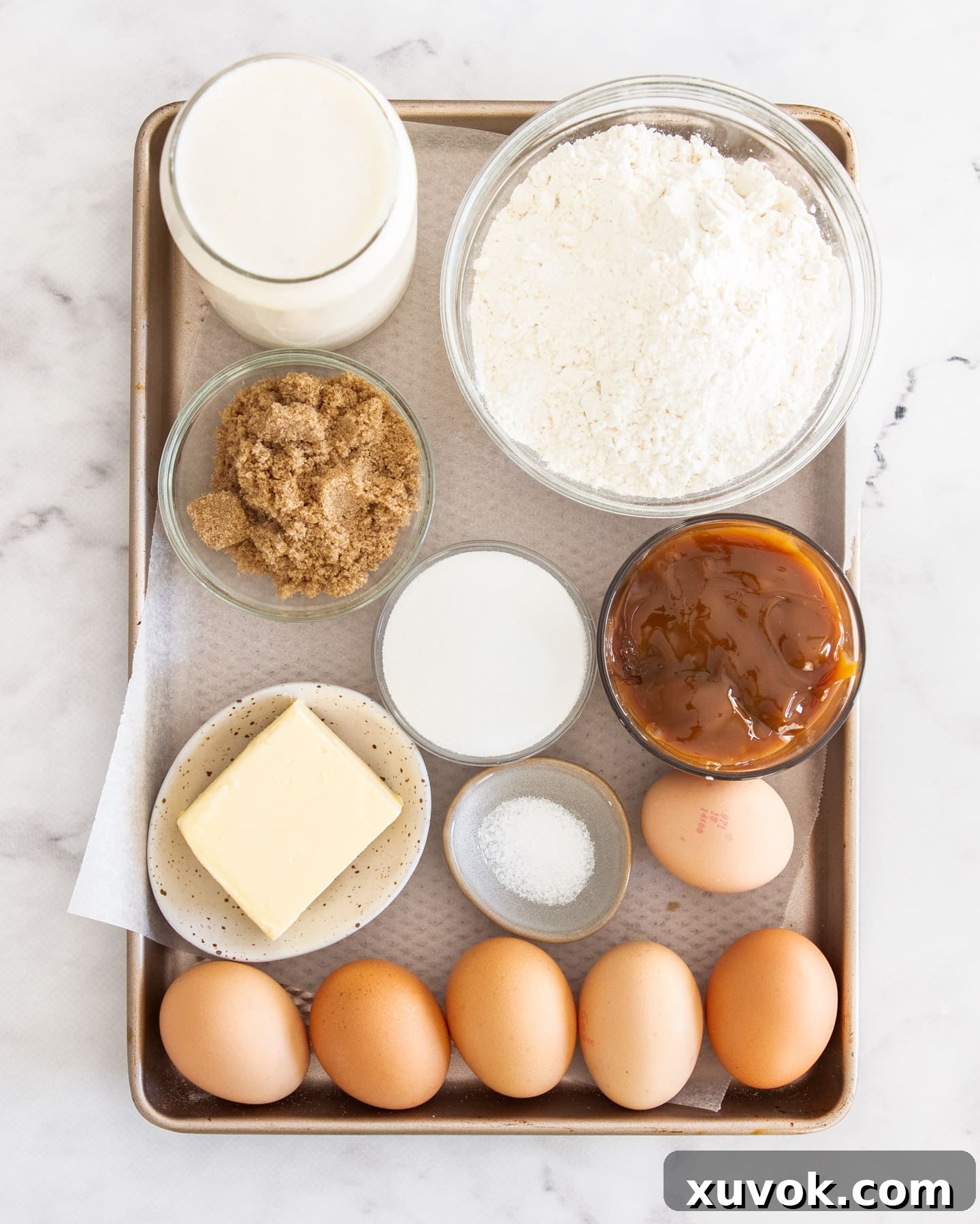
For detailed measurements and step-by-step instructions, please jump to the full recipe card below.
- Flour: For the pastry, a standard plain flour or all-purpose flour is all you need. It provides the essential structure for a tender and flaky crust.
- Sugar: We use two types of sugar for distinct purposes. A small amount of light brown sugar in the pastry crust subtly enhances the overall caramel flavor, adding a touch of molasses depth. For the signature crisp topping, superfine caster sugar is preferred as it melts and caramelizes quickly and evenly under the torch, creating that perfect, shattery shell.
- Butter: Unsalted butter is crucial for the pastry. Ensure it is very cold and cut into small cubes. Cold butter creates pockets of steam during baking, which results in that desirable flaky texture. Using unsalted butter also gives you more control over the salt content in your tart.
- Eggs: Eggs are vital for both the crust and the filling. One large cold egg helps bind the pastry dough, contributing to its tenderness. For the crème brûlée filling, you’ll need one whole large egg and four large egg yolks. The yolks contribute significantly to the custard’s richness, color, and silky smooth texture. Don’t fret about leftover egg whites; they can be stored in the fridge for 2-3 days or frozen for future use in meringues, omelets, or other recipes.
- Caramel Sauce: To simplify this recipe without compromising on flavor, I recommend a good quality, store-bought thick caramel sauce. Bonne Maman caramel is an excellent choice due to its rich flavor and ideal consistency. Alternatively, a can of dulce de leche, such as Nestle Top N Fill Caramel, works wonderfully. The key is to use a thick caramel; runny sauces might affect the custard’s setting ability. If your chosen caramel is on the thinner side, consider adding an extra egg yolk to the filling for added richness and stability.
- Cream: The crème brûlée filling demands a cream with a high milk fat content, typically around 35%. This is commonly known as thickened cream or whipping cream in some regions, and heavy cream or heavy whipping cream in others. The high fat content is essential for achieving the luxurious, velvety texture of the custard.
- Salt: A touch of sea salt or kosher salt is incorporated into both the caramel filling and a pinch in the tart shell. This small addition is a game-changer, balancing the sweetness of the caramel and elevating all the other flavors. The contrast of sweet and salty is what makes this tart truly irresistible.
With these carefully selected ingredients, you’re well on your way to creating a Caramel Crème Brûlée Tart that will delight everyone who tastes it!
Step-by-Step Guide to Crafting Your Caramel Crème Brûlée Tart
The idea of making both a tart shell and a crème brûlée from scratch might seem daunting at first glance. However, I assure you that this recipe is designed to be straightforward and incredibly rewarding. The pastry comes together effortlessly in a food processor, requiring minimal handling before being rolled and fitted into your tart pan. The caramel crème brûlée filling is even simpler, involving just a few quick steps to achieve its signature smoothness.
This detailed section will guide you through each stage of the process, ensuring that even novice bakers can achieve a professional-looking and tasting tart. Precision in each step contributes to the final masterpiece, so let’s get baking!
For precise quantities and a complete list of instructions, please refer to the recipe card at the bottom of this page.
1. Mastering the Tart Crust Dough
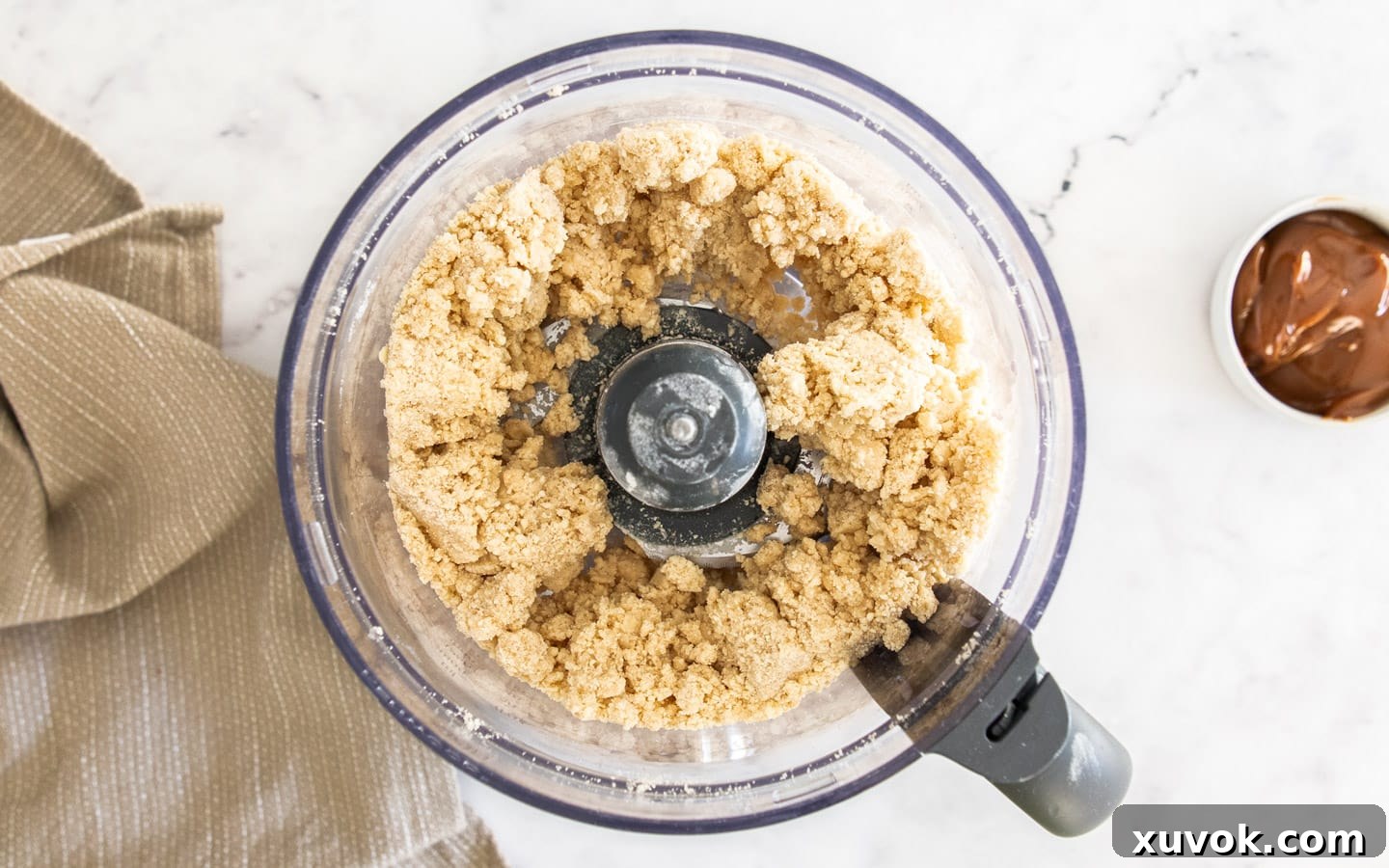
The journey to a perfect tart begins with a perfectly flaky crust. In the bowl of your food processor, combine the flour, brown sugar, and cold, cubed unsalted butter. Pulse these ingredients until the butter is broken down into tiny pieces, roughly the size of lentils. This is a critical step for a flaky crust, as these small butter pieces create steam pockets during baking. Next, add the cold egg and pulse again until the mixture resembles coarse breadcrumbs. Be careful not to overmix at this stage; we want distinct crumbs, not a smooth paste. Finally, with the food processor running on low speed, gradually drizzle in the cold water. Continue to blend until the dough just begins to clump together and form larger masses. This indicates it’s ready to be turned out and lightly kneaded.
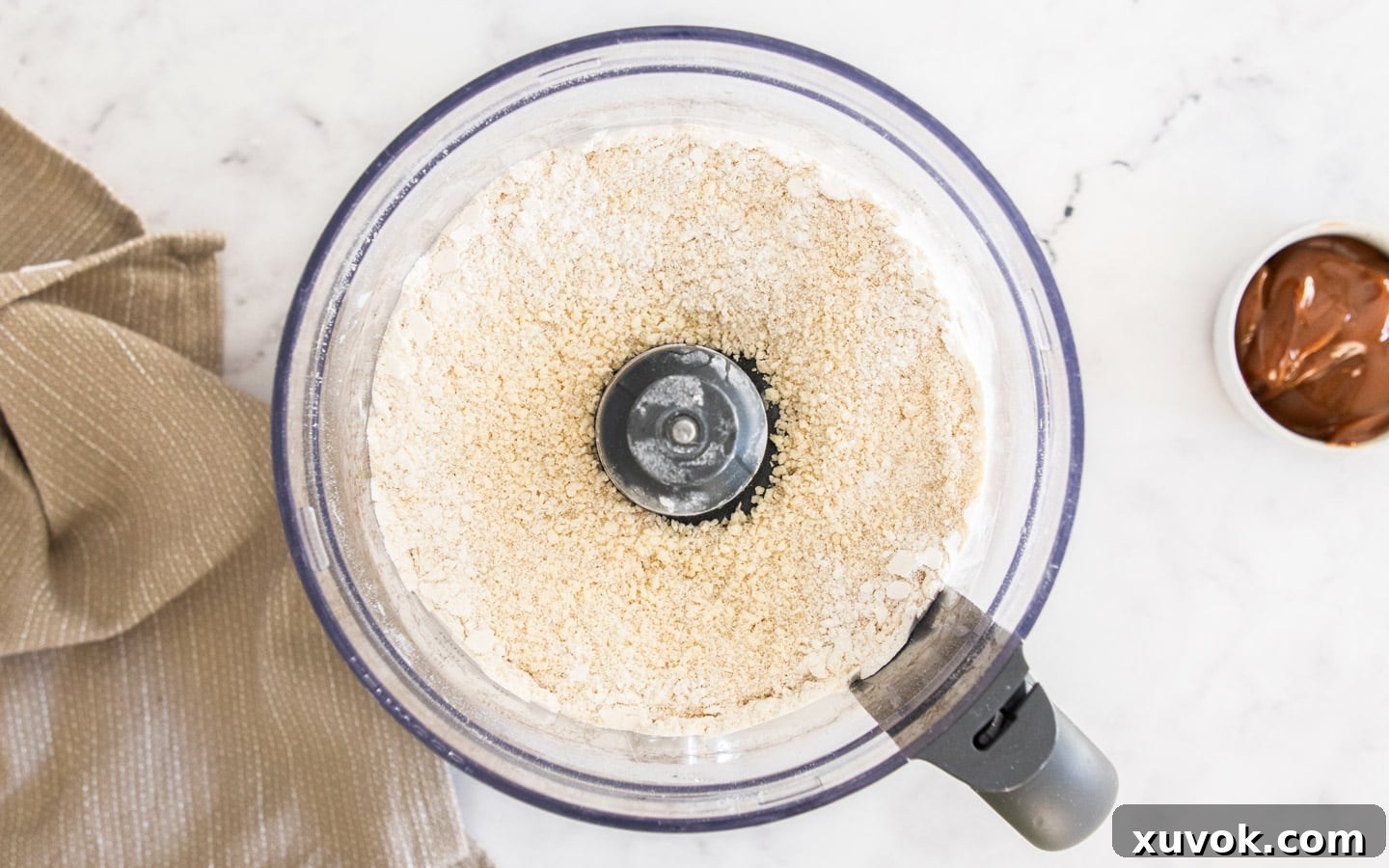
As you blend, observe the dough’s consistency. It should transform from loose crumbs to larger, cohesive clumps, as shown in the image below. This texture is ideal for creating a tender, flaky crust. Once it reaches this stage, avoid further processing to prevent overworking the gluten, which can lead to a tough crust.
2. Shaping and Preparing the Crust
Once your dough has formed clumps, turn it out onto a lightly floured surface. Gently bring the clumps together to form a cohesive disk. Knead it just enough to make it mostly smooth, but don’t overwork it. Next, roll out the dough to an even thickness of about 4mm (1/6 inch) and approximately 11 inches in diameter, larger than your tart pan to allow for overhang. To effortlessly transfer the delicate dough to your tart pan, drape one side of the rolled dough over your rolling pin, then lift and carefully unroll it into the pan. This technique minimizes stretching and tearing.
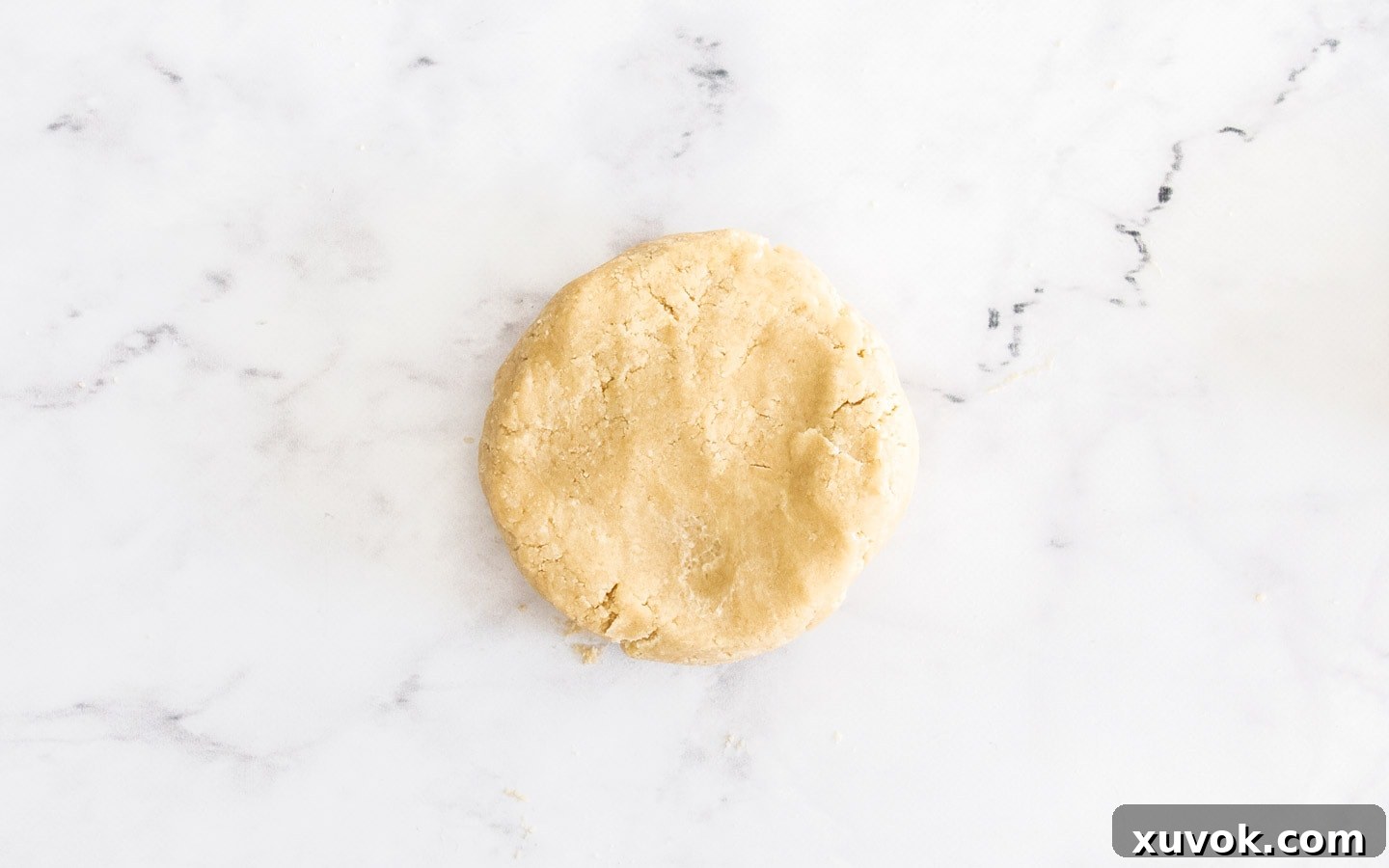
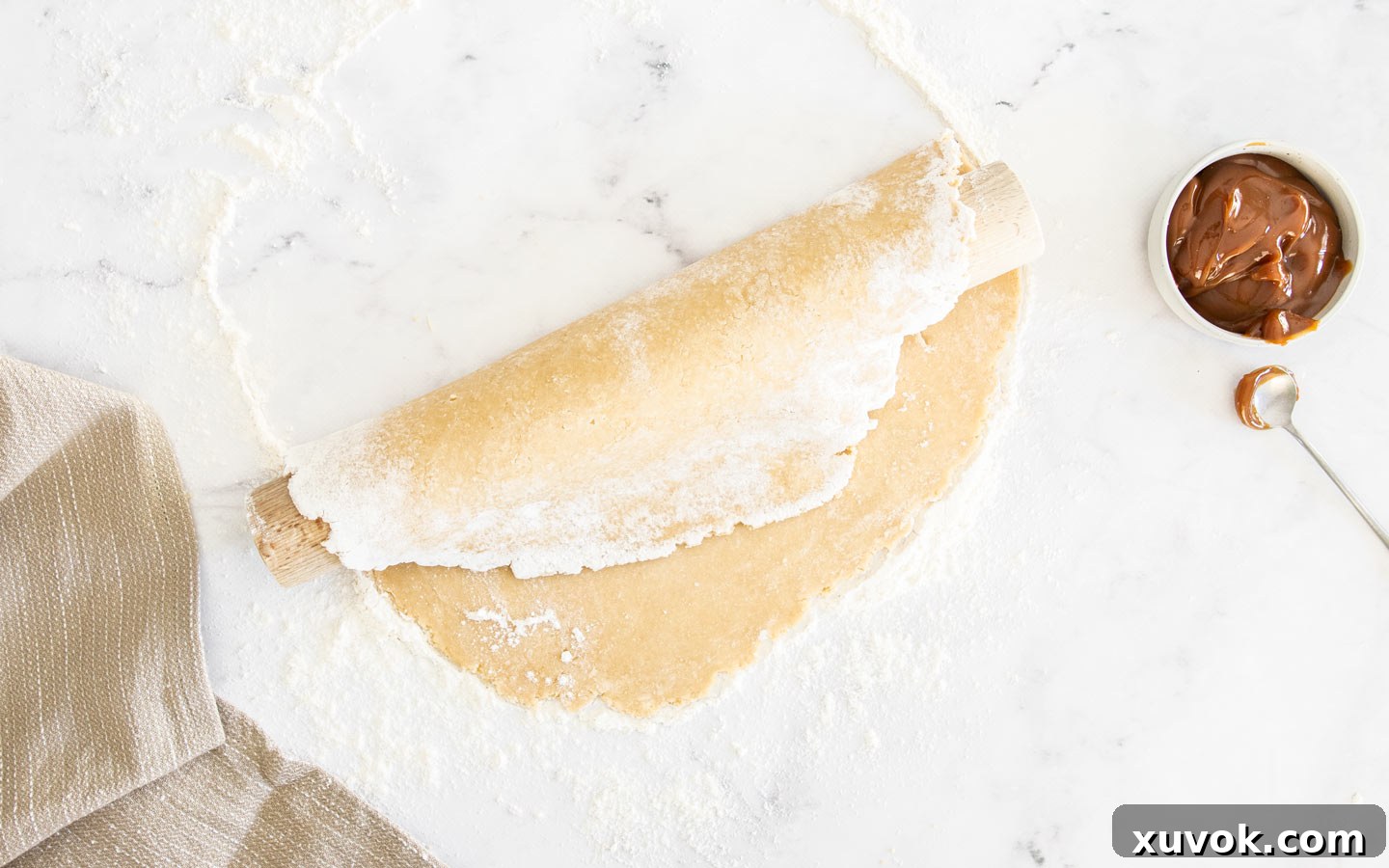
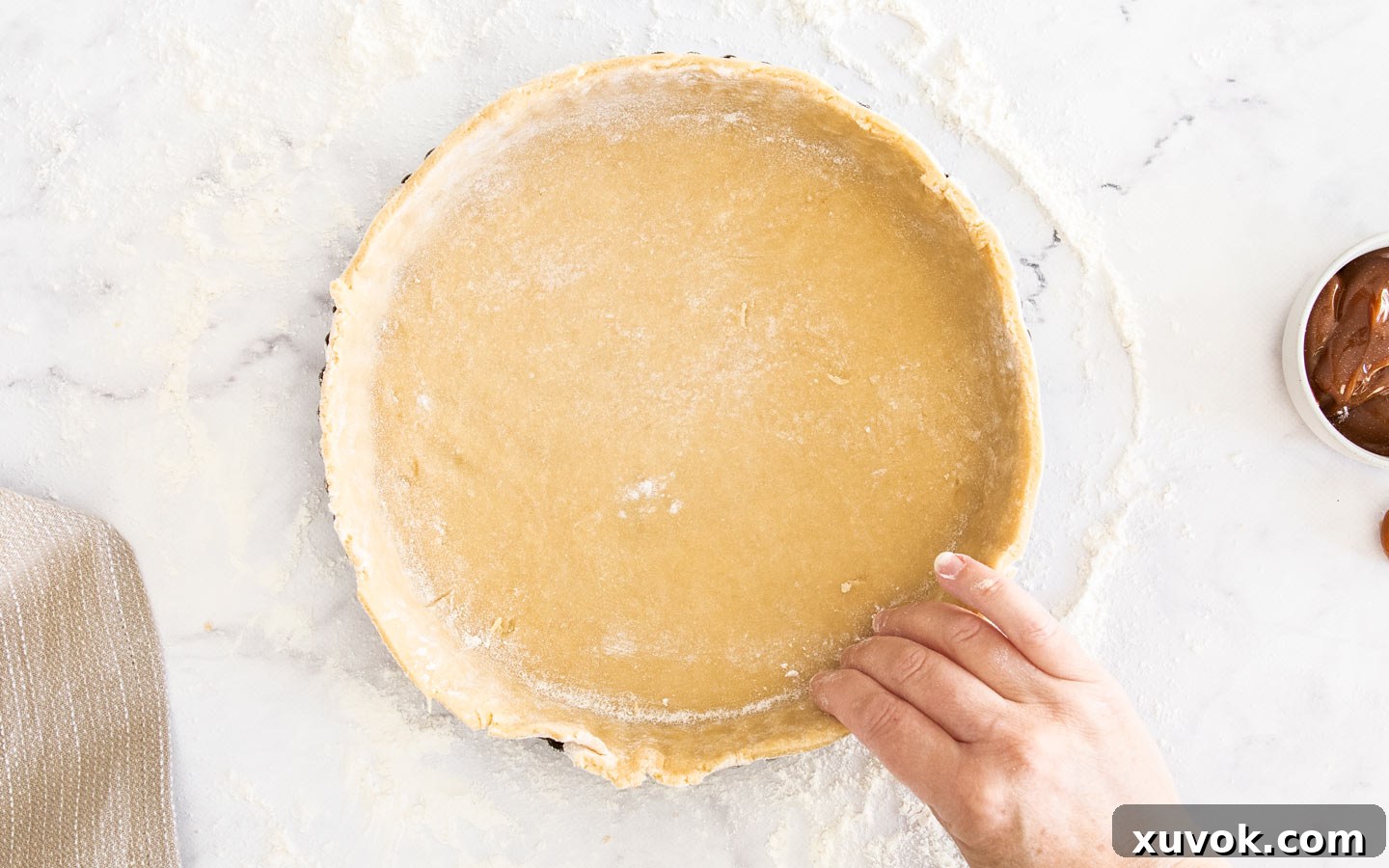
Once the dough is in the pan, gently press it downwards into the corners and up the fluted sides, ensuring it fits snugly. Leave any excess pastry hanging over the edge for now. If the overhang is too heavy and causes the crust to pull away or sag, you can carefully trim a little with scissors. The most crucial step now is chilling: refrigerate the tart shell for a minimum of 2 hours, or ideally, up to 3 days. This chilling period is essential for the butter to firm up and for the gluten to relax, which prevents the crust from shrinking excessively during baking and ensures a beautifully crisp and even shell, ready to hold your luscious caramel filling.
3. The Art of Blind Baking
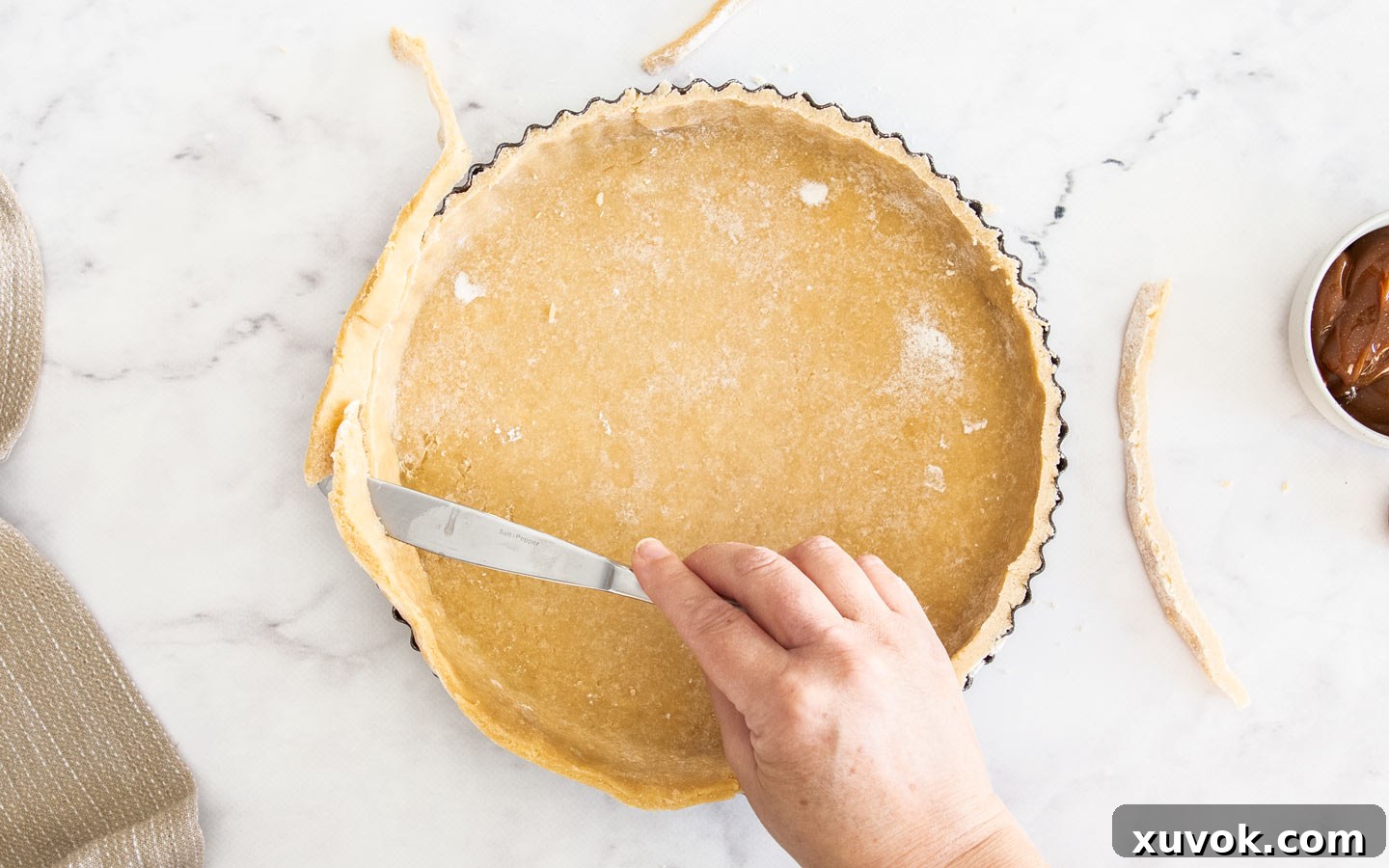
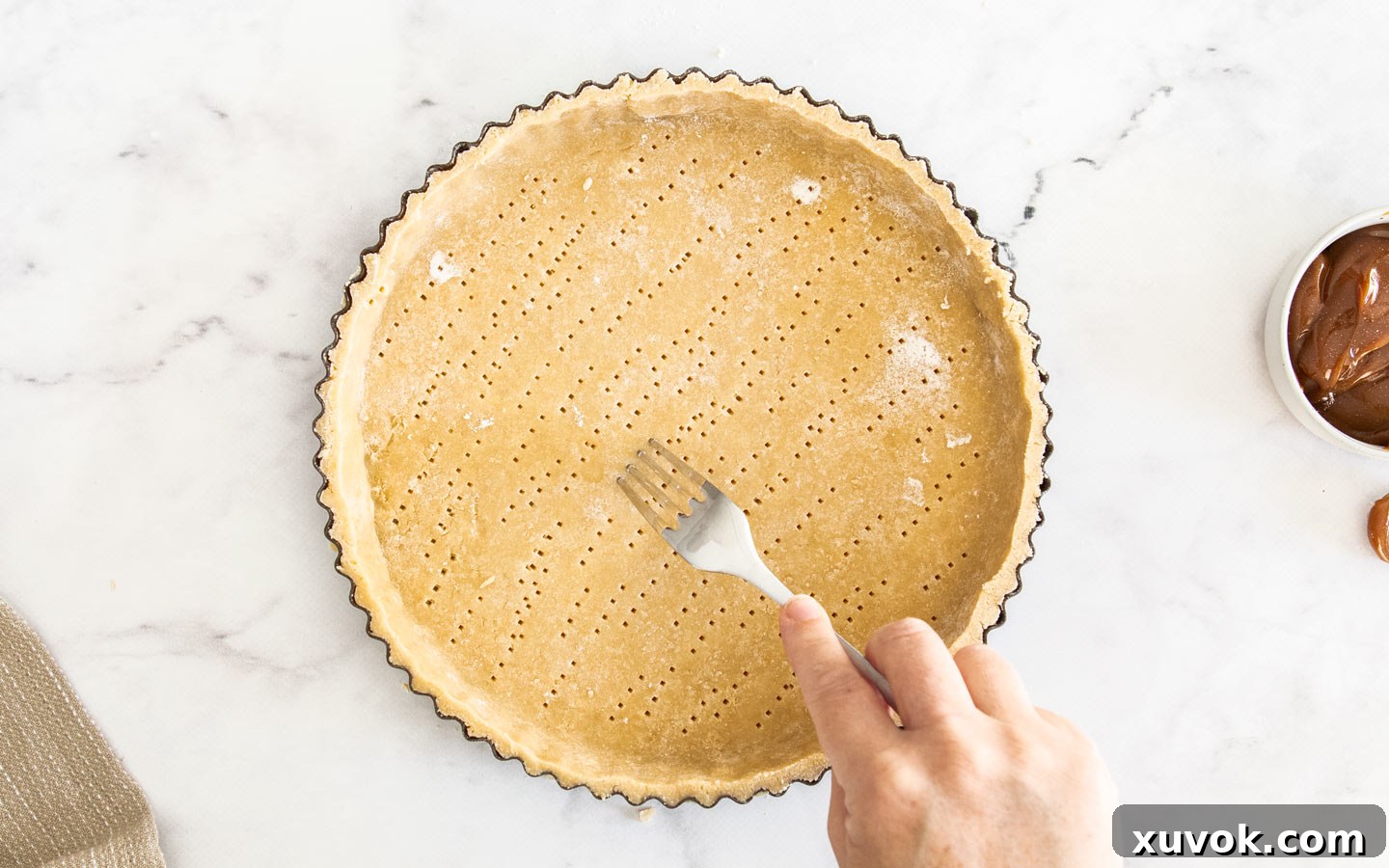
To ensure a perfectly cooked and crisp crust that won’t become soggy once filled, a process called blind baking is necessary. First, retrieve your chilled tart shell. Use a small, sharp knife to carefully trim off the excess pastry around the edge of the pan, aligning the blade flat against the rim for a clean finish. Then, gently prick the base of the pastry all over with a fork. This technique, known as “docking,” allows steam to escape during baking, preventing the crust from puffing up unevenly.
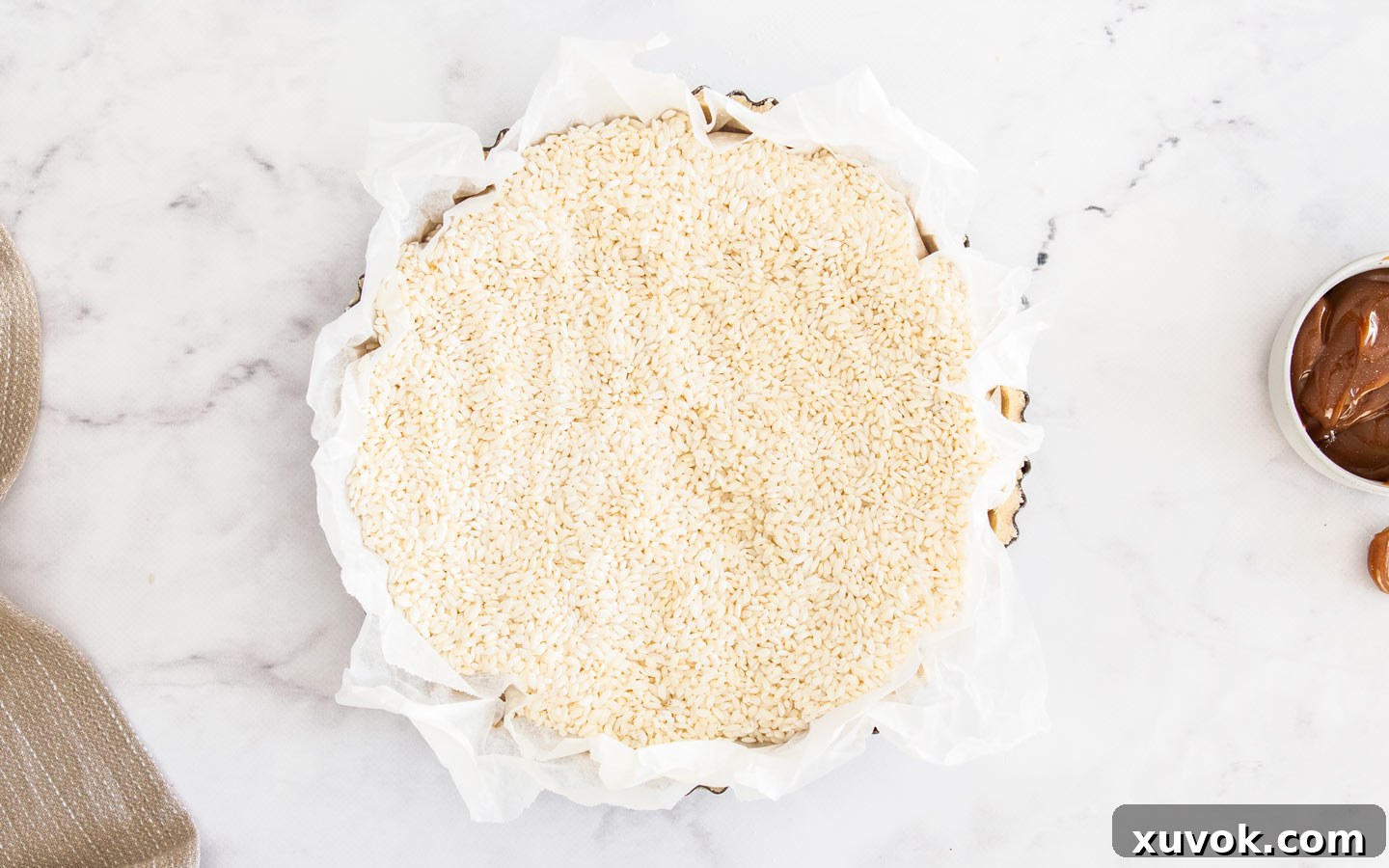
Next, line the pricked tart crust with a sheet of baking paper or parchment paper, ensuring it covers the base and extends up the sides. Fill the paper-lined shell with pie weights, dried beans, or rice. Make sure to press the weights firmly into the corners and against the sides of the crust; this prevents the pastry from shrinking or collapsing during the initial bake. Bake the tart shell for 15 minutes with the weights, which helps to set its shape. After this initial bake, carefully remove the baking paper and weights, then return the crust to the oven for an additional 8 minutes. This second bake ensures the bottom of the crust is thoroughly dried out and lightly golden, creating a robust foundation for your creamy filling.
4. Creating the Silky Caramel Filling
With your tart crust perfectly blind-baked and cooling, it’s time to prepare the star of the show: the incredibly smooth and rich caramel crème brûlée filling. Before you begin, remember to reduce your oven temperature to 160C (140C fan forced) / 320F, as the custard bakes at a lower heat to prevent curdling. The filling itself is remarkably quick and easy to assemble.
Start by gently heating the heavy cream in a saucepan over medium heat until it is steaming hot but not boiling. Meanwhile, in a separate mixing bowl, whisk together the large whole egg, the four large egg yolks, and the room-temperature caramel sauce until thoroughly combined and smooth. Ensure your caramel is at room temperature to prevent it from seizing when mixed with the cold eggs.
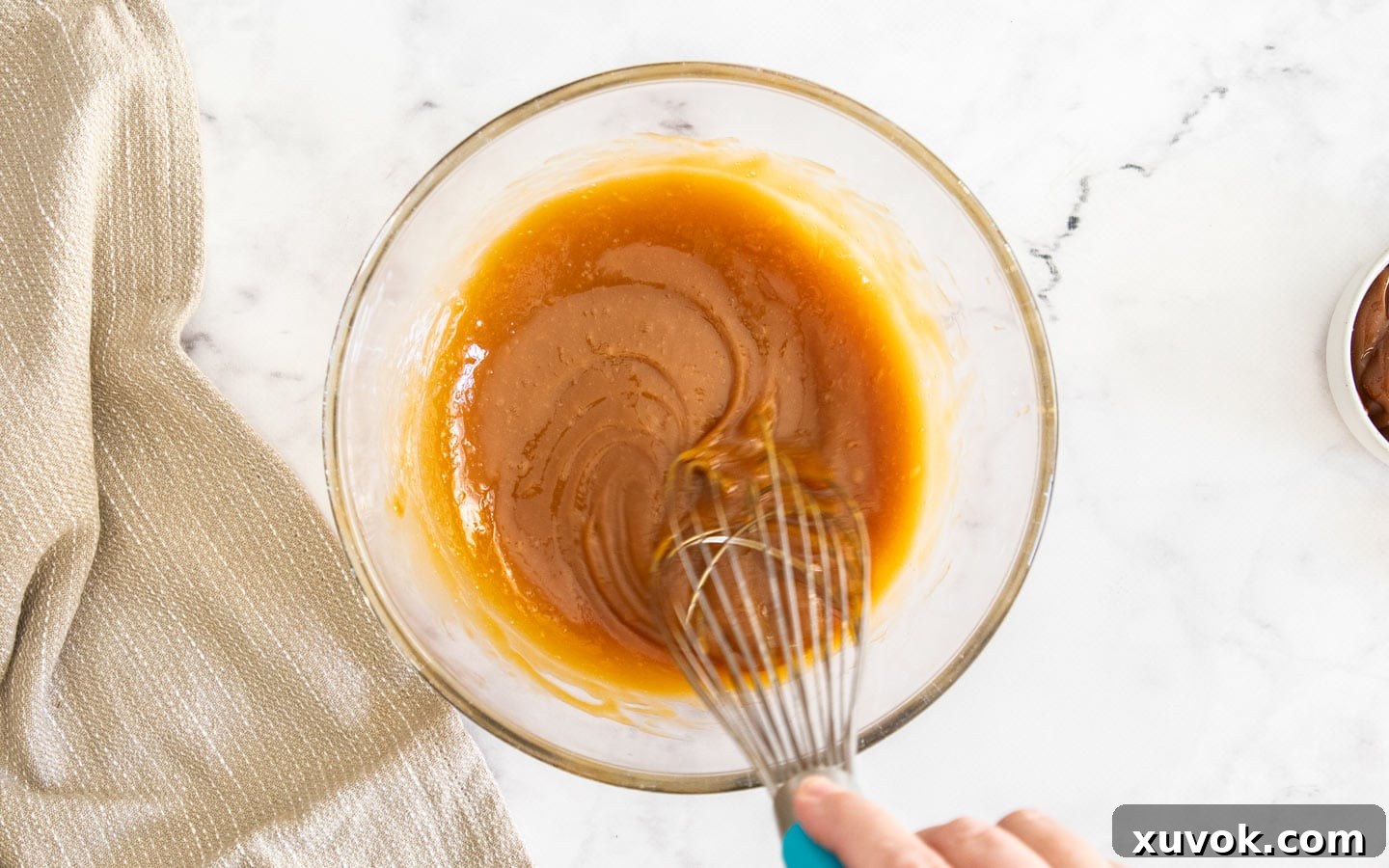
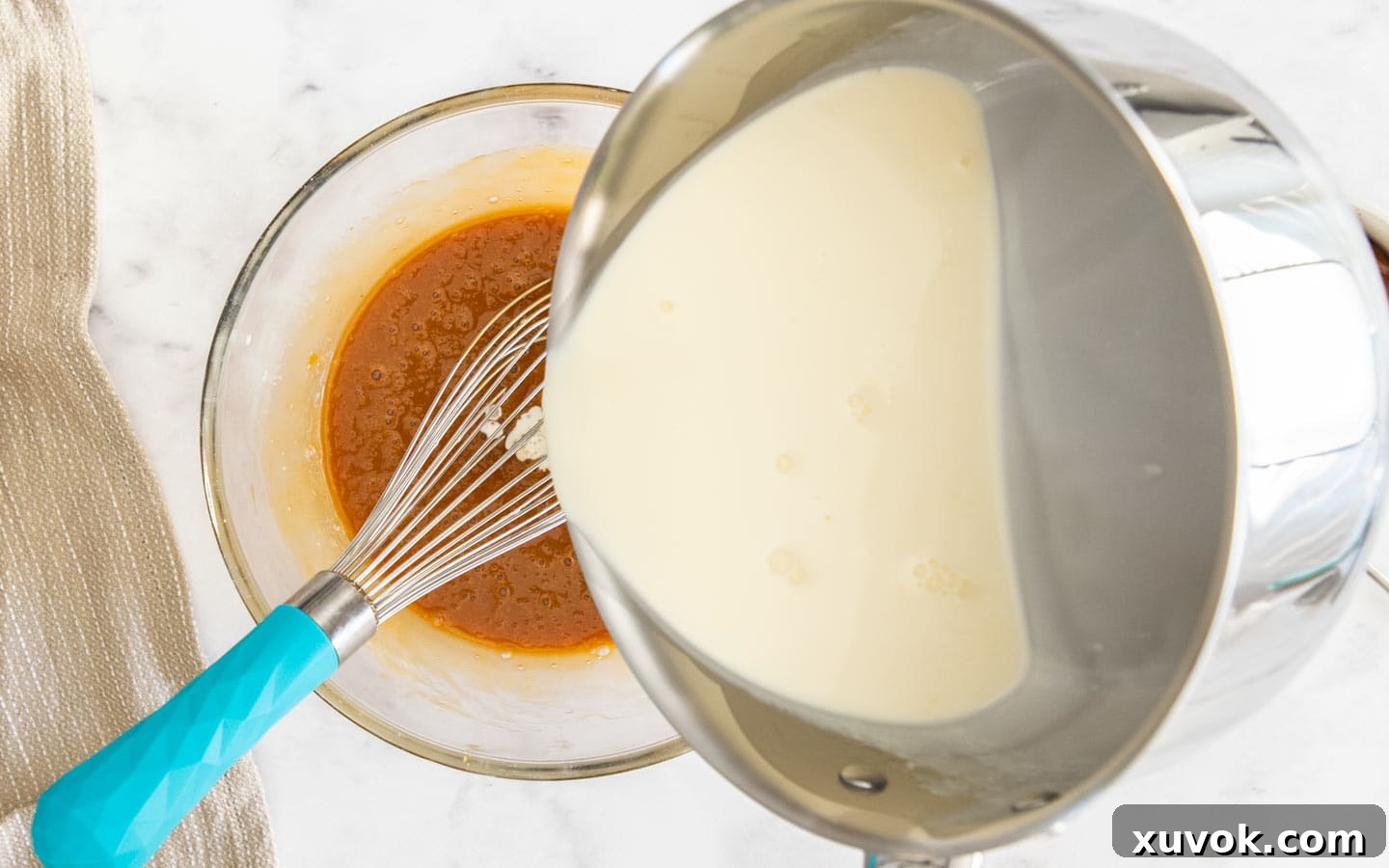
Next, stir the salt into the hot cream until dissolved. This touch of salt is essential for balancing the sweetness and enhancing the caramel flavor. Now, for the crucial technique of “tempering” the eggs: slowly dribble about half of the hot cream into the egg and caramel mixture while continuously whisking. This gradual addition raises the temperature of the eggs gently, preventing them from scrambling. Once tempered, you can pour in the remaining hot cream, still whisking gently to combine everything without incorporating too much air, which can lead to bubbles in your finished custard. A slow and steady hand here will ensure a perfectly smooth, uncurdled custard base.
5. Filling and Baking Your Tart
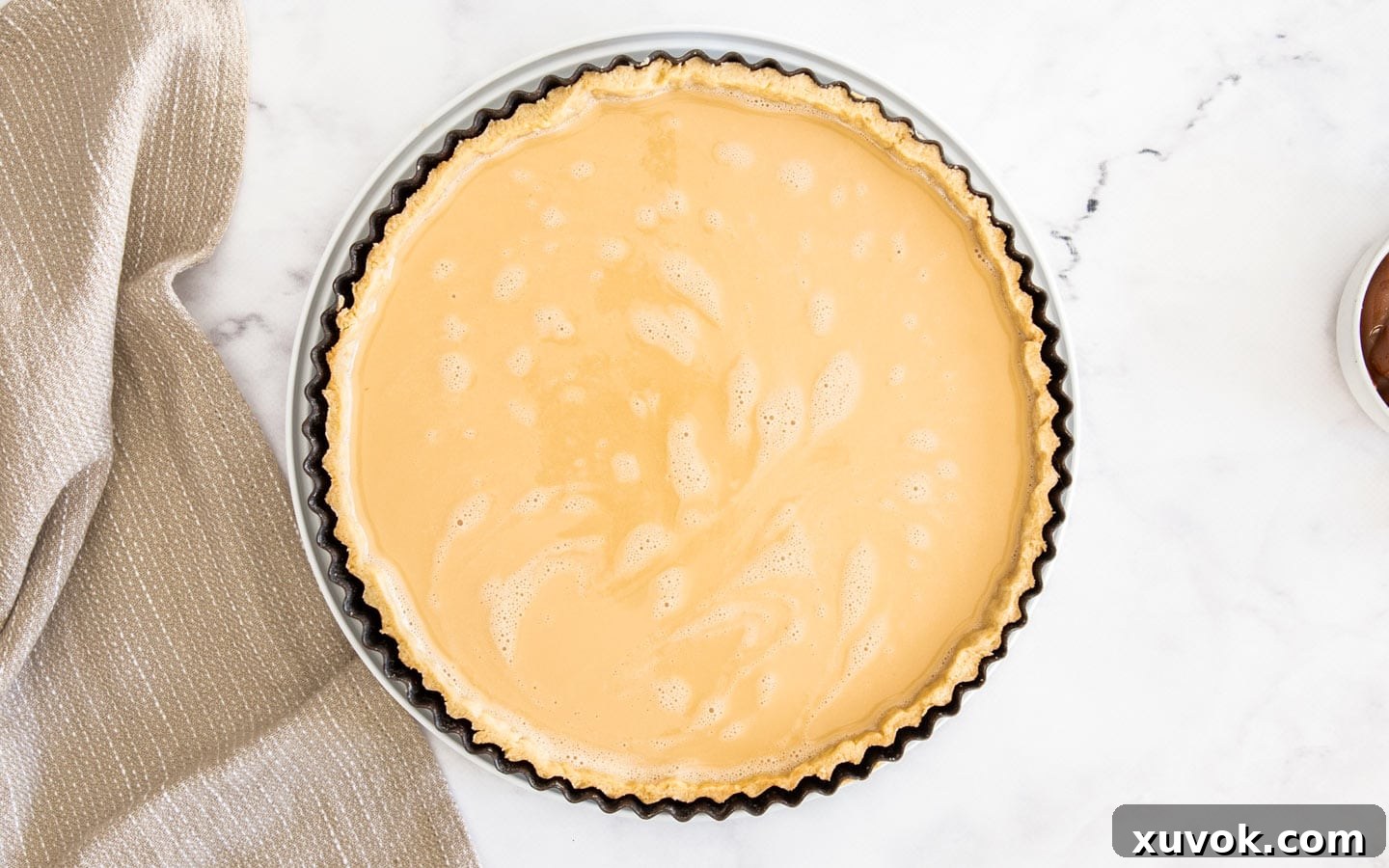
Before filling the tart, strain the custard mixture through a fine-mesh sieve into a large pouring jug or back into your clean saucepan. This step ensures an ultra-smooth custard by removing any small bits of scrambled egg or unincorporated ingredients. If any froth has formed on top, gently skim it off with a spoon to prevent an uneven surface on your baked tart.
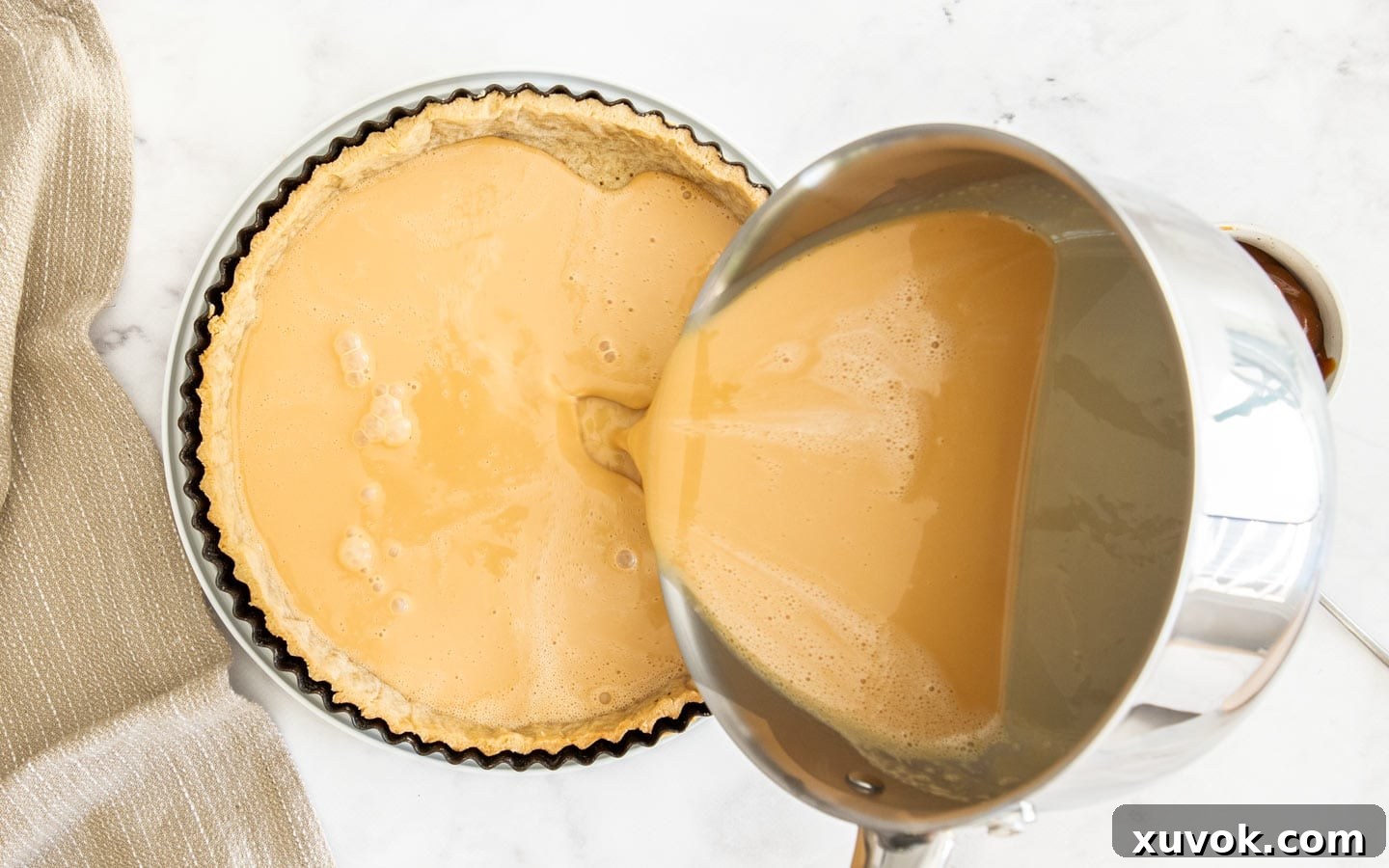
Now, carefully pour the silky caramel crème brûlée filling into your cooled, blind-baked tart shell. Fill it almost to the very top. The exact amount of filling your tart shell can hold might vary slightly depending on the precise dimensions of your tart pan (even “9-inch” pans can differ) and how much your crust might have shrunk during baking. A smart tip to prevent spills and messes: slide your oven rack halfway out, place the tart pan (still in its tin) directly onto the rack, and then pour the filling. This eliminates the tricky transfer from your counter to the hot oven, reducing the risk of sloshing.
Once filled, gently push the oven rack back in and bake for approximately 35-38 minutes. The key to a perfectly baked custard is to remove it from the oven when it still has a slight wobble in the center but appears set around the edges. It should not look liquid. This gentle wobble indicates that the custard is cooked through but will continue to set as it cools, resulting in that desirable creamy texture. Overbaking can lead to a rubbery or cracked custard, so keep a close eye on it! Allow the tart to cool completely on a wire rack before refrigerating it to chill thoroughly for at least 2 hours. This chilling period is crucial for the custard to fully set and firm up.
6. Achieving the Perfect Brûlée Top
The name “crème brûlée” literally translates to “burnt cream” in French, referring to the signature caramelized sugar crust that tops this classic dessert. This crunchy, glass-like shell is what makes the crème brûlée experience so unique and satisfying. To achieve this, you’ll need a kitchen blowtorch – it’s an indispensable tool for an even, golden caramelization without heating the custard too much. While you *can* attempt to brûlée under a hot overhead grill or broiler, this method carries the risk of re-melting your perfectly set custard or burning the edges of your tart. For best results and control, a blowtorch is always my preferred method.
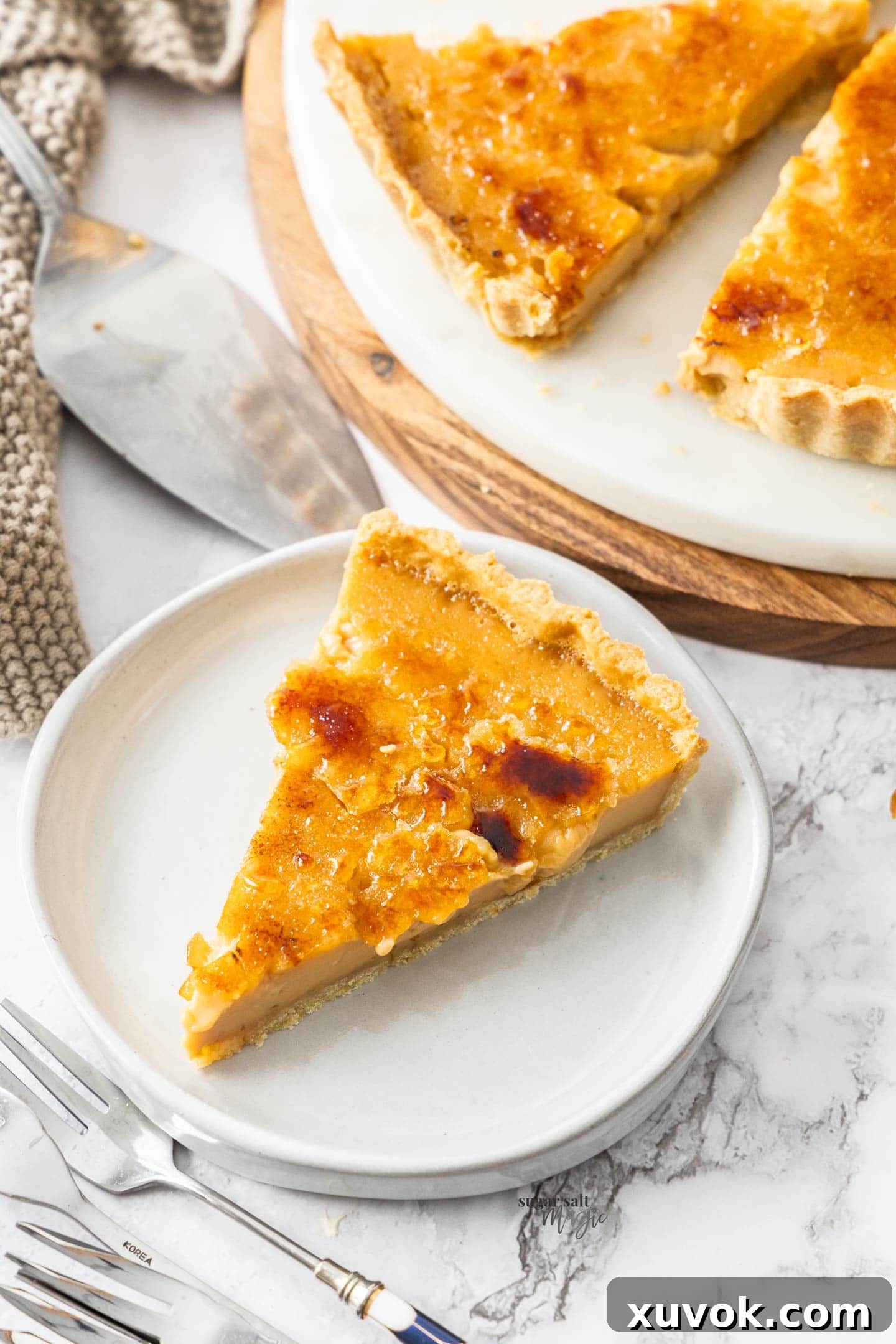
Just before serving, generously scatter a thin, even layer of superfine caster sugar over the top of your thoroughly chilled and set tart. Use the back of a spoon or a small spatula to ensure an even coating. Now, carefully ignite your kitchen blowtorch and hold it a few inches above the sugar. Move the flame steadily and evenly across the surface, watching as the sugar melts, bubbles, and transforms into a beautiful amber-colored, crunchy toffee. Work quickly and avoid concentrating the flame in one spot to prevent burning. The goal is a uniform, crackable crust that shatters delightfully with the tap of a spoon, revealing the creamy caramel custard beneath.
Expert Tips and Tricks for Perfection
Mastering any impressive dessert comes down to understanding the nuances. Here are some expert tips and tricks to ensure your Caramel Crème Brûlée Tart is absolutely flawless, from its flaky crust to its perfectly caramelized topping.
- Cold Ingredients for the Pastry are Non-Negotiable: This is perhaps the most crucial rule for a truly light and flaky crust. Cold butter, egg, and even cold water are essential. The cold butter remains in tiny, solid pieces within the dough. As the tart bakes, these butter pockets release steam, which pushes apart the layers of dough, creating that desirable airy, flaky texture rather than a hard, crunchy one. Warm ingredients will result in a greasy, tough crust.
- Don’t Skip Chilling the Dough: Patience is a virtue in pastry making. If you bypass or shorten the chilling time for your dough (at least 2 hours, or ideally overnight), the butter will soften, and the gluten won’t relax. This leads to excessive shrinkage during baking, resulting in a short, uneven crust that may not hold enough filling. A well-chilled dough holds its shape beautifully and bakes evenly.
- Fill the Tart Directly in the Oven: The liquid custard filling is quite fluid, making it prone to spilling if you attempt to carry a fully filled tart from your kitchen counter to the oven. To avoid this common mishap and ensure a clean transfer, pull the oven rack out halfway, place the empty, blind-baked tart shell (still in its pan) onto the rack, and then carefully pour in the custard. Gently slide the rack back into the oven, and you’re good to go!
- Brûlée the Top Just Before Serving: This is a golden rule for any crème brûlée. Sugar is hygroscopic, meaning it readily absorbs moisture from its surroundings. Once you caramelize the sugar on top of the custard, it will slowly start to absorb moisture from the tart filling and eventually dissolve, losing its crispness and turning into a syrup. This process is similar to how sugar draws water out of fruit in macerated strawberries. To preserve that iconic, satisfying “crack,” wait until literally minutes before you plan to serve the tart to brûlée the sugar. Doing this in front of guests can also be a delightful and impressive part of the dessert presentation!
- Prevent Cracks in Your Custard: Overbaking is the primary culprit behind a cracked custard. The key is to remove the tart from the oven when the center still has a slight wobble, like soft jelly. It will continue to set as it cools. Also, avoid rapid temperature changes; let the tart cool gradually on the counter before transferring it to the refrigerator.
- Achieve the Perfect Caramelization: When using your blowtorch, keep the flame moving constantly. Don’t hold it in one spot for too long, as this can burn the sugar rather than caramelize it evenly. You’re aiming for a uniform, deep amber color. If the sugar burns too dark, it will taste bitter.
- Don’t Overfill Your Tart: While it’s tempting to fill it to the brim, ensure you leave a tiny bit of space at the top. This prevents the custard from overflowing as it slightly expands during baking and helps create a neat edge for the brûléed sugar.
⏰ Time-Saving Strategies for Busy Bakers!
We all lead incredibly busy lives, juggling work, family commitments, and social events. Happily, this Caramel Crème Brûlée Tart, despite its impressive appearance, offers several fantastic opportunities for make-ahead preparation, allowing you to enjoy the process and impress without the last-minute rush. Here are some smart tips to fit this decadent dessert into even the busiest schedule:
- Make the Pastry Dough Ahead (⏰ Approximately 5-10 minutes active time): The tart dough is a perfect candidate for advance preparation. You can whip up the dough in your food processor, form it into a disk, and store it tightly wrapped in plastic wrap in the refrigerator for up to 2-3 days. For even longer storage, freeze it for up to 3 months – just thaw it in the fridge overnight before you plan to use it. To truly speed things up, use a kitchen scale to weigh your flour, sugar, and butter directly into the food processor bowl, minimizing dirty dishes and measuring time.
- Go One Step Further: Prepare the Tart Shell Ahead (⏰ Approximately 7-15 minutes active time): Don’t stop at just making the dough! After preparing the pastry, roll it out, line your tart pan, trim the edges, and chill it. A fully prepared and chilled raw tart shell can be stored in the refrigerator for 2-3 days, or even blind-baked a day in advance. This means on baking day, you’re halfway there before you even start! Ensure it’s well-wrapped to prevent it from drying out or absorbing fridge odors.
- The Entire Tart Can Be Assembled and Baked in Advance: For ultimate convenience, you can bake the entire tart (crust and filling) one day ahead of serving. Once baked and completely cooled, store it carefully in an airtight container in the refrigerator overnight. While the tart will keep for 2-3 days, be aware that the longer it’s stored, the softer the tart base might become due to moisture from the custard. However, the flavors will meld beautifully. Remember, the crucial step to leave until serving time is the brûléeing of the sugar topping to ensure that satisfying crunch!
- Pre-measure Dry Ingredients: For ultra-fast assembly on baking day, measure out all your dry ingredients (flour, sugar for the crust, and sugar for the topping) and combine them in labeled bags or containers. This small step can make a big difference when time is tight.
These strategies empower you to enjoy the baking process without feeling overwhelmed, ensuring your beautiful Caramel Crème Brûlée Tart is a stress-free delight for any occasion.
Storage and Make-Ahead Advice
Proper storage is key to enjoying your Caramel Crème Brûlée Tart for as long as possible. If you have any glorious leftovers, or if you’ve opted to bake the tart ahead of time, ensure it is stored in an airtight container in the refrigerator. This helps to protect its delicate flavors and textures. The tart will keep well for up to 2-3 days in the fridge.
It’s important to remember that the magic of the crunchy sugar topping is ephemeral. Once brûléed, the caramelized sugar will gradually absorb moisture from the creamy custard beneath. Over time, it will lose its satisfying crack and turn into a soft, syrupy layer. This is perfectly normal and still delicious, but if you desire that classic “crack,” it is imperative to brûlée the sugar just before serving. If you’ve stored a brûléed tart, you might be able to *very lightly* re-torch the top just to firm it up, but it won’t be quite the same as a fresh brûlée. For best results, prepare the tart, chill it, and then apply and torch the sugar only when ready to present and serve.
More Irresistible Dessert Recipes You’ll Love
If you’ve fallen in love with the sophisticated flavors and satisfying textures of this Caramel Crème Brûlée Tart, then you’re in for a treat! Our collection is brimming with desserts that offer similar levels of indulgence and impressiveness, often with surprisingly simple preparation. Explore these other fantastic recipes from our kitchen:
- Zesty Orange Crème Brûlée: A bright and refreshing twist on the classic, perfect for citrus lovers.
- Decadent Chocolate Salted Caramel Cake: Layers of rich chocolate and gooey salted caramel – an absolute showstopper.
- Elegant Salted Caramel Tartlets: Individual portions of caramel bliss, ideal for entertaining or a personal indulgence.
- Dreamy Salted Caramel Fudge: A melt-in-your-mouth confectionery that’s dangerously addictive.
- Effortless No-Bake Chocolate Salted Caramel Tart: All the flavor, none of the oven time – a perfect summer dessert.
- Luxurious Baked Salted Caramel Cheesecake: Creamy, rich, and featuring that irresistible caramel swirl.
Whether you’re craving more caramel, experimenting with different crème brûlée flavors, or seeking another show-stopping tart, these recipes are sure to inspire your next baking adventure!
⭐⭐⭐⭐⭐
Did you try this caramel crème brûlée tart recipe? We’d love to hear from you! Share your thoughts and show it some love in the comments below!
Hungry for more culinary inspiration? Subscribe to our newsletter for free, exclusive recipes delivered straight to your inbox. Also, connect with us and follow along on Facebook, Pinterest and Instagram for daily inspiration and behind-the-scenes glimpses!

Caramel Crème Brûlée Tart
Rate
Pin
Ingredients
FOR THE SHORTCRUST PASTRY
- 225 g plain flour (all purpose flour) (1 ¾ cups / 8oz)
- 50 g light brown sugar (¼ cup / 1.8oz)
- 100 g unsalted butter, cold and cubed (7 tablespoons / 3 ½oz)
- 1 large egg, cold
- 1 ½ tablespoons cold water
FOR THE CREME BRULEE FILLING
- 500 ml thickened cream (heavy cream) (2 cups)
- 4 egg yolks (from large eggs)
- 1 large whole egg
- ⅔ cup store-bought thick caramel sauce (I use Bonne Maman)
- ½ teaspoon salt (optional, but recommended)
- 2 tablespoons caster sugar (superfine sugar) (for topping)
For best results, always weigh ingredients where a weight is provided.
Equipment
-
food processor
-
Rolling Pin
-
9 inch fluted tart pan with removable base
-
kitchen blowtorch
-
mixing bowl
-
Saucepan
Instructions
-
FOR THE PASTRY:
In the bowl of a food processor, add the flour, sugar, the cold butter and a pinch of salt. Process until the pieces of butter are about lentil sized. Add the egg and pulse on low until it resembles bread crumbs. Be careful not to overprocess. Finally, with the processor on low, dribble in the cold water and let it continue blending until it start to form clumps.
-
Turn the pastry dough out onto a clean surface and pull it together with your hands, kneading it just enough to make it mostly smooth. Do not overwork the dough.
-
Lightly dust your work surface and the top of the dough with flour. Roll it out evenly to about 4mm (⅙ inch) thick and approximately 11 inches round, regularly moving the dough and adding a minimal amount of flour as necessary to prevent sticking.
-
Place your rolling pin in the middle of the rolled dough and gently fold one side of the pastry over the top of the pin. Lift the rolling pin, allowing the pastry to drape over it, and lightly dust off any excess flour from the underside. Carefully unroll and lay the pastry into a 9-inch round tart pan with a removable base.
-
Press the dough firmly down into the corners and up against the fluted sides of the pan all the way around. Leave the overhanging pastry standing upright. Place the tart pan into the fridge to chill for a minimum of 2 hours, or ideally overnight, for best results.
-
PAR-BAKE THE TART SHELL:
Preheat your oven to 180C (160C fan) / 350F.
-
Using a fork, prick the base of the chilled pastry all over to prevent air bubbles from forming during baking (this is called docking). Then, use a small paring knife to trim off the excess pastry, laying the blade flat against the edge of the tin and working your way around for a neat finish.
-
Line the tart shell with a sheet of baking paper or parchment paper, ensuring it covers the base and extends up the sides. Fill it with pie weights, dried beans, or rice. Fill it quite full and press the weights firmly against the edges to support the crust.
-
Bake for 15 minutes. Carefully remove the baking paper and pie weights, then return the crust to the oven for a further 8 minutes to dry out and lightly brown the base.
-
Remove the par-baked tart shell from the oven and allow it to cool completely on a wire rack before proceeding with the filling. This prevents a soggy bottom.
-
FOR THE FILLING:
IMPORTANT! Reduce your oven temperature to 160C (140C fan forced) / 320F before starting the filling.
-
Heat the heavy cream in a medium saucepan over medium heat until it is steaming hot, but do not allow it to boil. Stir in the salt until fully dissolved.
-
Meanwhile, in a medium mixing bowl, whisk together the egg yolks, whole egg, and the room-temperature caramel sauce until smooth and well combined.
-
To temper the eggs, very slowly pour about half of the hot cream mixture into the egg and caramel mixture while gently and continuously whisking. This gradual addition prevents the eggs from scrambling. Then, pour in the remaining hot cream, continuing to whisk gently until fully incorporated. TIPS: Pour slowly and steadily to ensure the eggs are tempered correctly. Whisk gently to avoid creating too much froth, which can lead to an uneven custard surface.
-
Pour the custard mixture through a fine-mesh strainer into a large pouring jug or back into the clean saucepan. Use a spoon to carefully skim off any froth or bubbles that have formed on the surface; this ensures a perfectly smooth custard.
-
Carefully pull the oven shelf part way out and place the cooled tart shell (still in its tin) onto the shelf. Now, slowly pour in the caramel crème brûlée filling until it almost reaches the top of the tart shell. If your tart shell experienced some shrinkage during blind baking, you can fill it to the very top. Any leftover filling can be poured into a small ramekin and baked alongside the tart for a delightful “cook’s treat.”
-
If you notice any remaining bubbles on the surface of the filled tart, gently run the back of a spoon over them to dissipate them. This final touch helps ensure a beautifully smooth finish.
-
Gently slide the oven shelf back in and bake for 35-40 minutes. The tart is ready when the filling has a slight, delicate wobble in the center when gently shaken, but the edges appear set and firm. It should not look liquid.
-
Allow the baked tart to cool completely on a wire rack for at least 20 minutes before transferring it to the refrigerator. Chill for a minimum of 2 hours, or until thoroughly set.
-
Right before serving, generously sprinkle an even layer of superfine caster sugar over the top of the chilled tart. Use a kitchen blowtorch to melt and caramelize the sugar until it turns a deep amber color and forms a hard, crackly shell. Work quickly and evenly.
-
Enjoy your perfectly crafted Caramel Crème Brûlée Tart! Please take a moment to leave a comment & rating below. Your feedback is greatly appreciated and helps fellow bakers.
Notes
- Tablespoons: Please note that I use a standard Australian 20ml tablespoon, which is equivalent to 4 teaspoons. It’s always a good idea to check your own measuring spoons to ensure accuracy, as tablespoon sizes can vary internationally.
- Caramel Consistency is Key: For this recipe, your caramel sauce needs to be thick – think a consistency that dollops rather than runs off a spoon. Bonne Maman caramel is an excellent example of the ideal thickness and flavor, and it’s what I recommend. Dulce de leche from a can also works wonderfully. A runny caramel sauce may not allow the custard to set properly. If your chosen caramel sauce is thinner, you might consider adding an extra egg yolk to the filling to provide more richness and help with setting.
- Nutrition details provided are approximate only and have been derived from an “online calculator.” The specific brands and exact quantities of ingredients you use may cause variations in the nutritional information.
EXPLORE MORE GORGEOUS TART RECIPES!
Calories from Fat 261