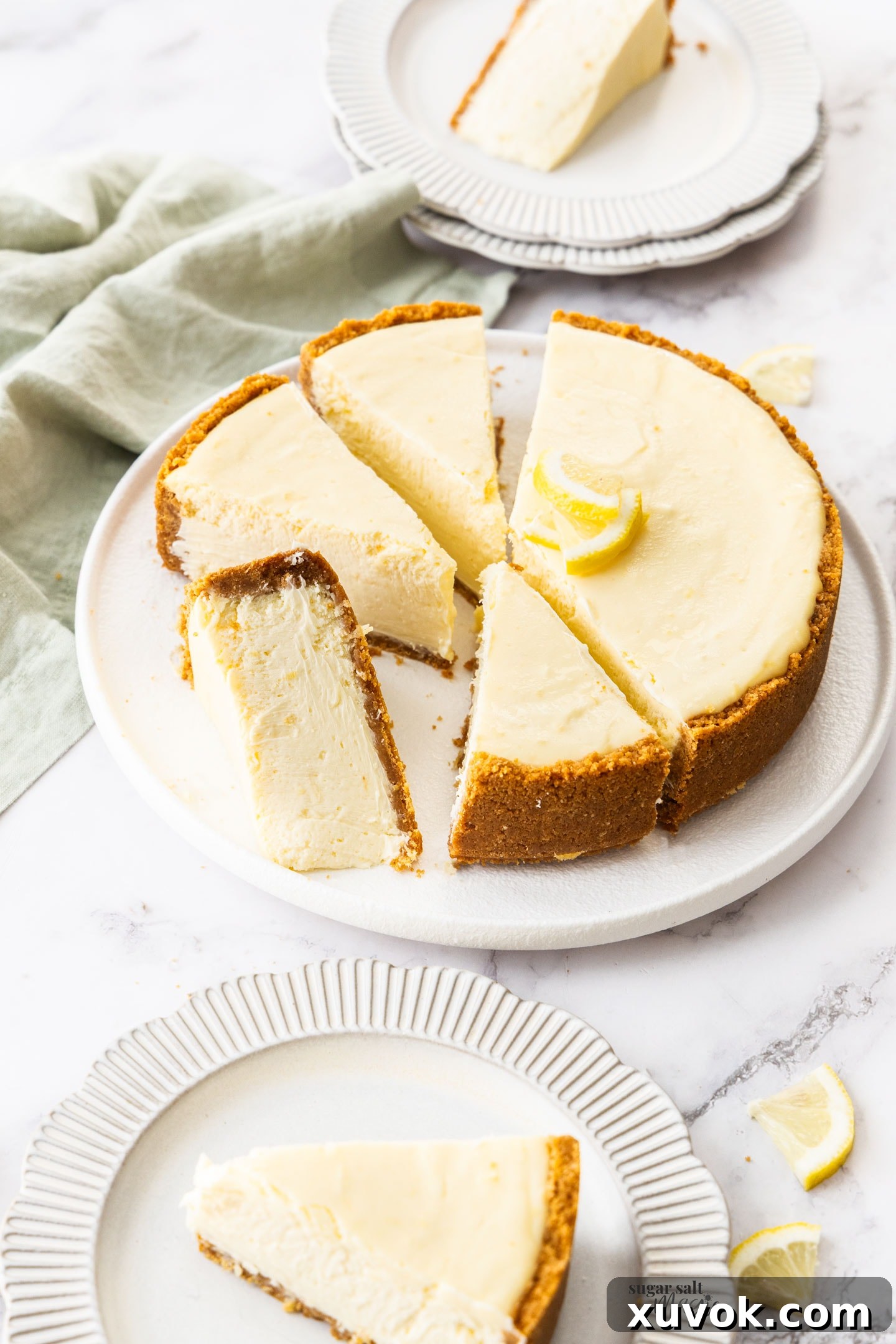
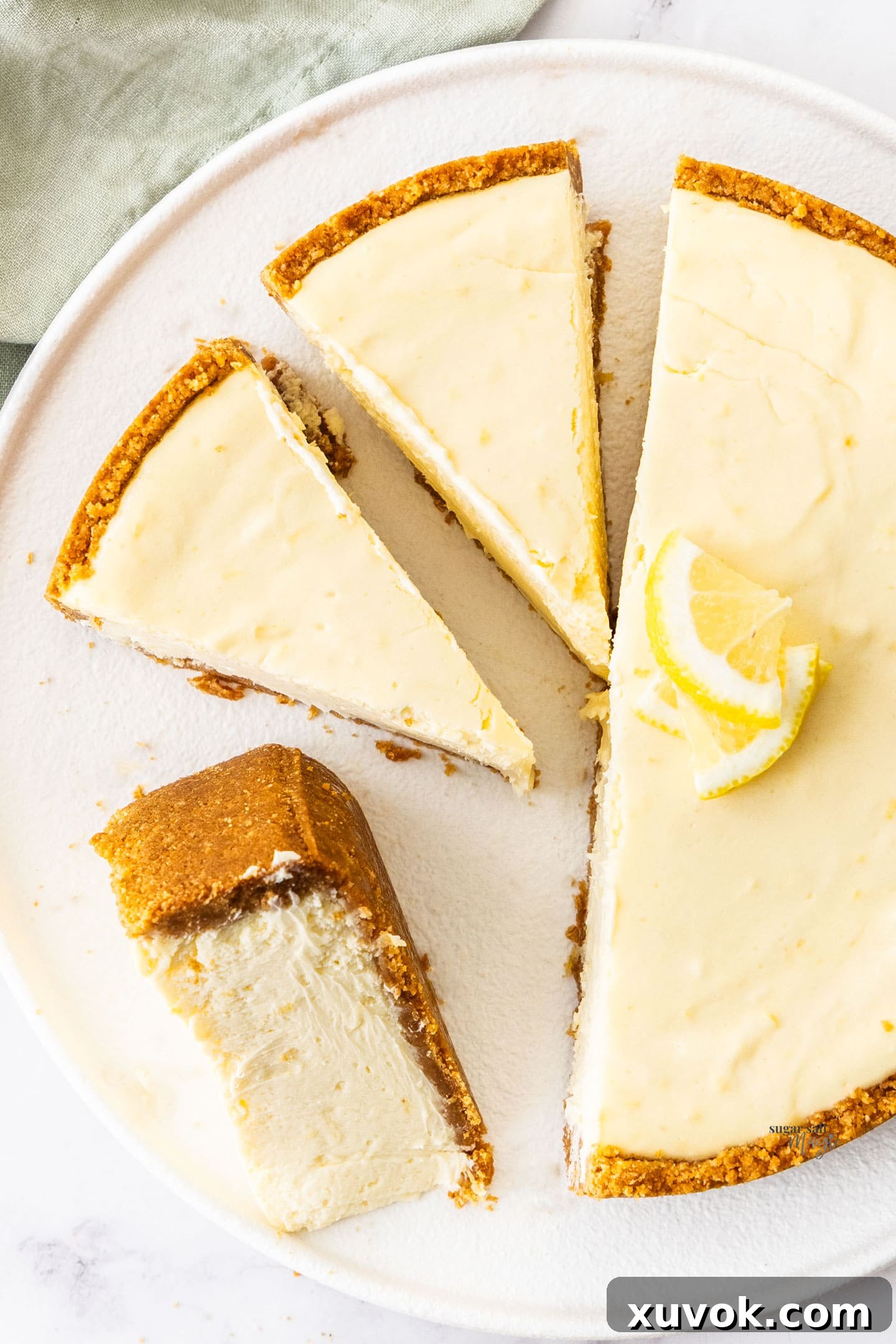
Indulge in Perfection: The Ultimate Baked Lemon Cheesecake Recipe
Prepare to embark on a culinary journey with this incredible **baked lemon cheesecake recipe**. Forget everything you thought you knew about cheesecake, because this rendition promises a truly unforgettable experience. It’s not just a dessert; it’s a celebration of vibrant citrus and luxurious creaminess, designed to be the crowning glory of any special occasion or a delightful treat for an ordinary day. This cheesecake is a symphony of flavors and textures: **rich and creamy**, with a perfect balance of **tangy and sweet** that simply melts in your mouth.
Crafting this sublime dessert is surprisingly **easy to make**, making it an ideal candidate for preparing ahead of time. Imagine the convenience of having a show-stopping dessert ready to impress your guests, allowing you to relax and enjoy the moment. The secret lies in its two harmonious components: a golden, buttery cookie crust that provides the ideal foundation, generously filled with a velvety, smooth lemon cheesecake mixture. Baked to exquisite perfection, the result is a dreamy texture that captivates with every single bite.
For those who wish to elevate this masterpiece even further, consider adding a luscious layer of homemade lemon curd. While undeniably divine and adding an extra burst of lemon intensity, rest assured that this cheesecake boasts a phenomenal lemon flavor all on its own, making the curd an optional yet delightful enhancement rather than a necessity.
Never Miss a Recipe!
Get the latest recipes straight to your inbox!
Essential Ingredients & Smart Substitutions for Your Lemon Cheesecake
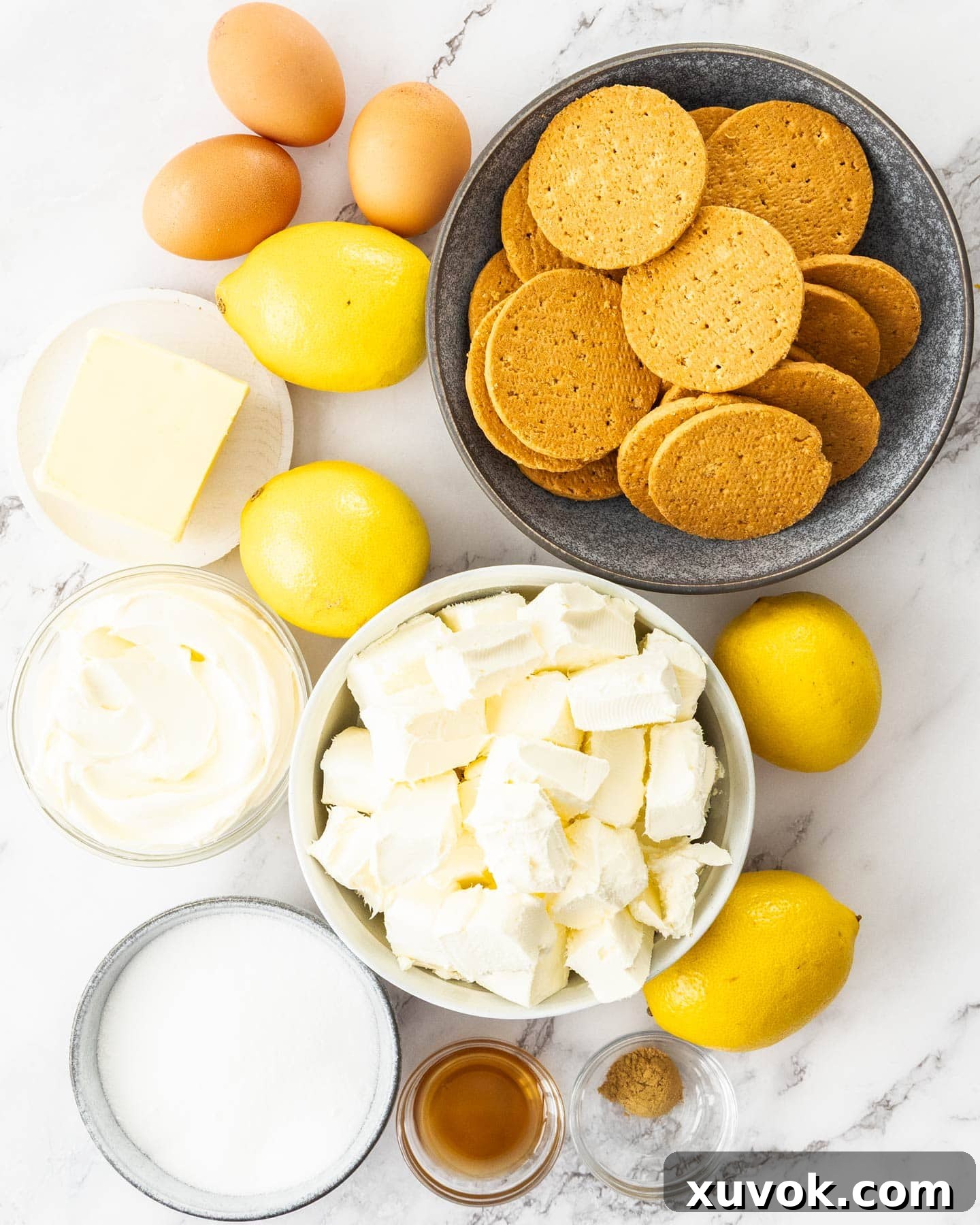
Your quest for the quintessential lemon cheesecake ends with this recipe. We keep things straightforward, requiring only fundamental cheesecake staples combined with the invigorating freshness of ripe lemons. This recipe is thoughtfully adapted from my beloved classic baked cheesecake, ensuring a quick bake time and an impressive, impactful burst of lemon flavor.
Beyond the pantry basics of sugar, butter, eggs, and a touch of vanilla, you’ll only need five additional key ingredients to bring this vibrant dessert to life. Each plays a crucial role in achieving that perfect balance of tang, sweetness, and creamy texture that defines an exceptional baked lemon cheesecake.
Jump to the recipe card for full ingredients and instructions.
- Cookies for the Crust: For this delightful lemon cheesecake, I typically opt for digestive biscuits, specifically Arnotts Granita for their perfect texture and mild sweetness. However, you have excellent alternatives! **Graham Crackers** are a classic choice in many regions and work beautifully, as do other sweet, unfilled cookies like vanilla wafers or shortbread. The goal is a biscuit that crumbles easily and holds together when combined with butter, providing a subtle, buttery base that complements the rich filling without overpowering it.
- Ground Ginger (Optional, but Recommended): While not strictly essential, a small addition of ground ginger to the cookie base provides a subtle warmth and depth. It won’t announce itself as a strong ginger flavor, but rather adds an intriguing “special something” that enhances the overall complexity of the crust, making it truly stand out. It’s a secret ingredient that elevates the experience.
- Full-Fat Cream Cheese: This is a non-negotiable ingredient for achieving the signature rich flavor and proper structure of a baked cheesecake. Using full-fat cream cheese ensures the cheesecake sets beautifully, yielding a dense yet tender crumb that’s incredibly satisfying. Lower-fat versions contain more water and can lead to a less stable, often rubbery, or cracked cheesecake. Ensure it’s softened to room temperature for smooth mixing.
- Fresh Lemons (Zest and Juice): The star of the show! You absolutely must use fresh lemons for both their zest and juice – and plenty of it! The vibrant, aromatic oils from the zest infuse the cheesecake with an unparalleled bright lemon flavor, while the fresh juice provides that crucial tangy counterpoint. **Please, do not substitute with bottled lemon juice, and never skip the zest.** The difference in flavor is monumental. Aim for organic lemons if possible, and wash them thoroughly before zesting.
- Sour Cream: This ingredient is a secret weapon in cheesecake baking, contributing significantly to both the tanginess and the incredibly creamy texture of the filling. It adds a luxurious richness while cutting through the sweetness, balancing the flavors perfectly. You can use either light or full-fat sour cream, though full-fat will contribute to a slightly richer consistency. Ensure it’s at room temperature for seamless incorporation into the batter.
Mastering the Art of Baked Lemon Cheesecake: A Step-by-Step Guide
Creating this dreamily creamy lemon cheesecake requires a bit of foresight and planning, primarily due to its essential chilling time after baking. While it might seem like a small detail, allowing it to chill overnight is key to achieving its perfect texture and stability. This ample chilling period also offers the fantastic advantage of making it well ahead of any special celebration, sparing you from last-minute stress and ensuring a perfectly set, ready-to-serve dessert.
Jump to the recipe card for full ingredients and instructions.
1. Crafting the Perfect Cookie Crumb Crust
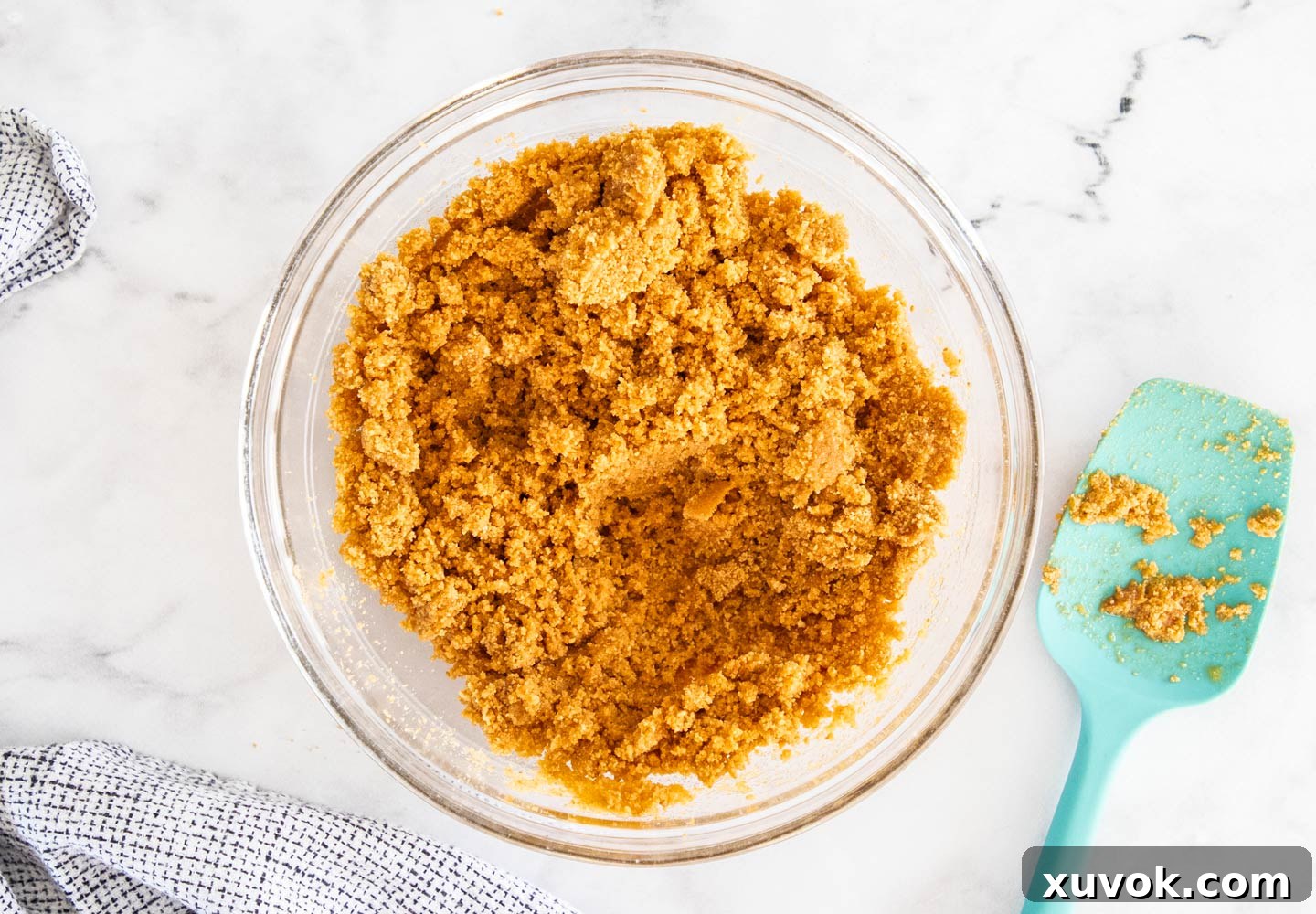
The foundation of any exceptional cheesecake is its crust, and ours is no exception. This cookie crust is perfectly buttery, offers just the right amount of delightful crumbliness, and is utterly delicious. A conscious choice in this recipe is to omit sugar from the cookie crust. Why? Because the lemon cheesecake filling is already exquisitely sweet, and the sugar-free crust provides a superb balance, allowing the vibrant lemon flavor to shine without being overwhelmed. Furthermore, its texture provides a wonderful contrast to the creamy filling, making each bite more interesting.
As mentioned, I prefer digestive biscuits for their subtle flavor and firm structure, but a classic Graham Cracker crust will also yield fantastic results. To achieve the ideal fine crumbs, use a food processor or a regular blender. Pulse until you have uniformly fine crumbs, avoiding any large chunks. Once the crumbs are ready, stir in the optional ground ginger, if using, and pour in the melted butter. Mix thoroughly, ensuring every single crumb is evenly coated with the butter. This step is crucial for a crust that holds together beautifully and provides that coveted buttery crunch.
2. Shaping the Foundation: Your Cookie Crumb Crust
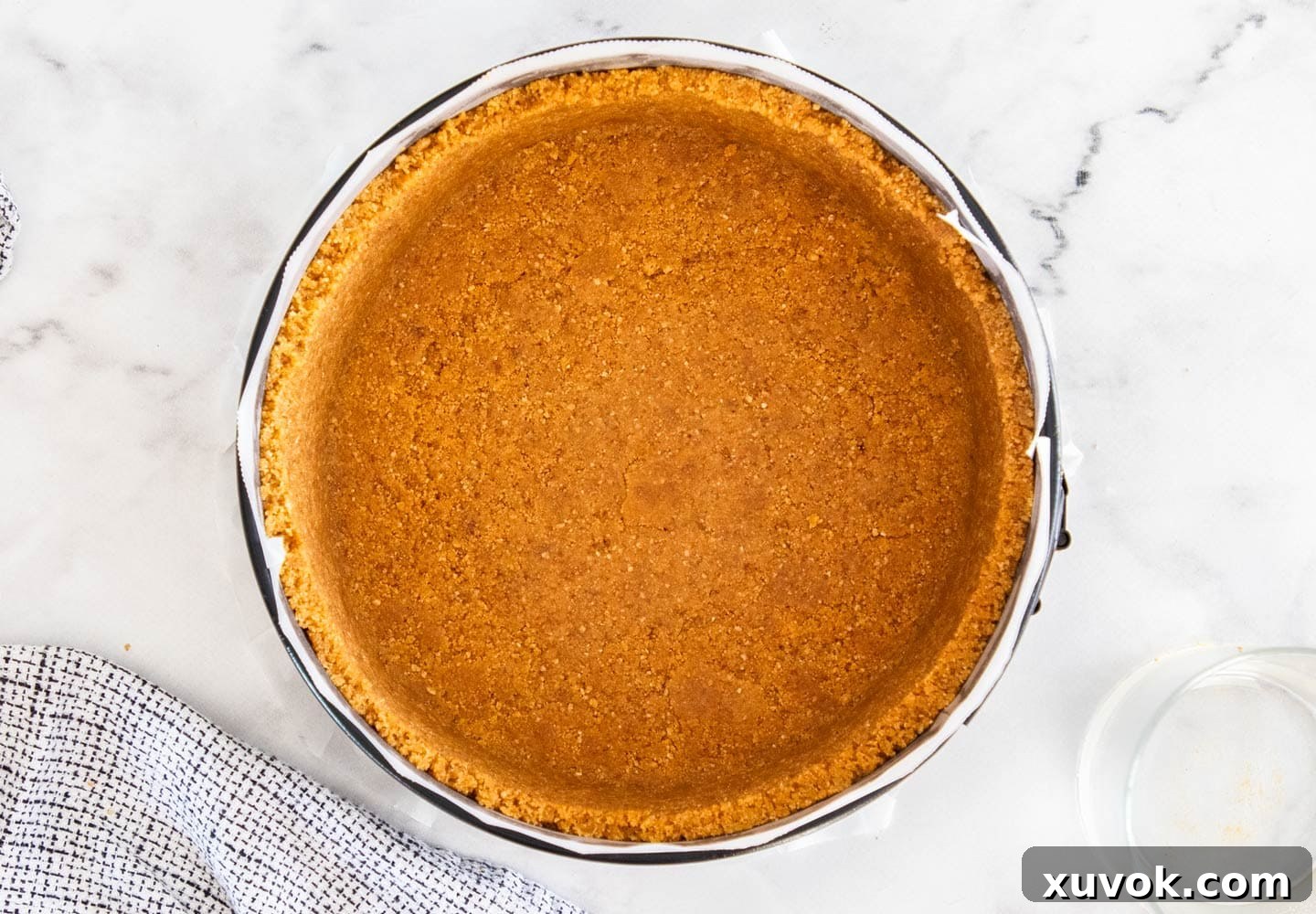
Once your buttery cookie mixture is perfectly prepared, it’s time to create the sturdy base for your lemon cheesecake. Carefully tip the entire mixture into a well-lined 8-inch springform tin. Ensuring your pan is properly lined with baking paper will make for effortless removal of the finished cheesecake. First, gently level the crumbs across the base of the pan.
Now for the shaping technique: Begin in the very center of the pan and use the flat bottom of a straight-sided glass to press the crumbs down. Work in a circular motion, moving outwards gradually. This method ensures an even, compact base. As you approach about 1.25 cm (½ inch) from the sides of the pan, shift your pressing technique. Instead of pressing directly downwards, begin to press the glass outwards towards the edge, simultaneously working your way up the sides to create a consistent rim. Continue this circular motion until you achieve a beautiful, even edge, approximately 5mm (⅕ inch) thick. A glass with straight edges and a sharp corner at the bottom, much like a whiskey glass or tumbler, works best for this task, allowing for clean lines and firm compaction. Once shaped, place the cookie crust in the fridge to chill while you prepare the creamy filling. This chilling step helps to firm up the butter in the crust, preventing it from crumbling excessively during baking.
3. Crafting the Velvety Lemon Cheesecake Filling
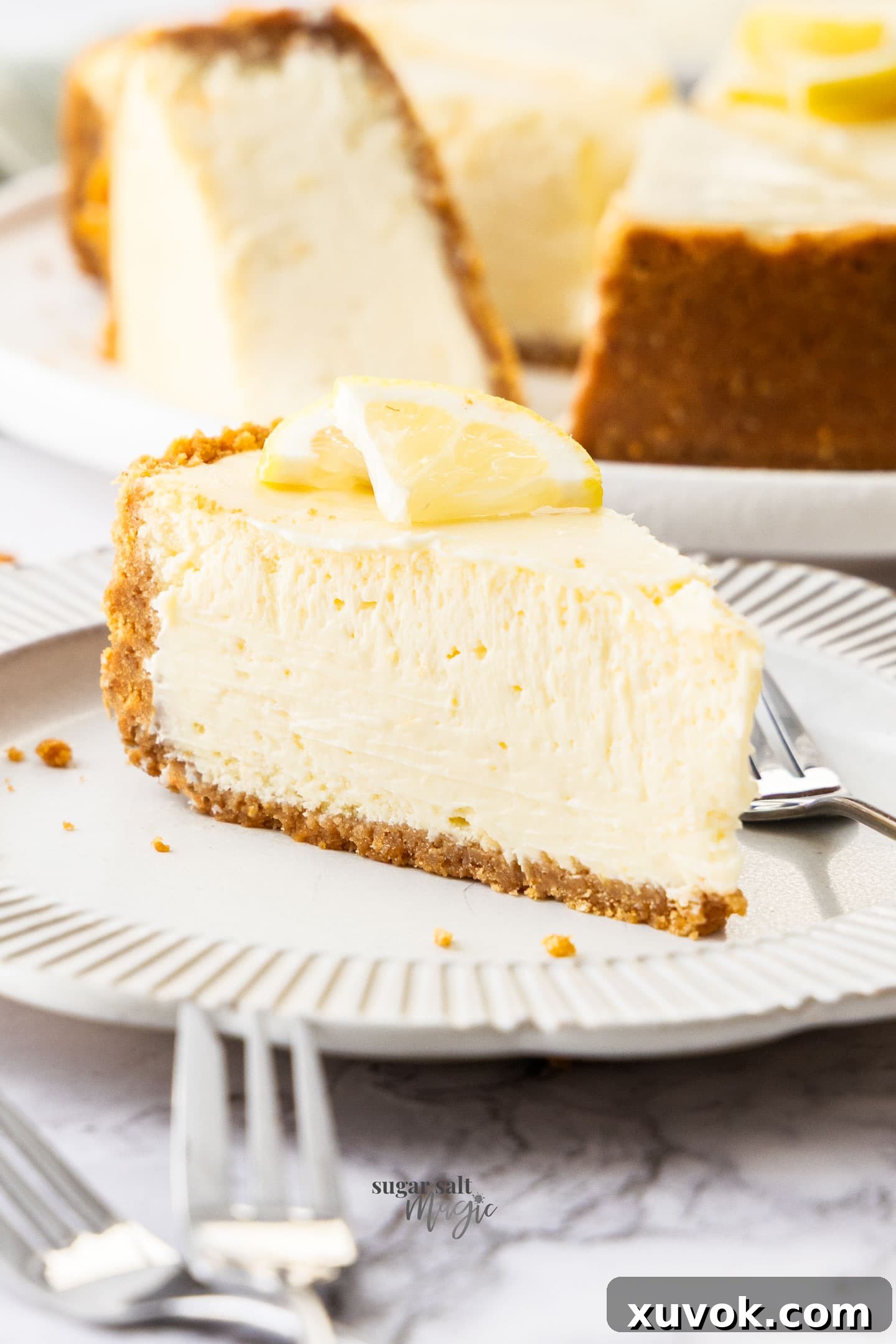
The heart of this dessert is its exquisite lemon cheesecake filling. It strikes a perfect balance: denser and more structured than a no-bake cheesecake, yet remarkably lighter and creamier than a traditional New York-style cheesecake. The result is a filling that boasts a wonderful melt-in-your-mouth texture, infused with bright citrus notes.
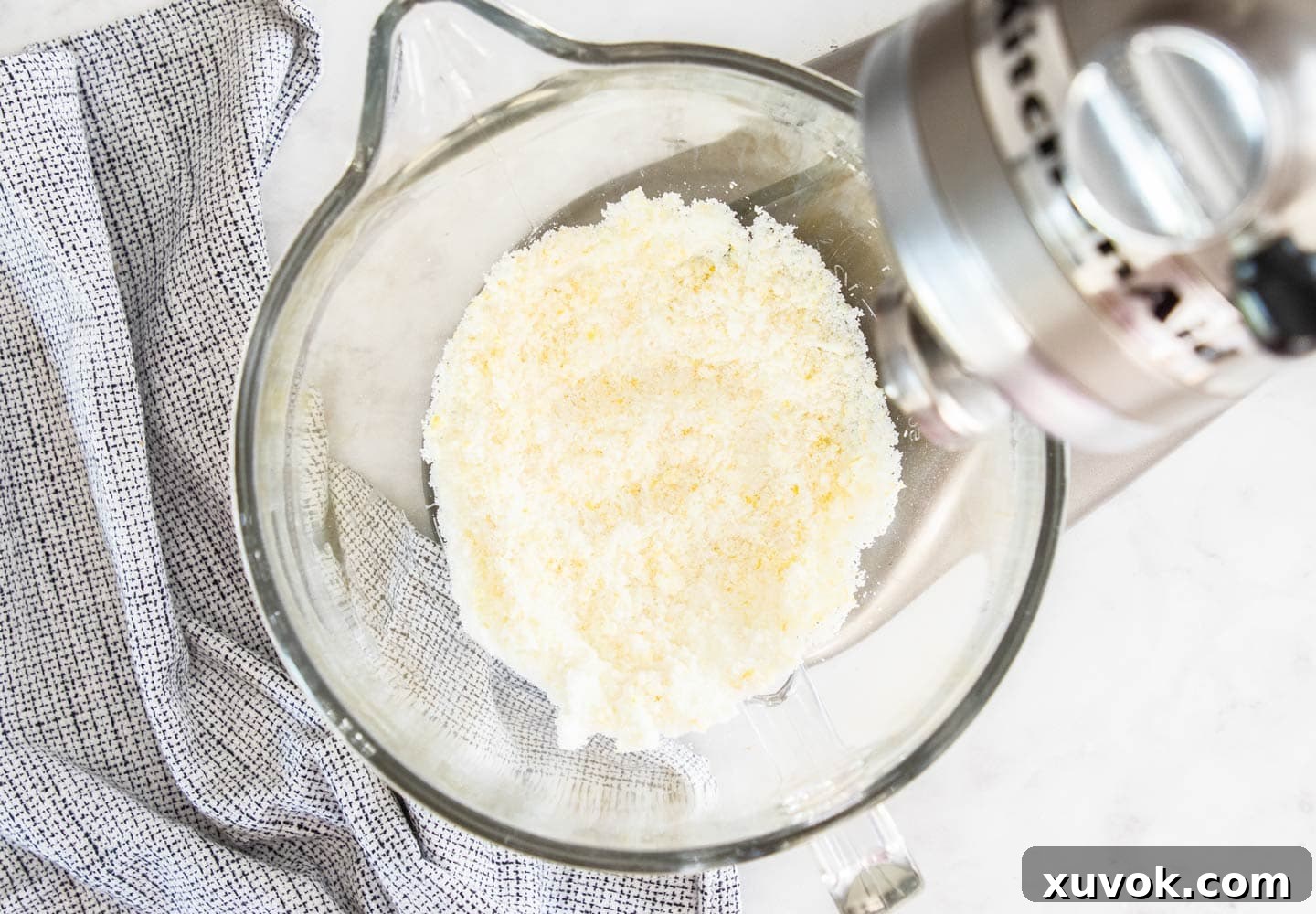
The initial and perhaps most crucial step in enhancing the lemon flavor is a technique that truly makes a difference. In a mixing bowl, combine the granulated sugar with the fresh lemon zest. Then, using your fingertips, gently but thoroughly blend the lemon zest into the sugar. Continue rubbing them together until the mixture resembles wet sand and you can distinctly smell the intensified lemon aroma. This simple action helps to release the natural oils from the lemon zest, deeply infusing the sugar with its vibrant flavor, which will then permeate the entire cheesecake. This step is a small effort for a huge flavor payoff, truly making this a **lemon lovers’ dream**.
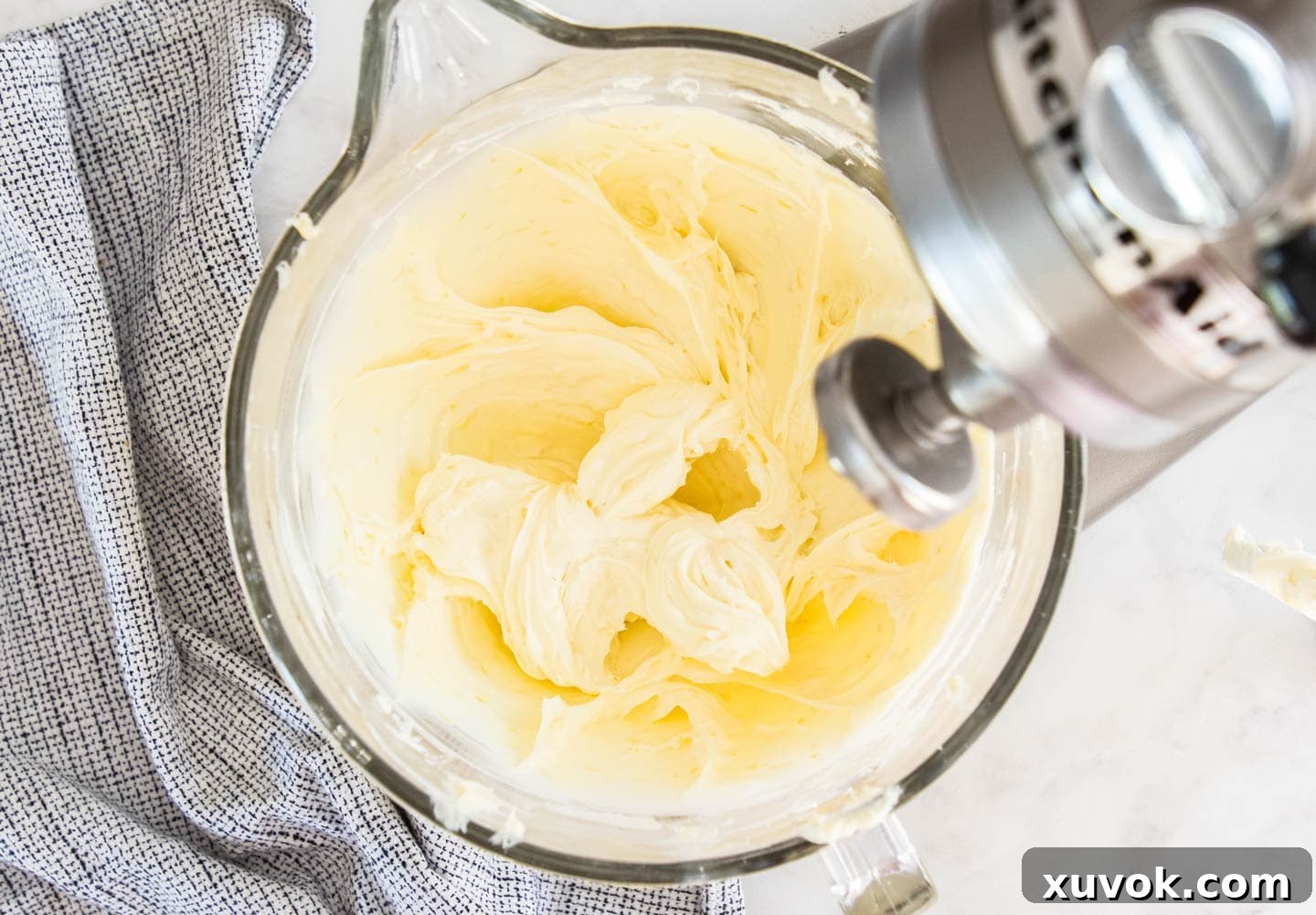
Next, introduce the softened full-fat cream cheese to your lemon-infused sugar. Beat them together on a low to medium speed, just until the mixture becomes smooth and perfectly combined. It’s essential to scrape down the sides of the bowl frequently to ensure all ingredients are incorporated evenly and to prevent any lumps.
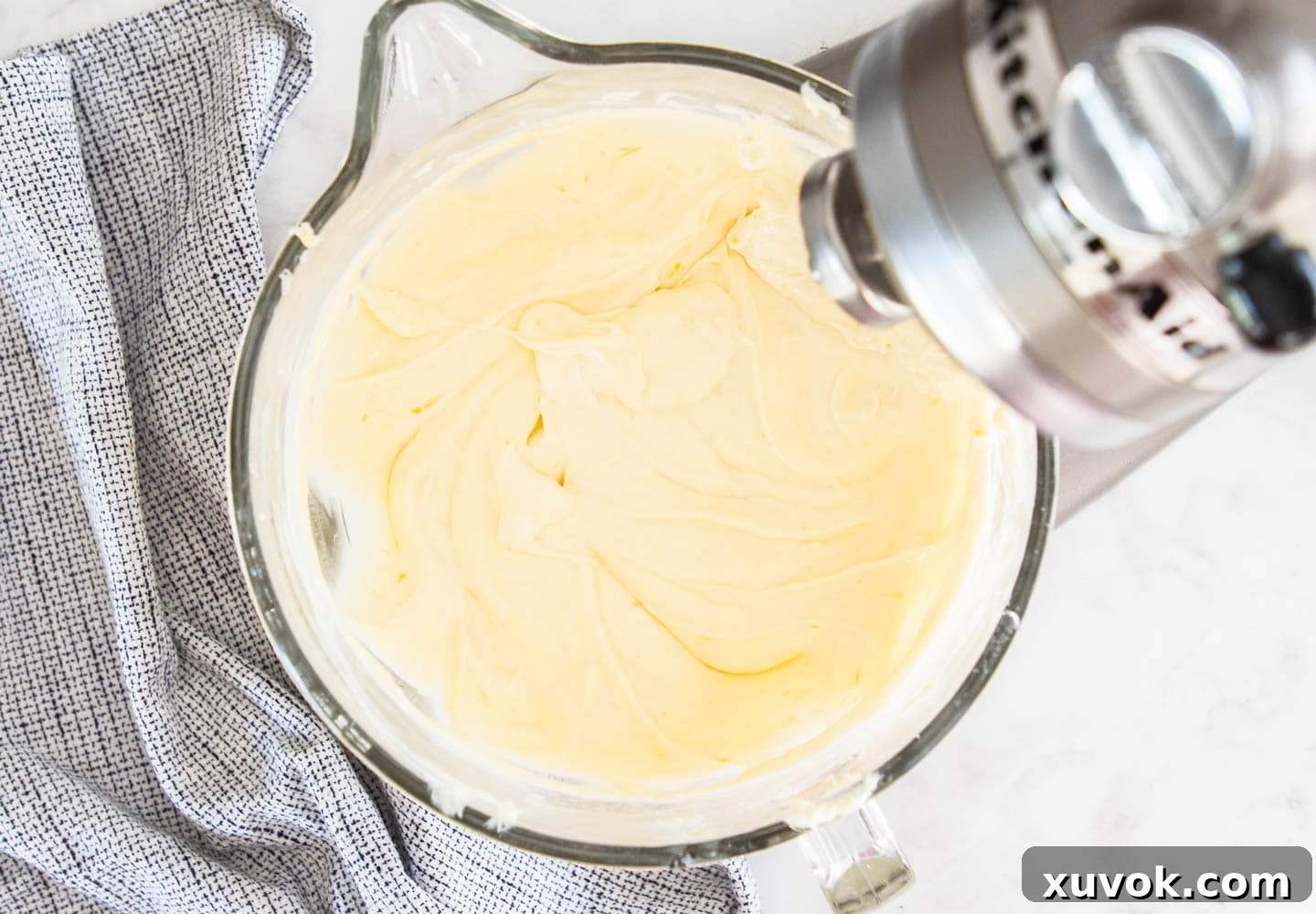
Following this, add the sour cream, fresh lemon juice, and vanilla extract. Beat these in on a low speed, again scraping down the sides as needed, until they are just combined. The sour cream contributes crucial tang and creaminess, while the vanilla rounds out the bright lemon notes. The final step is to incorporate the eggs, but this requires a delicate touch. Add them one at a time, beating on a low speed only until each egg is just fully incorporated into the mixture. This gentle approach is incredibly important: **do not overbeat the cheesecake mixture.** Excessive beating incorporates too much air into the batter, which can lead to cracks forming on the surface of your beautiful cheesecake during baking and cooling. A perfectly smooth, slightly thick batter is what you’re aiming for.
4. Baking Your Lemon Cheesecake to Golden Perfection
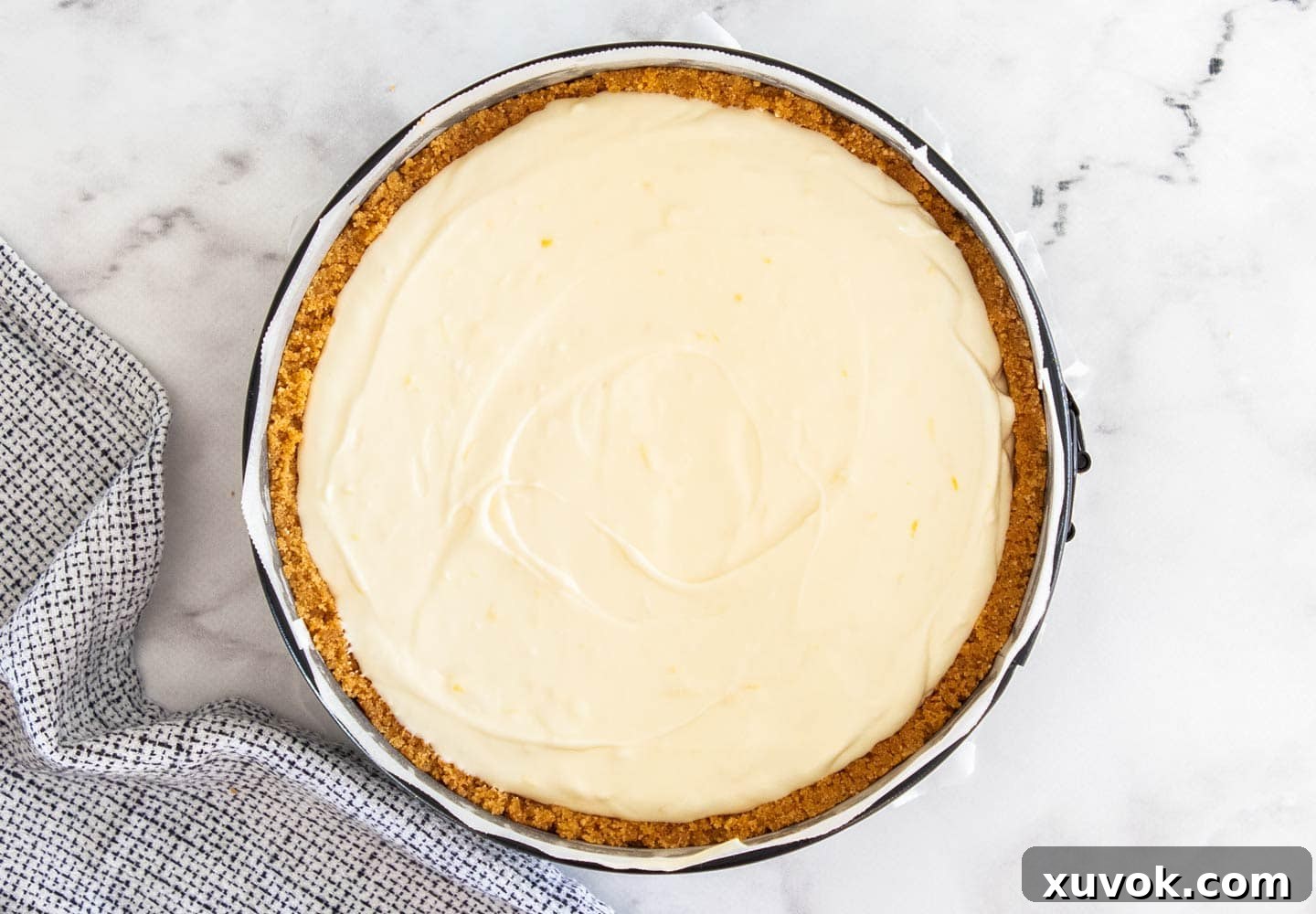
With your luscious lemon cheesecake batter prepared, it’s time for the magic to happen in the oven. Gently pour the creamy filling over the chilled cookie crust in your springform pan. Smooth the top with a spatula if necessary to ensure an even surface. Now, it’s ready for baking.
Bake the cheesecake for approximately 40-45 minutes. The key to knowing when it’s perfectly done is observing its appearance and texture. The outer edges of the cheesecake should appear set and slightly puffed, while the very center still retains a slight, gentle wobble when you delicately nudge the pan. This slight wobble is exactly what you want – it indicates that the cheesecake is cooked through but not overbaked, ensuring that signature creamy, tender texture once cooled. Trust the wobble! Overbaking is a common pitfall that can lead to a dry, cracked cheesecake, so keep a close eye on it.
5. The Art of Gentle Cooling: Preventing Cracks
The cooling process is just as crucial as the baking itself for a flawless baked lemon cheesecake. Sudden temperature changes are the primary culprits behind cracks in cheesecake surfaces. To prevent this, a gradual cooling method is essential. Once baked, turn off your oven, but leave the cheesecake inside with the door closed for an initial 30 minutes. This allows the cheesecake to continue cooking very gently with residual heat while slowly acclimatizing to a cooler environment. After this, slightly open the oven door (leaving it ajar) for another 30 minutes. This further reduces the temperature gradually. Only then should you remove the cheesecake from the oven. For extra assurance, let it sit on your counter for another 30 minutes before finally transferring it to the refrigerator. This patient approach ensures a smooth, crack-free top, ready for any delightful toppings you choose.
Do I Need a Water Bath for My Baked Lemon Cheesecake?
The short answer, for this particular **easy lemon cheesecake recipe**, is no. While a water bath (or bain-marie) is a traditional method often recommended for baked cheesecakes, and you are certainly welcome to use one if it’s your preferred technique, I personally find them a bit cumbersome. They can be prone to issues, such as water potentially seeping into the delicate cookie crust if the foil isn’t perfectly sealed around the springform pan, or the sheer inconvenience of handling a hot water-filled pan when retrieving the cheesecake. Many believe a water bath is essential for reducing the risk of cracks, but a perfectly smooth, crack-free cheesecake can absolutely be achieved without one, simply by ensuring you don’t overbake and implementing a careful, gradual cooling process.
Instead of submerging the cheesecake, my preferred method for creating a humid, gentle baking environment is to simply place an oven-safe dish filled with water on the bottom rack of the oven, *below* the cheesecake. This ingenious trick creates steam, effectively mimicking the benefits of a water bath by introducing humidity into the oven cavity. This moist environment allows the cheesecake to cook more gently and evenly, significantly reducing the chances of cracks, all without the fuss and potential hazards of direct water contact. It’s a simpler, cleaner, and equally effective way to ensure your **creamy lemon cheesecake** bakes beautifully every time.
Expert Tips & Tricks: Unlocking the Secret to a Crack-Free Lemon Cheesecake
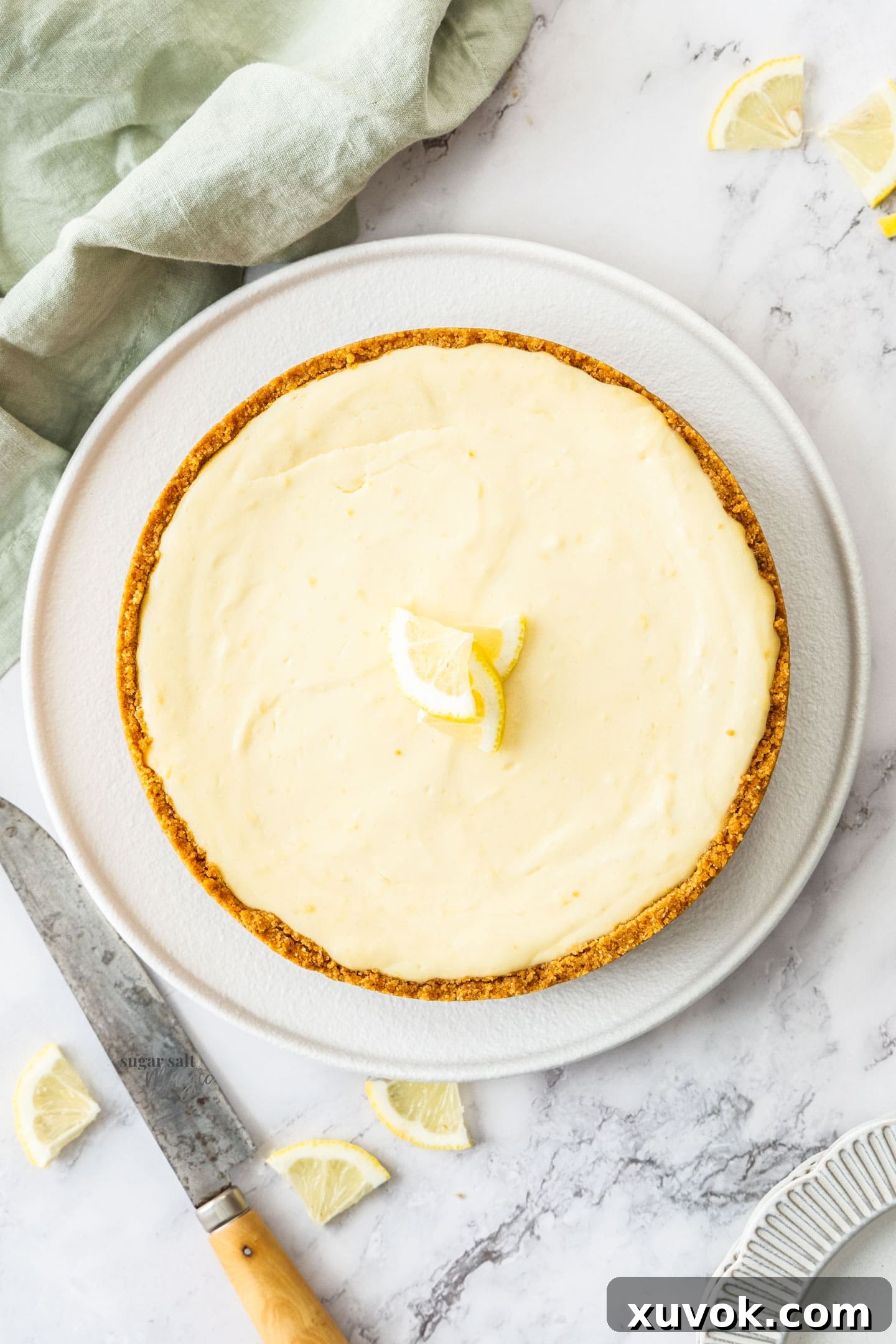
Achieving a perfectly smooth, uncracked surface on your baked lemon cheesecake is the hallmark of a successful dessert. Most of my advice for this **homemade lemon cheesecake** centers around precise techniques to prevent those dreaded cracks. With a few key practices, you’ll consistently bake a picture-perfect cheesecake.
- Avoid Overmixing the Batter: This is arguably the most critical rule for any baked cheesecake. Incorporating too much air into the batter, especially after adding the eggs, creates air pockets that expand rapidly in the oven and then collapse during cooling, leading to cracks. Always mix on a low speed, being incredibly gentle. Use a rubber spatula frequently to scrape down the sides and bottom of your mixing bowl, ensuring all ingredients are just combined without unnecessary aeration. Stop mixing as soon as everything looks homogenous.
- Do Not Overbake: Overbaking is a common culprit for dry, rubbery, and cracked cheesecakes. Like any cake, baking it for too long will dry out the delicate custard-like filling, causing it to shrink and crack. The visual cue of a slightly wobbly center (while the edges are set) is your best friend here. It will continue to set as it cools, transforming into that perfect creamy consistency. Trust your oven and the visual cues rather than simply relying on a timer.
- Cool it Gradually and Patiently: Baked cheesecakes are highly sensitive to abrupt temperature changes, which can cause thermal shock and lead to cracking. To combat this, follow a slow, multi-stage cooling process. Once your cheesecake is baked and the oven is turned off, leave the cheesecake inside with the door completely closed for approximately 30 minutes. This allows for a very gentle continuation of cooking while the oven begins its slow cool-down. After this initial period, open the oven door slightly (leaving it ajar) for another 30 minutes. This facilitates a more rapid, yet still gradual, release of heat. Finally, remove the cheesecake from the oven and allow it to cool on the countertop at room temperature for another 30-60 minutes before transferring it to the refrigerator. This patient cooling schedule is the most effective way to prevent surface cracks and ensure a beautifully smooth finish.
Dressing Your Dessert: What to Top Lemon Cheesecake With
While this **tangy sweet cheesecake** is phenomenal on its own, a thoughtful topping can elevate its presentation and flavor profile. You can keep things elegantly simple by garnishing with delicate slices of fresh lemon, as shown here. These not only add a pop of color but also reinforce the vibrant lemon theme.
For an extra layer of indulgence and a burst of intense lemon flavor, why not consider adding a generous layer of homemade or high-quality store-bought lemon curd? Its smooth texture and concentrated tang pair exquisitely with the creamy cheesecake. Alternatively, a dollop of freshly whipped cream can add a delightful lightness and richness, creating a beautiful contrast. You could even combine both for the ultimate treat – a layer of lemon curd topped with a cloud of whipped cream.
And remember, if despite all your best efforts, you do find a small crack or two in your cheesecake, don’t despair! It’s a common occurrence even for experienced bakers, and it certainly won’t impact the incredible taste. A decorative layer of lemon curd, a generous swirl of whipped cream, or a scattering of fresh berries can effortlessly conceal any imperfections, allowing your **best lemon cheesecake** to still steal the show.
Storing Your Delicious Baked Lemon Cheesecake
Proper storage is key to enjoying your magnificent baked lemon cheesecake for days to come. This delightful dessert will maintain its freshness and sublime texture when stored correctly in the refrigerator. Place it in an airtight container to prevent it from absorbing any odors from other foods and to keep it from drying out. When stored this way, your cheesecake will remain perfectly delicious for 3-4 days, making it an excellent make-ahead option.
For longer enjoyment, this cheesecake also freezes beautifully. Freezing it in individual slices is highly recommended, as it allows you the convenience of thawing just the amount you need, whenever a craving strikes. To freeze slices, first place them on a baking sheet and place them in the freezer until they are completely solid. This flash-freezing step prevents the slices from sticking together. Once solid, individually wrap each slice tightly in plastic wrap, ensuring no air can get in. Then, transfer the wrapped slices to an airtight freezer-safe container or a heavy-duty freezer bag. Stored in this manner, your **lemon dessert recipe** can be kept in the freezer for up to 3 months.
To thaw a frozen slice, simply unwrap it and discard the plastic wrap. You can then let it thaw at room temperature for an hour or two for a quicker indulgence, or for optimal texture, thaw it slowly in the refrigerator overnight. This method ensures the cheesecake retains its creamy consistency without becoming watery. This **easy baked lemon cheesecake** is truly a gift that keeps on giving!
Discover More Irresistible Cheesecake Recipes You’ll Adore!
If you’ve fallen in love with this **perfect cheesecake crust** and creamy filling, you’ll be thrilled to explore our other fantastic cheesecake creations. From rich, decadent flavors to refreshing fruit-infused varieties, there’s a cheesecake for every palate and occasion. Expand your baking repertoire with these beloved recipes:
- Baked Ricotta Cheesecake: A lighter, yet wonderfully rich and textural alternative.
- Baked Chocolate Cheesecake: Indulgent chocolate goodness, often paired with delightful berry compotes.
- Cherry Cheesecake: A classic fruit-topped sensation.
- Caramel Cheesecake: A luxurious treat with a delightful salty-sweet balance.
- Black Forest Cheesecake: Combining rich chocolate, cherries, and cream in cheesecake form.
- Strawberry Swirl Cheesecake: Beautiful swirls of fresh strawberry for a vibrant look and taste.
⭐⭐⭐⭐⭐
Did you try this baked lemon cheesecake recipe?
Show it some love in the comments below.
Hungry for more? Subscribe to the newsletter for free recipes straight to your inbox. Also, follow along on Facebook, Pinterest and Instagram.
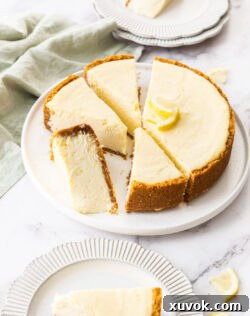
Baked Lemon Cheesecake Recipe
Rate
Pin
Ingredients
- 250 g digestive biscuits (or other sweet cookie) , like granita or graham crackers (~9oz)
- 100 g unsalted butter , melted (3 ½oz)
- ½ teaspoon ground ginger , optional
FILLING
- 200 g caster sugar (or white granulated sugar) (1 cup / 7oz)
- 1 tablespoon packed lemon zest , 3-4 medium lemons (notes 1)
- 625 g cream cheese , softened (22oz)
- ¾ cup sour cream (180ml / 170g / 6oz)
- ¼ cup lemon juice (60ml)
- 1 ½ teaspoons vanilla extract
- 3 large eggs
For best results, always weigh ingredients where a weight is provided
Equipment
-
Stand mixer with paddle attachment
-
OR electric mixer and large bowl
-
rubber spatula
-
8 inch springform pan
Instructions
-
Preheat the oven to 160C (140C fan forced)/ 320F /. Grease and line an 8 inch round spring form pan with baking paper.
-
Blend the cookies to crumbs (if you don’t have a blender or food processor, put the cookies in a plastic bag and crush them with a rolling pin)
-
Add the melted butter & ground ginger and mix well.
-
Tip into the prepared pan and use a straight sided glass to gently press the crumbs out over the centre then up against the sides.
-
Add the sugar and lemon zest to the bowl of a stand mixer or a large mixing bowl and use your fingertips to blend the zest into the sugar until it looks like wet sand.
-
Using the paddle attachment or a hand mixer, beat the cream cheese into the sugar on low-med speed for about a minute until smooth. Scrape down the sides of the bowl as required.
-
Add the sour cream, lemon juice and vanilla and beat on low scraping down the sides as necessary until just combined.
-
Add the eggs, one at a time beating on low until each is just incorporated. Don’t over mix.
-
Pour the filling into the cookie base and smooth the top if needed.
-
Place an oven safe dish or cake pan filled with water on the bottom shelf of the oven. Place the cheesecake onto a separate baking sheet (to catch any butter that might leak out in cooking) and place in the middle shelf of the oven. Bake for 40-45 minutes until the edges look set and the middle still has a wobble when you gently nudge the pan,
-
Cooling: Turn the oven off and let the cheesecake cool in the oven, door closed, for 30 minutes. Open the door and let it cool for a further 30 minutes before removing it. Let it cool another 30 minutes then transfer to the fridge for at least 6 hours or overnight is best.
-
Please take a moment to leave a comment & rating. It’s appreciated and so helpful.
Notes
- Tablespoons: I use a standard Australian 20ml tablespoon (equal to 4 teaspoons). Check yours before measuring.
- Cracking in cheesecakes: If you follow the instructions to a tee, you shouldn’t get any cracks but all ovens are different so if yours runs a little hotter than mine, your cheesecake may bake quicker. If you do get cracks, don’t worry. It will still taste amazing and if you want to hide them, just add a layer of lemon curd or some whipped cream.
- All ovens vary so check your cheesecake around the 40 minute mark being very gently when you move the oven shelf or cake pan and nudge it gently. The outside couple of inches should look set while the middle still has a wobble.
- Nutrition details are approximate only – scroll below the recipe to find the full nutritional information.
MORE CHEESECAKE RECIPES!
Calories from Fat 279