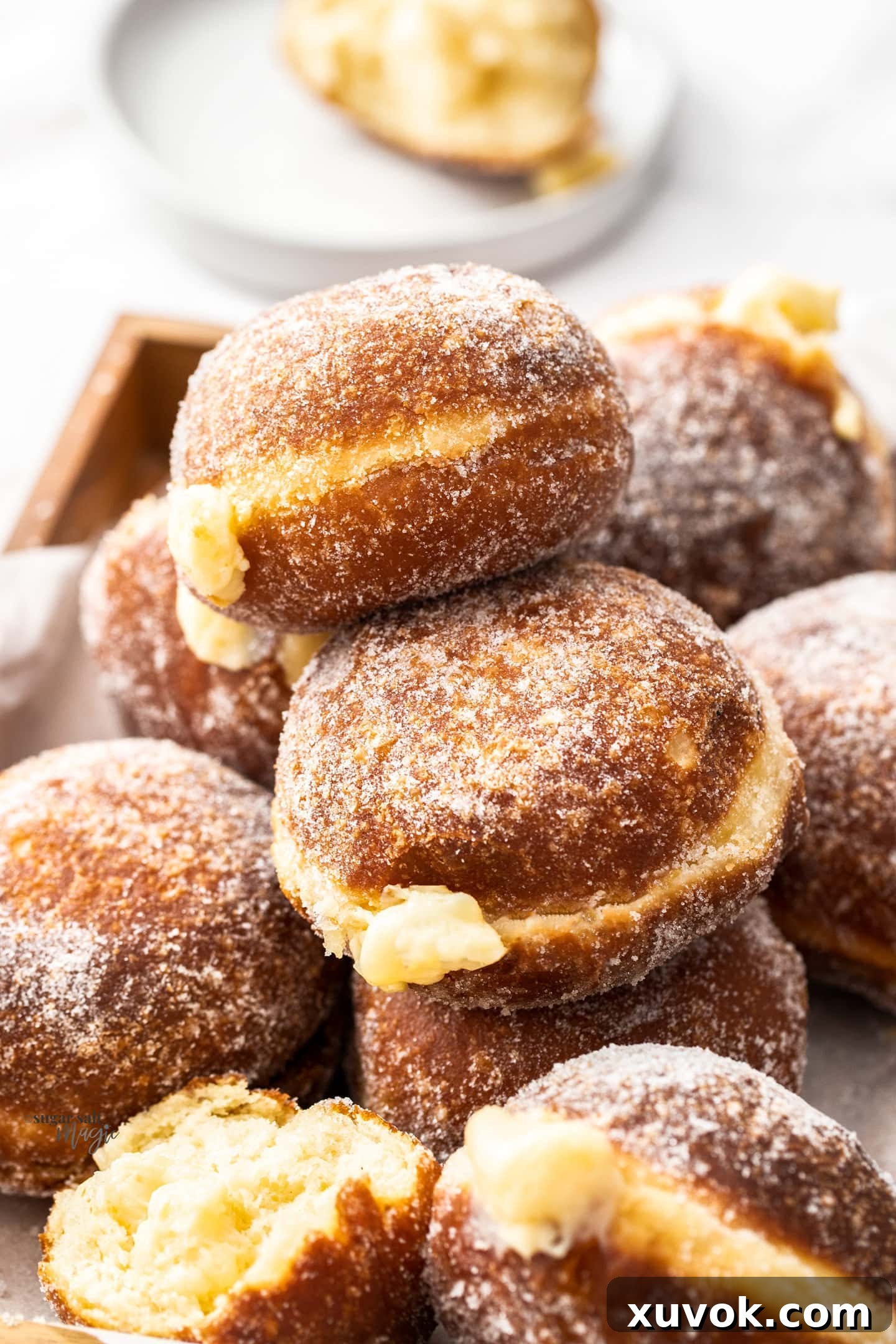
Homemade Bavarian Cream Donuts: Your Ultimate Guide to Fluffy, Creamy Perfection
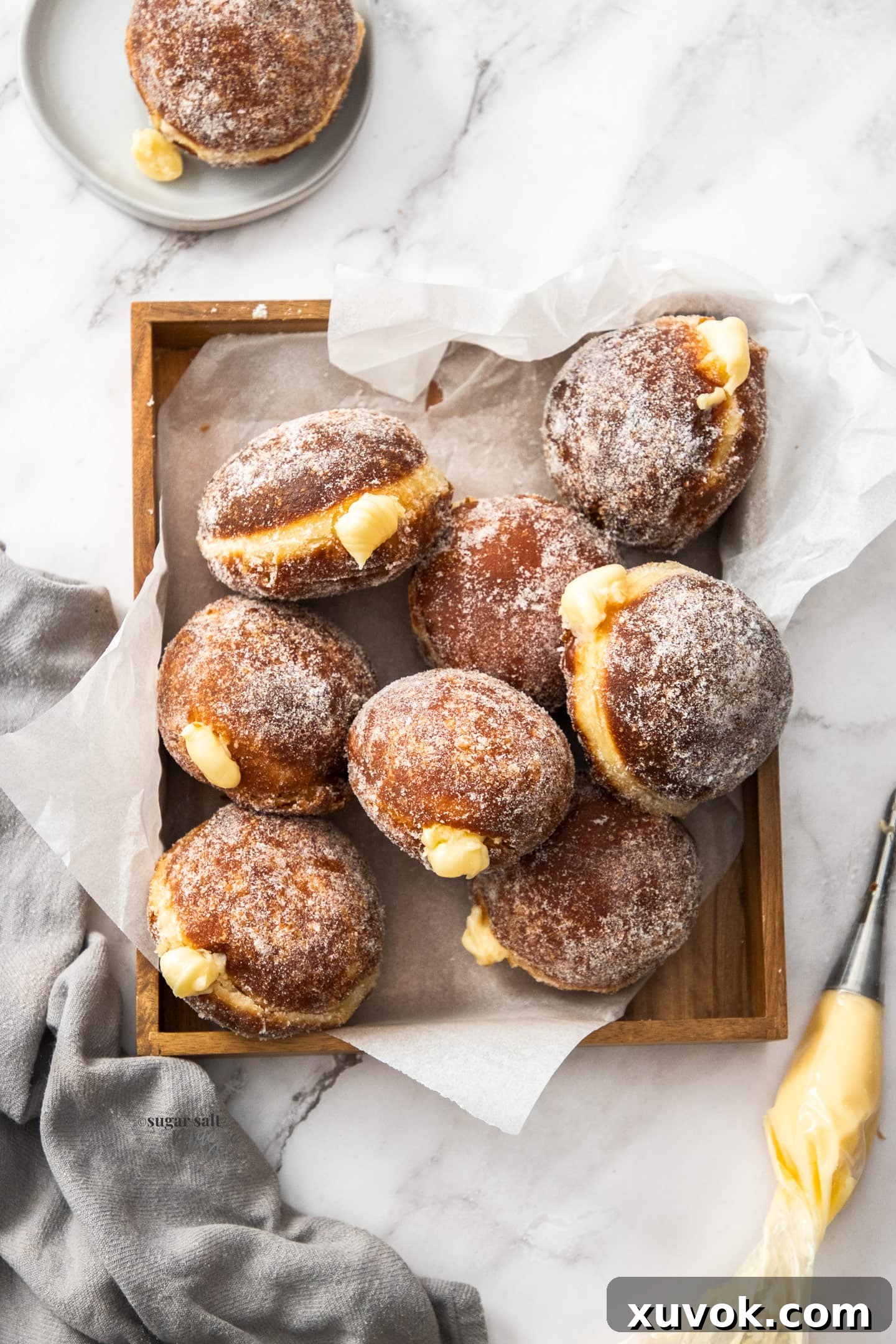
Imagine biting into a perfectly golden, soft, and impossibly fluffy donut, generously filled with a rich, silky vanilla pastry cream. That, my friends, is the dream of a homemade Bavarian cream donut. Forget store-bought versions; crafting these delightful treats at home is not just a rewarding culinary adventure but also guarantees a taste experience that truly stands out. This comprehensive guide will walk you through every step of creating these incredible yeast-raised donuts, ensuring a batch of pure bliss that will impress anyone lucky enough to try them.
Bavarian cream donuts, also known as Berliner Pfannkuchen in Germany or simply cream-filled donuts, have a storied history as a beloved European pastry. Characterized by their light, airy dough and a decadent custard filling, they offer a sophisticated alternative to the classic jelly or glazed donut. This particular recipe elevates the experience further by focusing on the finest ingredients and a leisurely overnight proofing process, which deeply enhances the flavor and texture of the dough, making it unparalleled in richness and depth.
While the process of making yeast donuts might seem intimidating, especially when involving an overnight rest, each step is designed to be straightforward and enjoyable. It’s a project that brings joy to the kitchen and culminates in an extraordinary indulgence. Whether you’re an experienced baker looking for a new challenge or a passionate home cook eager to master a classic, these Bavarian cream donuts promise a delectable reward that’s truly worth the effort.
Why This Bavarian Cream Donut Recipe Is a Must-Try:
- Pillow-Soft Dough with Unbeatable Flavor: This recipe delivers donuts that are exceptionally soft, light, and airy, almost melting in your mouth. The overnight proofing isn’t just a time-saver; it’s a secret weapon for developing complex flavors, giving the dough a nuanced taste that quick-proofed donuts simply can’t achieve. This extended fermentation contributes to a tender crumb and a delightful chewiness, making each bite a testament to artisanal baking.
- Velvety Smooth Vanilla Pastry Cream: At the heart of every Bavarian cream donut is its signature filling. Our recipe features a rich, creamy vanilla pastry cream (crème pâtissière) that is luscious and intensely flavored. Made with real vanilla, it provides the perfect balance of sweetness and aromatic depth, complementing the fried dough beautifully without being overly heavy. Its smooth texture creates a luxurious mouthfeel that is truly unforgettable.
- Convenient Overnight Proofing for Stress-Free Baking: One of the standout features of this recipe is the option for overnight proofing. This allows you to prepare the dough the day before, letting it slowly develop flavor and texture in the refrigerator. This not only deepens the donut’s taste but also breaks up the workload, making it a perfect weekend baking project without rushing through steps. You can wake up, shape, fry, and fill your donuts fresh, making breakfast or brunch truly special.
- A Fun and Rewarding Culinary Project: Making donuts from scratch is an incredibly satisfying experience. From watching the yeast activate to kneading the dough, shaping the perfect rounds, and seeing them puff up golden in hot oil, each stage is engaging. It’s a fantastic activity for a leisurely weekend, offering a creative outlet that results in a tangible, delicious reward. The joy of presenting a platter of these homemade beauties is truly unmatched.
- Simple Steps, Spectacular Results: While it may not be the quickest treat to prepare from start to finish due to the resting times, the individual steps themselves are straightforward and manageable for bakers of all skill levels. We provide clear, detailed instructions to guide you, ensuring that even if you’re new to yeast baking or deep frying, you’ll achieve professional-quality results. The exceptional taste and texture of these Bavarian cream donuts make every moment spent in the kitchen utterly worthwhile.
If your heart beats for fried doughnuts, don’t stop here! You absolutely must explore our caramel doughnuts filled with brown sugar custard for another level of decadence. Or, for a delightful baked alternative, try our vibrant lemon donuts.
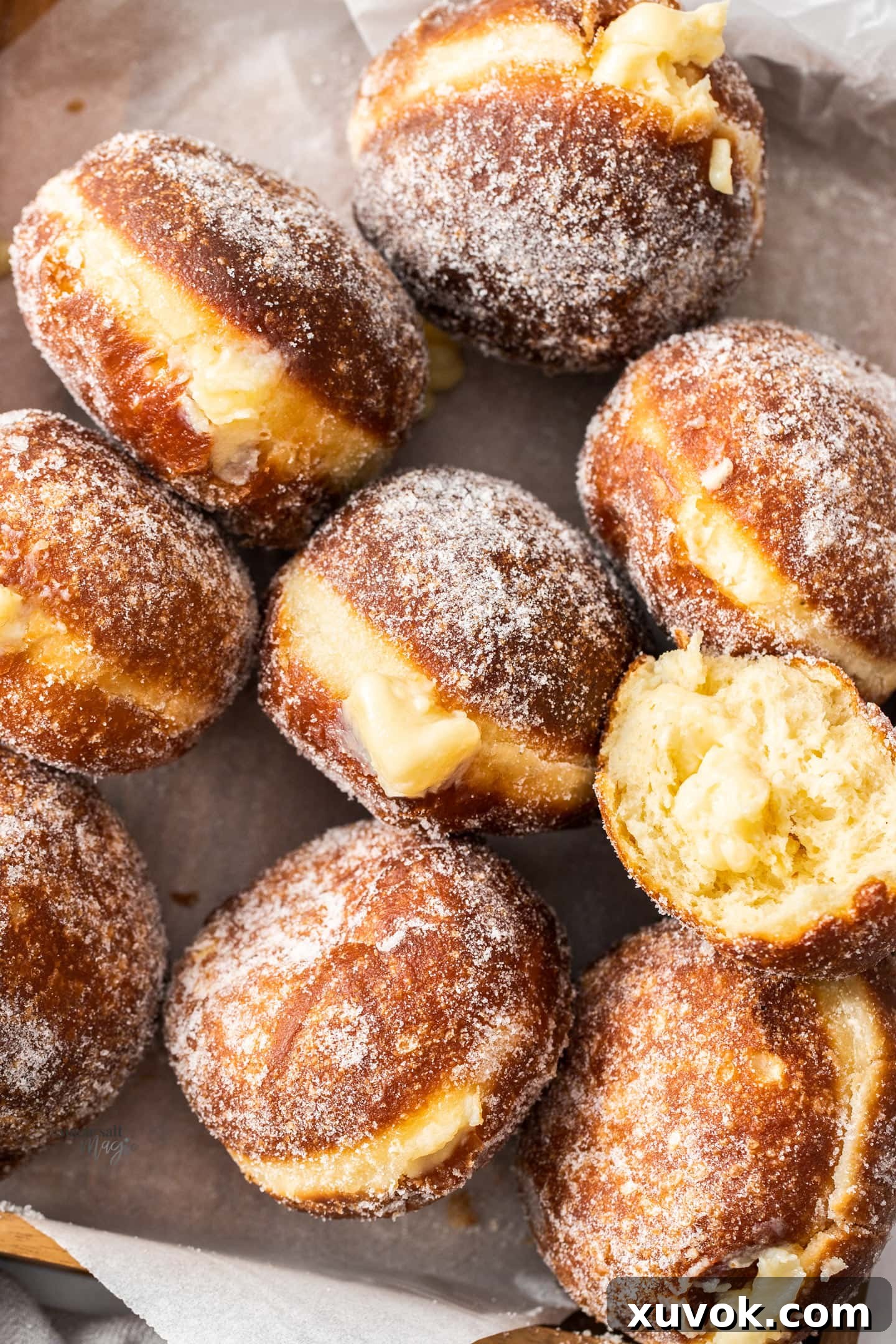
Table of contents
- Don’t Miss Out on New Recipes!
- Essential Ingredients for Perfect Bavarian Donuts
- Recommended Tools and Equipment
- Step-by-Step Guide to Making Bavarian Cream Donuts
- Crafting the Perfect Donut Dough
- Shaping and Proofing Your Donuts
- Preparing the Luscious Bavarian Cream Filling
- Frying to Golden Perfection and Filling
- Expert Tips and Tricks for Success
- How to Ensure Your Donuts Are Perfectly Cooked
- Delightful Variations and Flavor Twists
- Yield, Storage, and Serving Suggestions
- More Irresistible Donut and Sweet Treat Recipes
Don’t Miss Out on New Recipes!
Join our community of passionate bakers and get the latest, most delicious recipes delivered straight to your inbox. Be the first to discover new treats and tips!
Sign up for our newsletter to receive exclusive recipes and baking inspiration directly to your inbox!
While the recipe card provides all the necessary measurements and instructions, we highly recommend taking a moment to read through this entire post. Here, you’ll discover invaluable extra tips, answers to frequently asked questions, and creative variations derived from our extensive testing and research. These insights will help you achieve the absolute best results for your Bavarian cream donuts!
Essential Ingredients for Perfect Bavarian Donuts
Crafting these divine Bavarian cream donuts requires just a handful of quality ingredients that combine to create both the fluffy dough and the rich pastry cream filling. Our recipe emphasizes simplicity, utilizing only 10 key components to achieve extraordinary flavor and texture. Understanding the role of each ingredient is crucial for baking success.
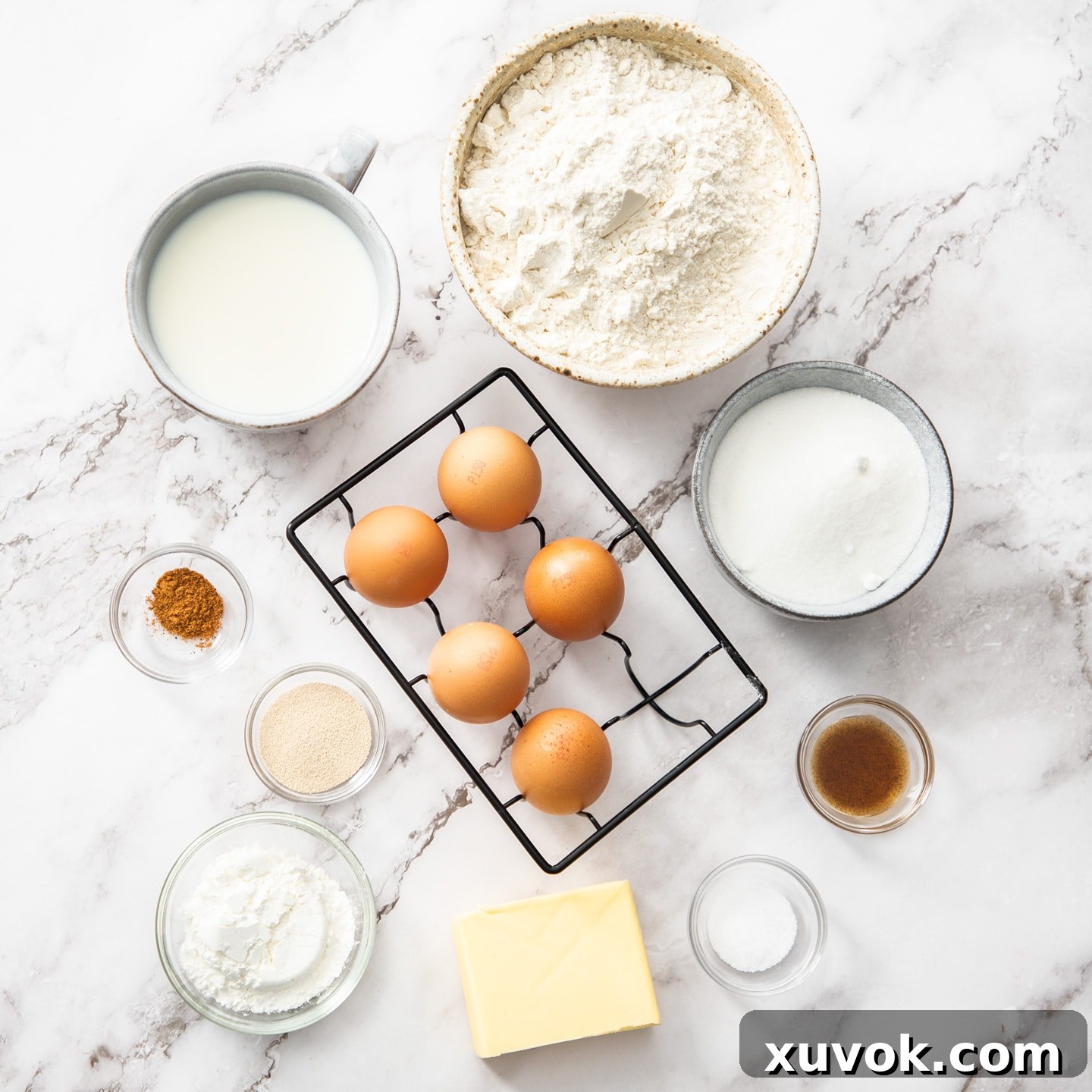
For precise quantities and detailed instructions, please refer to the comprehensive recipe card below.
- Flour: We typically use plain flour (all-purpose flour) as it strikes a wonderful balance, providing just enough chewiness while maintaining incredible softness. If you desire a distinctly chewier donut, often preferred by some for a more robust texture, feel free to substitute with bread flour. Bread flour has a higher protein content, which encourages greater gluten development. Remember, accurate measurement by weight is paramount for consistent results.
- Yeast: This recipe calls for instant dry yeast, which is convenient as it can often be added directly to dry ingredients without prior activation. However, for peace of mind and to ensure your yeast is active, we always recommend the initial activation step, even with instant yeast. If you’re using active-dry yeast, use the same quantity but definitely do not skip the initial proofing step with warm milk and sugar to confirm its vitality.
- Sugar: Caster sugar, also known as superfine sugar, is our sweetener of choice. Its fine granules dissolve quickly and evenly into the dough and cream, ensuring a smooth texture without any grittiness. It’s important to note that this is NOT powdered sugar (confectioners’ sugar). If you only have regular granulated white sugar, you can achieve a similar fineness by briefly grinding it in a food processor or spice grinder.
- Salt: A small amount of salt is crucial in any baking recipe, especially for yeast doughs. It balances the sweetness, intensifies the overall flavors of the other ingredients, and helps to regulate yeast activity, contributing to a more controlled and flavorful rise.
- Milk: Full-fat milk is highly recommended for both the dough and the pastry cream. The higher fat content contributes significantly to the richness, tenderness, and moistness of the donuts, yielding superior flavor and a luxuriously soft crumb. Warm milk is also essential for activating the yeast properly.
- Eggs: We use large, free-range eggs in this recipe. Eggs play multiple roles: they enrich the dough, add structure, provide moisture, and contribute to the beautiful golden color of the fried donuts. For the pastry cream, egg yolks are vital for creating a rich, thick, and velvety custard.
- Butter: As an enriched dough, our donut recipe relies on unsalted butter for its profound richness, flavor, and tenderizing qualities. Softened butter is gradually incorporated into the dough, leading to a supple, elastic texture. Always use unsalted butter to have full control over the salt content in your recipe.
- Nutmeg: Just a whisper of freshly ground nutmeg adds a warm, cozy, and subtly spiced aroma that is classic in traditional donut recipes. It elevates the overall flavor profile, giving the donuts a comforting depth that enhances the vanilla cream.
- Vanilla: For the most authentic and exquisite flavor, please use high-quality vanilla paste or pure vanilla extract. Avoid synthetic vanilla essence, as it lacks the complex aromatic notes that make vanilla cream truly special. Pure vanilla is key to the luscious taste of the Bavarian cream.
- Cornflour / Cornstarch: This fine, white powder acts as a crucial thickening agent for our pastry cream. In many parts of the world, it’s known as cornstarch. It helps to create a stable, smooth, and wonderfully thick custard, ensuring your Bavarian cream filling holds its shape beautifully and doesn’t thin out when piped.
Recommended Tools and Equipment for Perfect Donuts
Having the right tools can make all the difference in the success and enjoyment of your donut-making process. While some equipment is essential, others simply make the job easier and more efficient. Here’s a breakdown of what you’ll need:
- Stand Mixer with Dough Hook: Highly recommended for kneading the donut dough. A stand mixer significantly reduces the physical effort and time required, making the process much smoother. It ensures consistent kneading, which is vital for developing the gluten structure that gives donuts their characteristic chewiness and elasticity. While you can knead by hand (expect a good 20-minute workout!), a stand mixer is a true game-changer for enriched doughs like this one.
- Large Mixing Bowl: Essential for combining ingredients and allowing the dough to proof. Choose one large enough to accommodate the dough as it doubles in size.
- Saucepan: A sturdy saucepan is needed for preparing the rich vanilla pastry cream filling. A heavy-bottomed pan is ideal to prevent scorching the milk and custard as it thickens.
- Slotted Spoon or Spider Skimmer: Crucial for safely turning and removing the fried donuts from the hot oil. A slotted spoon allows excess oil to drain away, preventing your donuts from becoming greasy.
- Piping Bag with Cream Puff Piping Nozzle: While not strictly mandatory, a piping bag fitted with a long, thin cream puff nozzle (or a bismarck nozzle) makes filling the donuts incredibly easy and neat. This specialized nozzle allows you to gently inject the cream directly into the center of the donut without tearing the dough or making a mess. You can improvise by cutting a small hole in the side of the donut and using a regular piping bag with a round tip, but the dedicated nozzle offers the best experience.
- Deep Frying Thermometer: Absolutely essential for maintaining the correct oil temperature during frying. Consistent temperature is key to perfectly cooked donuts that are golden brown on the outside and thoroughly cooked inside, without being oily or burnt. A candy thermometer or dedicated deep-frying thermometer is a non-negotiable tool for this recipe.
- Kitchen Scales: For the most accurate and consistent baking results, weighing your flour and other dry ingredients is highly recommended. Volume measurements can vary greatly depending on how ingredients are scooped, impacting the dough’s texture.
- Large Heavy-Bottomed Pot (Dutch Oven): Ideal for deep frying, a Dutch oven or a large, heavy-bottomed pot helps maintain a stable oil temperature and prevents splattering.
Step-by-Step Guide to Making Bavarian Cream Donuts
Creating these heavenly Bavarian cream donuts is a process of love, spread across several stages for optimal flavor and texture. Follow these detailed steps to achieve perfect results. Remember, specific quantities and precise timings are available in the recipe card below.
Crafting the Perfect Donut Dough
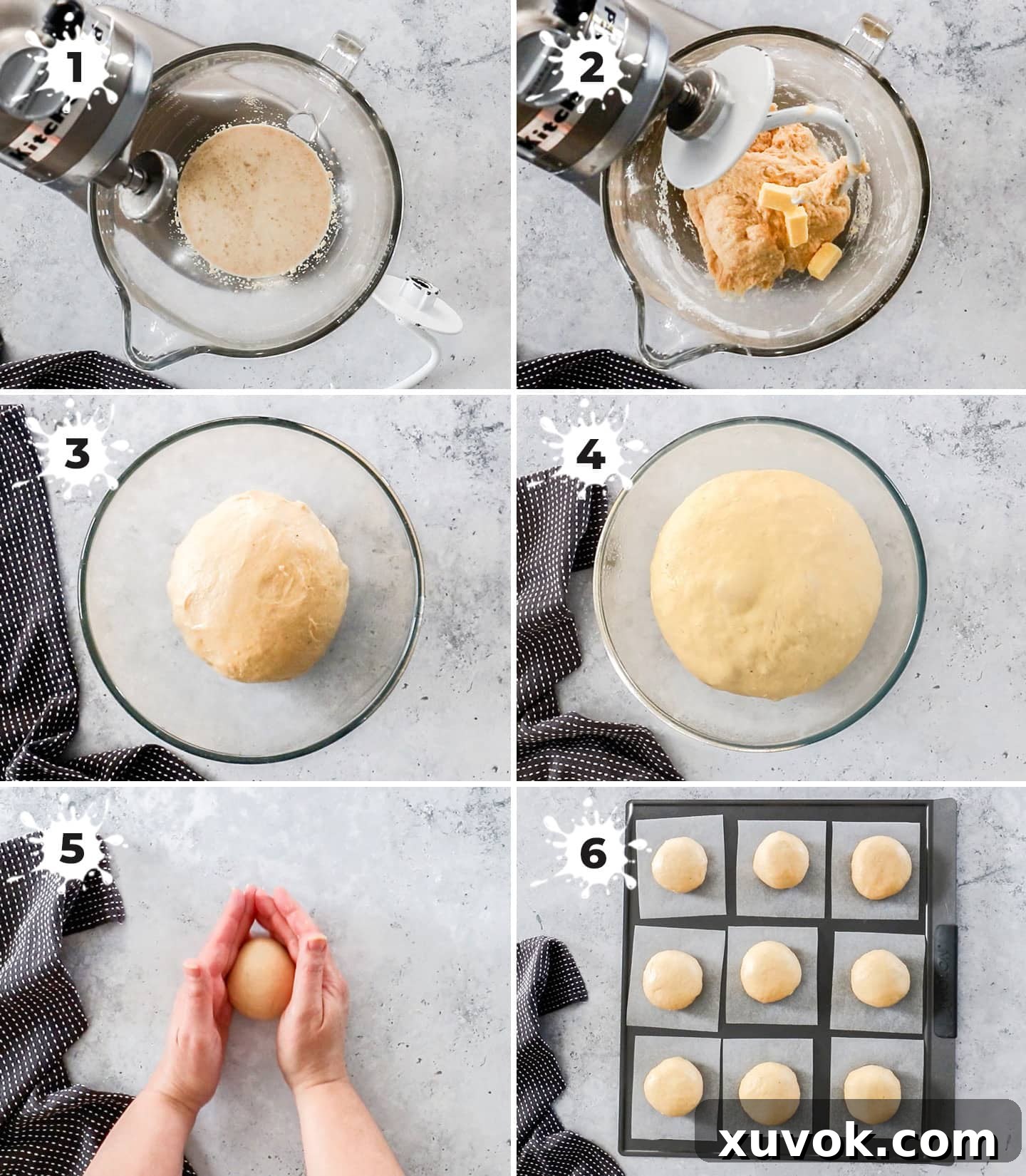
- Activate the Yeast for a Lively Dough: Begin by gently warming the milk until it’s lukewarm (around 105-115°F or 40-46°C) – it should feel warm to the touch but not hot, as excessive heat can kill the yeast. Pour this warm milk into the bowl of your stand mixer, add the caster sugar, and then sprinkle the instant dry yeast evenly over the surface. Give it a gentle stir. Allow this mixture to sit undisturbed for about 5-10 minutes. This crucial step is to activate the yeast; if it’s alive and active, a frothy, bubbly layer will form on the surface, indicating it’s ready to work its magic (photo 1). If no froth appears, your yeast might be expired, and it’s best to start with a fresh batch.
- Combine Dry and Wet Ingredients into a Shaggy Dough: Once your yeast is active, add the remaining dry ingredients—plain flour, salt, and freshly ground nutmeg—into the yeast mixture. Crack in the two large eggs and the additional egg yolk. Attach the dough hook to your stand mixer and start mixing on low speed. Continue mixing until all the ingredients are just combined and a rough, shaggy dough forms. Increase the speed slightly to low-medium and knead for another 3 minutes. This initial kneading helps to begin the gluten development process, which is essential for giving the donuts their classic chewy yet tender texture.
- Enrich the Dough with Softened Butter: With the mixer still running on a low speed, begin adding the softened unsalted butter, a small cube at a time. Allow each piece of butter to be fully incorporated into the dough before adding the next. This process requires patience but is vital for an enriched dough. Once all the butter is integrated, increase the mixer speed to low-medium and continue kneading for a further 5-10 minutes. The dough will transform, becoming smooth, elastic, and soft, pulling away cleanly from the sides of the bowl. It will feel pillowy and plump to the touch, indicating proper gluten development (photo 2).
- The Overnight Rest for Enhanced Flavor: Lightly oil a large clean bowl. Transfer the prepared donut dough into this bowl, then flip it over once to ensure it’s lightly coated with oil on all sides. This prevents it from drying out and sticking. Cover the bowl tightly with plastic wrap to create an airtight seal. Place the bowl in the refrigerator to chill and proof overnight, ideally for 12 to 24 hours. This extended cold proof significantly enhances the flavor of the dough and contributes to a superior texture, making your donuts exceptionally delicious (photo 3).
Shaping and Proofing Your Donuts
- Prepare the Dough the Next Day: The following day, remove the chilled dough from the refrigerator (photo 4). It will have expanded and become firmer. Gently turn the dough out onto a lightly floured surface and give it 3-4 quick, light kneads to release any excess air and make it more pliable. For consistently sized donuts, which ensures even cooking, weigh the entire dough mass. Then, divide the total weight by 9 to determine the weight for each donut. You should aim for 9 dough balls, each weighing approximately 100g (3.5oz).
- Master the Art of Shaping Round Donuts: Take one portion of dough and give it a brief, light knead to make it uniform. Now, in the palm of your non-dominant hand, gently pull the edges of the dough from all sides and pinch them together underneath, creating a smooth, taut top surface. Once you have a roughly spherical shape with a smooth top, place the dough ball, pinched-side down, onto your clean work surface. Cup the dough with both hands, gently applying light pressure, and drag it towards you 3-4 times. This motion creates surface tension, resulting in a perfectly round, smooth dough ball (photo 5). Repeat this shaping technique for the remaining dough portions.
- The Final Proof: Cut 9 individual squares of baking paper (parchment paper), each large enough to comfortably hold a single donut. Place each perfectly shaped dough ball, pinched-side down, onto its own square of baking paper. Arrange these on a baking sheet, leaving ample space between them to allow for expansion. Lightly cover the sheet with a clean, damp tea towel to prevent the dough from drying out. Let the dough balls rise in a warm, draft-free place for 1.5 to 2 hours, or until they have visibly doubled in size and feel light and puffy (photo 6). This final proof is crucial for achieving that signature airy texture.
Preparing the Luscious Bavarian Cream Filling
The heart of these Bavarian donuts is the crème pâtissière, commonly known as pastry cream. This thick, rich, and incredibly smooth vanilla custard simply melts in your mouth. It’s surprisingly easy to make, but requires careful attention to temperature and continuous stirring to ensure a perfectly smooth, lump-free filling. If you prefer a lighter, airier filling, you can transform this into a diplomat cream by gently folding in some freshly whipped cream once the pastry cream has cooled.
- Create the Custard Base: In a medium saucepan, combine 1 ¼ cups of whole milk with the caster sugar and pure vanilla extract. Heat this mixture over low-medium heat, stirring regularly until the sugar has dissolved and the milk is steaming, but not boiling. Remove from the heat. In a separate, medium mixing bowl, whisk together the remaining ¼ cup milk, the two egg yolks, and the cornflour until the mixture is completely smooth and no lumps remain. This is your tempering base.
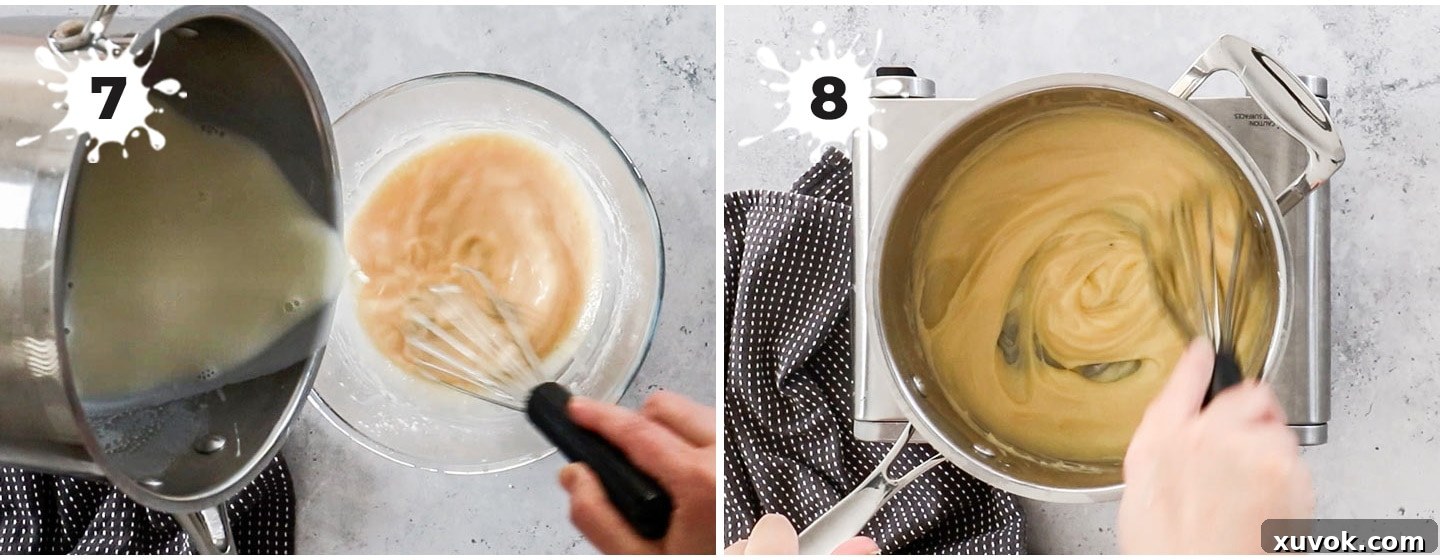
- Temper and Thicken the Cream: While continuously whisking the egg yolk mixture, very slowly drizzle the hot milk mixture into it in a thin, steady stream (photo 7). This process, known as tempering, gradually brings up the temperature of the egg yolks, preventing them from scrambling. Once fully combined, return the entire mixture to the saucepan. Continue to heat over low-medium heat, whisking constantly and vigorously, especially as it begins to thicken. It will quickly become very thick; continue whisking until the pastry cream no longer settles back into itself when you move it around, achieving a pudding-like consistency (photo 8). Immediately remove from heat. For an extra smooth finish, pass the hot pastry cream through a fine-mesh strainer into a clean dish. Press plastic wrap directly onto the surface of the cream to prevent a skin from forming, and allow it to cool completely to room temperature before chilling.
Frying to Golden Perfection and Filling
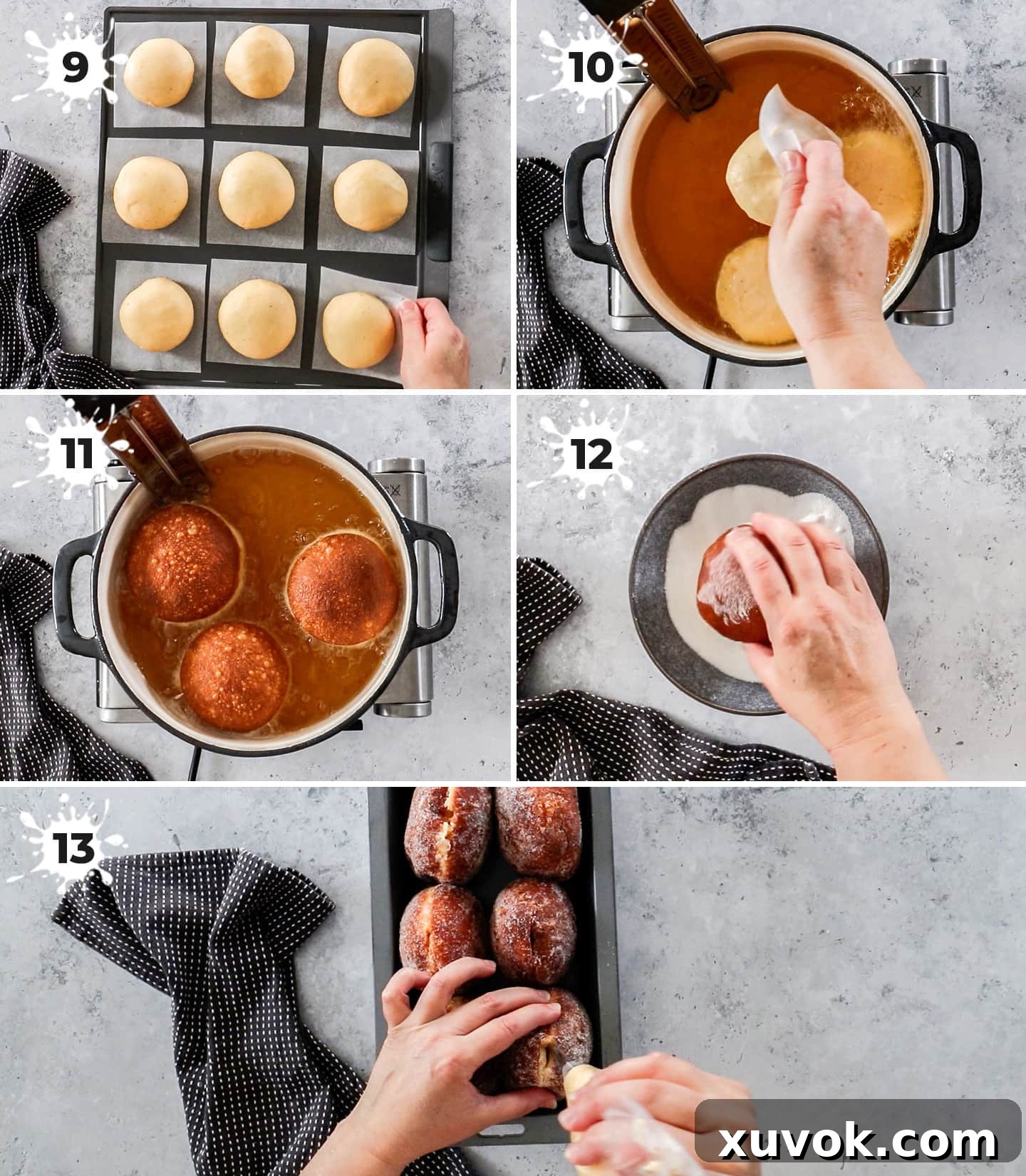
- Prepare for Frying: Once your dough balls have beautifully proved and doubled in size (photo 9), it’s time to fry. Set up your frying station: lay a few layers of paper towels on a baking tray to drain the fried donuts. Pour about 2 liters (2 quarts) of vegetable oil (such as canola, sunflower, or rice bran oil) into a Dutch oven or a large, heavy-bottomed saucepan. Attach a candy or deep-frying thermometer to the side of the pot – this is absolutely essential for maintaining the correct oil temperature. Heat the oil steadily to 180°C (350°F). Maintaining this precise temperature is key to perfectly cooked donuts.
- Carefully Fry the Donuts in Batches: Once the oil reaches the target temperature, you can begin frying. Add 2-3 donuts to the hot oil at a time, ensuring you do not overcrowd the pan. Overcrowding will cause the oil temperature to drop significantly, leading to greasy, undercooked donuts. To safely transfer the dough, hold the baking paper with your dominant hand and gently support the dough ball with your other hand. Slowly lower the donut into the hot oil, then carefully peel away the baking paper (photo 10). Be extremely cautious and avoid dropping the donut from a height, as this can cause hot oil to splash.
- Cook to Golden Perfection: Fry the donuts for 3-4 minutes on one side until they achieve a beautiful deep golden brown color. Throughout this process, keep a close eye on your oil thermometer and adjust the heat as necessary to maintain 180°C (350°F). Gently turn the donuts over using a slotted spoon or tongs (photo 11) and cook for another 3-4 minutes on the second side until evenly golden. The consistent temperature ensures they cook through without burning or absorbing too much oil.
- Drain, Sugar, and Cool: Once perfectly golden and cooked, transfer the fried donuts with your slotted spoon to the paper towel-lined tray to drain for about 30-40 seconds. While the donuts are still hot, generously roll them in caster sugar to coat them completely (photo 12). The heat allows the sugar to adhere beautifully. Once coated, transfer them to a wire rack to cool down completely to room temperature. This is important before filling, as warm donuts can melt the cream. Once fully cooled, prepare your pastry cream by whisking it until smooth, then transfer it to a piping bag fitted with a cream puff piping nozzle. Carefully make a small slit in the side of each donut and gently insert the nozzle towards the center. Squeeze the piping bag, filling the donut until you feel resistance and the donut feels plump. Serve immediately and enjoy the exquisite reward of your efforts!
Expert Tips and Tricks for Success
Achieving bakery-quality Bavarian cream donuts at home is entirely possible with a few key techniques and considerations. These tips, refined through countless tests, will guide you to a perfect batch every time:
- Always Weigh Your Flour: Precision is paramount in baking, especially when working with doughs. Using kitchen scales to weigh your flour (and other dry ingredients) is significantly more accurate than using cup measurements. A slight excess or deficiency in flour can drastically alter the dough’s consistency, leading to dry, dense, or overly sticky donuts. If you must use cups, remember to lightly spoon the flour into the measuring cup and then level it off with the back of a knife – never scoop directly from the bag.
- Resist the Urge to Add More Flour to the Dough: This donut dough is designed to be soft and slightly sticky, even after thorough kneading. It might feel a bit challenging at first, but trust the process. The kneading action actively develops gluten, which will gradually make the dough more manageable and less sticky without adding extra flour. Adding too much flour will result in dry, dense, and less flavorful donuts. Be patient and let the gluten do its work; the dough will come together beautifully.
- Pre-activating the Yeast (Even for Instant): While instant yeast technically doesn’t require prior activation, we strongly recommend taking this extra step. It’s a quick and easy way to verify that your yeast is alive and active before committing to the entire recipe. If your yeast doesn’t become frothy in the warm milk and sugar mixture, you’ll know to replace it, saving you valuable time and ingredients from a failed dough. This small precaution guarantees a successful rise.
- Mind the Milk Temperature for Yeast: When warming the milk for yeast activation, ensure it’s lukewarm (around 105-115°F or 40-46°C). Milk that is too hot will kill the yeast, rendering it inactive and preventing your dough from rising. If it’s too cold, the yeast will activate too slowly or not at all. Use a thermometer for accuracy, or test it by feeling: it should be comfortably warm, not hot.
- Perfecting the Donut Shaping Technique: Achieving a perfectly round, smooth donut is key for even frying and a beautiful appearance. Start by holding a portion of dough in the palm of your non-dominant hand. With the fingers of your dominant hand, gently pull the edges of the dough from underneath and pinch them into the center, effectively smoothing out the top surface against your palm. Once you have a taut ball, place it pinched-side down on your lightly floured work surface. Cup the dough with both hands, gently applying pressure, and drag it against the surface towards you. Rotate the dough 90 degrees and repeat this dragging motion 3-4 times. This creates surface tension, resulting in a perfectly round and smooth ball ready for proofing.
- Gentle Heat for Lumpy-Free Pastry Cream: When cooking the Bavarian cream filling, always use low-medium heat and whisk continuously. High heat or intermittent stirring can cause the egg yolks to scramble or the cornflour to clump, leading to a lumpy, unappetizing custard. Consistent, gentle whisking ensures an incredibly smooth, silky, and uniform texture.
- Safety First When Frying with Hot Oil: Deep frying requires extreme caution. Never drop donuts into hot oil from a height, as this can cause dangerous splattering. Instead, carefully lower each donut close to the oil surface. If you’re uncomfortable getting your hands too close, use tongs or a slotted spoon to gently guide the dough into the oil. Always ensure your frying area is clear and free of water.
- Avoid Overcrowding the Frying Pan: Fry your donuts in small batches (2-3 at a time) to prevent overcrowding. Each donut needs adequate space to expand and cook evenly. More importantly, adding too many cold dough balls at once will significantly drop the oil’s temperature, leading to greasy donuts that absorb too much oil and cook unevenly. Maintain that optimal 180°C (350°F) temperature.
- Use a Slotted Spoon for Drainage: Always use a slotted spoon or a spider skimmer to remove the fried donuts from the oil. This allows excess oil to quickly drain away, preventing your donuts from becoming overly oily and ensuring a lighter, crisper exterior.
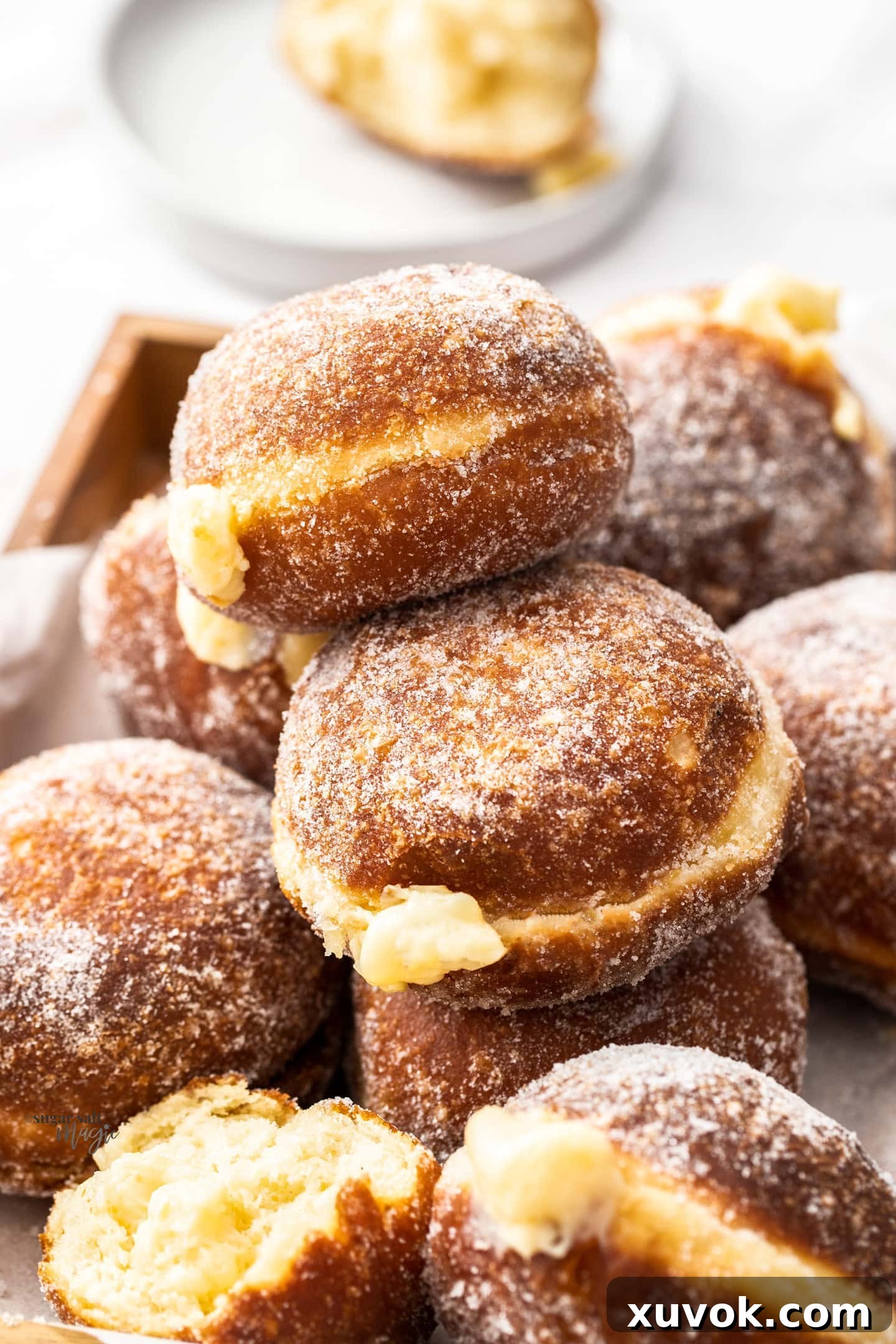
- Piping the Pastry Cream with Ease: For the neatest and most efficient filling, a cream puff nozzle (or bismarck nozzle) is your best friend. This long, thin piping tip allows you to insert it deep into the center of the donut through a small slit. As you gently squeeze the piping bag, you’ll feel the donut plump up and a slight resistance as it fills. Continue until the donut feels weighty and full, then slowly withdraw the nozzle while continuing to pipe slightly to fill the opening.
- Don’t Be Shy with the Filling: To truly experience the decadent joy of a Bavarian cream donut, ensure you use all the prepared pastry cream. Each donut should be generously filled, providing that delightful burst of creamy vanilla goodness with every bite.
How to Ensure Your Donuts Are Perfectly Cooked
There’s nothing more disappointing than biting into a beautiful homemade donut only to find an uncooked, doughy center. Ensuring your Bavarian cream donuts are thoroughly cooked is paramount for a truly enjoyable experience. The key lies in precise temperature control and a little bit of testing:
The most critical factor is maintaining the oil temperature consistently around the 180°C (350°F) mark. If the oil temperature drops too low, the donuts will take too long to cook, absorbing excess oil and becoming greasy and heavy. Conversely, if the oil gets too hot, the exterior will brown too quickly, potentially burning, while the interior remains raw and doughy. Your deep-frying thermometer is your best friend here; continuously monitor the temperature and adjust your heat accordingly throughout the frying process.
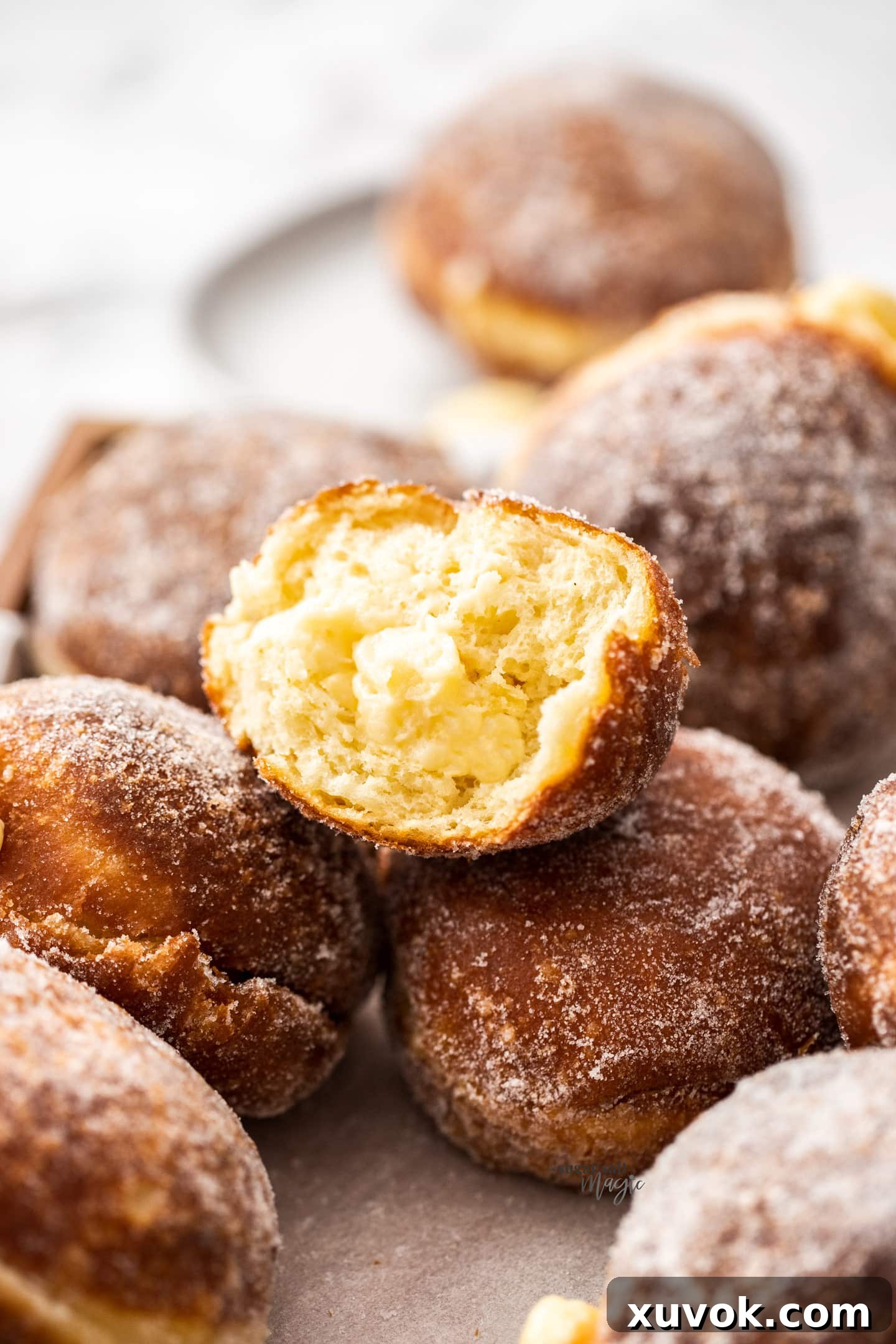
To definitively check for doneness, we recommend the “sacrifice donut” method. Once your first donut (or first batch) is cooked to a beautiful golden brown, remove it from the oil and allow it to cool slightly. Then, cut it in half right through the middle. Observe the cross-section: the dough should be light, airy, and evenly cooked, with no dense, pale, or raw spots. This initial test will allow you to confidently determine if the 3-4 minute per side cooking time is appropriate for your specific oil temperature and donut size. If it’s undercooked, adjust by increasing the cooking time slightly for subsequent batches, ensuring your remaining donuts are cooked to perfection.
Delightful Variations and Flavor Twists
While the classic vanilla Bavarian cream donut is undeniably delicious, this recipe offers a fantastic base for creativity. You can easily customize your donuts with different fillings to suit various preferences and occasions. Here are a couple of popular and exciting variations:
- Rich Chocolate Pastry Cream: For chocolate lovers, a decadent chocolate pastry cream makes an irresistible alternative. Simply follow our chocolate pastry cream recipe and use it as the luscious filling for your fluffy donuts. The deep cocoa notes pair wonderfully with the sweet, fried dough, creating a truly luxurious treat.
- Fruity Jam Filling: If you prefer a burst of fruitiness, these donuts are also excellent when filled with your favorite jam or fruit preserve. Classic strawberry, raspberry, or apricot jams are traditional choices that offer a delightful contrast to the rich dough. Ensure your jam is smooth or has small, soft fruit pieces for easy piping. A good quality fruit curd, such as lemon or passion fruit, would also make a vibrant and tangy filling.
- Spiced Fillings: Consider adding a pinch of cinnamon or cardamom to your vanilla pastry cream for a warm, aromatic twist, especially appealing during cooler months.
- Coffee or Liqueur-Infused Creams: For an adult-friendly treat, a hint of espresso powder in your pastry cream or a splash of a complementary liqueur (like Kahlúa or Grand Marnier) can elevate the flavor profile significantly.
Yield, Storage, and Serving Suggestions
Understanding the yield, proper storage, and best serving methods for your Bavarian cream donuts will help you make the most of your delicious efforts.
- Yield: This recipe is carefully calibrated to produce 9 generously sized, regular Bavarian cream donuts. If you prefer smaller, more bite-sized treats or wish to serve a larger crowd, you can certainly divide the dough into 12-13 smaller portions. Just keep in mind that smaller donuts will cook more quickly, likely requiring only 2-3 minutes per side. Always test your first small donut by cutting it open to ensure it’s cooked through.
- Serving Suggestions: Bavarian cream donuts, like all fried donuts, are absolutely best enjoyed as fresh as possible. The moment they are filled with that luscious cream, their texture and flavor are at their peak. Serve them immediately after filling for the ultimate experience. Their tender dough and creamy filling make them a perfect dessert, a decadent breakfast treat, or a delightful accompaniment to an afternoon coffee.
- Storage: While ideal when fresh, if you happen to have any leftovers (a rare occurrence!), store them in an airtight container in the refrigerator for a maximum of 1-2 days. The moisture from the cream can cause the donut dough to soften over time.
- Reheating Leftovers: To revive refrigerated donuts and bring back some of their original fluffiness, a quick zap in the microwave can work wonders. Heat them for just 8-10 seconds – this is enough to gently warm the dough without overheating the delicate pastry cream. Be careful not to microwave for too long, as it can make the donuts tough or melt the filling.
More Irresistible Donut and Sweet Treat Recipes You’ll Love
- Chocolate Filled Donuts
- Jam Doughnuts (classic donuts but baked, not fried)
- Caramel Doughnuts with Brown Sugar Custard (classic fried doughnuts)
- Chocolate Chouxnuts (doughnuts made with choux pastry)
- Biscoff Donuts (cake style donuts)
- Cinnamon Caramel Cake Donuts (cake style donuts)
- Orange Donuts with Pomegranate Icing (cake style donuts)
- Maritozzi (Italian Cream Buns) – brioche style bun filled with vanilla cream
Loved this Bavarian Cream Donuts recipe?
We’d be thrilled if you left a rating and comment below! Your feedback is incredibly valuable and helps other home bakers discover this delicious recipe.
Hungry for more? Subscribe to our newsletter for free recipes straight to your inbox. Also, follow along with us on Facebook, Pinterest and Instagram for daily inspiration and baking adventures.

Bavarian Cream Donuts
9
donuts
45 minutes
30 minutes
18 hours
19 hours
15 minutes
For best flavor, start this recipe the day before so the dough can rest in the fridge overnight. If you want to make them all on one day, let the dough rise for 1 – 1 1/2 hours before proceeding.
The pastry cream can be made 1-2 days ahead of time.
Rate
Pin
Ingredients
FOR THE DOUGHNUTS
-
¾ cup milk -
¼ cup white sugar (50g / 1.8oz) -
2 ¼ teaspoons instant yeast (or active dry – see notes) (7g or 1 sachet) -
450 g plain flour (all-purpose flour) (3 ½ cups / 1lb) -
½ teaspoon salt -
¼ teaspoon freshly ground nutmeg -
2 large eggs -
1 egg yolk, from a large egg -
113 g unsalted butter, softened (1 stick / ½ cup) -
2 liter vegetable oil (like canola / sunflower / rice bran) -
1 cup caster sugar (superfine sugar), for coating (200g / 7oz)
FOR THE PASTRY CREAM
-
1 ½ cups whole milk (375ml) -
⅓ cup caster sugar (superfine sugar) (66g / 2.3oz) -
1 teaspoon pure vanilla extract -
¼ cup cornflour (cornstarch) (30g / 1oz) -
2 egg yolks from large eggs
For best results, always weigh ingredients where a weight is provided.
Equipment
-
Stand mixer (recommended) -
mixing bowl -
Saucepan -
Slotted spoon -
Piping bag with cream puff piping nozzle (recommended)
Instructions
-
FOR THE DOUGHNUT DOUGH: Gently warm the milk for about 15 seconds in the microwave. It should be slightly warmer than room temperature, not hot. Pour the milk into the bowl of a stand mixer, add the sugar, then sprinkle the yeast on top and stir gently. Let it sit for 5-10 minutes until a frothy layer appears on top.
-
Add the flour, salt, nutmeg, eggs, and egg yolk to the frothy yeast mixture. Using a dough hook, beat on low speed for 4-5 minutes until the ingredients are combined and the dough starts to smooth out.
-
With the stand mixer still on low-medium speed, add the softened butter, a couple of cubes at a time, allowing each addition to fully incorporate before adding more. Be patient during this step.
-
Once all the butter is incorporated, continue kneading on low speed for a further 5-10 minutes. The dough will become smooth, soft, elastic, and will pull away from the sides of the bowl.
-
Lightly grease a large bowl with a tiny bit of oil or oil spray. Place the donut dough into the bowl and flip to coat all sides with oil. Cover the bowl tightly with plastic wrap and refrigerate overnight for 12 to 24 hours.
-
SHAPE THE DOUGHNUTS: The next day, remove the dough from the refrigerator and give it 3-4 quick kneads on a lightly floured surface. Weigh the dough (this ensures even-sized donuts for consistent cooking). Divide the total weight by 9 to make 9 donuts (each will be approximately 100g / 3.5oz).
-
For each piece of dough, hold it in one hand and use the fingers of your other hand to pull and pinch the dough from the edges towards the center until the side in your palm is smooth.
-
Place the dough ball, pinched side down, onto your work surface. Cup it with a hand on either side and gently drag it towards you against the work surface. Turn it 90° and repeat this dragging motion another 2-3 times until you have a nice smooth, round ball.
-
Cut 9 small squares of baking paper and place each shaped dough ball onto one of the squares on a baking tray. Cover the tray loosely with a light tea towel and let them rise in a warm, draft-free spot until doubled in size, which will take approximately 1.5 – 2 hours.
-
While the donuts are proofing, begin preparing the pastry cream.
-
FOR THE PASTRY CREAM: Pour 1 ¼ cups of milk into a heavy-based saucepan. Add the caster sugar and vanilla extract. Heat over low-medium heat until the mixture is steaming and the sugar has dissolved, stirring regularly. Remove from heat.
-
In a separate large bowl, whisk together the remaining ¼ cup milk, egg yolks, and cornflour until completely smooth and lump-free.
-
While continuously whisking the egg mixture, very slowly pour the hot milk mixture into it in a slow, steady stream. Pouring too quickly will scramble the eggs. Whisk until fully combined.
-
Return the entire mixture to the saucepan. Heat over low-medium heat, whisking constantly and vigorously, until it becomes very thick and no longer settles into itself when moved. This typically happens quickly, within about 5 minutes. Continuous whisking is crucial to prevent lumps.
-
Immediately transfer the custard through a fine-mesh strainer into a clean bowl to ensure ultimate smoothness. Press plastic wrap directly onto the surface of the custard to prevent a skin from forming, and allow it to cool completely to room temperature before chilling.
-
TO COOK THE DOUGHNUTS: Prepare your frying station by laying a few layers of paper towel on a plate or tray. Attach a candy thermometer to the side of a Dutch oven or large, heavy-bottomed saucepan. Pour in about 2 liters of vegetable oil and heat it to a precise 180°C (350°F).
-
Once the oil is at temperature, carefully add the donuts in batches of 2-3 to avoid overcrowding the pan. To transfer, hold the baking paper with one hand and gently support the dough with your other hand as you carefully lower it close to the oil surface. Once the donut is in the oil, peel away the baking paper. Be extremely careful not to drop the donut from a height to prevent hot oil splashes.
-
Deep fry for 3-4 minutes until the underside is deep golden brown. Using a slotted spoon, gently flip the donuts over and fry the other side for another 3-4 minutes until evenly golden. Continuously monitor the oil temperature; if it drops too low, the donuts will absorb too much oil; if it goes too high, they may burn on the outside while remaining raw inside.
-
Remove the cooked donuts from the oil using a slotted spoon, allowing excess oil to drip off, then transfer them to the paper towel-lined tray to drain for about 30 seconds.
-
While still hot, roll the drained donuts in caster sugar to coat them completely. The heat helps the sugar adhere. Then, transfer them to a wire rack to cool down completely.
-
Repeat the frying process with the remaining donuts, ensuring the oil returns to the correct temperature before each new batch.
-
Once the donuts are fully cooled, whisk the chilled custard until smooth, then transfer it to a piping bag fitted with a cream puff piping nozzle.
-
Make a small slit on the side of each donut and gently insert the piping nozzle roughly into the center. Squeeze the piping bag, filling the donut until you feel it plump up and offer slight resistance. Slowly pull out the nozzle, continuing to pipe slightly to fill the opening as you withdraw.
-
Serve immediately and savor the fresh, creamy goodness. These donuts are truly at their best the same day they are made.
-
Please take a moment to leave a comment & rating. It’s appreciated and so helpful!
Notes
- Activating the yeast: While not strictly required for instant yeast, performing this step is a reliable way to confirm your yeast is active. This prevents wasted time and ingredients if the yeast is expired or inactive, ensuring your dough rises successfully.
- Use scales for accuracy: For the most consistent and professional baking results, always weigh dry ingredients like flour and sugar using kitchen scales. If you’re using volume measurements, use the spoon-and-level method (spoon flour into the cup, then level with a straight edge) rather than scooping directly, which compacts flour and leads to inaccurate amounts.
- Yield: This recipe is designed to produce 9 standard-sized donuts. For smaller donuts, you can divide the dough into 12-13 portions. Be aware that smaller donuts will have a shorter frying time (approximately 2-3 minutes per side). Always test the first donut by cutting it open to check for doneness.
- Resting time matters: The extended overnight resting time in this recipe is crucial. It allows the dough to develop a more complex, nuanced flavor and a wonderfully tender, airy texture. While you can opt for a quicker proof (1 – 1.5 hours per rise), the overnight method yields superior results. Ensure the dough doubles in size during each resting period, regardless of the method chosen.
- Avoid adding extra flour to the dough: The dough is meant to be soft and slightly sticky, even after thorough kneading. Resist the temptation to add more flour to make it less sticky. The kneading process develops gluten, which will naturally make the dough more manageable. Excess flour will result in dense, dry donuts.
- Handle hot oil with extreme care: Safety is paramount when deep-frying. Never drop donuts into hot oil from a height, as this can cause dangerous splattering. Gently lower them close to the oil surface. Using tongs or a slotted spoon can help keep your hands at a safe distance.
- Do not overcrowd the pan: Fry donuts in small batches (2-3 at a time). Overcrowding significantly lowers the oil temperature, leading to greasy, undercooked donuts. Giving each donut ample space allows it to cook evenly and puff up beautifully.
453
kcal
Marie Roffey
Dessert
Bavarian, German
Have you tried this recipe?
Don’t forget to leave a rating and comment below and let me know how it was! I love hearing from you. Nutrition information is approximate and derived from an online calculator. The brands you use may cause variations.