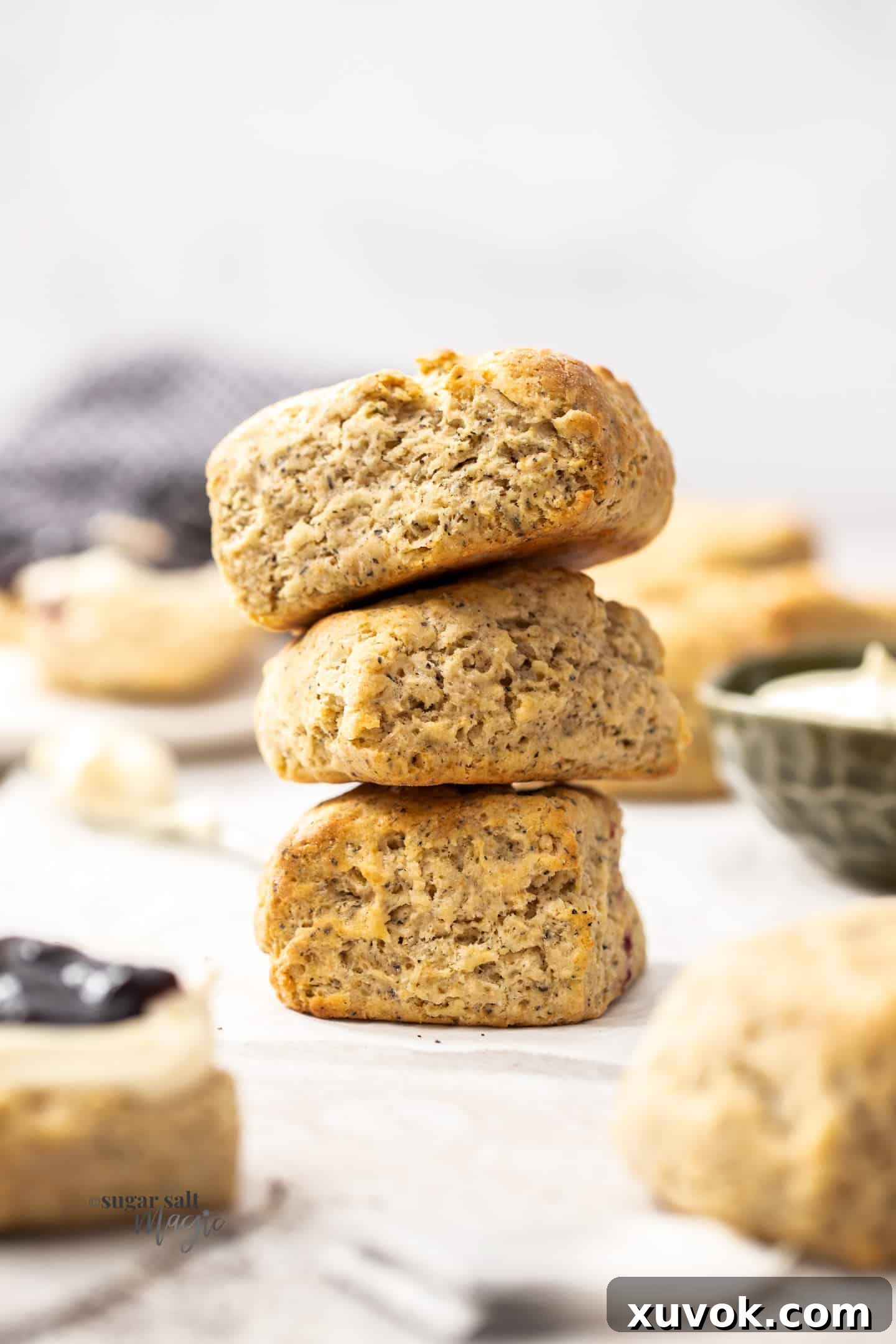
There’s a special kind of delight that comes from baking and enjoying a fresh batch of scones. And when those scones are infused with the delicate, aromatic essence of Earl Grey tea, the experience transcends into something truly magical. These Earl Grey scones are not just good; they are, quite simply, the best scones you’ll ever bake. Imagine a perfectly flaky, wonderfully light, and exquisitely buttery scone, boasting a subtle yet distinct Earl Grey flavor and an enchanting fragrance. Best of all, they’re surprisingly easy to make, transforming your kitchen into a comforting haven with their irresistible aroma.
If you have a fondness for traditional British scones, or simply love the unique citrusy notes of Earl Grey tea, this recipe is destined to become a firm favorite. It captures the essence of a classic tea-time treat while elevating it with a sophisticated twist. Whether you’re planning an elegant afternoon tea party or simply craving a delightful snack, these scones deliver on both taste and ease.
Craving more delightful scone recipes? Be sure to explore these other popular blog favorites: White Chocolate Cranberry Scones and Lime Coconut Scones.
Never Miss a Recipe!
Get the latest, most delicious recipes straight to your inbox and elevate your home baking!
Why These Earl Grey Scones Will Become Your New Favorite
These Earl Grey scones are more than just a treat; they’re an experience. With their subtly sophisticated Earl Grey flavor and captivating fragrance, they truly stand out from ordinary scones. Prepare to fall head over heels for these delightful pastries!
- Effortless & Quick: Just 10 Minutes Prep Time
Forget complicated baking. This recipe is designed for speed and simplicity, allowing you to whip up a batch of glorious scones in just 10 minutes, making it perfect for spontaneous cravings or unexpected guests. - Minimal Ingredients: Only 7 Pantry Staples
You won’t need an elaborate shopping list for these beauties. With just seven readily available ingredients, you can create impressive, bakery-quality scones right in your own kitchen. - Perfect Texture: Soft Centre, Crisp Exterior
Experience the quintessential scone texture – a wonderfully soft, tender interior that yields to a delicate crumb, encased in a perfectly crisp, golden-brown exterior. It’s a textural symphony in every bite. - Incredibly Light and Flaky Layers
Our Earl Grey scones boast distinct, tender layers that effortlessly pull apart, showcasing their masterful construction and light-as-air quality. - Ideal for Impromptu Gatherings
When friends drop by unexpectedly, these scones are your secret weapon. Their quick preparation time means you can have warm, freshly baked treats ready to impress in a flash, making you the ultimate host. - The Ultimate Simple Afternoon Tea Treat
Elevate your afternoon tea ritual with these fragrant scones. They pair exquisitely with a freshly brewed cup of tea, offering a moment of pure, unadulterated indulgence. - Distinctive Earl Grey Flavor
The subtle yet discernible hint of bergamot from the Earl Grey tea adds an elegant, sophisticated twist, setting these scones apart and making them utterly unforgettable.
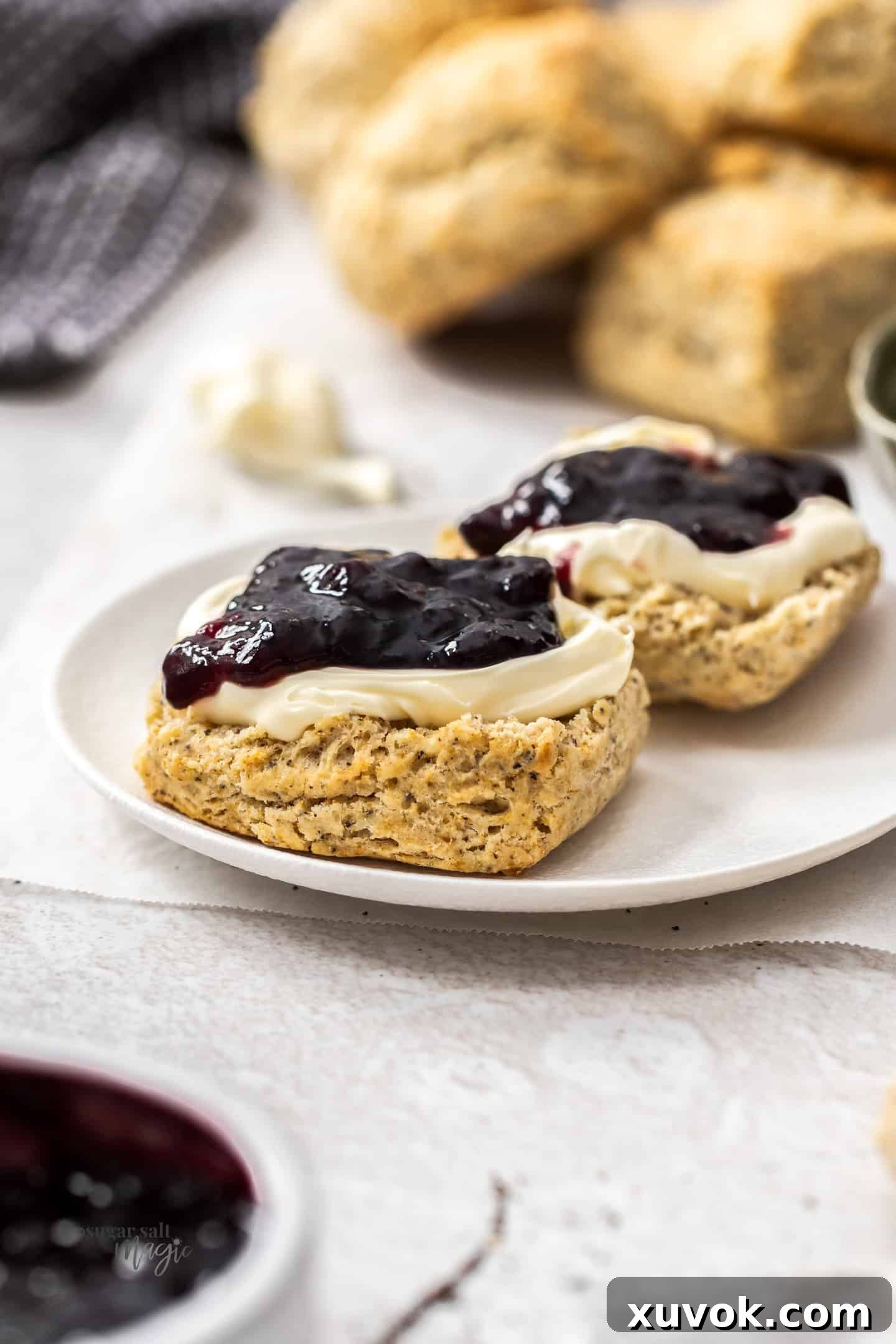
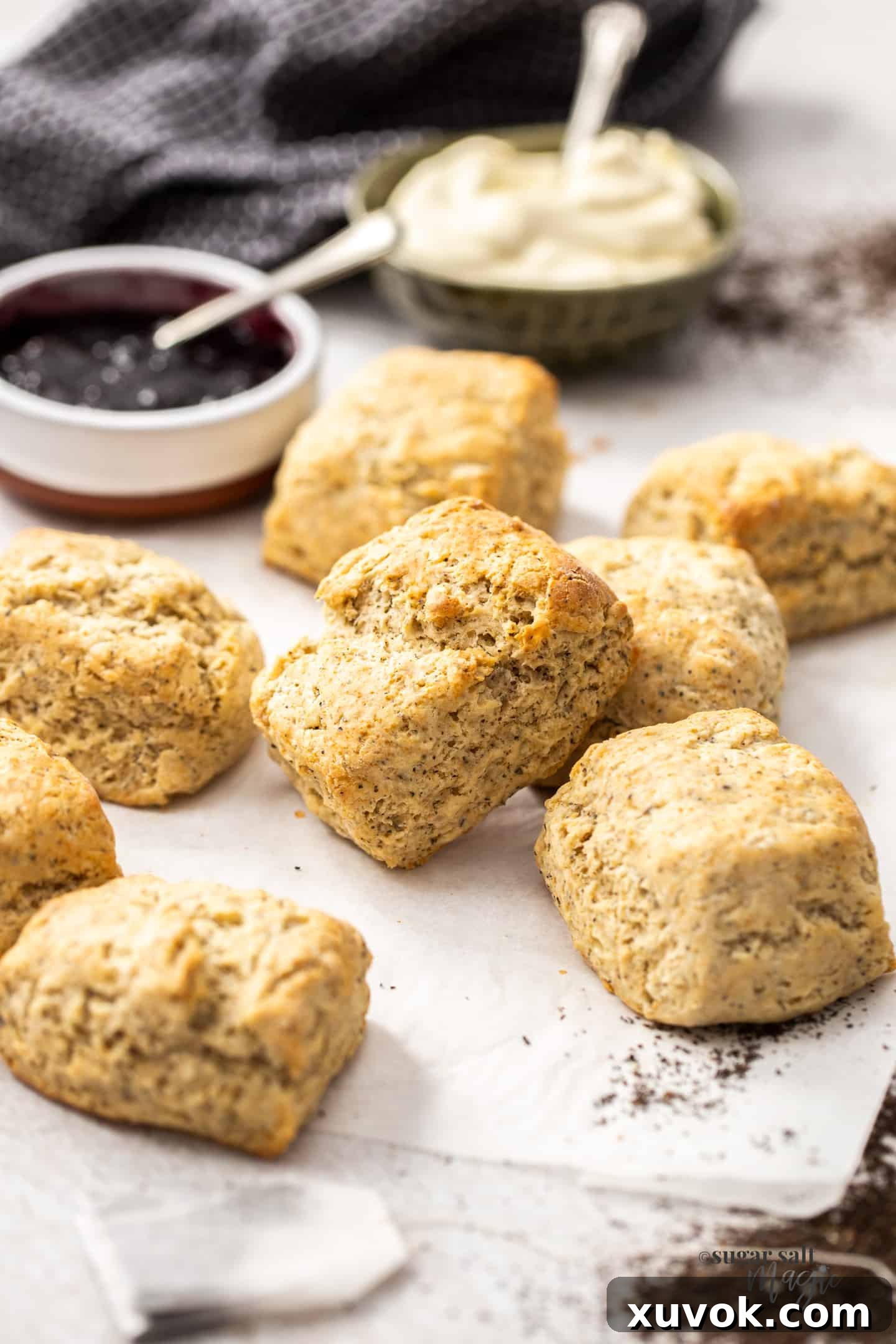
Imagine breaking one open while it’s still warm, the fragrant steam carrying the rich aromas of butter and delicate tea. Top it generously with a dollop of luxurious double-thick cream or traditional clotted cream, followed by a spoonful of your favorite fruit jam. This combination creates an indulgent, yet surprisingly light, tea-time treat that will transport your taste buds.
What Exactly Are Scones? A Journey into a Classic Tea-Time Delight
Scones are a beloved small, lightly sweetened baked good, traditionally enjoyed during tea time. Characterized by their soft, tender center, crisp golden exterior, and delightful flaky texture, they are most commonly served alongside rich clotted cream and various fruit preserves, always accompanied by a steaming cup of tea. The pronunciation of “scone” itself is often a playful point of debate, with many opting for the long ‘o’ sound (pronounced ‘skohn’) while others prefer the short ‘o’ (pronounced ‘skon’). Regardless of how you say it, their deliciousness is universally agreed upon.
The Enduring History and Origin of Scones
The exact origin of scones is a topic shrouded in a bit of mystery, with various regions of the UK — Scotland, Ireland, and Great Britain — each laying some claim to their invention. While the precise birthplace might be vague, what’s certain is that this humble baked good has evolved over centuries. Originally, early versions of scones were likely larger, flatter, and made with oats, cooked on a griddle. It wasn’t until the advent of baking powder in the 19th century that scones began to resemble the lighter, fluffier versions we cherish today, often baked in an oven.
Thanks to whoever first conceived this delightful pastry, scones are now a cherished part of culinary traditions across the globe, from their native British Isles to Australia, North America, and beyond. In North America, they are often compared to or confused with biscuits, but traditional British scones typically contain more fat (butter) and sugar, resulting in a richer, slightly sweeter profile, and are always enjoyed with cream and jam.
These particular Earl Grey scones perfectly embody the classic buttery flavor profile of a British scone, beautifully complemented by the wonderfully uplifting, citrus-infused aroma and taste of Earl Grey tea. It’s a fusion that honors tradition while introducing an elegant, modern twist.
Essential Ingredients for Perfect Earl Grey Scones
Creating these exquisite Earl Grey scones requires a careful selection of just a few simple, high-quality ingredients. Each component plays a crucial role in achieving the desired flaky texture and aromatic flavor. Here’s a detailed look at what you’ll need:
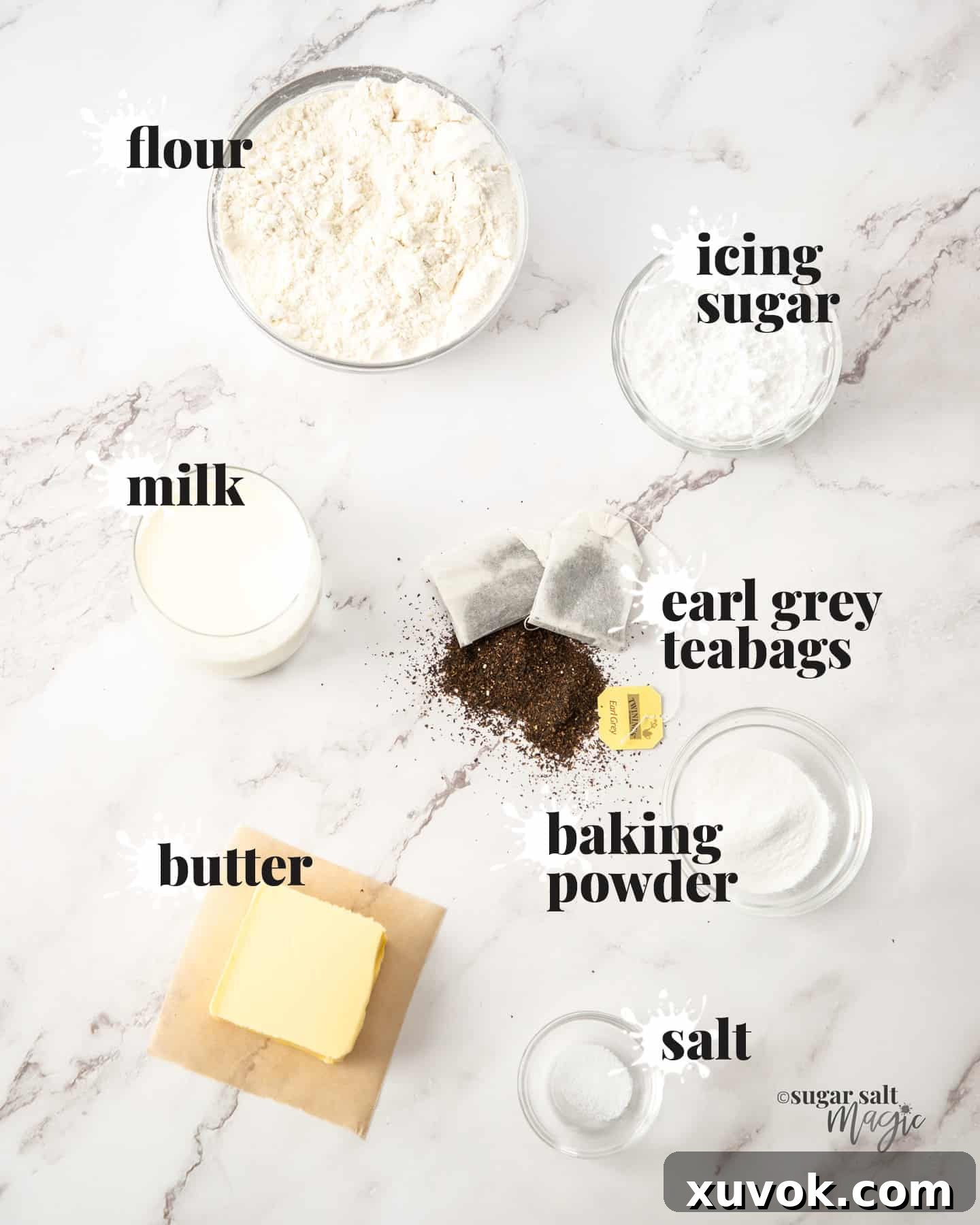
Detailed quantities and step-by-step directions are provided in the comprehensive recipe card located at the very bottom of this post.
- Earl Grey Tea: The star of the show! Earl Grey is a distinct black tea blend famously flavored with oil of bergamot, which imparts its unmistakable citrusy, floral aroma. For this recipe, both standard tea bags or fine loose-leaf tea will work beautifully. We’ll be using both steeped tea for liquid and dried leaves for flecks of flavor.
- All-Purpose Flour (Plain Flour): This is your foundational ingredient. Plain flour provides the structure for the scones. Avoid self-rising flour as we are adding our own leavening. Measuring by weight (grams) is always recommended for accuracy in baking.
- Icing (Powdered) Sugar: Unlike granulated sugar, icing sugar (also known as confectioners’ sugar) is finely milled, ensuring it disperses evenly throughout the dough with minimal mixing. This prevents any unwanted crunchy sugar bits and helps maintain the scones’ delicate structure. If superfine (caster) sugar is all you have, you can use it, but reduce the quantity slightly to about ¼ cup.
- Baking Powder: A crucial leavening agent that creates carbon dioxide bubbles when heated, giving the scones their essential lift and light, airy texture. Ensure your baking powder is fresh for the best results.
- Unsalted Butter: Used cold and grated or cut into small pieces, cold butter is vital for flaky scones. As it melts during baking, it releases steam, creating pockets of air that separate the layers of dough, resulting in that coveted flaky texture. Unsalted butter gives you control over the overall salt content.
- Full-Fat Milk: Cold, full-fat milk contributes to a rich flavor and tender crumb. The fat content helps prevent the scones from becoming dry. Using cold milk also helps to keep the butter solid until it hits the hot oven, which is key for flakiness.
- Salt: Just a small touch of salt is added to balance the sweetness and intensify all the other flavors, making them pop. Don’t skip it!
Each ingredient, while simple, contributes significantly to the overall success and deliciousness of these Earl Grey scones. Using them at the correct temperature and in the right proportions will guarantee a perfect batch every time.
Mastering the Art of Earl Grey Scones: A Step-by-Step Guide
Baking perfect scones, especially these aromatic Earl Grey ones, hinges on a few key principles, the most important of which is keeping certain ingredients — particularly the butter and milk — as cold as possible. Adhering to this simple rule will lead to consistently flaky, delicious results. Let’s walk through the process:
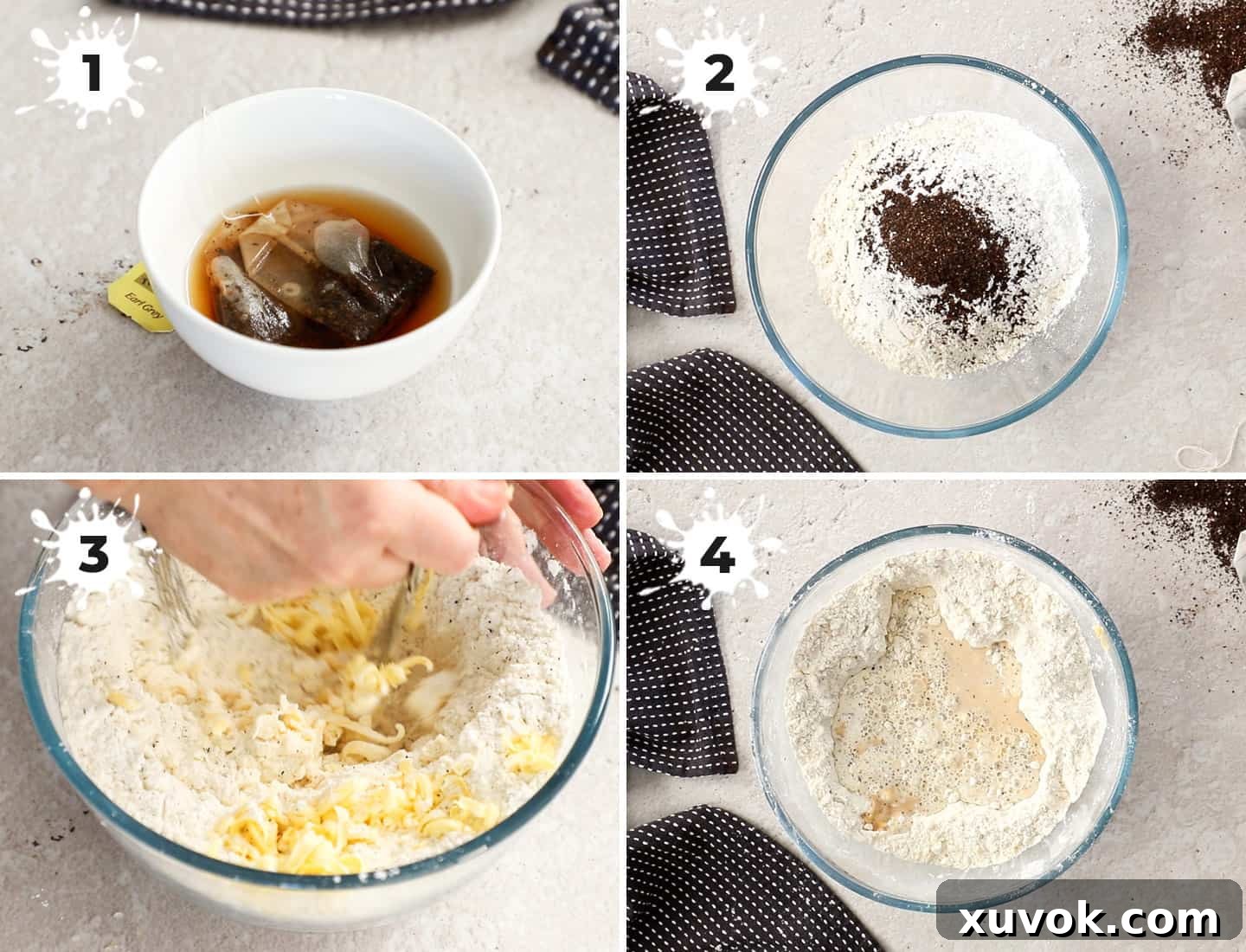
For the complete recipe details, including precise measurements and oven temperatures, please refer to the full recipe card below this section.
- Prepare the Earl Grey Infusion: Begin by steeping two Earl Grey tea bags in hot boiling water. Allow them to steep for about 5 minutes to create a strong tea concentrate. Once steeped, squeeze out as much liquid as possible from the tea bags and set the infused tea aside to cool completely. This concentrated tea liquid will add depth of flavor without over-hydrating the dough.
- Combine Dry Ingredients: In a spacious mixing bowl, whisk together the all-purpose flour, fine icing (powdered) sugar, fresh baking powder, and a pinch of salt. For an extra boost of tea flavor and visual appeal, open up two more Earl Grey tea bags and add their fine leaves directly into this dry mix. Whisk thoroughly to ensure all ingredients are well combined and evenly distributed.
- Incorporate the Cold Butter: Add your cold, grated butter to the dry mixture. Using a pastry cutter or your very fingertips (work quickly to avoid melting the butter), carefully cut the butter into the flour mixture. The goal here is to create a crumbly texture with small, pea-sized or lentil-sized pieces of butter remaining. These tiny pockets of butter are crucial for creating those coveted flaky layers when baked.
- Form the Shaggy Dough: Pour the cooled, steeped Earl Grey tea liquid along with the cold milk into the dry ingredients. Use a sturdy spoon or spatula to gently mix everything together. Avoid overmixing; stir just until the ingredients are barely combined and a wet, shaggy dough forms. It will look rough and sticky, and that’s exactly what you want.
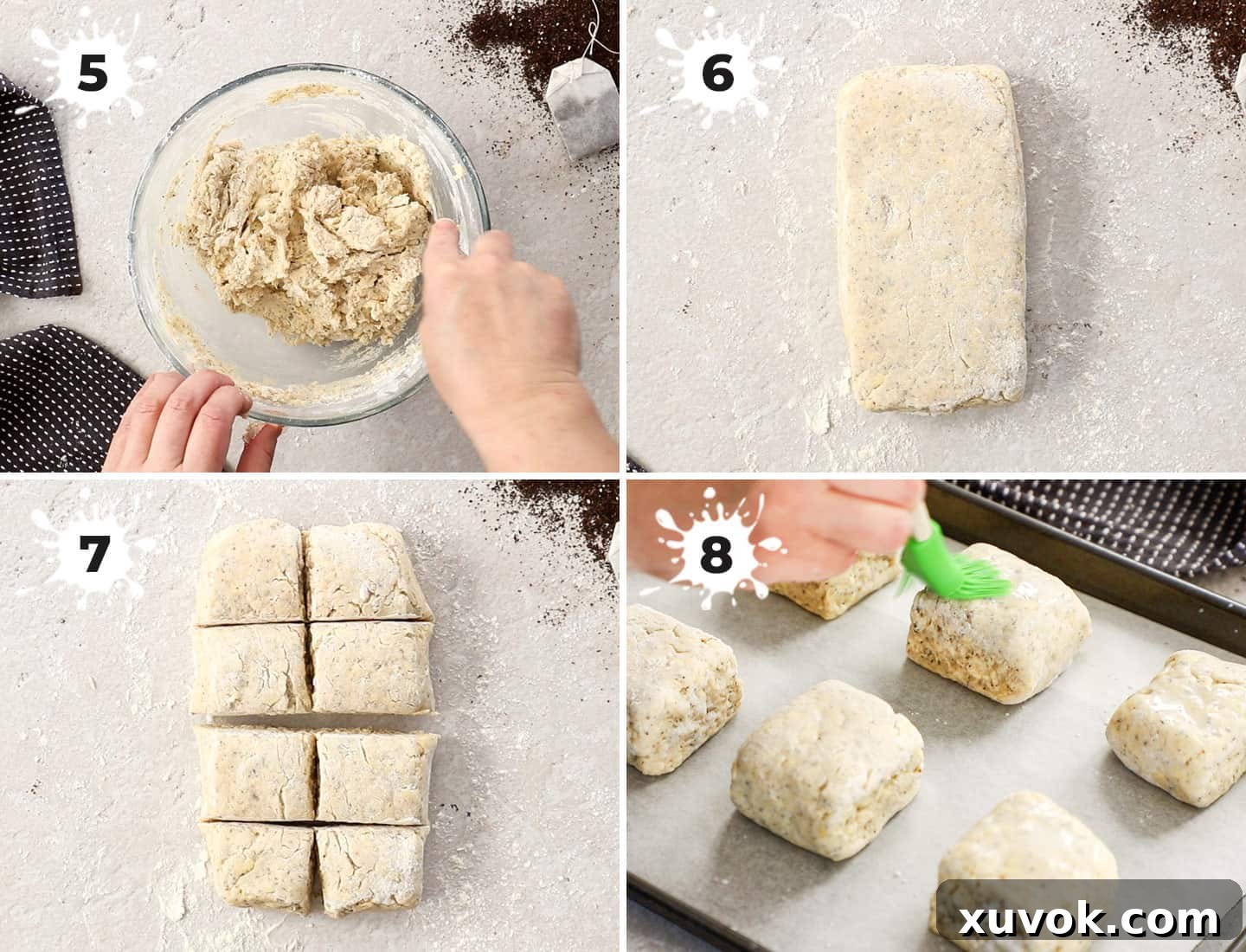
- Shape and Cut the Scones: Lightly flour your work surface. Turn the shaggy dough out onto this surface. Gently bring the dough together and, using your hands, carefully shape it into a rectangle that is approximately 1 ½ inches (about 3.5-4 cm) high. The dough should be about twice as long as it is wide. Once you have your rectangle, use a sharp, floured knife to cut the dough into 8 tall, even squares. Avoid twisting or dragging the knife, which can seal the layers.
- Prepare for Baking: Transfer the cut scone squares to your prepared baking tray, ensuring they are not touching too closely. Before baking, gently brush the tops of each scone with a little extra cold milk. This milk wash helps the tops achieve a beautiful golden-brown color and a slightly crisp finish.
- Bake to Golden Perfection: Place the tray into your preheated oven and bake for approximately 20 minutes, or until the scones have risen beautifully and turned a lovely golden color on top. Once baked, remove them from the oven. Allow them to cool on the tray for just 5 minutes before serving warm. This brief cooling period helps them set without losing their warmth.
Following these steps carefully will ensure you achieve perfectly risen, flaky, and fragrant Earl Grey scones every single time. Enjoy the baking process!
Expert Tips and Tricks for Flawless Scones
Achieving light, flaky, and tender scones is a culinary art that’s surprisingly easy to master with a few insider tips. Here’s how to ensure your Earl Grey scones turn out perfectly every time:
- The Golden Rule: Keep Butter and Milk Cold. This is perhaps the most critical tip for scone success. The butter is not meant to fully blend into the dough; instead, it should remain in small, distinct pieces. As these cold butter pockets melt in the hot oven, they release steam, creating tiny air pockets. This process is what yields the wonderfully flaky, layered texture characteristic of a perfect scone. Warm butter will simply incorporate into the dough, leading to a denser, cake-like scone.
- Mastering the Art of Cutting in Butter. The easiest and most effective way to incorporate cold butter into flour is by using a pastry cutter. Its sturdy blades make quick work of cutting the butter into uniform, small pieces without overworking the dough or melting the butter with your hands. If you don’t have a pastry cutter, you can use two knives or even a cheese grater for frozen butter. If using your fingertips, work very quickly and lightly, aiming for lentil-sized butter pieces, being mindful not to melt the butter with the warmth of your hands.
- Precision Cutting for Perfect Rise. Once your dough is shaped, use a sharp knife to cut your scones. For best results, dip your knife in flour between each cut. This technique prevents the knife from sticking and, more importantly, ensures that the delicate layers created by the butter are not pushed together or sealed. This allows the scones to rise to their maximum height and puff up beautifully in the oven.
- Resist the Urge to Over-Flour. Scone dough is meant to be a bit sticky – it’s a sign of a well-hydrated, tender dough. When you turn the dough out onto your work surface for shaping, use only a very light dusting of flour. Adding too much extra flour can dry out the dough, resulting in heavy, dense, and less flavorful scones. A slightly sticky dough is your friend!
- Maintain Dough Height for Tall Scones. When you shape the dough and after you cut the individual scones, make sure they maintain a height of approximately 1 ½ inches (3.5-4 cm). This ensures that your baked scones will be wonderfully tall and impressive, with ample room for those lovely flaky layers to develop and rise. Don’t flatten them too much before baking.
- Don’t Overmix the Dough. Less is more when it comes to mixing scone dough. Overmixing develops the gluten in the flour, leading to a tough, chewy scone rather than a light, tender one. Mix just until the ingredients are combined and a shaggy dough forms. A few dry spots are preferable to an overworked dough.
- Preheat Your Oven Properly. A hot oven is essential for scones to rise quickly and create that beautiful crust. Ensure your oven is fully preheated to the specified temperature before placing the scones inside. This initial blast of heat helps activate the baking powder and creates steam from the cold butter, crucial for a good rise and flaky texture.
The Art of Enjoying Scones: A Guide to Proper Etiquette
While ultimately you should enjoy your scones however you like, there is a charming, long-standing etiquette around eating scones, particularly in traditional British tea culture. Follow these steps to truly savor the experience like a seasoned scone connoisseur:
- Serve Them Warm: A scone is at its absolute best when enjoyed fresh out of the oven, while still radiating warmth. The heat enhances their buttery fragrance and tender texture. Never serve or eat a cold scone if you can help it!
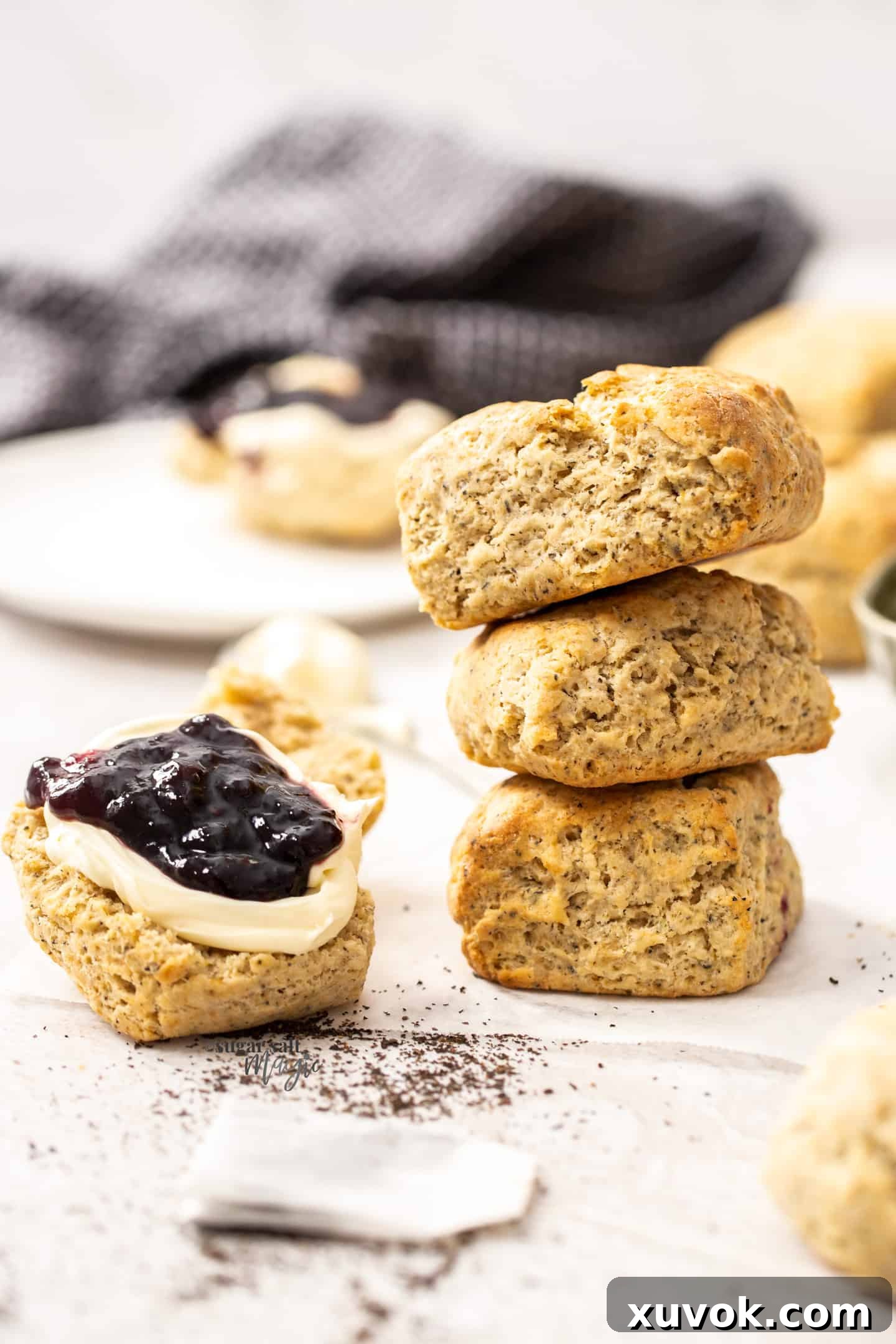
- Break, Don’t Cut: True aficionados never use a knife to cut a scone. If a scone is made correctly, with its beautiful flaky layers, it should easily crack open through the center when gently pulled apart by hand. This preserves the delicate structure.
- The Great Debate: Cream First or Jam First? This is perhaps the most famous and fiercely debated point of scone etiquette! The Cornish tradition dictates jam first, topped with clotted cream, while the Devonshire method insists on cream first, followed by jam. My personal inclination has always been cream first, but I truly believe the most important rule is to eat it whichever way brings you the most joy. Both ways are delicious!
- Avoid the Sandwich: Resist the urge to press the two halves of your scone back together after adding your toppings. Each half of a scone is considered a separate, delightful treat, meant to be eaten individually. Scones are not sandwiches!
- Hands Only, Please: For a truly authentic experience, forgo the cutlery. Scones are traditionally eaten with your hands. Simply pick up a prepared half and take a bite, appreciating the simple pleasure of this classic treat.
While the history and traditions surrounding recipes are always fascinating, remember that these are your delicious Earl Grey scones. Feel free to enjoy them in whatever way brings you the most personal satisfaction!
Serving Suggestions: Elevating Your Earl Grey Scone Experience
These fragrant Earl Grey scones are truly versatile and pair wonderfully with a variety of accompaniments. While the traditional combination of rich double-thick cream or authentic clotted cream and sweet preserves (like the delicious blueberry jam often featured here) is always a winner, don’t hesitate to explore other delightful pairings:
- Simple Butter: Sometimes, the simplest pleasures are the best. Spread them with a generous knob of good quality butter, straight from the oven, allowing the butter to melt into the warm, flaky layers. This truly highlights the scone’s inherent buttery flavor.
- Citrus Curds: The bergamot oil in Earl Grey tea has a distinct citrus note that harmonizes beautifully with other citrus flavors. Try pairing your scones with a bright, tangy lemon curd or a vibrant orange curd for a zesty counterpoint.
- Homemade Fruit Compotes: A warm, homemade fruit compote adds a burst of fresh flavor. Imagine a luscious blueberry compote or a rich blackberry compote cascading over your warm scones. The natural sweetness and slight tartness of the fruit perfectly complement the tea.
- Sweet Honey: The subtle tea flavor in these scones also marries wonderfully with the golden sweetness of honey. A drizzle of your favorite local honey can add a comforting, earthy depth.
Regardless of your chosen topping, make sure to serve these delicious scones with a freshly brewed pot of Earl Grey tea, or perhaps another favorite blend, to complete the ultimate tea-time experience.
Storing and Reheating Your Earl Grey Scones
While all scones, including these delectable Earl Grey scones, are unequivocally best enjoyed fresh from the oven, warm and tender, it’s understandable that you might have leftovers or wish to prepare them in advance. Scones tend to lose some of their magical lightness and crispness by the next day, but there are ways to keep them enjoyable.
For Leftovers: If you find yourself with leftover scones, a quick 10-15 second blitz in the microwave can work wonders. This gentle warming will soften them up and restore some of their fluffy texture. Alternatively, you can briefly warm them in a preheated oven (around 150°C/300°F) for 5-7 minutes until heated through.
Make Ahead Options: If you’re looking to get a head start, you can prepare the scone dough and shape the individual scones the day before you plan to bake. Simply arrange the unbaked scones on a baking tray, cover them loosely with plastic wrap, and place them in the refrigerator overnight. When you’re ready to bake, transfer them directly from the fridge to a preheated oven. Baking them from cold ensures the butter remains firm, contributing to a better rise and flakier texture.
Freezing Unbaked Scones: For longer storage, you can freeze unbaked scones. Once shaped, place them on a baking sheet and freeze until solid. Then, transfer the frozen scones to an airtight freezer bag or container for up to 1 month. When ready to bake, place them on a prepared baking tray (no need to thaw) and bake in a preheated oven, adding an extra 5-10 minutes to the baking time to account for their frozen state. This is a fantastic way to have fresh, warm scones on demand!
Discover More Delightful Scone Recipes
If you’ve loved these Earl Grey scones, you’re sure to adore these other easy and irresistible scone recipes from our collection.
If you try this delightful Earl Grey Scones recipe,
please show it some love with a ⭐⭐⭐⭐⭐ rating below. Your feedback means the world!
Hungry for more culinary inspiration? Subscribe to our newsletter for a steady stream of free, mouth-watering recipes delivered straight to your inbox. Plus, join our vibrant community by following us on Facebook, Pinterest, and Instagram for daily doses of sweet and savory magic.
Earl Grey Scones
8
scones
10
minutes
20
minutes
0
minutes
30
minutes
Rate
Pin
Ingredients
- ¼ cup boiling water
- 4 Earl Grey teabags (notes 6)
- 325 g plain (all-purpose) flour (2 ½ cups / 11.4oz)
- 45 g icing (powdered) sugar (⅓ cup / 1.2oz)
- 3 ½ teaspoons baking powder
- ¼ teaspoon salt
- 75 g unsalted butter, cold and grated (3 oz / ¾ stick)
- ¾ cup cold milk (plus 2 teaspoons extra for brushing)
For the most accurate results in baking, always use a kitchen scale to weigh ingredients where a weight is provided.
Equipment
-
Pastry cutter
-
Baking tray
Instructions
-
Steep two of the Earl Grey teabags in the boiling water for 5 minutes. Firmly squeeze them out, then discard the used teabags and allow the concentrated tea to cool completely to room temperature.
-
Preheat your oven to 200°C / 400°F (or 180°C fan forced). Line a large baking tray with a sheet of baking paper.
-
In a spacious bowl, use a whisk to thoroughly combine the plain flour, icing sugar, baking powder, and salt. Open the remaining two Earl Grey teabags and add their fine tea leaves directly into this dry mix for enhanced flavor.
-
Add the cold, grated unsalted butter to the dry ingredients. Using either your fingertips (working very quickly and lightly) or a pastry cutter, gently blend the butter into the flour until only small pieces remain, roughly the size of lentils.
-
Pour the cooled Earl Grey tea liquid and the cold milk into the dry ingredients. Stir with a spoon until the mixture comes together to form a wet, shaggy, and slightly sticky dough. Be careful not to overmix.
-
Turn the dough out onto a very lightly floured work surface. Gently pat and shape it into a rectangle approximately 1 ½ inches (about 3.5-4 cm) high, and roughly twice as long as it is wide.
-
Using a sharp knife, dipped in flour before each cut, slice the dough into 8 tall, even squares. Avoid dragging or twisting the knife to maintain the layers.
-
Carefully transfer the cut scones to the prepared baking tray, ensuring there is a small gap between each. Lightly brush the tops of the scones with the reserved extra milk.
-
Bake in the preheated oven for approximately 20 minutes, or until the scones have risen significantly and the tops are beautifully golden brown. Allow them to cool on the tray for about 5 minutes before serving warm with your favorite accompaniments.
Notes
- Always ensure that both the butter and the milk are kept as cold as possible right up until the moment you incorporate them into the dough. This is key for flaky scones.
- The butter should not be completely blended into the flour. It’s crucial to have small, lentil-sized pieces of butter still visible within the dough for optimal flakiness.
- The height of your scone dough before cutting is important. Aim for around 1 ½ inches (3.5-4 cm) to achieve tall, well-risen scones.
- If your kitchen is particularly warm, consider chilling the prepared dough for 10-15 minutes in the refrigerator before shaping and cutting to prevent the butter from melting.
- When steeping the tea, make sure to thoroughly squeeze out all the liquid from the teabags to extract maximum flavor.
- The tea flavor in this recipe is designed to be subtle and elegant. If you prefer a more pronounced Earl Grey taste, you can add the leaves from a third teabag to the dry mix.
225
kcal
Marie Roffey
Afternoon Tea
British, English
Have you tried this recipe?
Don’t forget to leave a rating and comment below and let me know how it was! I love hearing from you. Nutrition information is approximate and derived from an online calculator. The brands you use may cause variations.
More Inspiring Scone Recipes to Bake
Expand your baking repertoire with these equally delicious and easy scone recipes that are sure to impress.