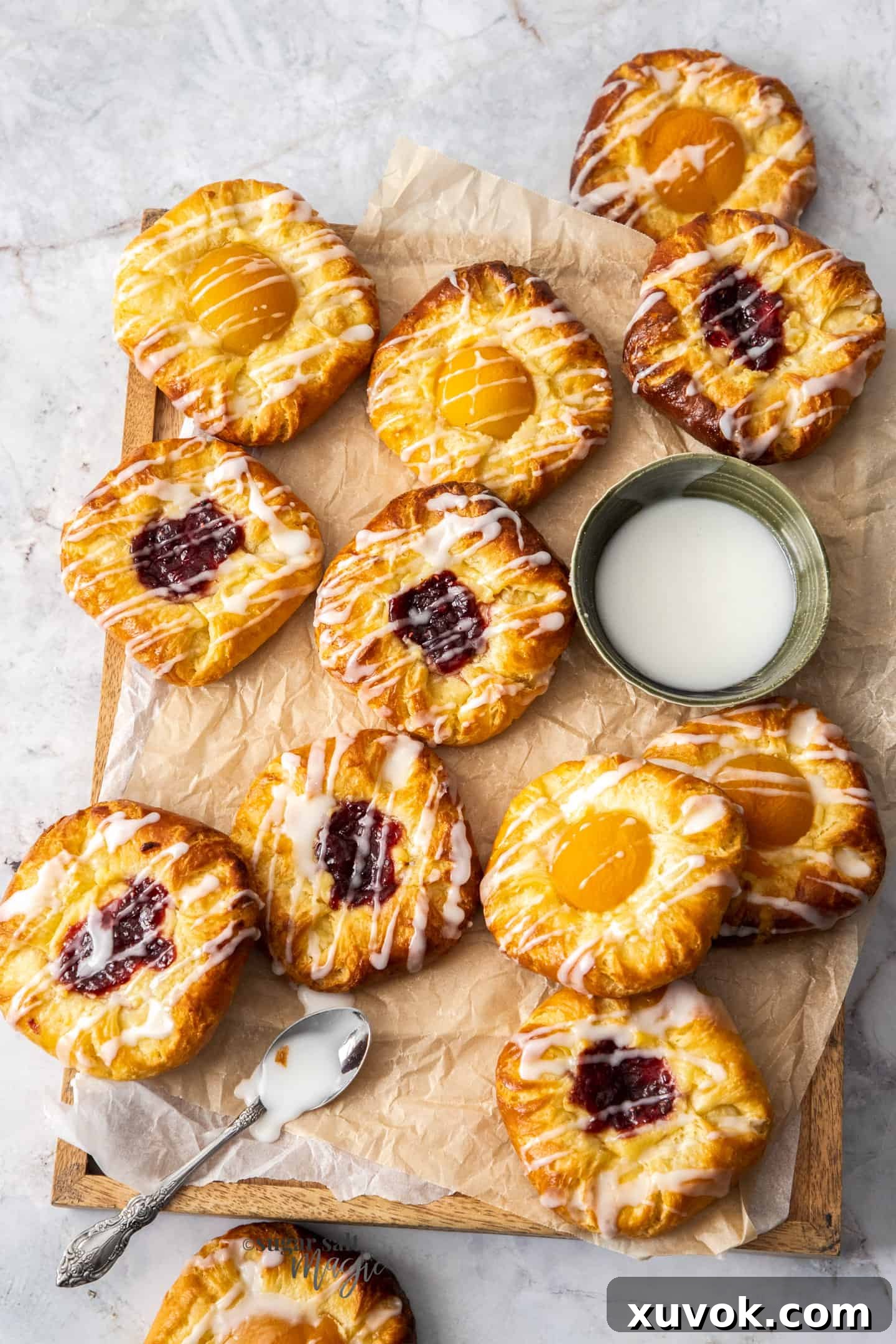
Imagine waking up to the irresistible aroma of freshly baked pastries, their golden-brown crust promising a symphony of textures and flavors. Whether your heart desires the creamy embrace of a Custard Danish, the fruity burst of an Apricot Danish, or the sweet tang of a Jam Danish, this versatile Custard Danish pastry recipe empowers you to create them all. Perfectly designed for make-ahead convenience, you can enjoy warm, buttery pastries for breakfast with minimal morning effort.
At the heart of these delectable treats is a superior pastry base. While some might opt for a good quality puff pastry for speed, I wholeheartedly recommend using my proven easy Danish pastry dough. The effort is well worth it, yielding a pastry that is exceptionally flaky, tender, and rich in butter flavor. Once you master this classic, feel free to explore other delightful variations like my Lemon Danish Pastry or, for those who prefer a savory start to the day, this comforting puff pastry breakfast tart.
Why You’ll Adore This Custard Danish Recipe
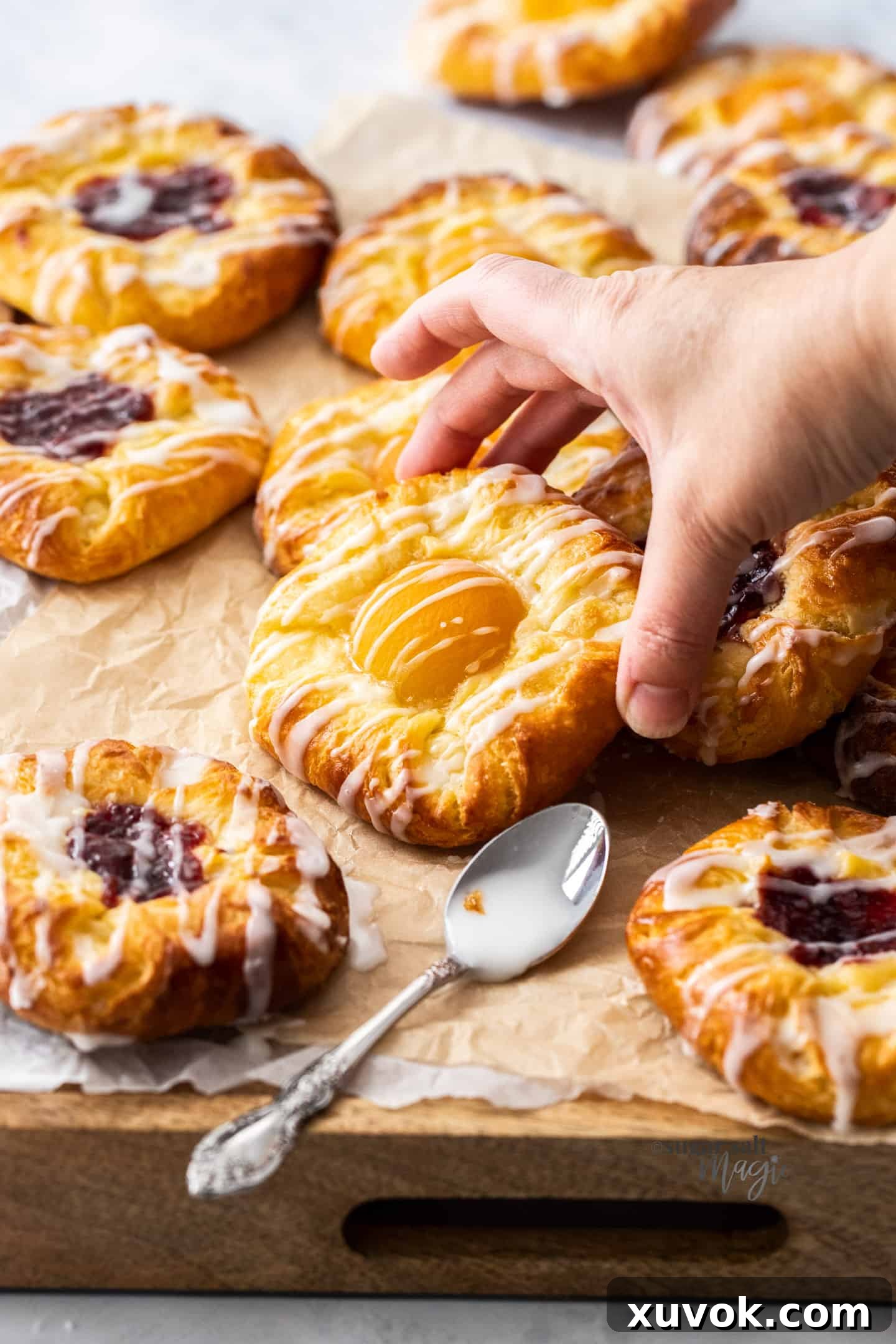
The Custard Danish pastry, affectionately known as Spandauer in its traditional homeland, has captured hearts and palates worldwide for undeniable reasons. Spandauer pastries are typically distinguished by their luscious filling of either creamy custard or sweet marzipan, often crowned with a dollop of vibrant jam. If marzipan piques your interest, don’t miss trying my authentic marzipan Spandauer recipe.
Imagine the ultimate breakfast indulgence: biting through a crisp, golden-brown exterior, revealing layers of impossibly buttery and flaky dough that melt in your mouth. This textural marvel then gives way to the smooth, rich Danish pastry filling—a velvety custard perfectly complemented by the fruity brightness of jam or the soft, sweet succulence of apricots. The balance is exquisite: sweet enough to satisfy your morning craving, yet never overpowering, leaving you utterly content and ready for the day.
Many home bakers find the idea of making Danish pastry daunting, but I’m here to assure you that it’s far simpler than you might believe. My recipe is designed to be approachable, even for those new to laminated doughs. The best part? The entire process, from preparing the dough to assembling the pastries, can be done ahead of time. This means you can wake up to the luxury of warm, fresh Danish pastries straight from your oven, without the early morning rush.
Never Miss a Recipe!
Get the latest recipes straight to your inbox and discover more baking magic!
Table of Contents
- Why You’ll Adore This Custard Danish Recipe
- The Art of Laminated Dough: Crafting Danish Pastry
- Essential Ingredients for Your Danish Masterpiece
- Step-by-Step Guide: How to Make Custard Danish
- Make-Ahead Magic: Prep Today, Enjoy Tomorrow
- Pro Tips for Perfect Pastries
The Art of Laminated Dough: Crafting Danish Pastry
The secret to the ethereal flakiness and signature texture of Danish pastries lies in a technique known as lamination. At its core, laminated dough is a yeasted dough that has butter repeatedly folded into it, creating hundreds of incredibly thin, distinct layers. When baked, the moisture in the butter creates steam, pushing the dough layers apart to form that characteristic airy, crisp, and tender structure.
While the term “laminated dough” might sound intimidating, my simplified Danish pastry dough recipe makes this process surprisingly manageable for home bakers. Unlike traditional methods that can be quite labor-intensive, my approach reduces active kneading and rolling time significantly. You’ll find that the hands-on work is quite minimal, often totaling only about 45 minutes from start to finish. The key component is the resting time in between folds, which allows the gluten to relax and the butter to chill. This step is crucial for achieving distinct layers and preventing the butter from incorporating too much into the dough, which would result in a tougher, bread-like texture rather than the desired flakiness.
Planning ahead for these resting periods is essential for success, but the reward is immense. By allocating a little time for chilling, you’re investing in pastries that are far superior to store-bought options and deliver that authentic Danish experience. The patience required during these resting stages pays off exponentially in the form of golden, crisp, and buttery layers that will truly impress. While you can substitute with store-bought puff pastry for a quicker fix, please note that puff pastry lacks the yeast, which gives traditional Danish pastry its slightly bready, rich texture and unique depth of flavor. For the ultimate Danish pastry experience, making the dough from scratch is highly recommended.
Essential Ingredients for Your Danish Masterpiece
Crafting these exquisite custard Danish pastries requires just a handful of quality ingredients, working in harmony to create their signature taste and texture. Excluding the pre-made dough, you’ll need only nine additional items.
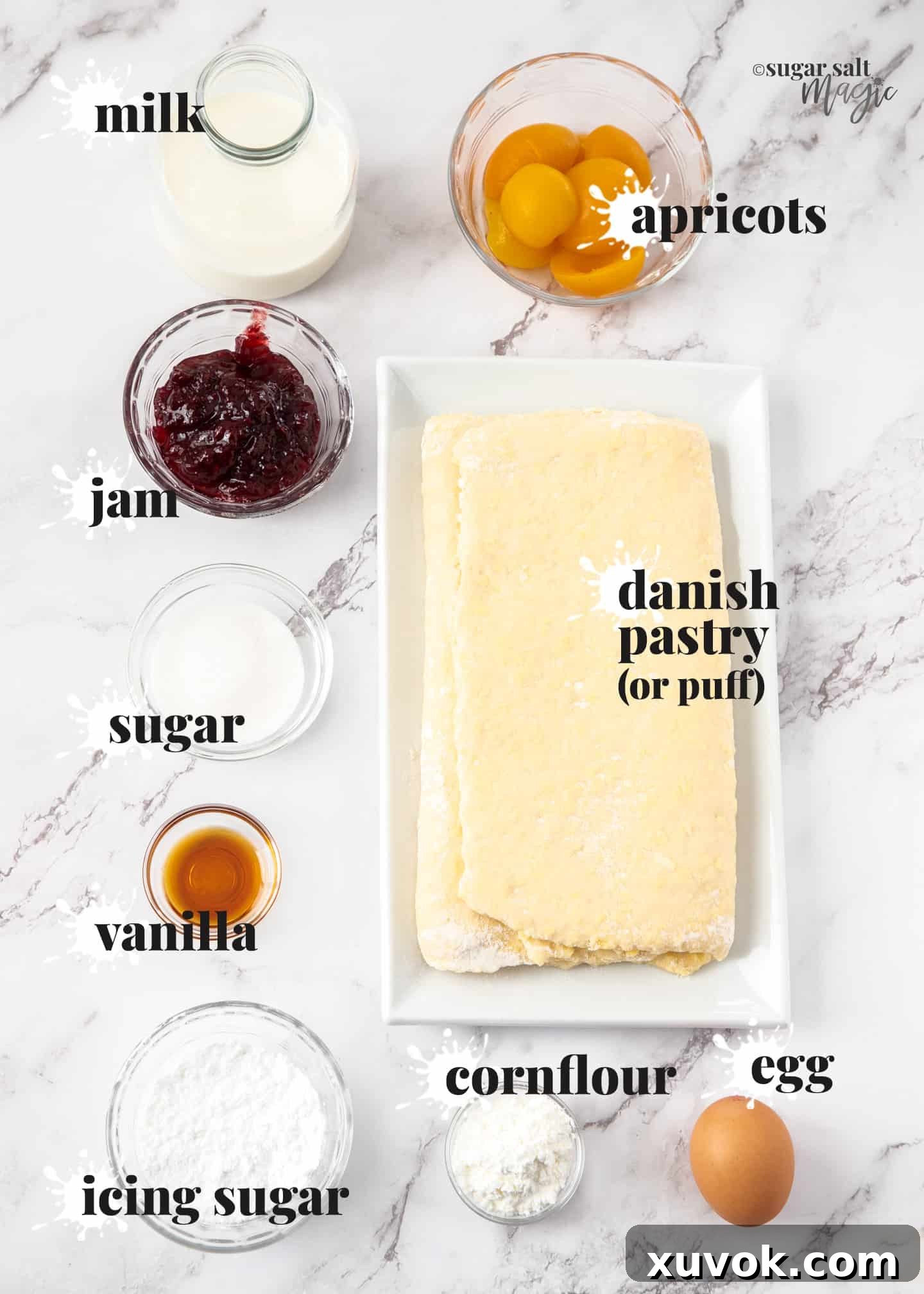
- Danish Dough: As highlighted, the foundation of these pastries is my easy Danish dough. Its simplified method still delivers the perfect buttery, layered, and flaky result. Remember to plan ahead for the necessary resting times. If time is genuinely an issue, a high-quality puff pastry can be a good substitute, though the final texture will differ slightly.
- Apricots / Jam: This is where you personalize your Danish! Do you prefer the subtle tartness and delicate texture of an apricot Danish or the vibrant sweetness of a jam Danish? Both are incredibly popular. I often create a combination, allowing guests to choose their favorite. For jam, consider raspberry, strawberry, or a classic apricot preserve. For apricots, you can use canned halves, drained well, or fresh apricot slices if in season.
- Milk: An essential component of our quick and easy custard recipe. Whole milk will yield the creamiest, richest custard, contributing to a luxurious mouthfeel. Skimmed milk can be used, but the custard will be less rich.
- Granulated Sugar: We use just enough sugar to sweeten the custard to perfection, ensuring it complements the pastry and fruit without being overly cloying. This allows the natural flavors to shine through.
- Eggs: Specifically, you’ll need two large egg yolks. One yolk is crucial for enriching and thickening the custard, giving it a smooth, velvety texture. The second egg yolk, mixed with a dash of water, forms the egg wash that will be brushed over the pastries before baking, contributing to their beautiful golden-brown color and inviting sheen.
- Cornflour (Cornstarch): This acts as the primary thickening agent for our custard, ensuring it sets to a perfect, spoonable consistency without any grainy texture. It helps create a stable, smooth filling that holds its shape beautifully after baking.
- Vanilla Extract: A splash of good quality vanilla extract is non-negotiable for custard. It enhances all the other flavors, adding a warm, aromatic depth that is characteristic of classic pastry creams.
- Icing Sugar (Powdered Sugar): For the finishing touch, a simple glaze made from icing sugar and a tiny amount of water is drizzled over the warm pastries. This adds an extra touch of sweetness and a delicate crackle that elevates the overall experience.
Step-by-Step Guide: How to Make Custard Danish
Making homemade Custard Danish pastries is a rewarding experience, especially when you follow these clear steps. Remember, if you’re making the Danish dough from scratch, ensure you plan ahead to accommodate the resting times. The dough can even be prepared and frozen weeks in advance—just thaw it overnight in the refrigerator when you’re ready to bake.
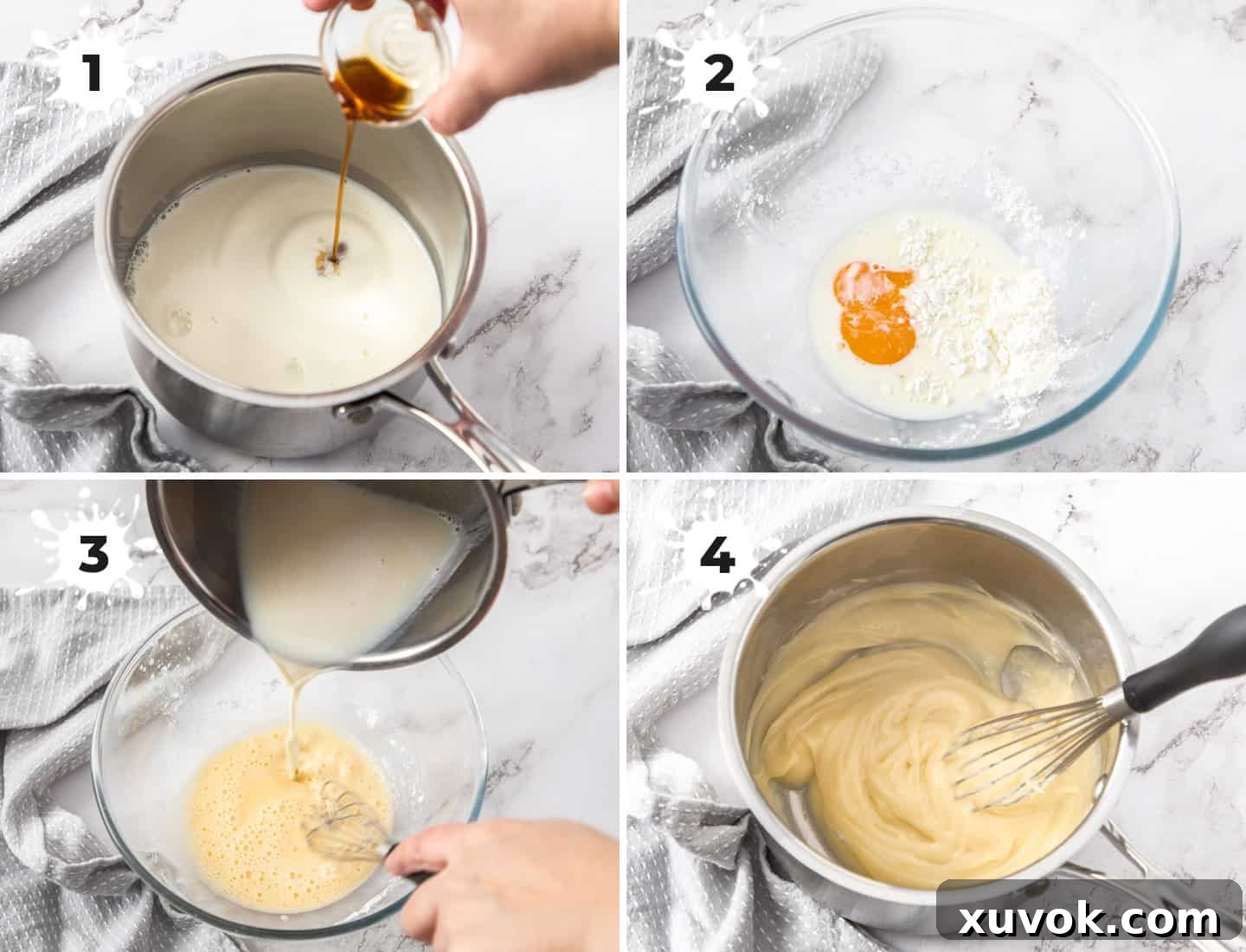
- Prepare the Velvety Custard: Begin by heating approximately ½ cup of whole milk, granulated sugar, and vanilla extract in a small, heavy-based saucepan over low-medium heat (photo 1). Stir continuously until the sugar fully dissolves and the mixture is steaming gently, but not boiling. Remove from the heat. In a separate bowl, whisk together the remaining ¼ cup milk, the single egg yolk, and the cornflour until the mixture is completely smooth and lump-free (photo 2). This is your tempering base.
- Still whisking the egg mixture constantly, very slowly pour the warm milk mixture into the egg mixture in a thin, steady stream (photo 3). This crucial step, known as tempering, gradually raises the temperature of the egg yolks, preventing them from scrambling. Once combined, return the entire mixture to the saucepan. Continue to cook over medium heat, whisking constantly and vigorously, until the custard thickens significantly and coats the back of a spoon, showing no signs of settling back into itself when you stop stirring (photo 4). This usually takes about 5 minutes, and it will thicken quite rapidly towards the end, so don’t stop whisking! Immediately pass the hot custard through a fine-mesh strainer into a clean bowl to ensure ultimate smoothness. Press plastic wrap directly onto the surface of the custard to prevent a skin from forming as it cools to room temperature.
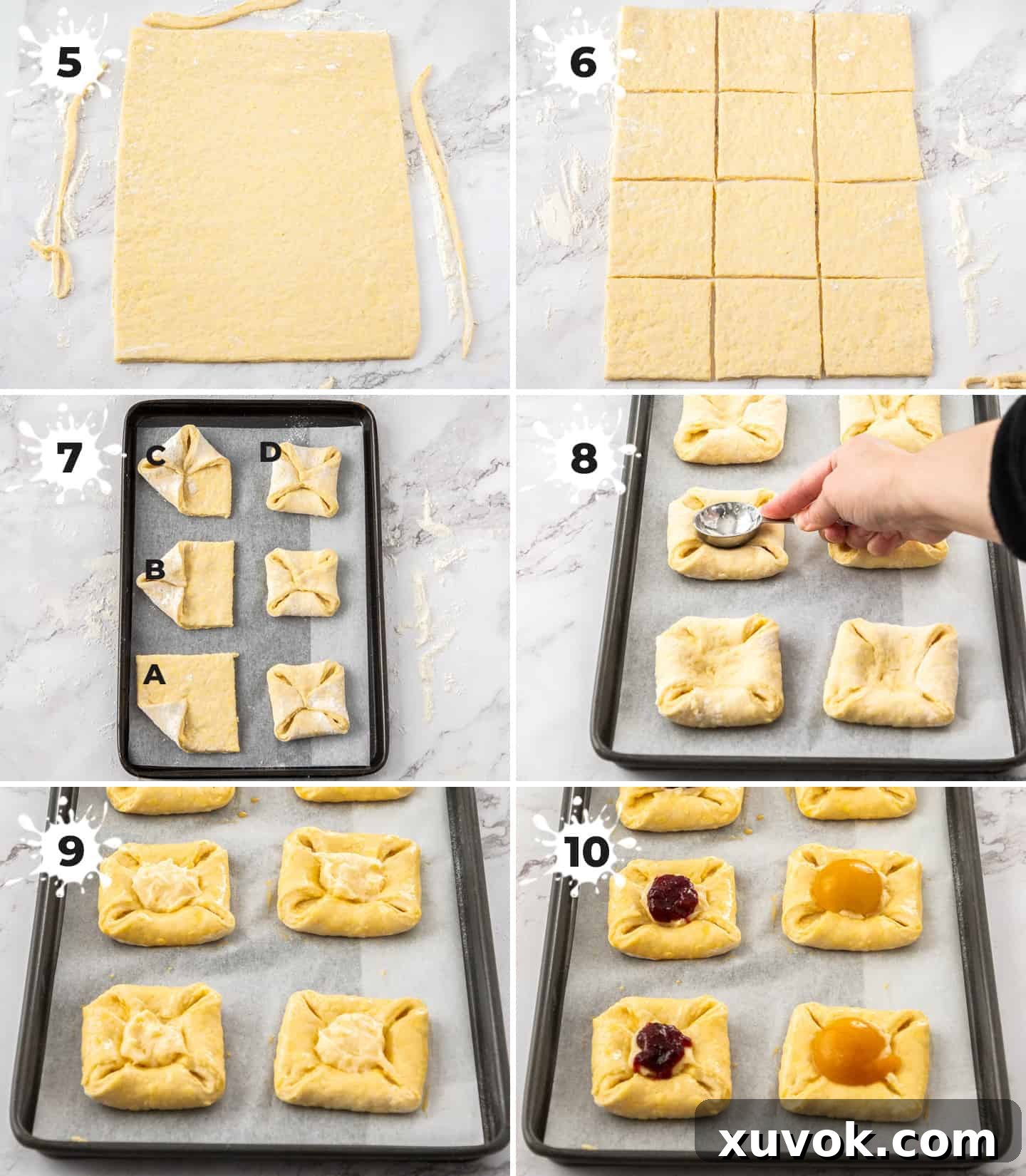
- Prepare and Cut the Dough: Preheat your oven to 200°C (395°F) / 180°C fan-forced. Line two baking trays with baking paper. On a lightly floured surface, roll your chilled Danish dough into a rectangle approximately 30x40cm (roughly 12×16 inches). Using a very sharp knife, carefully trim off the ragged edges of the dough rectangle (photo 5). This ensures clean, defined layers in your final pastries. Then, cut the large rectangle into 12 equally sized squares, each about 10cm (4 inches) (photo 6).
- Assemble and Fill the Danish Pastries: Place the dough squares onto your prepared baking trays (typically 6 per tray). Take each square and fold each of its four corners inwards towards the center, pressing down gently but firmly in the middle to seal them together (photo 7). This forms the classic square Danish shape with an open center. Allow the shaped pastries to rest on the trays for 10-15 minutes; this brief proofing allows the dough to relax slightly and encourages a better rise. After resting, use the back of a spoon or your thumb to create a clear indent in the center of each pastry (photo 8). This dent will hold your delicious filling.
- Bake to Golden Perfection: Brush the entire surface of each shaped Danish, including the folded edges and the visible dough, with the prepared egg wash. This will give them a beautiful golden-brown color and a lovely shine. Generously spoon 2-3 teaspoons of the cooled custard into the dent of each pastry (photo 9). Finally, top the custard with 1-2 teaspoons of your chosen jam or a delicate apricot half (photo 10). Bake for 20-22 minutes, or until the pastries are puffed, golden-brown, and cooked through. For even baking, rotate the trays halfway through the baking time.
You’ll find that assembling these pastries is incredibly straightforward, making this one of the easiest and most satisfying Danish pastry shapes to create. The visual transformation from simple dough squares to elegant, filled pastries is truly a joy to behold.
Want to try your hand at choux pastry for another delightful baking challenge? Give these incredible chocolate chouxnuts a try for a unique twist!
Make-Ahead Magic: Prep Today, Enjoy Tomorrow
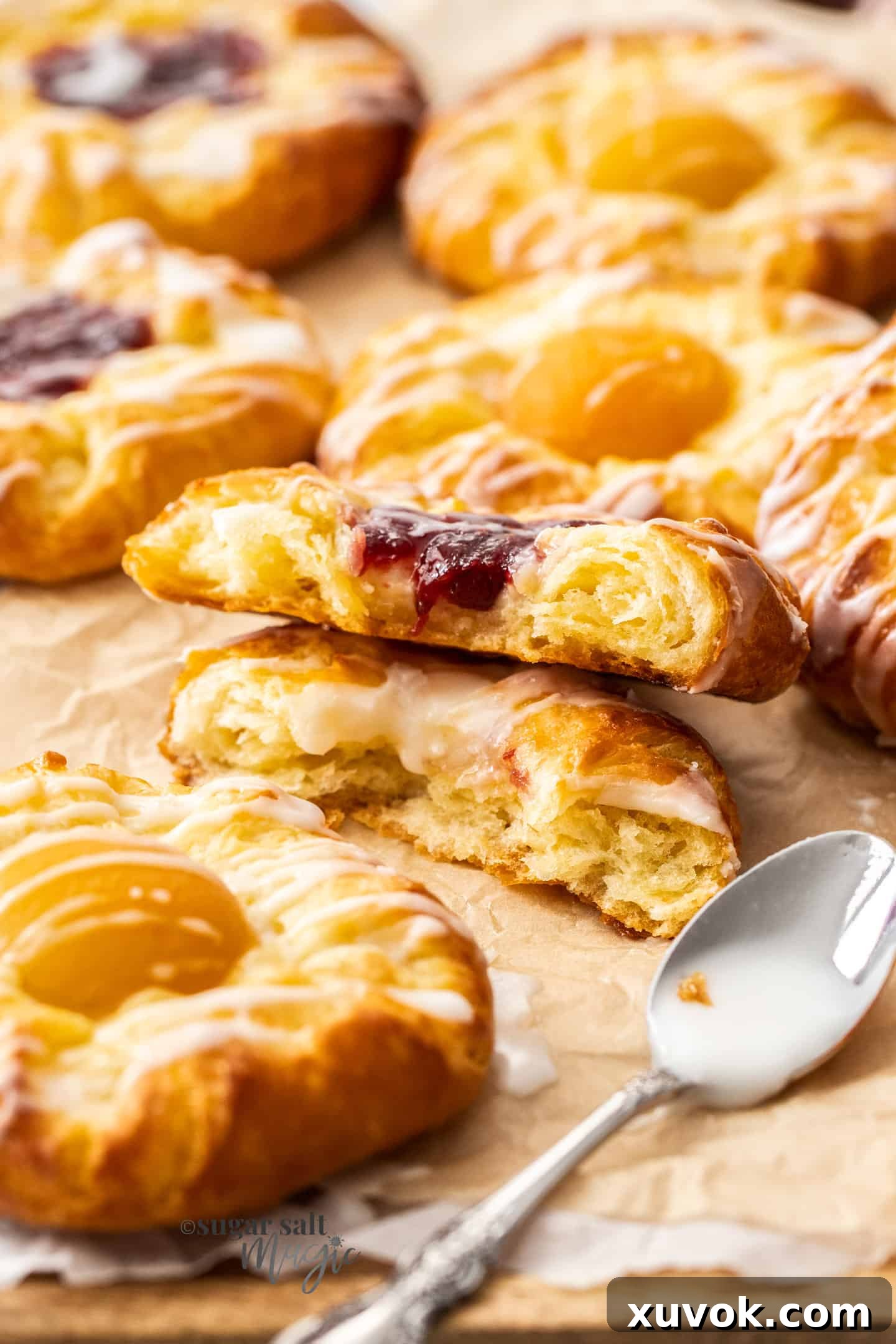
One of the most appealing aspects of this Custard Danish pastry recipe is its incredible flexibility for make-ahead preparation. This allows you to enjoy freshly baked, warm pastries without the morning rush, making them perfect for leisurely breakfasts or entertaining.
Refrigeration: You can fully prepare and assemble these custard Danish pastries the day before you plan to bake them. Once assembled with their filling, arrange them on your baking trays, cover them loosely but completely with plastic wrap, and refrigerate overnight. The next morning, simply remove them from the fridge and bake directly—no need to bring them to room temperature first. This method ensures maximum freshness and convenience.
Freezing Unbaked Pastries: For even longer-term planning, you can freeze the assembled, unbaked Danish pastries. Place the filled pastries on a baking sheet and freeze until solid (this prevents them from sticking together). Once firm, transfer them to an airtight freezer bag or container, separating layers with parchment paper. They can be stored in the freezer for up to 2-3 weeks. When you’re ready to bake, you can transfer them directly from the freezer to a prepared baking sheet and bake them. You may need to add an extra 5-10 minutes to the baking time, and keep a close eye on them to ensure they are golden and cooked through.
Freezing Baked Pastries: If you have leftover baked Danish pastries, or simply want to bake a large batch for future enjoyment, they can also be frozen after baking. Allow them to cool completely, then wrap each pastry individually in plastic wrap and then in foil, or place them in an airtight container. Freeze for up to 1 month. To reheat, simply unwrap and warm them in a moderate oven (around 150°C / 300°F) for 10-15 minutes until warmed through and flaky again. The glaze can be added after reheating, or you can omit it if freezing baked pastries.
Pro Tips for Perfect Pastries
- Strategic Planning for Dough Success: If you’re opting for homemade Danish dough, remember it’s an easy process but demands resting time. Begin preparing your dough at least 24 hours in advance, or even a few days prior, to allow for proper chilling and gluten relaxation. Refer to my dedicated Danish pastry dough post for comprehensive tips on efficient make-ahead preparation. This planning is the cornerstone of truly flaky pastries.
- The Power of a Sharp Knife: When it comes to trimming the dough edges and cutting the individual squares, the sharpness of your knife is paramount. A very sharp knife ensures clean cuts that slice through the delicate layers of butter and dough without compressing them. A dull knife, on the other hand, can press these layers together, hindering the pastry’s ability to rise properly and creating a less flaky, denser result.
- Don’t Overwork the Dough: Handle the laminated dough gently. Excessive kneading or rolling can overdevelop the gluten, making the pastry tough instead of tender and flaky. Work quickly and efficiently, especially when the dough is out of the refrigerator.
- Maintain Cold Temperatures: The success of laminated dough relies on keeping the butter layers distinct and cold. If at any point the dough becomes too warm and sticky while you’re working with it, don’t hesitate to pop it back into the refrigerator for 10-15 minutes to chill before resuming.
- Achieving Silky Smooth Custard: To guarantee a lump-free and perfectly smooth custard, pay close attention during the tempering process. Pour the hot milk mixture into the egg yolks slowly, whisking continuously. When cooking the custard on the stove, stir constantly with a whisk to prevent scorching and ensure even thickening. Straining the finished custard is an extra step that guarantees a professional, silky texture.
- The Magic of Egg Wash: Don’t skip the egg wash! Brushing your pastries with an egg yolk and water mixture not only gives them a beautiful, appetizing golden-brown color but also adds a lovely sheen and helps crisp up the exterior, enhancing the overall appeal.
- Unleash Your Creativity with Fillings: While custard, apricot, and jam are classics, feel free to experiment with other fillings. Consider fresh blueberries, a spiced cinnamon-apple mixture, a decadent cherry pie filling, or even a sweet cream cheese filling for endless delicious possibilities.
More Sweet Breakfast Recipes You’ll Love
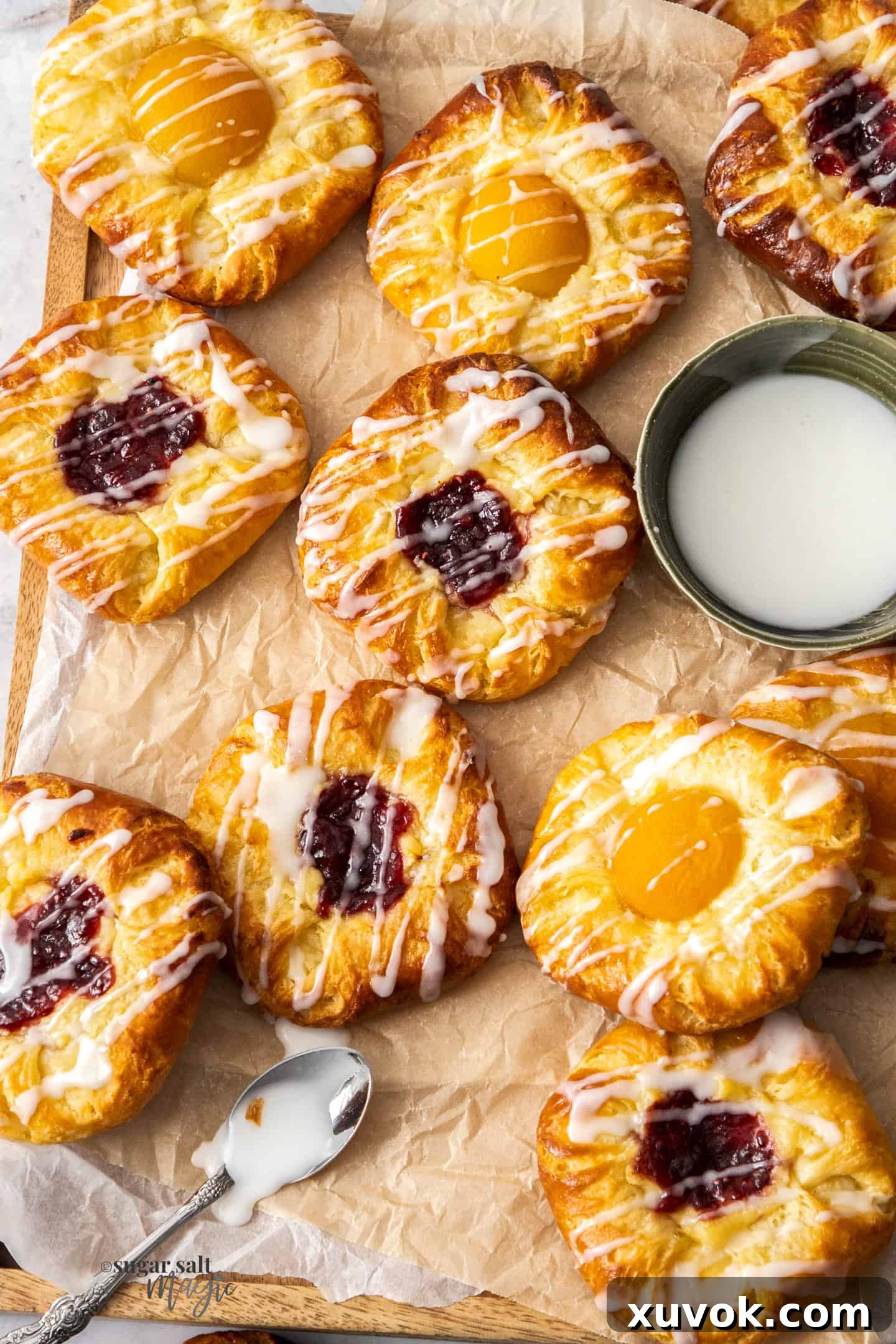
If you’ve fallen in love with the art of making Danish pastries, or simply enjoy starting your day with something sweet and satisfying, explore these other delightful breakfast and brunch recipes. Each one offers a unique taste and baking adventure!
- How to Make Danish Pastry Dough: Master the foundation for all your Danish creations with this detailed guide.
- Blueberry Danish Braid: A beautiful braided pastry bursting with juicy blueberries.
- Spandauer (Jam and Marzipan Danishes): Dive deeper into traditional Danish baking with these marzipan-filled delights.
- Puff Pastry Blueberry Turnovers: A quicker, yet equally delicious, fruity pastry option.
- Cream Cheese Strawberry Danishes: A classic combination of creamy and fruity, perfect for any occasion.
- Easy Jam Tarts: Simple, charming, and utterly delicious individual jam tarts.
- Blueberry Cinnamon Rolls: A fruity twist on the beloved classic, tender and sweet.
- Caramel Apple Cinnamon Rolls: Indulgent rolls featuring a luscious caramel apple filling.
- Jumbo Swedish Cinnamon Buns: Large, aromatic, and spiced with cardamom for a unique flavor.
- Bear Claw Pastry: An almond-filled, flaky pastry, resembling a bear’s claw.
If you try this delightful custard Danish pastry recipe, please take a moment to leave a rating and comment below. Your feedback is invaluable, helping me improve and guiding other enthusiastic bakers! Feel free to capture your creation and tag @sugarsaltmagic on Instagram—I love seeing your culinary triumphs!
Hungry for more? Subscribe to our newsletter for a fresh dose of free recipes delivered straight to your inbox. And don’t forget to follow along on Facebook, Pinterest and Instagram for daily inspiration and behind-the-scenes glimpses!

Custard Danish Pastry
Rate
Pin
Ingredients
- 1 batch Danish Pastry
- ¾ cup whole milk (180ml)
- 2 tablespoons white granulated sugar (notes 1)
- 1 teaspoon vanilla extract
- 1 ½ tablespoons cornflour (cornstarch) (notes 1)
- 1 egg yolk from a large egg
- Jam of choice or 12 apricot halves
- 1 egg yolk mixed with a dash of water
- 1 cup icing sugar (130g / 4.6oz)
For best results, always weigh ingredients where a weight is provided
Instructions
FOR THE CUSTARD DANISH RECIPE
-
Pour ½ cup of milk into a heavy based saucepan, and add sugar and vanilla, then heat on low-medium heat until steaming, stirring regularly to dissolve the sugar. Remove from heat.
-
In a large bowl, whisk together the remaining ¼ cup milk, egg yolk and cornflour until smooth and fully combined.
-
While whisking, very slowly pour the hot milk mixture into the egg mixture in a slow but steady stream. Don’t pour it too quickly or the heat will scramble the eggs.
-
Once everything is combined, return the mix to the saucepan. Heat over medium heat, stirring with a whisk constantly, until it gets very thick and no longer settles into itself when you move it around. This will happen quite quickly after about 5 minutes so it’s important to keep gently whisking increasing intensity as it gets very thick. You will end up with lumpy custard if you don’t.
-
Swap to a silicone spatula and pass the custard through a strainer into a clean bowl, then press plastic wrap to the surface and allow to cool to room temperature
-
Preheat the oven to 200C / 395F / 180C fan forced. Line 2 baking trays with baking paper.
-
On a lightly floured surface, roll the dough out to just over 30x40cm (about 12×16 inches). Trim the edges from the rolled dough, then cut into 12 even squares about 10cm / 4in square each.
-
Place the squares of dough onto the baking trays (6 on each), then fold each of the corners into the centre of each square. Press down lightly with your palm. Let them rest for 10-15 minutes
-
Use a spoon or similar to press a dent into the centre of each danish, then brush all over with the egg wash.
-
Add 2-3 teaspoons of custard to dent in each pastry. Top each with 1-2 teaspoons of jam or an apricot half.
-
Bake for 20-22 minutes or until golden, turning the trays after 10 minutes.
TO MAKE THE ICING
-
Mix together the icing sugar and 1 tablespoon of water. Add more water if you need to thin it or more icing sugar to thicken it. When it’s a consistency you like, drizzle it over the warm pastries.
Notes
- I use a standard Australian 20ml tablespoon (equal to 4 teaspoons).
- All ovens vary, check for doneness 2-3 minutes before the recipe suggests.
MORE DELICIOUS BREAKFAST AND BRUNCH RECIPES!
How to Make Danish Pastry Dough
Easy Jam Tarts