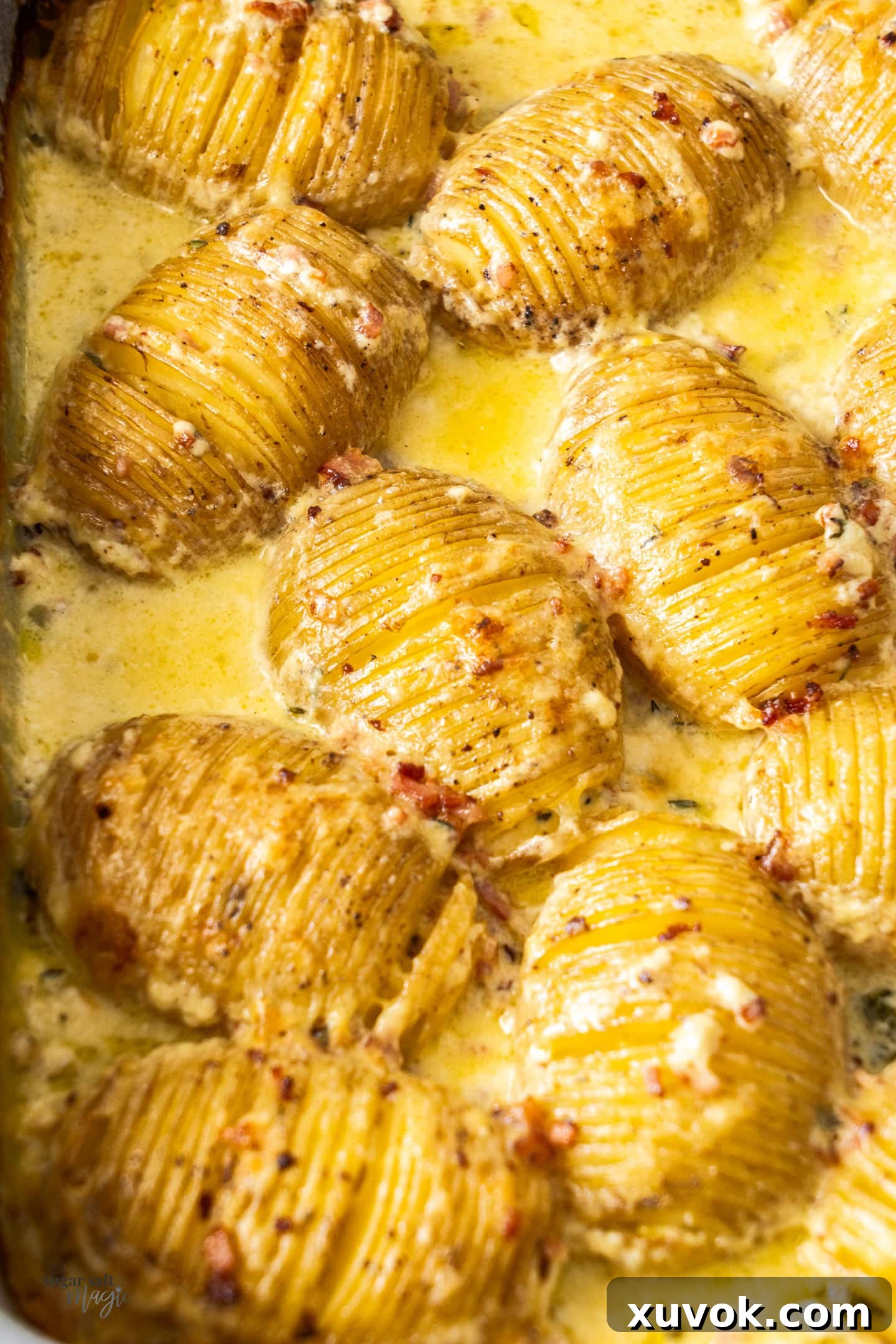
Why You’ll Fall in Love with This Hasselback Potato Gratin
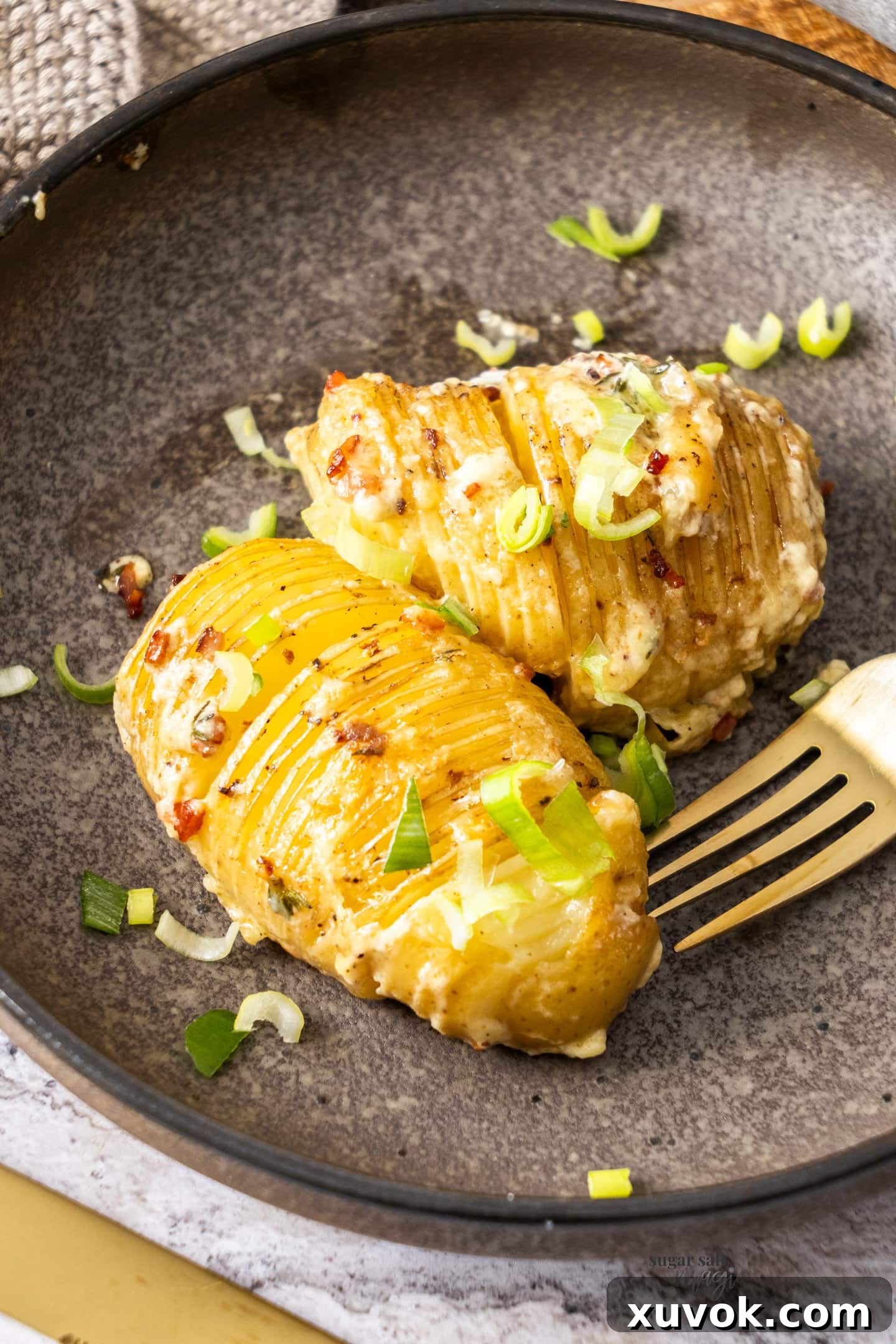
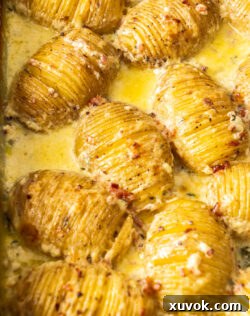
Prepare to elevate your side dish game with this sensational hasselback potato gratin. Imagine perfectly sliced, tender potatoes, each fanning out beautifully, drenched in a rich, creamy, and irresistibly cheesy sauce. Infused with the savory notes of crispy bacon and aromatic fresh thyme, this dish is far more than just a side; it’s a culinary masterpiece that promises to be a showstopper at any meal.
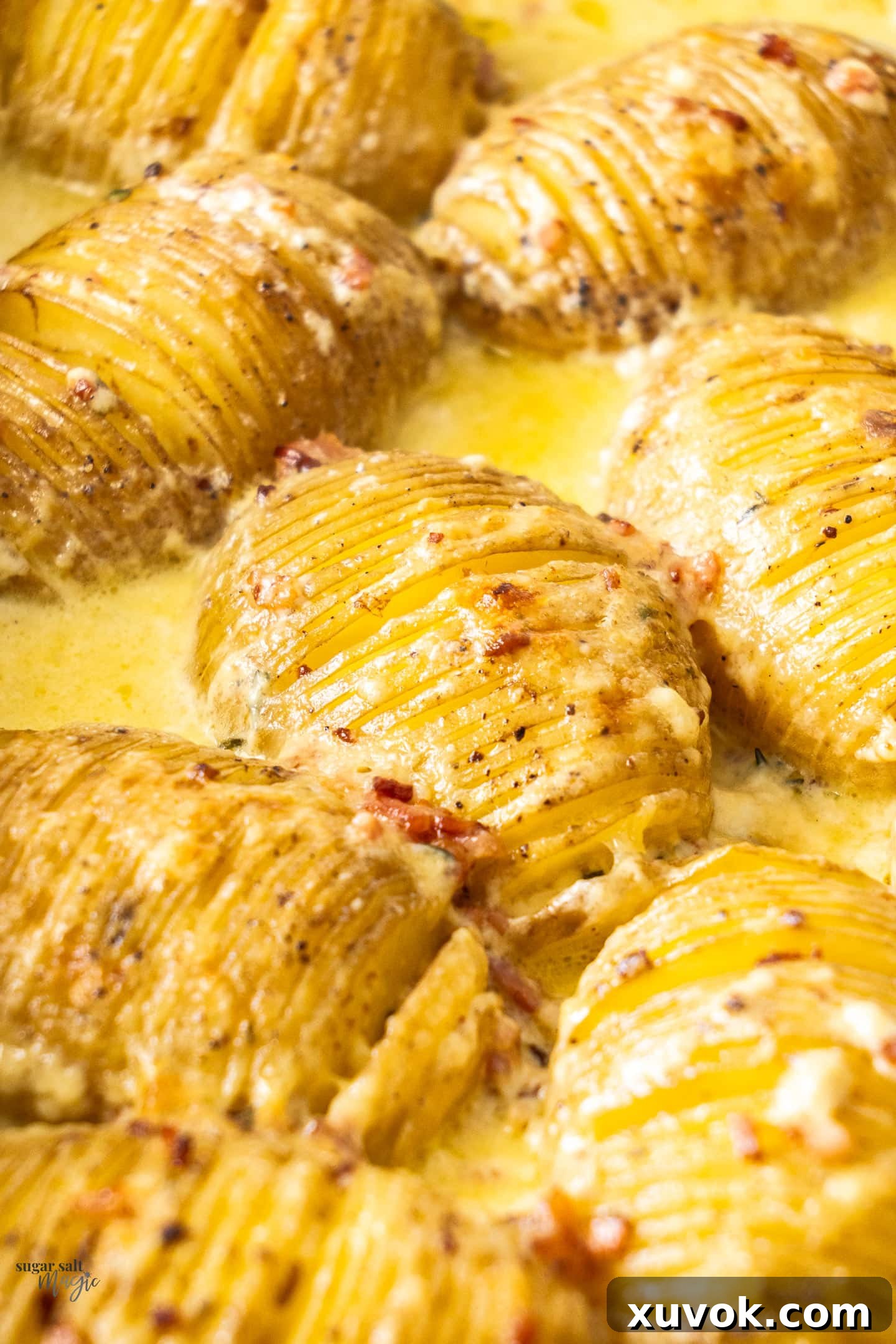
What makes this hasselback potato gratin truly special is its unique blend of textures and flavors. The initial roasting of the hasselback potatoes ensures they become wonderfully tender on the inside with delightfully crispy edges, creating a captivating contrast with every bite. Following this first bake, the luxurious cream, a generous layer of sharp cheddar cheese, savory bacon bits, and fragrant thyme are introduced. The result is a harmonious blend where the cream maintains its velvety, sauce-like consistency, avoiding the common issue of splitting often encountered in longer-baked gratins.
This dish boasts an appearance that is as striking as its taste. The signature hasselback design, with its elegant fanned slices, lends an air of sophistication that belies its surprising simplicity to prepare. You’ll impress your guests with minimal effort! Furthermore, the ingenious design creates countless little pockets that caramelize during the final bake, capturing pools of cheesy, bacony, creamy goodness – these delectable morsels are undoubtedly the best part, offering intense bursts of flavor.
Another delightful aspect? There’s absolutely no need to peel the potatoes, saving you precious prep time while adding rustic charm and valuable nutrients. The skins crisp up beautifully, adding another layer of texture to this already divine creation. At the end of its baking journey, you’re left with a thick, luscious sauce perfect for drizzling over each golden-brown potato. For more delightful vegetable sides, consider trying these Cheesy Cauliflower Steaks!
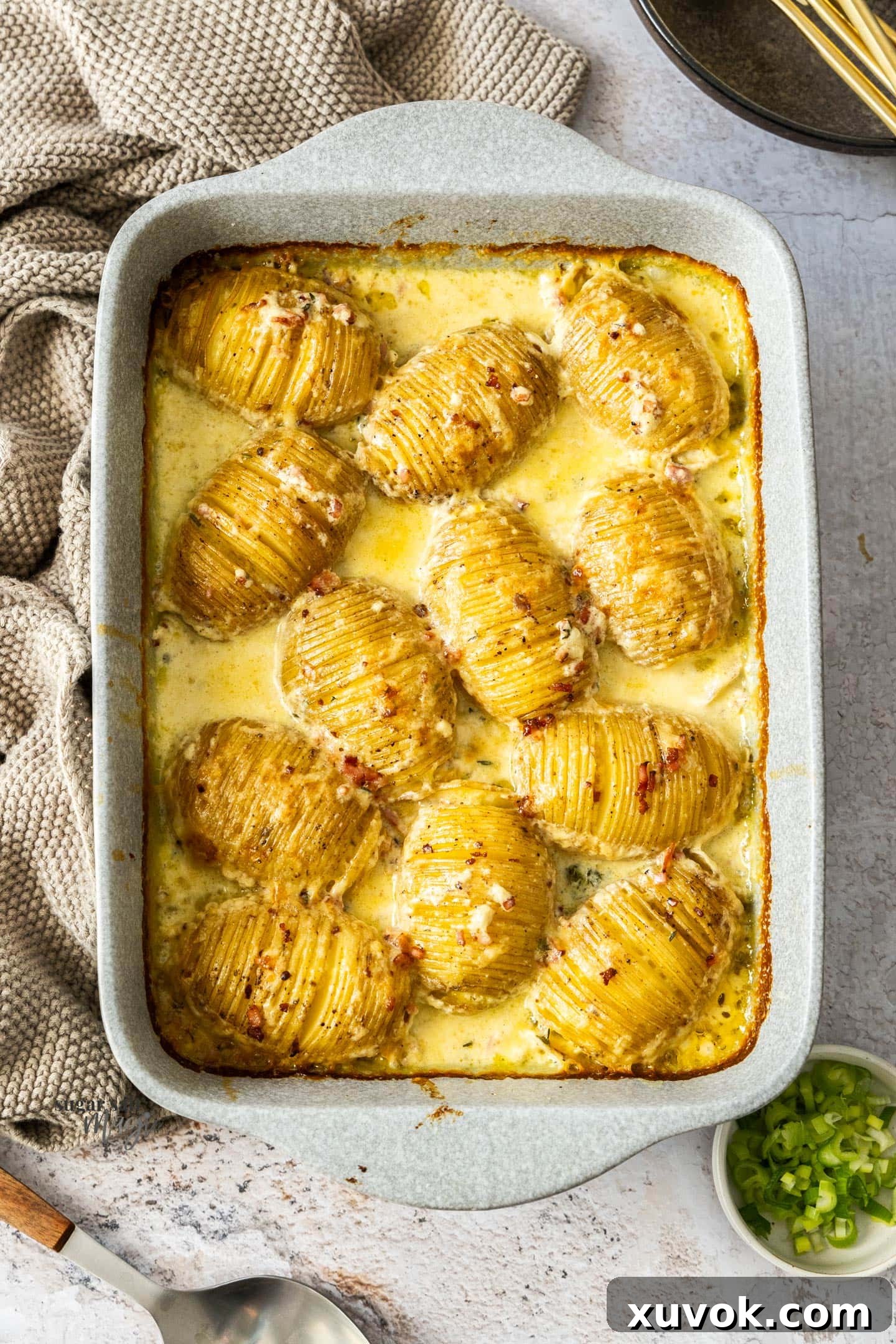
Table of Contents
- Why You’ll Fall in Love with This Hasselback Potato Gratin
- The Star Ingredients for Your Perfect Gratin
- Crafting Your Hasselback Potato Gratin: Step-by-Step Guide
- Preventing Cream Splitting: Expert Tips for a Smooth Sauce
- Pro Tips for a Flawless Hasselback Gratin
- Storage and Reheating Guide
- Frequently Asked Questions (FAQs)
- More Irresistible Recipes You’ll Love
Never Miss a Recipe!
Get the latest, most delicious recipes straight to your inbox!
The Star Ingredients for Your Perfect Gratin
It’s truly remarkable how a handful of simple, everyday ingredients can transform into a profoundly flavorful and visually stunning dish like this hasselback potato gratin. The secret lies not just in the technique, but in selecting quality components that truly shine.
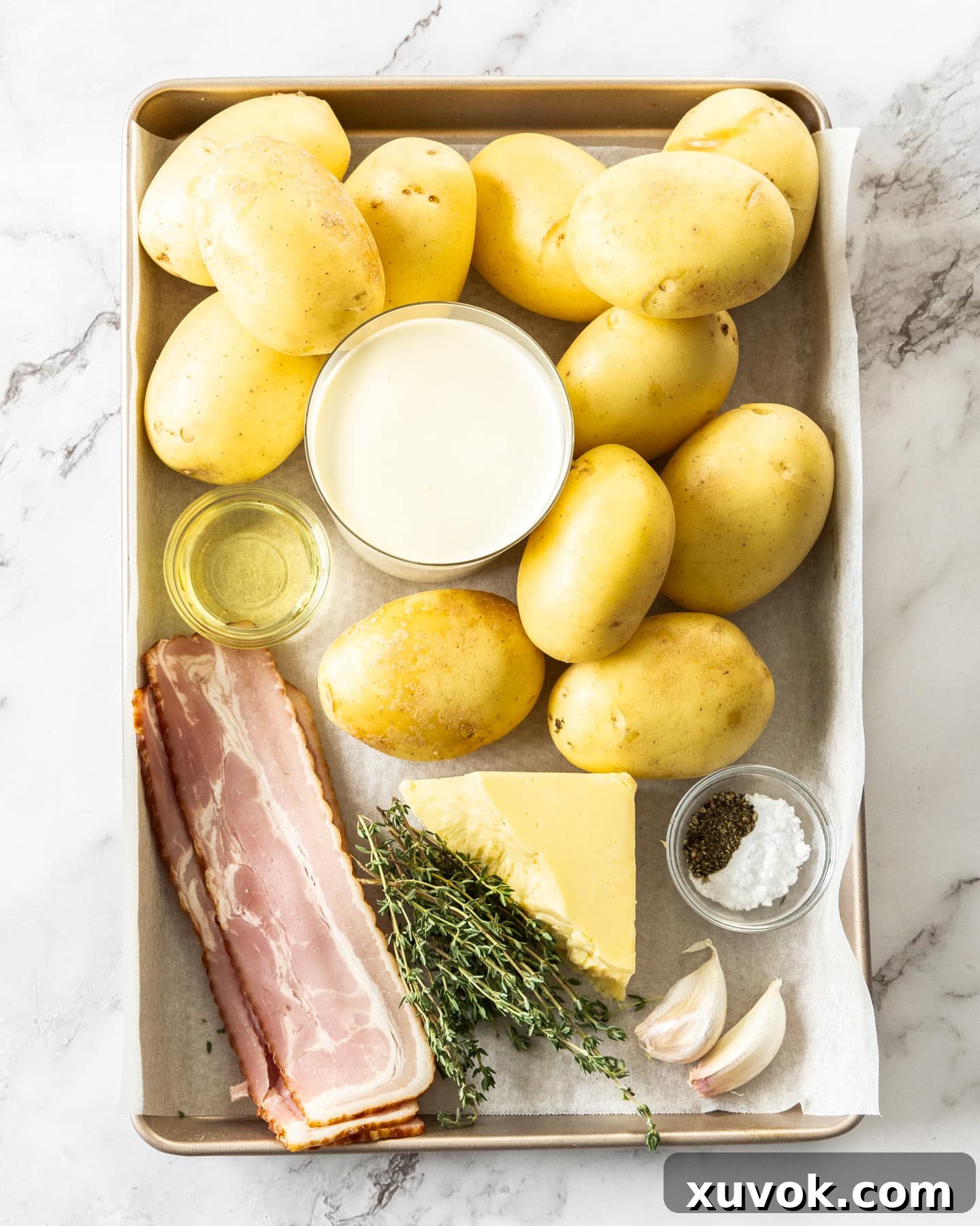
For precise measurements and full instructions, simply jump to the full recipe card below.
- Potatoes: The foundation of this dish requires the right kind of potato. For this potato and bacon gratin, you’re looking for either a versatile all-rounder or a starchy potato variety. These types soften beautifully during baking, becoming wonderfully tender while still holding their distinct hasselback shape. Excellent choices include King Edwards, Maris Piper, Russet potatoes, Coliban, Desiree, Red Delight, Royal Blue, Sebago, and Yukon Gold potatoes. Avoid waxy potatoes, as they tend to hold too much moisture and won’t achieve the desired texture.
- Bacon: Finely diced rasher bacon is your secret weapon for a burst of savory, salty flavor and a delightful textural contrast. As it cooks, the bacon renders its fat, creating a flavorful base that will later infuse our rich cream sauce, adding depth and complexity to the entire dish. Don’t underestimate the power of these small, crispy bits!
- Cream: This is where the magic happens for that luxurious, thick sauce. Opt for heavy cream, thickened cream, or double cream – the higher the fat content, the better the result. Full-fat cream is essential here; lighter versions are prone to splitting under heat and won’t provide the same velvety richness that makes a gratin so utterly comforting.
- Thyme: Fresh thyme is a non-negotiable for its earthy, slightly peppery, and incredibly aromatic notes. It complements both potatoes and bacon magnificently, adding a layer of sophisticated flavor that dried thyme simply cannot replicate. A few sprigs are steeped in the cream, and fresh leaves are scattered for a final flourish.
- Fresh Garlic: The garlic in this recipe isn’t meant to overpower, but rather to subtly perfume the cream. Large, peeled garlic cloves are gently infused into the heated cream, lending a mellow, aromatic backdrop without any harshness. This technique ensures a delicate garlic essence that enhances the overall flavor profile.
- Cheese: A good quality cheddar cheese is my go-to for its balanced flavor and excellent melting properties. However, don’t hesitate to experiment! Gruyère is another fantastic option for baked dishes like this, known for its nutty flavor and beautiful melt, creating a wonderful texture. If you desire a stronger, saltier kick, a finely grated Parmesan cheese (Parmigiano Reggiano) can be an exquisite substitution, adding an Italian twist to this classic.
Crafting Your Hasselback Potato Gratin: Step-by-Step Guide
Creating this impressive hasselback potato gratin is a rewarding experience, and with our detailed steps, you’ll achieve perfection every time. The key is in the preparation and understanding each stage of the cooking process.
For a comprehensive list of ingredients and precise measurements, please refer to the full recipe card further down the page.
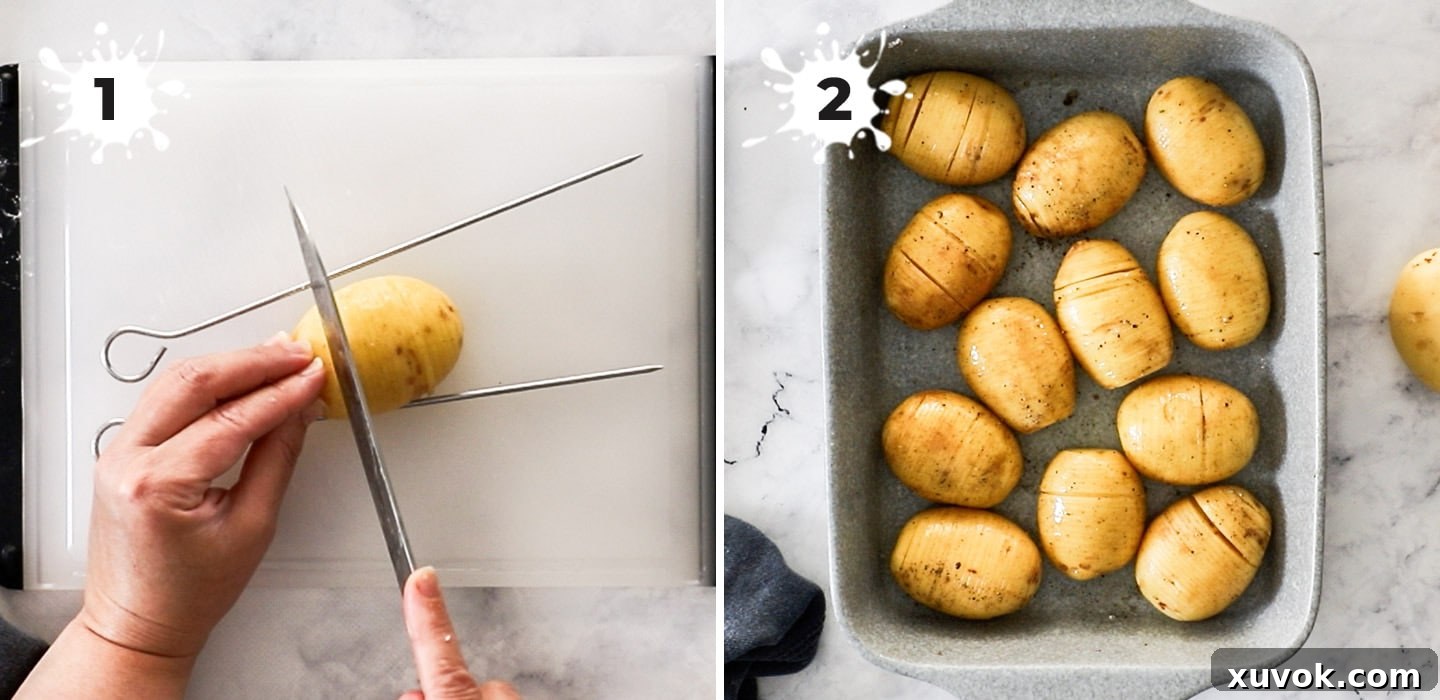
- Master the Hasselback Slice: The first, and arguably most distinctive, step is transforming your potatoes into the classic hasselback shape. Begin by washing and thoroughly drying your potatoes. To create a stable base, trim a thin slice from one side of each potato so it sits perfectly flat on your chopping board. This flat side prevents rolling. Now, here’s a crucial tip to prevent accidentally cutting all the way through: place two metal skewers (or even chopsticks) parallel on either side of the potato. Using a sharp chef’s knife, slice the potato into thin, approximately 2mm (or thinner) increments. The skewers will act as a barrier, stopping your knife blade just short of the base, ensuring each slice remains connected. Repeat this process with all your potatoes, aiming for consistency in thickness for even cooking.
- Season and Roast to Perfection: Once all your potatoes are expertly sliced, arrange them snugly in a casserole dish. A snug fit encourages better steaming and flavor infusion. Drizzle them generously with olive oil, then season evenly with salt and freshly cracked black pepper. Gently roll and toss the potatoes to ensure they are thoroughly coated, taking care not to break the delicate fanned slices. Finally, turn each potato so the hasselback side faces upwards and arrange them with a little space in between to allow for even browning. Bake in a preheated oven for about 50-60 minutes, or until the potatoes are beautifully tender when pierced with a fork and have developed a pale golden-brown hue on their exposed edges. This initial bake is crucial for achieving that desired soft interior and slight exterior crispness.
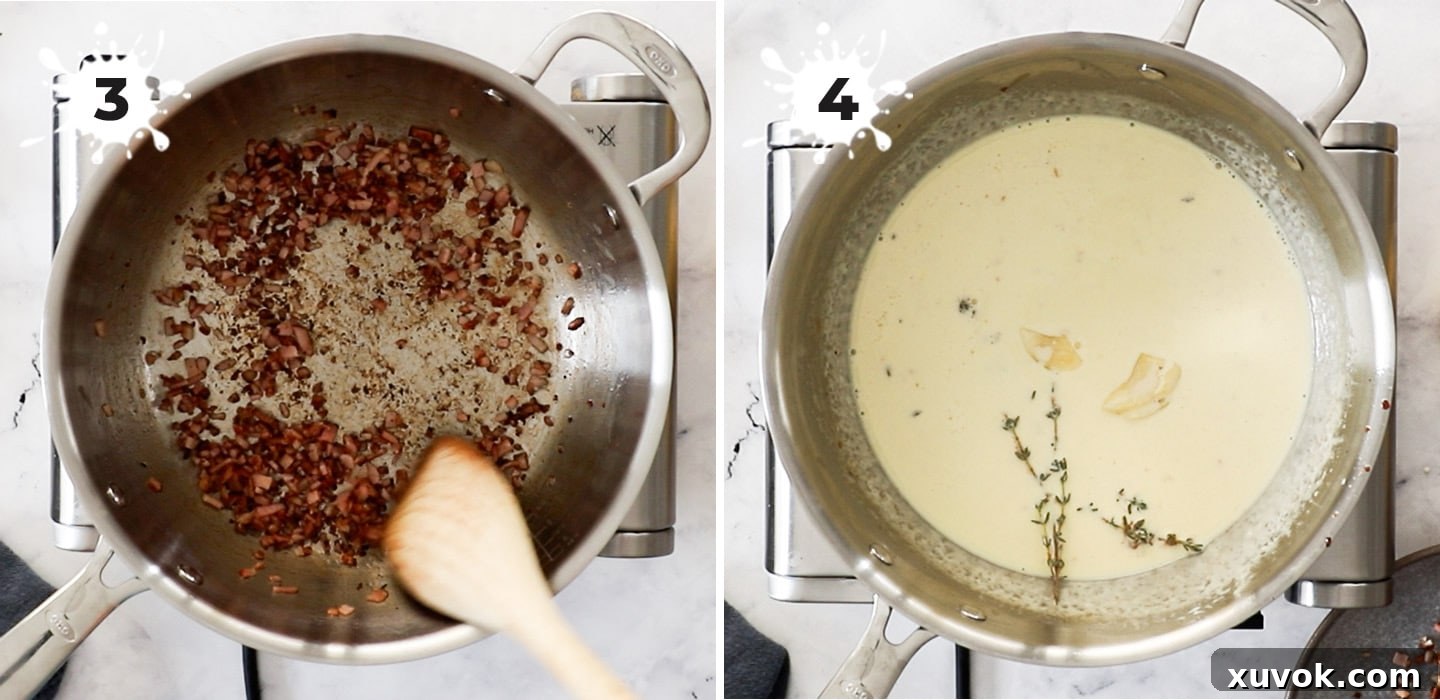
- Crisp the Bacon: Around 20 minutes before the potatoes finish their initial bake (approximately 40 minutes into their cooking time), it’s time to prepare the bacon. In a medium saucepan, cook the finely diced bacon over medium heat. Stir occasionally until the bacon bits are golden brown and delightfully crispy. Once cooked, remove the bacon from the pan and set it aside on a plate lined with paper towel to absorb any excess fat. Do not clean or wash the pan! The rendered bacon fat and browned bits stuck to the bottom are essential for the next step, providing immense flavor for the cream sauce.
- Steep the Aromatic Cream Mixture: With the bacon bits set aside, add the heavy cream, several sprigs of fresh thyme, and the peeled garlic cloves directly to the bacon pan. Place the pan over low-medium heat and use a spatula to gently scrape the bottom, deglazing it and incorporating all those flavorful bacon fond into the cream. Allow the mixture to heat slowly until it just begins to show small bubbles breaking the surface – do not bring it to a rolling boil, as this increases the risk of splitting. Immediately remove the pan from the heat and let the mixture steep for about 5 minutes. This brief infusion time allows the thyme and garlic to release their beautiful aromas and flavors into the cream. After steeping, carefully pick out and discard the garlic cloves and thyme sprigs. A few stray thyme leaves are perfectly fine and add to the rustic charm.
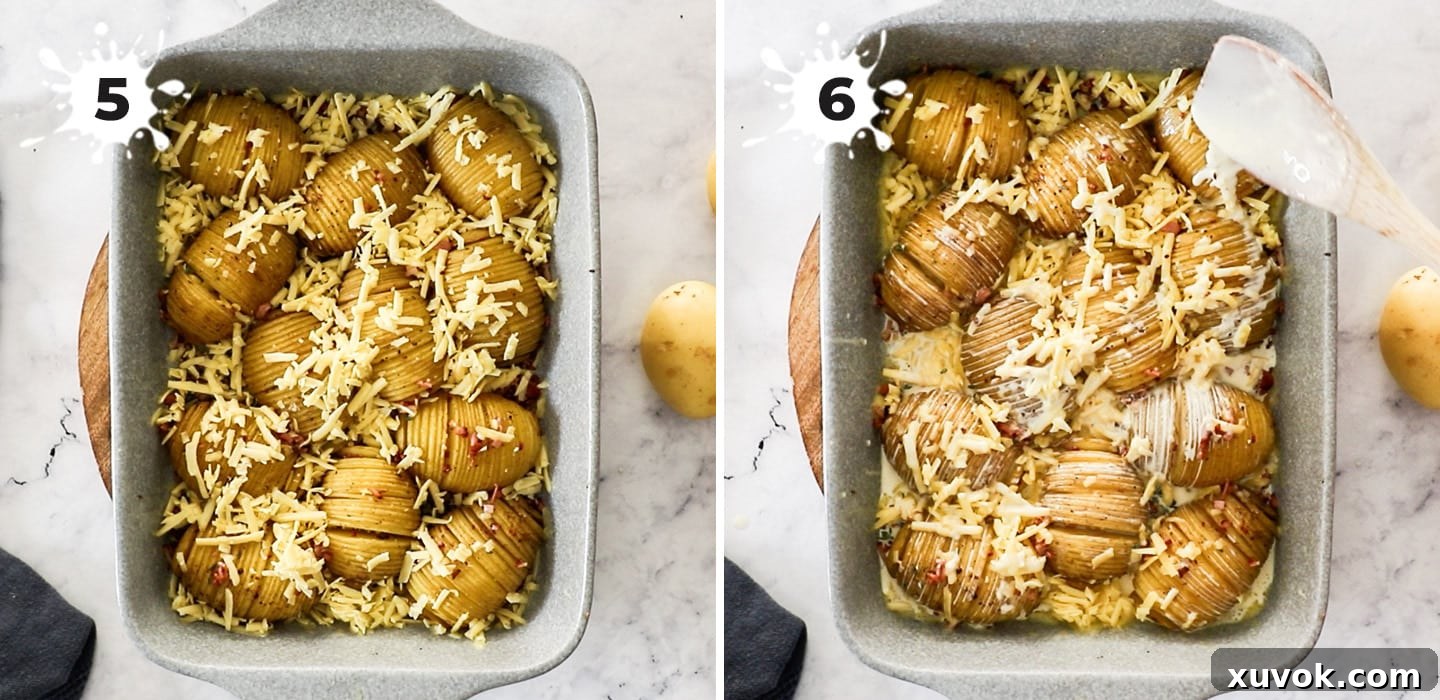
- Combine and Infuse with Flavors: Once your potatoes are tender and golden from their initial bake, it’s time to complete the gratin. Evenly scatter the crispy bacon bits, a sprinkle of fresh thyme leaves (removed from their stalks), and the grated cheese over the baked hasselback potatoes. Then, delicately spoon the infused cream mixture over the entire dish, ensuring it drizzles down into each fanned potato slice. This method allows the cream to thoroughly penetrate the potatoes and embrace all the added flavors.
- Final Bake for Golden Perfection: Return the casserole dish to the oven for a further 20 minutes. During this final baking phase, the cheese will melt into a golden, bubbly crust, the cream will thicken into a rich sauce, and the flavors will meld beautifully together. The edges of the potato slices will crisp up further, creating an irresistible texture. Once done, remove from the oven and allow it to rest for a few minutes before serving. This brief rest helps the sauce to set slightly and makes for easier serving.
Preventing Cream Splitting: Expert Tips for a Smooth Sauce
It’s a common culinary frustration: cream splitting in beloved dishes like potato dauphinoise or gratin. While the flavor remains amazing, the curdled appearance can be less than appealing. This phenomenon occurs when the cream is heated for an extended period, causing its fat and curd-like proteins to separate. In layered dishes like a traditional dauphinoise, the potato starches can sometimes help stabilize the cream, but in a gratin where a distinct, smooth sauce is desired, splitting is definitely an issue to avoid.
Through extensive testing with various types of cream – ranging in fat percentages and even including varieties without added stabilizers – and experimenting with different oven temperatures and cooking durations, a clear pattern emerged. With the creams readily available, splitting consistently occurred whenever the cream was added at the beginning of the bake or for longer than a final 20-minute cooking period.
Happily, my tests confirmed that the delicious flavor of the potatoes remained unchanged whether the cream was introduced at the start or only during the last 20 minutes of baking. More importantly, when added at the end, the sauce thickened beautifully without any signs of curdling. This discovery led to the refined recipe you see here.
Therefore, this recipe is meticulously designed to provide you with a wonderfully thick, creamy, and un-split sauce for your potatoes. However, if, despite best efforts, your cream does happen to split slightly, don’t despair! Rest assured, it’s still absolutely delicious and perfectly safe to eat. Just keep a watchful eye on it as it nears the end of its cooking time, and remember that taste trumps aesthetics in the end.
Pro Tips for a Flawless Hasselback Gratin
- Choose the Right Potato: As mentioned in the ingredients section, the type of potato profoundly impacts the final texture. Always opt for a starchy potato or a good all-rounder variety. Waxy potatoes contain more moisture and tend to hold their shape too rigidly, preventing them from fanning out and absorbing the creamy sauce as effectively as desired.
- Optimal Slicing Tools: While wooden skewers can work in a pinch, I highly recommend using metal skewers to guide your knife. A sharp knife can sometimes get stuck or cut into wooden skewers, making the slicing process frustrating and less precise. Metal skewers provide a smooth, consistent barrier, ensuring clean, even cuts every time.
- Angle Your Slices for Success: To prevent inadvertently cutting through the very bottom of your potato – especially the final few slices – try angling your knife blade ever so slightly away from the last cut. For example, if you typically slice from right to left, angle the blade just a tiny bit to the left. This subtle adjustment helps maintain the integrity of the base. Should a slice accidentally detach, simply slot it back into place before baking. Once coated in cream and baked, it will meld back into the potato, and no one will ever know!
- Seasoning Strategy: Don’t be shy with seasoning the potatoes before their initial bake. The salt helps draw out some moisture and enhances the overall flavor. Ensure they are evenly coated with oil, salt, and pepper for optimal crisping and taste development.
- Selecting Your Baking Dish: Choose a baking dish where the potatoes fit quite snugly. This allows them to support each other during cooking, helping them retain their shape and encouraging the cream sauce to pool around them rather than spreading too thinly. A dish that’s too large will result in a drier gratin.
- Rest Before Serving: After removing your gratin from the oven, allow it to rest for 5-10 minutes. This crucial step allows the sauce to thicken and settle, making it easier to serve and ensuring each portion holds its creamy goodness.
Storage and Reheating Guide
This hasselback potato gratin is often best enjoyed fresh from the oven, but leftovers are a delicious treat! To store, ensure any remaining gratin is transferred to an airtight container and refrigerated promptly. It will keep well in the refrigerator for 2-3 days, making it an excellent make-ahead component for busy weeknights.
When you’re ready to enjoy it again, reheating is simple. For individual portions, the microwave works efficiently, though it may not restore the crispy texture of the potato tops. For best results, especially if reheating a larger amount, use the oven. Preheat your oven to a moderate temperature (around 160°C/325°F), cover the gratin loosely with foil to prevent drying, and bake until heated through, typically 15-25 minutes. If you desire some crispness, remove the foil for the last few minutes of reheating.
Frequently Asked Questions (FAQs)
Hasselback refers to a specific culinary technique where potatoes (or other vegetables) are sliced very thinly, leaving the base intact. This creates an accordion-like effect. When roasted, the numerous thin edges become wonderfully crispy, while the interior of the potato remains beautifully tender and moist, creating a delightful contrast in every bite.
The name “Hasselback” originates from the place where this distinctive potato preparation was first created. It was invented in the 1940s at a restaurant named Hasselbacken, located in Stockholm, Sweden. The unique slicing method and resulting texture quickly gained popularity, leading to its enduring name.
Historically, there were clear distinctions: scalloped potatoes traditionally feature thin potato slices baked in a milk-based sauce, often thickened with a roux, and didn’t always include cheese. Potatoes au gratin, on the other hand, are characteristically made with cream and always include cheese, which forms a delicious browned crust (the “gratin”). However, in modern cooking, these techniques and ingredient lists often mingle, leading to many recipes that blend elements of both.
Cream curdling in potatoes au gratin is a fairly common occurrence. While it might not look ideal, the dish is still perfectly edible and often tastes just as good. This happens when cream is exposed to high temperatures or lengthy cooking times, causing the fat to separate from the proteins, resulting in a slightly curdled appearance resembling melted butter with small curds. To minimize this, always use full-fat cream, as low-fat versions are much more prone to splitting. A higher fat content cream can be more stable. Some chefs also suggest whisking a small amount of cornflour (or cornstarch in the US) into the cream before cooking, which acts as a stabilizer and helps prevent separation.
You can certainly prepare parts of this dish in advance. The potatoes can be sliced a few hours ahead of time and kept submerged in cold water in the refrigerator to prevent browning. Drain and pat them very dry before proceeding with baking. You can also cook the bacon and prepare the infused cream mixture (without discarding the garlic and thyme, just remove before the final pour) and store them separately in the fridge. For optimal texture, it’s best to assemble and bake the gratin fresh, adding the cream for the final 20 minutes as instructed, to ensure the crispiest potato tops and a perfectly smooth sauce.
This rich and flavorful gratin pairs beautifully with a wide variety of main courses. It’s an excellent accompaniment to roasted meats such as roast chicken, turkey, beef tenderloin, or pork loin. It also complements pan-seared steaks or hearty lamb chops. For a balanced meal, consider serving it alongside a simple green salad with a light vinaigrette or some steamed green vegetables like asparagus or green beans to cut through the richness.
More Irresistible Recipes You’ll Love
If you enjoyed this hasselback potato gratin, be sure to explore more delightful side dishes and potato-centric recipes from our collection!
- Hasselback Butternut Squash
- Parmesan Smashed Potatoes
- Roasted Garlic Parmesan Potatoes
- Perfect Crunchy Roast Potatoes
- Cheesy Loaded Potato Bake
- Cheesy Mashed Potatoes
Did you try this hasselback potato gratin recipe?
Leaving a rating and comment below the recipe is so helpful!
Hungry for more? Subscribe to the newsletter for free recipes straight to your inbox. Also, follow along on Facebook, Pinterest and Instagram.
Hasselback Potato Gratin
Rate
Pin
Ingredients
- 12 small potatoes, 110-140g each / 4-5oz (or 6 medium cut in half), unpeeled (see notes on potato type and size)
- 1 tablespoon olive oil
- 1 teaspoon salt
- ¼-½ teaspoon finely cracked black pepper, to taste
- 85 g bacon (finely diced) (approx. 3oz / 3 rashers)
- 1 ½ cups thickened cream (heavy cream, double cream)
- 8-10 sprigs fresh thyme
- 2 large cloves garlic, peeled
- ¾ cup packed grated cheddar cheese (85g / 3oz; or Gruyère/Parmesan)
For best results, always weigh ingredients where a weight is provided
Equipment
-
Chopping Board
-
Sharp Chef’s Knife
-
2 Metal Skewers (recommended)
-
Medium Saucepan
-
Large Baking Dish (approx. 9×13 inch / 23×33 cm)
Instructions
-
Preheat your oven to 180°C (160°C fan-forced) / 350°F.
-
Thoroughly wash and dry all the potatoes before proceeding. This helps ensure even crisping.
-
Select the flattest side of one potato and carefully trim off a thin slice to create a perfectly flat base. Place the potato flat-side down on a chopping board. Position a metal skewer (or chopstick) on either side of the potato, parallel to its longest sides. Using a sharp knife, cut the potato into thin 2mm (or thinner) slices, allowing the skewers to stop your knife from cutting all the way through to the base (refer to notes for slicing tips). Repeat this precise slicing technique for all remaining potatoes.
-
Carefully arrange the sliced potatoes in a large baking dish. Ideally, choose a dish where they fit quite snugly together. Drizzle the potatoes generously with olive oil, then sprinkle evenly with salt and freshly cracked black pepper. Very gently roll and toss them around to ensure each potato is evenly coated with the seasoning, being extra careful not to break apart the delicate hasselback slices.
-
Turn all the potatoes so their fanned, hasselback sides are facing upwards. Ensure they are evenly spaced out in the baking dish to allow for consistent cooking and browning.
-
Bake the potatoes on the middle oven rack for 50-60 minutes, or until they are tender when pierced with a fork and have developed a pale golden-brown color on their exposed edges.
-
When the potatoes have about 20 minutes left to bake, begin preparing the bacon. In a medium saucepan, cook the finely diced bacon bits over medium heat. Stir frequently until they are just starting to turn golden brown and become crispy. Once cooked, set the bacon aside on a paper towel-lined plate.
-
Using paper towel, carefully soak up any large pools of grease remaining in the bacon pan. However, do not rinse or wash the pan! The residual bacon fat and browned bits stuck to the bottom are crucial for infusing the cream sauce with incredible flavor.
-
Add the two peeled garlic cloves, the heavy cream, and three sprigs of fresh thyme directly to the bacon pan.
-
Heat the cream mixture over low-medium heat, using a spatula to scrape the bottom of the pan to deglaze it and incorporate all the delicious bacon flavor. Continue heating until you just start to see small bubbles breaking the surface of the cream; it is important not to boil the cream. Immediately remove the pan from the heat and set it aside to allow the flavors of the garlic and thyme to steep and infuse for approximately 5 minutes. After steeping, carefully pick out and discard the garlic cloves and thyme stalks (leaving a few small leaves behind is perfectly fine).
-
From the remaining sprigs of thyme, remove the leaves from their stalks until you have about 1 teaspoon of fresh thyme leaves. Discard the stalks.
-
Once the potatoes are tender from their initial bake, evenly scatter the reserved crispy bacon bits, the grated cheese, and the fresh thyme leaves over them. Then, spoon the infused cream mixture over the top, making sure it seeps down into the fanned slices of each potato.
-
Return the baking dish to the oven and bake for a further 20 minutes. During this final bake, the cheese will melt and become golden and bubbly, the cream will thicken into a rich sauce, and all the flavors will meld together beautifully.
-
Please take a moment to leave a comment & rating once you’ve tried the recipe. Your feedback is greatly appreciated and incredibly helpful!
Notes
- Tablespoons: This recipe uses a standard Australian 20ml tablespoon, which is equivalent to 4 teaspoons. Please check your own tablespoon measure before portioning ingredients to ensure accuracy.
- Best Potato Varieties: For the most delicious results, we highly recommend using starchy or all-rounder potato varieties such as Royal Blue, Sebago, Russet, King Edward, or Maris Piper. These types soften beautifully and absorb flavors wonderfully.
- Potato Size Consistency: Aim for potatoes that are roughly 110-140g (4-5oz) each. Consistency in size is important so that all potatoes cook evenly at the same rate. You can gently adjust the size of larger potatoes by trimming a little more off the bottom to create a flatter, more uniform base. If you use significantly larger potatoes, the initial baking time might need to be extended, but always keep the final bake with the cream to the recommended 20 minutes to prevent splitting.
- Slicing Precision: Exercise care when slicing the potatoes. If, during the slicing process, you find that a slice or two accidentally cuts through and detaches from the base, don’t worry! Simply slot the piece back into its place. Once the gratin is assembled and baked, these small imperfections will become virtually invisible.
- Nutritional Information: The nutritional details provided are approximate estimates only and have been derived from an online calculator. Please be aware that variations may occur depending on the specific brands and exact quantities of ingredients you use.
EXPLORE MORE GREAT SIDE DISH RECIPES!
Calories from Fat 270