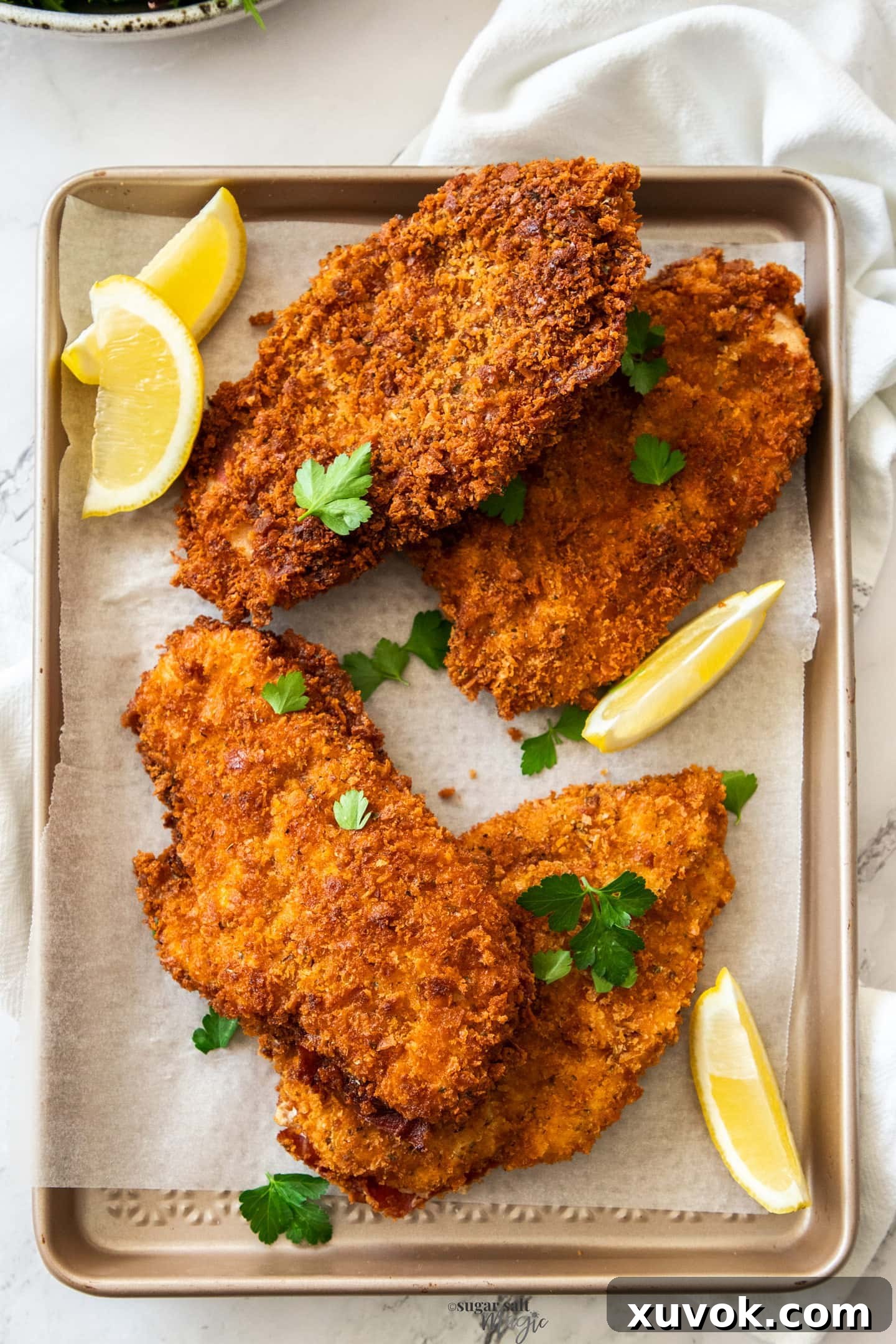
The Ultimate Guide to Making Perfect Crispy Chicken Schnitzel at Home
Transforming a simple chicken breast into a golden, crunchy, and irresistibly tender delight is easier than you think. Forget greasy, bland schnitzel – this comprehensive guide will equip you with all the tips and tricks to master the art of homemade chicken schnitzel, ensuring a succulent interior and a perfectly crisp, golden-brown crust every single time. I’ve perfected this recipe over years, and it consistently delivers a flavor that will wow your family and friends.
While chicken schnitzel might not be labeled as health food, the misconception of it being a heavy, oil-laden dish couldn’t be further from the truth when prepared correctly. The secret lies in a few crucial details: selecting the right meat, crafting superior breadcrumbs, and maintaining the optimal oil temperature. Get these elements right, and you’ll achieve a culinary masterpiece – tender, juicy chicken encased in a delicate, crunchy coating, devoid of any greasiness.
❤️ Why You’ll Fall in Love with This Homemade Chicken Schnitzel Recipe
This isn’t just another chicken dish; it’s a comforting classic redefined for home cooks. Here’s why this recipe will quickly become a cherished favorite in your kitchen:
- Unbeatable Texture: Crunchy & Golden Perfection – Experience the ultimate sensory delight with a perfectly crisp, golden crust that gives way to incredibly tender, juicy chicken inside. This exquisite contrast is what sets a truly great chicken schnitzel apart.
- Quick & Effortless: Ideal for Weeknights – Don’t let its gourmet appeal intimidate you. This recipe is surprisingly straightforward and can be ready in under 40 minutes, making it a fantastic option for busy weeknight dinners without compromising on flavor or quality.
- Exciting Flavor Twist: The Saltimbocca Sensation – Elevate your schnitzel with an optional Italian-inspired twist. By adding prosciutto, fresh sage, and grated Parmesan cheese, you can create a sophisticated “Saltimbocca Schnitzel” that introduces layers of savory, aromatic flavors to this classic dish.
- Guaranteed Family-Friendly Appeal – This comforting meal is a universal crowd-pleaser. Its familiar yet elevated flavors make it a hit with kids and adults alike, ensuring clean plates and happy faces around the dinner table.
- Incredibly Versatile & Customizable – While chicken is the star here, the technique is highly adaptable. Feel free to swap chicken for pork, veal, or even turkey to explore different flavor profiles. It’s also excellent in sandwiches, salads, or with various sauces.
Looking for more crispy chicken inspiration? Try these crunchy chicken tenders. For a truly satisfying and comforting dinner, serve your schnitzels alongside a rich broccoli cheese bake. Or, if you prefer a lighter accompaniment, this vibrant asparagus, rocket, and parmesan salad makes an excellent choice.
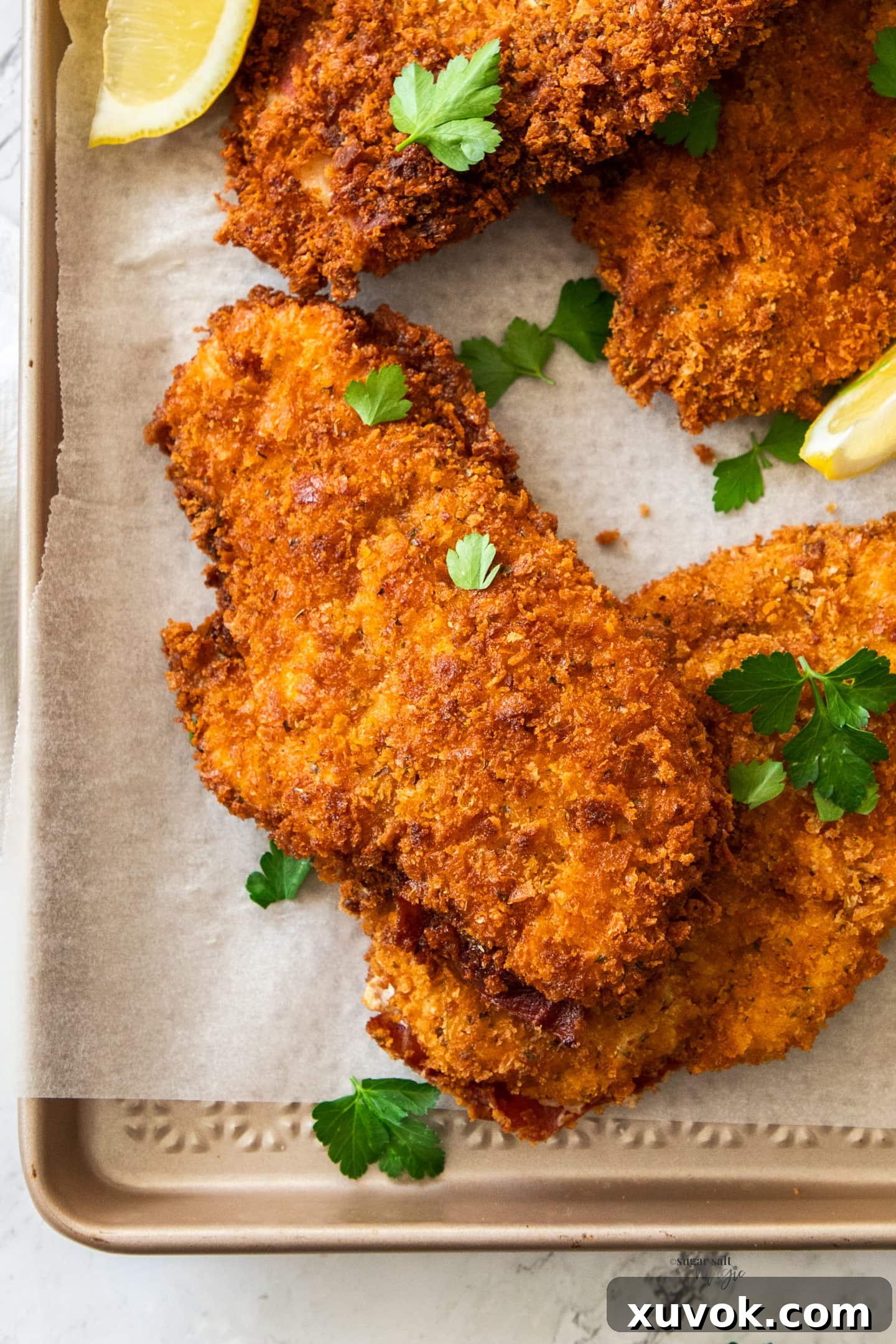
Table of Contents
- ❤️ Why You’ll Fall in Love with This Homemade Chicken Schnitzel Recipe
- What Exactly is Schnitzel?
- Essential Ingredients for Flawless Schnitzel
- Step-by-Step: How to Prepare Chicken Schnitzel
- Mastering the Fry: How to Cook Chicken Schnitzel Perfectly
- How Long Does Chicken Schnitzel Need to Cook?
- Delicious Variations and Customizations
- What to Serve with Your Crispy Schnitzel
- More Chicken Dinners You’ll Adore
Never Miss a Recipe!
Get the latest recipes straight to your inbox!
What Exactly is Schnitzel? Understanding This European Classic
The term ‘schnitzel’ (pronounced shnit-suhl) typically refers to a thin slice of meat, most commonly veal, pork, or chicken, that is pounded thin, coated in breadcrumbs, and then fried. Originating from Austria and Germany, schnitzel has become a beloved dish worldwide, with numerous regional variations.
While the classic Wiener Schnitzel traditionally uses veal, chicken schnitzel has gained immense popularity for its tender texture and versatility. This recipe can easily be adapted for pork, veal, or even turkey to suit your preference. The key characteristic of any great schnitzel is its delicate, crispy crust and tender, moist meat.
Traditional shallow frying is the preferred method for cooking schnitzel, which involves frying the breaded cutlets in just enough oil to come halfway up the side of the meat. This technique ensures that the breading crisps up beautifully to a golden hue without becoming greasy. Many people mistakenly believe more oil leads to a greasier result, but the opposite is true. When the oil is hot enough, the breadcrumbs create a protective barrier, preventing excessive oil absorption and yielding that coveted non-greasy, ultimate crunchy finish. It’s cooked on one side until golden, then flipped to achieve the same perfect crispness on the other.
The concept of breaded cutlets is beloved globally; for a delightful Japanese take, try this classic Chicken Katsu.
Essential Ingredients for Flawless Chicken Schnitzel
Crafting perfect homemade chicken schnitzel requires only a handful of fundamental ingredients, transforming humble chicken breasts into a flavorful meal. For those looking to add a gourmet touch, the prosciutto, sage, and Parmesan are entirely optional but highly recommended for creating an exquisite Saltimbocca-style schnitzel.
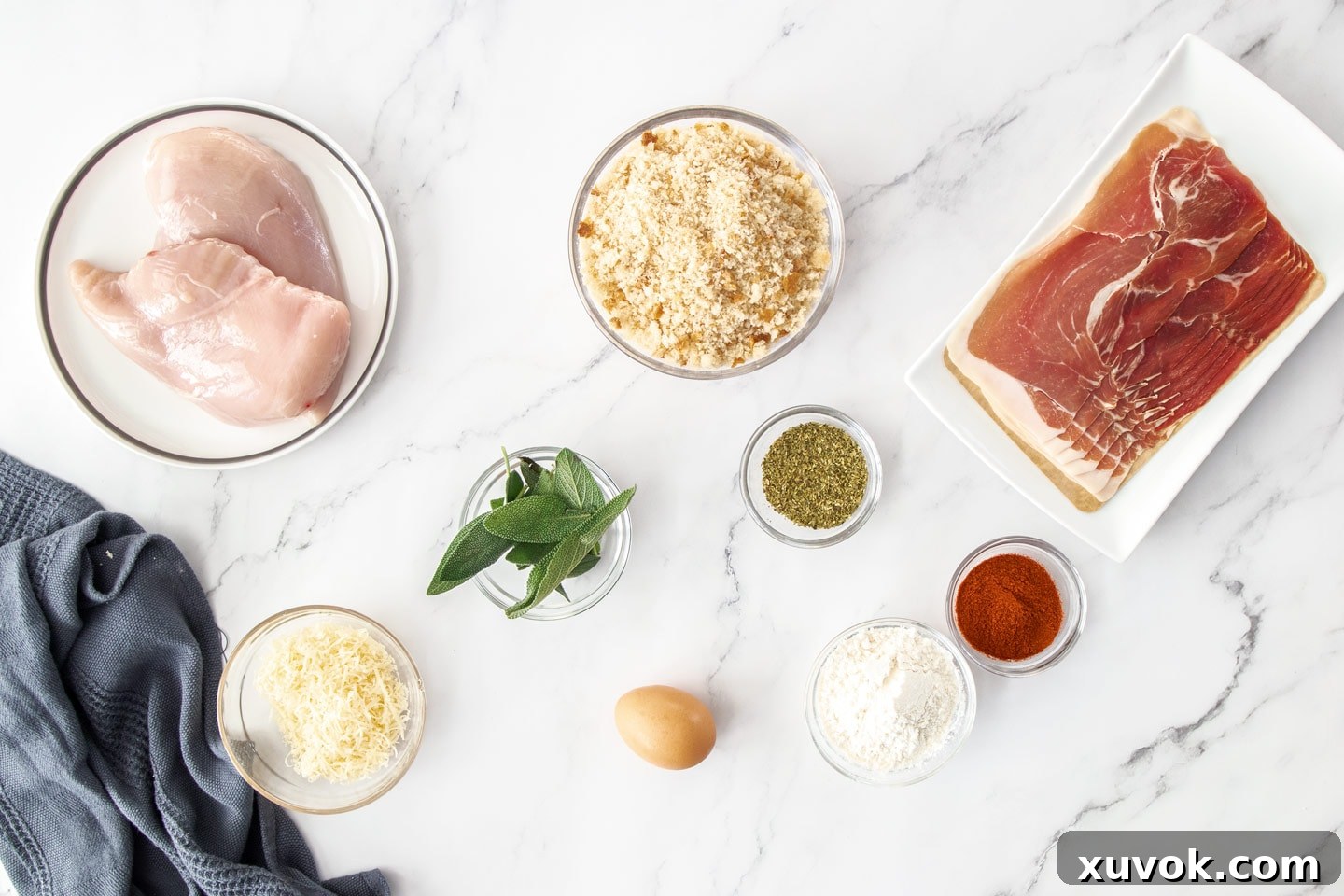
Detailed quantities and instructions can be found in the recipe card below.
- Chicken Breasts: Opt for large, boneless, skinless chicken breasts. The quality of your chicken significantly impacts the tenderness and overall flavor of the schnitzel.
- Breadcrumbs: For an unparalleled texture and flavor that truly elevates your schnitzel, homemade breadcrumbs are highly recommended. They offer a superior crunch and a more robust, natural flavor compared to store-bought varieties. Making your own from day-old bread is simple and yields a light, airy, and incredibly crispy coating. If homemade isn’t an option, high-quality panko breadcrumbs are the best store-bought alternative, providing excellent crispiness.
- Dried Herbs: Mixing dried herbs, such as oregano, into your breadcrumbs adds a wonderful aromatic lift and depth of flavor. Italian seasoning blend is also a great choice.
- Seasoning: Don’t underestimate the power of salt and freshly ground black pepper. Seasoning the chicken itself, as well as the breadcrumb mixture, is crucial for preventing a bland final product, ensuring flavor permeates every bite.
- All-Purpose Flour: This forms the essential first layer of your breading station. The flour helps to create a dry surface on the chicken, allowing the egg wash to adhere more effectively.
- Eggs: Beaten eggs act as the “glue” that binds the breadcrumbs to the chicken, creating a uniform and sturdy coating.
- Neutral Oil for Frying: Choose an oil with a high smoke point and neutral flavor, such as vegetable oil, canola oil, or sunflower oil. The right oil ensures a golden, crispy fry without imparting unwanted flavors.
Because everything is better ‘schnitzelized’ (yes, it’s a new word!), I chose to transform one of my favorite dishes from our honeymoon—chicken saltimbocca—into a schnitzel. These optional ingredients introduce a delightful Italian flair:
- Prosciutto: Thin slices of savory prosciutto add a wonderful salty depth and a subtle crispness when fried.
- Parmesan Cheese: Finely grated Parmesan contributes a nutty, umami richness that pairs beautifully with the chicken and sage.
- Fresh Sage: The aromatic, earthy notes of fresh sage are classic in saltimbocca and infuse the schnitzel with a sophisticated flavor.
- Paprika: A touch of mild paprika mixed into the breadcrumbs not only adds a gentle warmth but also enhances the golden color of the crust, making it even more appealing.
These extra ingredients, when combined with the chicken, are all wrapped up in a wonderfully crunchy, can’t-stop-eating-this crumb. For a traditional, simple chicken schnitzel recipe, simply omit these four optional ingredients. Easy peasy, and still utterly delicious!
You can even ‘schnitzelize’ sausages for a fun twist – try my Crumbed Sausages for another family favorite.
Step-by-Step: How to Prepare the Perfect Chicken Schnitzel
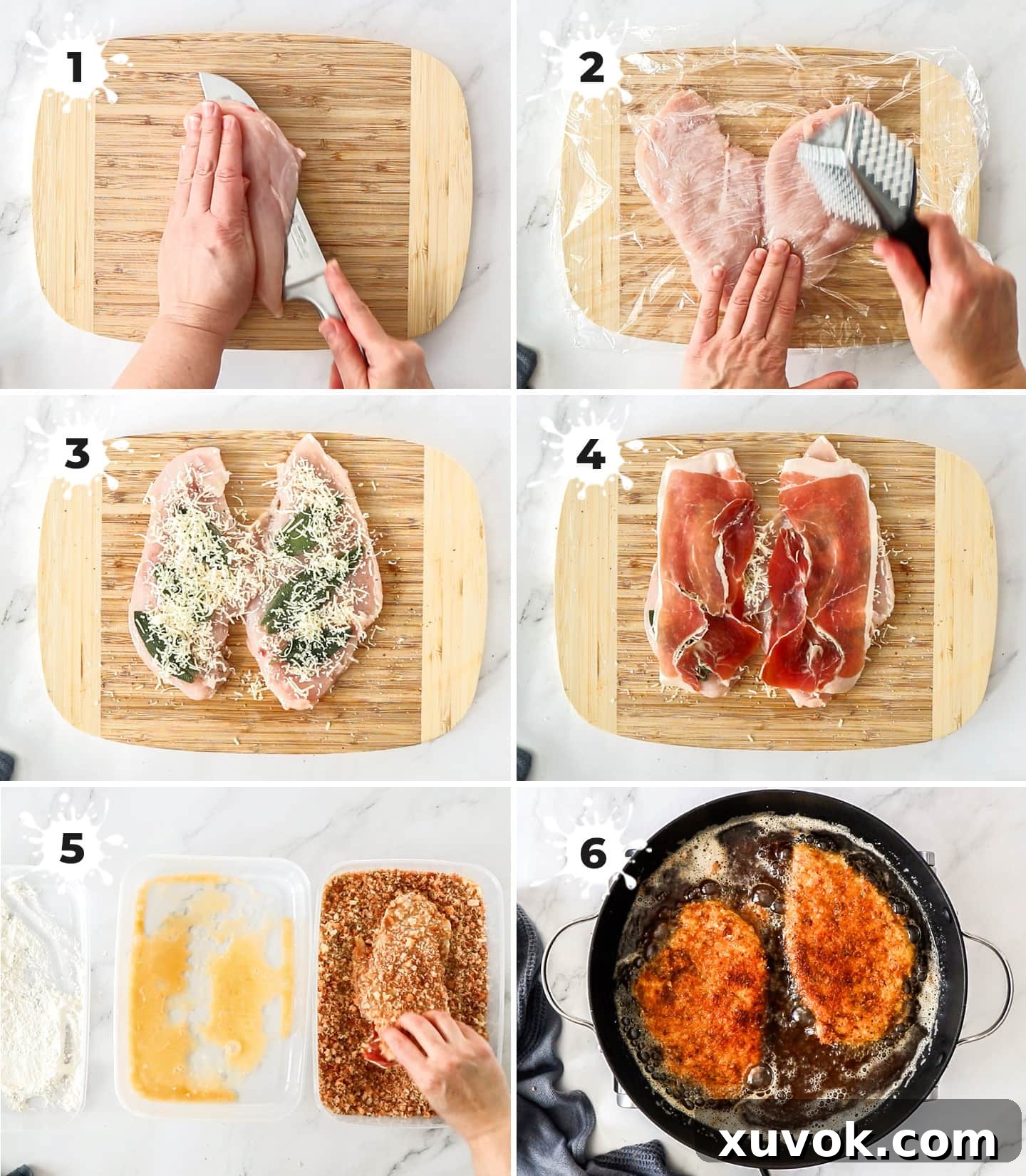
Detailed quantities and instructions can be found in the recipe card below.
Homemade chicken schnitzel is more than just coating chicken in crumbs and frying; it’s a careful process that elevates a simple ingredient into a culinary highlight. Follow these steps to ensure your schnitzel reaches its full potential, achieving next-level flavor and texture.
- Prepare the Chicken Cutlets: Slice & Pound for Evenness
- Slice: Begin by placing a large boneless, skinless chicken breast on a clean cutting board. Carefully slice it horizontally through the thickness, creating two thinner pieces, often referred to as chicken cutlets (photo 2). This technique ensures faster, more even cooking. If your chicken breasts are very thick, you might even get three cutlets from one breast.
- Bash: To achieve uniform thickness and tenderize the meat, place the chicken cutlets between two sheets of plastic wrap. Using a meat tenderizer (or the flat side of a rolling pin), gently but firmly pound the thicker parts of the chicken (photos 1&2) until each piece is about 1/2 to 3/4 inch (approximately 1-1.5 cm) thick. Be careful not to bash too hard, which can tear the meat. This crucial step guarantees even cooking and contributes to the meat’s tenderness.
For a more in-depth guide on preparing chicken cutlets, refer to my full guide to chicken cutlets.
- Season Generously for Flavor Depth:
- Remove the plastic wrap from the pounded chicken cutlets. Generously season both sides of the chicken with salt and freshly ground black pepper. This step is vital because the breading can absorb a lot of flavor, and seasoning the meat directly prevents a bland interior.
- Don’t forget to season your breadcrumb mixture too! This layering of seasoning ensures that every bite is bursting with flavor, from the crispy crust to the tender chicken.
- Optional Saltimbocca Twist: Add Italian Flair:
- For my special Saltimbocca Chicken Schnitzel, this is where you add the gourmet layer. Lay 3 fresh sage leaves evenly over one side of each seasoned chicken breast. Sprinkle a generous amount of finely grated Parmesan cheese over the sage, then top with a slice of prosciutto, gently pressing it down (photos 3&4). You’ll need to handle these pieces carefully during the breading process to keep the toppings in place.
- Master the Breading Station: For a Perfect Crumb Coating:
- Set Up: Prepare three separate shallow bowls or dishes, each wide enough to comfortably fit a chicken cutlet. In the first bowl, place your all-purpose flour. In the second, whisk the eggs until well beaten. In the third bowl, combine your homemade breadcrumbs (or panko), paprika, oregano, and sea salt flakes. Mix thoroughly.
- Coat in Flour: Take one chicken cutlet (with toppings if making Saltimbocca) and dredge it completely in the flour, ensuring both sides are coated. Gently shake off any excess flour. This step provides a dry surface for the egg to adhere to.
- Dip in Egg: Next, dip the flour-coated chicken into the beaten egg, allowing any excess egg to drip off. The egg acts as a binder for the breadcrumbs.
- Crumb Coating: Finally, place the chicken into the seasoned breadcrumb mixture (photo 5). Press the crumbs firmly onto both sides of the meat, ensuring it’s completely covered. This firm press is crucial for the crumbs to stick well and create that satisfying crunch. Lay the breaded schnitzel on a clean plate or baking sheet.
- Repeat: Continue this breading process with the remaining chicken cutlets, ensuring each is fully coated and pressed.
- A Key Tip: Avoid Double Crumbing: Resist the temptation to double-crumb your schnitzel. While it might seem like it would create extra crunch, it often leads to a soggy layer underneath the outer crispy layer, which is undesirable. A single, well-adhered coating is all you need for the perfect texture.
Mastering the Fry: How to Cook Chicken Schnitzel Perfectly
Detailed quantities and instructions can be found in the recipe card below.
The secret to a truly outstanding chicken schnitzel lies in its cooking method: shallow frying. This technique ensures a beautifully golden, crispy crust without the excessive oil absorption often associated with deep-frying.
- Achieve Optimal Oil Temperature:
- Pour your chosen neutral oil (vegetable, canola, or sunflower) into a large, heavy-bottomed skillet or frying pan. The oil should be no more than 1 cm (about ⅓ to ½ inch) deep, enough to come halfway up the sides of the chicken.
- Heat the oil over medium-high heat. The ideal temperature is crucial; if it’s not hot enough, the schnitzel will absorb too much oil and become greasy. If it’s too hot, the crumbs will burn before the chicken cooks through.
- Test the oil: Dip the handle of a wooden spoon into the hot oil. If tiny bubbles vigorously form around the wood, the oil is ready. Alternatively, a small pinch of breadcrumb should sizzle immediately upon contact.
- Gently Place and Don’t Overcrowd the Pan:
- Carefully and gently place one or two breaded schnitzels into the hot oil. Avoid splashing the hot oil.
- It’s essential not to overcrowd the pan. Cooking too many pieces at once will drastically lower the oil’s temperature, causing the schnitzel to steam rather than fry, resulting in a soggy rather than crispy crust. Cook in batches, allowing enough space between each piece. Don’t worry, cooked schnitzels retain their heat well, so you can keep earlier batches warm while subsequent ones cook.
- Cook to Golden Perfection:
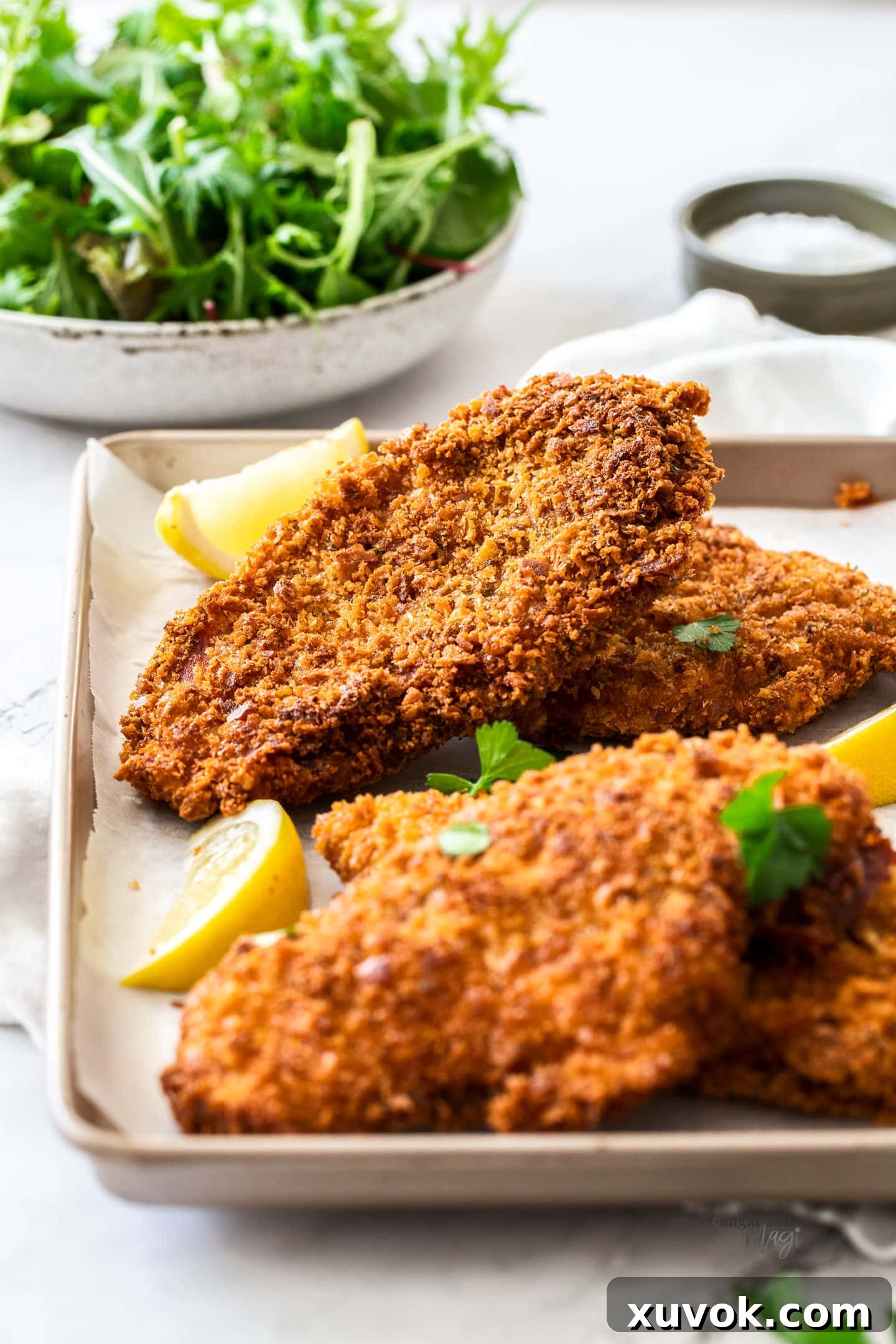
- Allow the schnitzels to cook undisturbed until the underside turns a beautiful golden brown and becomes wonderfully crispy (photo 6, above). This typically takes about 6-7 minutes.
- Carefully flip the schnitzel with tongs or a spatula and cook the other side until it’s equally golden and crisp.
- Drain Excess Oil for Ultimate Crispness:
- Once both sides are golden brown and the chicken is cooked through (see the next section for how to check doneness), carefully transfer the schnitzels to a tray lined with several layers of ruffled-up paper towel. The crumpled paper towel creates air pockets, allowing better drainage and preventing the bottom from becoming soggy.
- Let them drain for a few minutes. This crucial step removes any excess oil, ensuring your schnitzels are exceptionally crisp and enjoyable. They will remain piping hot during this brief draining period.
Serve your gorgeous, crispy chicken schnitzel immediately with fresh lemon wedges, ready to be squeezed over for a burst of bright acidity.
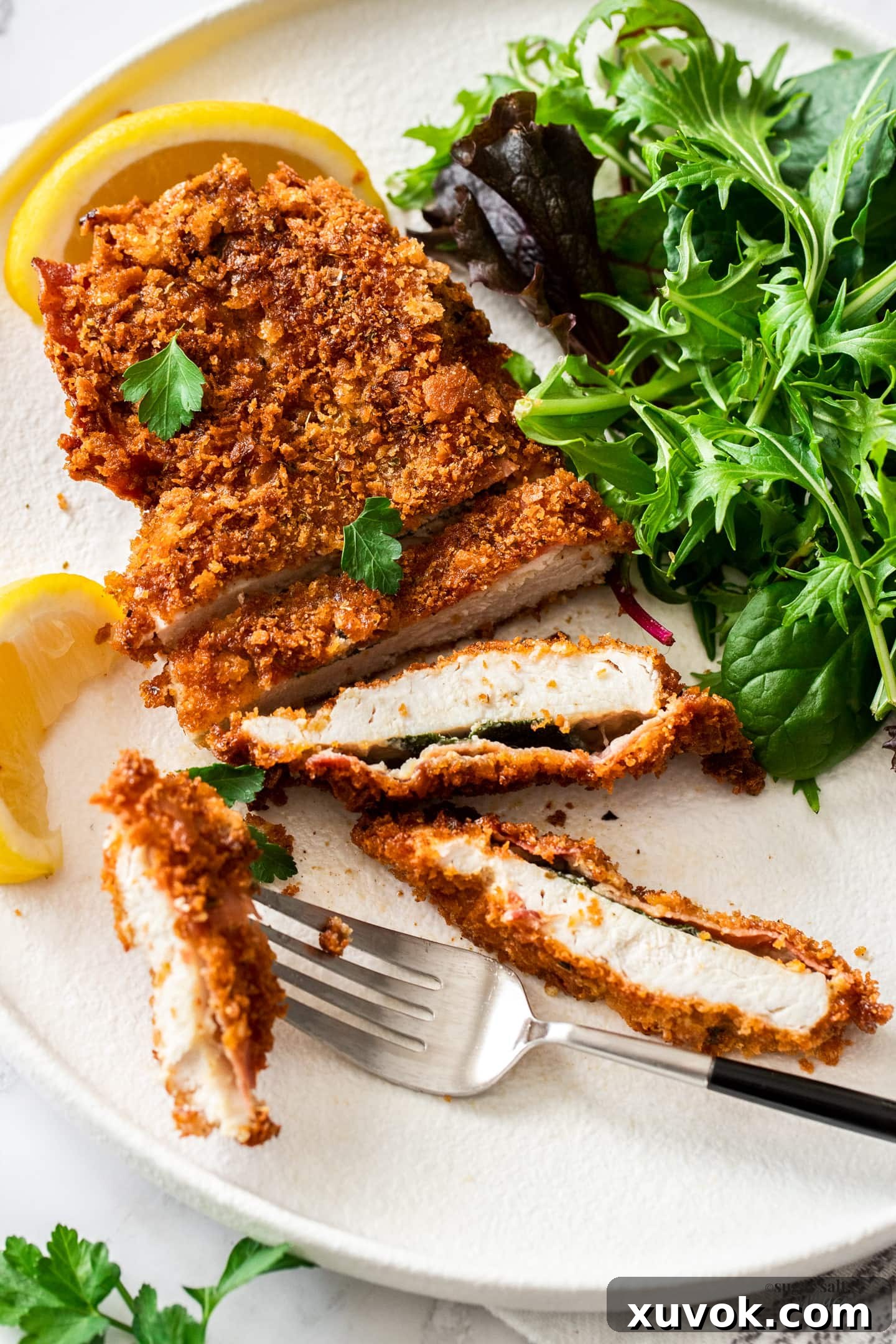
How Long Does Chicken Schnitzel Need to Cook? Ensuring Perfect Doneness
The exact cooking time for your chicken schnitzel can vary based on a couple of factors: the precise thickness of your pounded chicken cutlets and the actual temperature of your frying oil. Following the shallow-frying method outlined above, for schnitzels that are approximately 1.5 cm (around ¾ inch) thick, you can expect a total cooking time of about 12-14 minutes, roughly 6-7 minutes per side.
For absolute certainty that your chicken is safely cooked through and perfectly juicy, using a meat thermometer is highly recommended. The internal temperature of cooked chicken should register 75°C / 165°F at its thickest point. If your schnitzels are not of uniform thickness, be sure to insert the thermometer into the thickest part of the largest piece. Alternatively, you can always make a small cut into the center of a piece to visually confirm there is no pink meat remaining.
Delicious Variations and Customizations for Your Schnitzel
The beauty of chicken schnitzel lies in its adaptability. Once you master the basic technique, the possibilities for customization are endless:
- Herb and Spice Blends: Experiment with different dried herbs and spices in your breadcrumb mixture. Consider adding garlic powder, onion powder, a pinch of chili flakes for a subtle kick, or a smoky paprika. Italian seasoning, thyme, or rosemary can also add delightful aromatic notes.
- Alternative Meats: While chicken is fantastic, don’t hesitate to use other proteins. Try making schnitzel with pork loin (like this savory Pork Cotoletta Milanese), tender veal, or even turkey breast for a leaner option. Thigh meat can also be used if you prefer a richer, darker chicken cut. Remember that cooking times may vary slightly with different meats.
- Serving Styles: Beyond serving them as a main course, schnitzels are incredibly versatile in other dishes. Slice them and add them to burgers for an elevated experience, like these crispy chicken burgers. They also make excellent additions to wraps, sandwiches, or sliced thinly for a crunchy salad topping.
- Gluten-Free Option: To make this recipe gluten-free, simply substitute all-purpose flour with a gluten-free all-purpose flour blend and use gluten-free breadcrumbs or certified gluten-free panko.
What to Serve with Your Crispy Chicken Schnitzel
A perfectly cooked chicken schnitzel is a meal in itself, but choosing the right accompaniments can elevate it to an unforgettable dining experience. Here are some delicious ideas, from comforting classics to lighter, fresher options:
- Hearty & Comforting Sides:
- Indulge with creamy mashed potatoes or a decadent Mac and Cheese.
- This delightful Broccoli Cheese Bake adds a cheesy vegetable component that pairs beautifully.
- Classic German potato salad or spaetzle (German egg noodles) also offer a traditional pairing.
- Simple & Lighter Carb Options:
- Keep the carbs light and fresh with a simple potato salad or a Warm Asparagus Potato Salad.
- For garlicky goodness, these Garlic Butter Potatoes are an excellent choice.
- A side of fluffy white rice or roasted root vegetables can also complement the schnitzel without overpowering it.
- Fresh Salads for Balance:
- A crisp green salad with a bright vinaigrette offers a refreshing contrast to the richness of the fried chicken.
- This sweet and tangy apple coleslaw is a fantastic textural and flavor counterpart.
- A creamy pasta salad or a refreshing cucumber salad with dill are also popular choices.
- Delectable Sauces and Garnishes:
- Fresh lemon wedges are non-negotiable! A squeeze of lemon juice over the hot schnitzel brightens every bite.
- Consider a classic mushroom sauce for a savory, umami-rich topping.
- For a unique twist, a dollop of lingonberry jam offers a sweet and tart counterpoint, traditional in some European cuisines.
- Creamy mayonnaise, garlic aioli, or a vibrant roasted tomato salsa can also work beautifully.
There are countless tips and tricks for making schnitzel, but if you consistently follow this proven method, you are guaranteed perfect results every single time. You’ll never have to resort to buying pre-crumbed schnitzel again – and frankly, you won’t want to! I wholeheartedly urge you to try this flavorful chicken schnitzel, especially the Italian-inspired Saltimbocca version. It’s incredibly simple to prepare, yet the resulting flavor is sensational. That perfect combination of golden, crunchy crumbs and tender, juicy chicken makes this a much-requested and truly satisfying dinner.
More Chicken Dinners You’ll Adore
- Pistachio Chicken
- Chicken Katsu
- Italian Chicken Cutlets
- Chicken Saltimbocca
- Karaage Chicken (Japanese Fried Chicken)
- Creamy Peppercorn Chicken
⭐⭐⭐⭐⭐
Did you try this chicken schnitzel recipe?
Show it some love with a comment and rating below.
Hungry for more? Subscribe to the newsletter for free recipes straight to your inbox. Also, follow along on Facebook, Pinterest and Instagram.

How to Make Chicken Schnitzel
Pin
Ingredients
- 1 cup vegetable oil
- 2 large chicken breasts
- 12 large fresh sage leaves (optional, for Saltimbocca)
- 20 g parmesan, finely grated (optional, for Saltimbocca)
- 4 slices prosciutto (optional, for Saltimbocca)
- 2 cups homemade breadcrumbs (or panko crumbs)
- 3 teaspoons mild paprika (optional, adds color)
- 1 tablespoon dried oregano
- 1 ½ teaspoons sea salt flakes, plus more for seasoning chicken
- 1 large egg
- ⅓ cup plain (all-purpose) flour
- 1 lemon, cut into wedges, to serve
For best results, always weigh ingredients where a weight is provided
Equipment
-
Chopping board
-
Meat tenderizer (or rolling pin)
-
3 high-sided dishes (wide enough for chicken breast)
-
Large deep frying pan (preferably heavy-based for even oil temperature)
-
Meat thermometer (optional, but recommended)
Instructions
-
On a large chopping board, slice each of the chicken breasts horizontally through the middle so you have two thinner breast pieces (chicken cutlets) from each one.
-
Place a piece of plastic wrap over the top of all 4 cutlets and gently bash the thicker parts with a meat tenderizer (or rolling pin) until they are a uniform thickness all over – about 1cm (½ inch) thickness is ideal.
-
Remove the plastic wrap and season the chicken well on both sides with salt and pepper. For Saltimbocca schnitzel: Lay 3 sage leaves on top of each cutlet, sprinkle Parmesan over, then top with a slice of prosciutto.
-
Set up your breading station: Take three high-sided dishes, large enough to fit a chicken breast flat. Add the flour to the first dish. Add the egg to the second and beat well.
-
In the third dish, mix together the breadcrumbs, paprika (if using), oregano, and sea salt flakes. Ensure the ingredients are well combined.
-
Breading the chicken: Holding the prosciutto in place if using, dip one piece of chicken into the flour, coating both sides. Gently shake off the excess. Repeat this process with the beaten egg. Finally, coat it generously in the breadcrumb mixture (photo 5), making sure to press the crumbs on firmly so they stick well. Lay the breaded chicken on a clean plate. Repeat with the remaining chicken pieces.
-
Prepare for frying: Pour the vegetable oil into a large, heavy-based pan. The oil should be no more than 1cm (½ inch) deep. Heat over medium-high heat. Line a baking sheet with plenty of crumpled kitchen paper towel to create air pockets for draining.
-
Fry the schnitzel: Test the oil by dipping the end of a wooden spoon into it – if it starts to sizzle vigorously, the oil is hot enough. Gently place 2 schnitzels into the hot oil (do not overcrowd the pan) and fry for 10-14 minutes total (notes), turning halfway through until both sides are golden brown and crispy.
-
Drain and rest: Transfer the cooked schnitzels to the paper towel-lined tray to drain excess oil. Test for doneness (a meat thermometer should read 74°C / 165°F). Allow to drain while you cook the remaining schnitzels – they will stay piping hot.
-
Serve: Once the second batch is cooked, let them drain briefly on the paper towel. Dish up your sides, then serve your schnitzels while they are still hot and crunchy. Don’t forget the lemon wedges for a squeeze of fresh juice over the top.
-
Please take a moment to rate this recipe. Your feedback is greatly appreciated and helps in creating more delicious recipes.
Notes
- I use a standard Australian 20ml tablespoon (= 4 teaspoons worldwide).
- The cooking time will depend on the thickness of your chicken and how hot the oil is.
- Check for doneness using a meat thermometer (which should reach 75°C / 165°F) or cut one open to make sure there is no pink left.
MORE CHICKEN RECIPES!
Calories from Fat 144