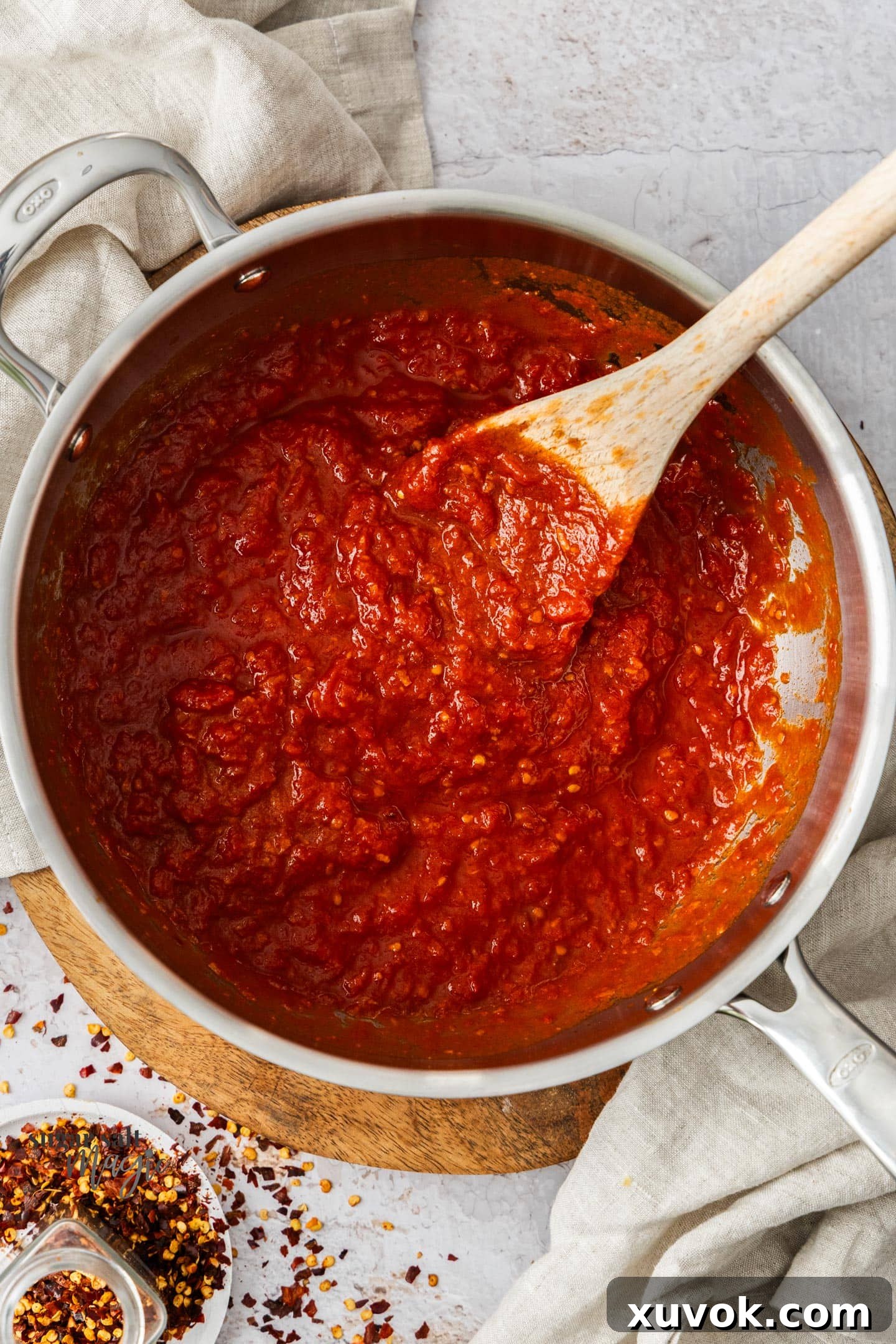
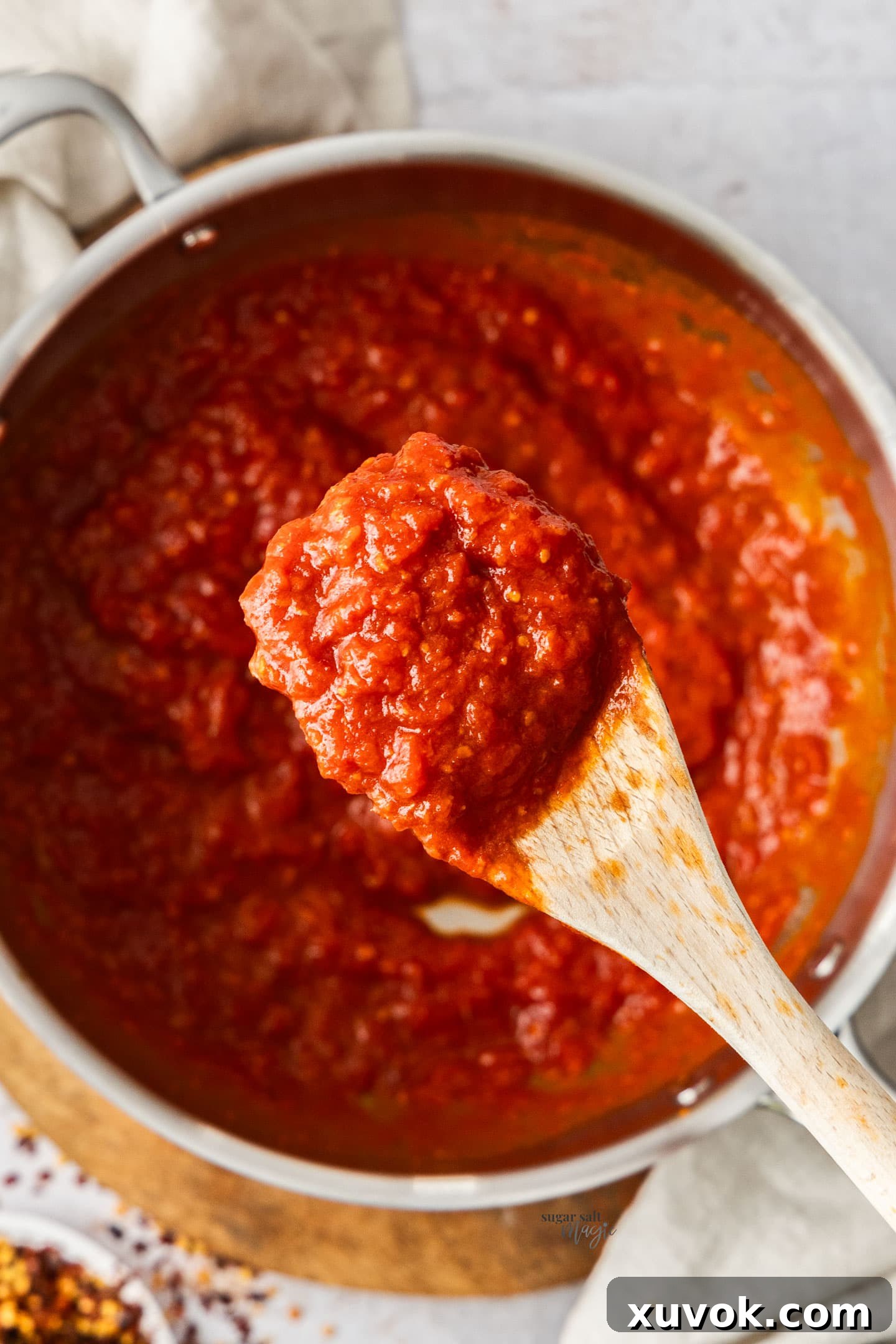
There’s an undeniable charm to simple recipes, and a truly authentic Arrabbiata sauce stands as a testament to this truth. This fiery, yet wonderfully balanced, tomato-based sauce is brimming with vibrant flavors that capture the essence of Italian cooking. It offers a rich depth from ripe tomatoes, complemented by a natural sweetness, all expertly intertwined with the invigorating kick of chili flakes and the aromatic warmth of fresh garlic.
Beyond its incredible taste, homemade Arrabbiata sauce boasts remarkable versatility, making it a staple in any kitchen. While an obvious choice is to toss it with your favorite pasta for a quick and satisfying meal, its applications extend far beyond. Imagine it as a robust dipping sauce for crispy arancini – whether you prefer mushroom, chorizo, or sweet corn varieties. It can even transform into a lively pizza sauce for your homemade pepperoni pizza or a crispy pizza fritta, or provide a zesty filling for a pesto chicken calzone. The possibilities are endless, making it a true culinary hero.
One of the most appealing aspects of this Arrabbiata sauce recipe is its incredible speed and ease of preparation. From gathering your ingredients to a bubbling, aromatic sauce ready to serve, you’ll need only about 20 minutes. The hands-on time is a mere 5 minutes, freeing you up to tackle other tasks or simply relax. This makes it an ideal choice for busy weeknights when time is precious, or for relaxed weekends when you crave delicious food without spending hours in the kitchen.
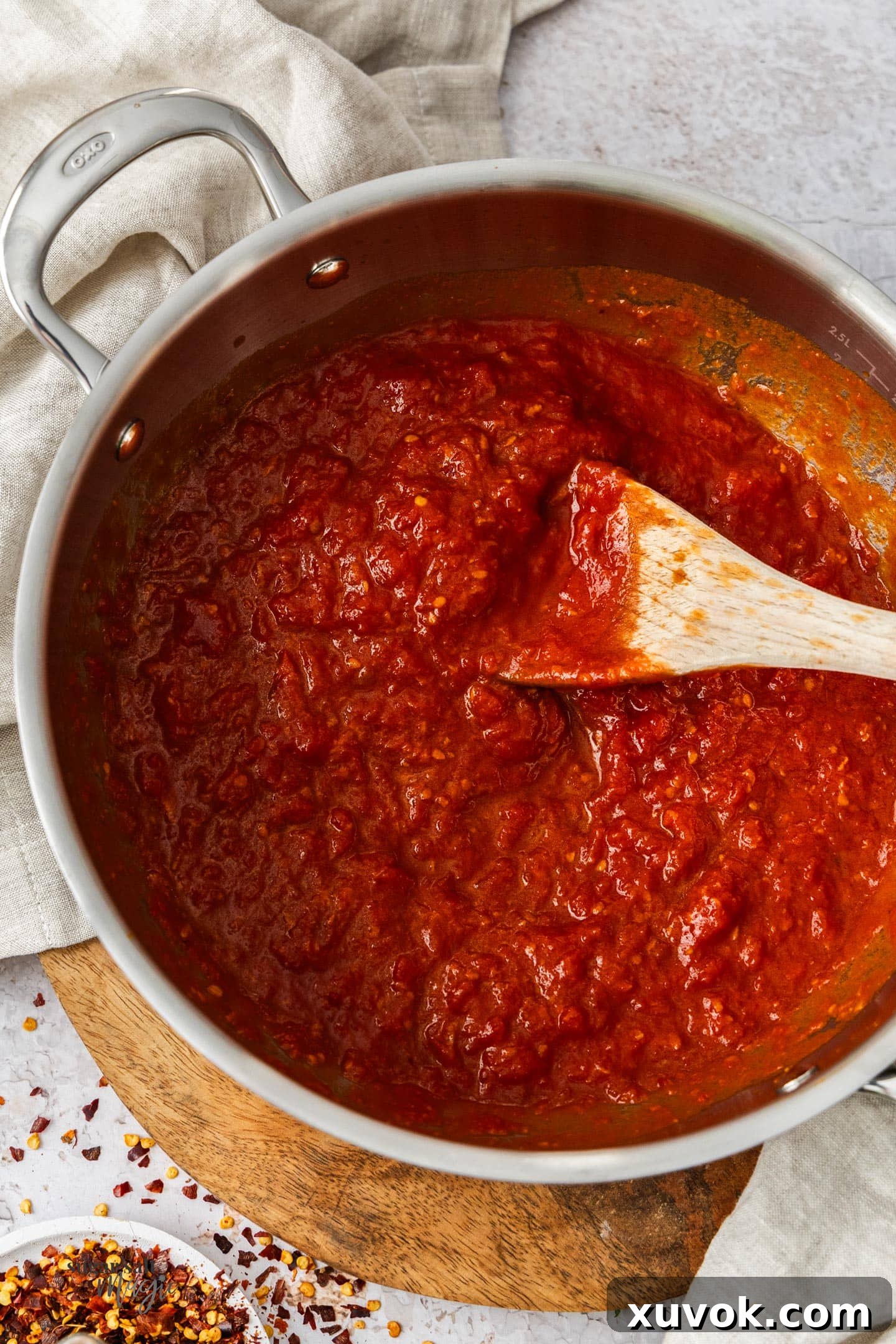
Table of Contents
- What is Arrabbiata Sauce?
- Why Make Homemade Arrabbiata?
- Ingredients for Success
- How to Make Arrabbiata Sauce
- Expert Tips for the Perfect Arrabbiata
- What to Serve with Arrabbiata Sauce
- Storage and Make-Ahead Tips
- Frequently Asked Questions (FAQs)
- More Delicious Recipes You’ll Love
Never Miss a Recipe!
Get the latest recipes straight to your inbox and discover more culinary inspiration!
What is Arrabbiata Sauce?
Arrabbiata sauce, known in Italy as sugo all’arrabbiata or simply sugo arrabbiata, is a quintessential Italian tomato sauce celebrated for its distinctive spicy kick. Its origins trace back to Rome and the surrounding Lazio region, where this vibrant sauce became a beloved part of local cuisine. The name itself offers a clue to its character: sugo translates to “sauce,” and arrabbiata means “angry” in Italian. This playful moniker is a direct nod to the sauce’s fiery, piquant flavor, a delightful result of a careful balance of ingredients.
At its heart, an authentic Arrabbiata sauce recipe is remarkably simple, relying on the quality of a few core ingredients: sun-ripened tomatoes, fresh red chili peppers (often in flake form), fragrant garlic, and rich olive oil. The beauty of Italian cooking often lies in this simplicity, allowing each ingredient to shine and contribute to a harmonious, unforgettable flavor profile.
My version of this classic sauce stays true to its traditional roots, honoring the time-tested combination of tomatoes, garlic, and chili. However, I’ve introduced a subtle yet impactful twist: a dash of balsamic vinegar stirred in at the very end. This addition works wonders, providing a delicate sweetness and a hint of tanginess that beautifully balances the robust flavors and the heat from the chili, elevating the sauce to new levels of delicious complexity without detracting from its authentic spirit. This small tweak ensures every spoonful is a perfectly harmonized experience.
Why Make Homemade Arrabbiata?
While store-bought sauces offer convenience, making your own Arrabbiata sauce at home is a game-changer. The difference in flavor, freshness, and quality is truly incomparable. When you prepare it from scratch, you have complete control over the ingredients, allowing you to select the best quality produce and adjust the spice level to your preference. You avoid unwanted additives, preservatives, and excessive sugar often found in commercial products.
Homemade Arrabbiata boasts a brighter, more vibrant tomato flavor, an intense garlic aroma, and a customizable heat that perfectly suits your palate. The rich aroma that fills your kitchen as it simmers is an experience in itself, promising a meal that is not only delicious but also deeply satisfying and incredibly rewarding. Plus, with a mere 5 minutes of hands-on time, it’s just as quick as heating a jarred sauce, making it an easy upgrade for any meal.
Ingredients for Success
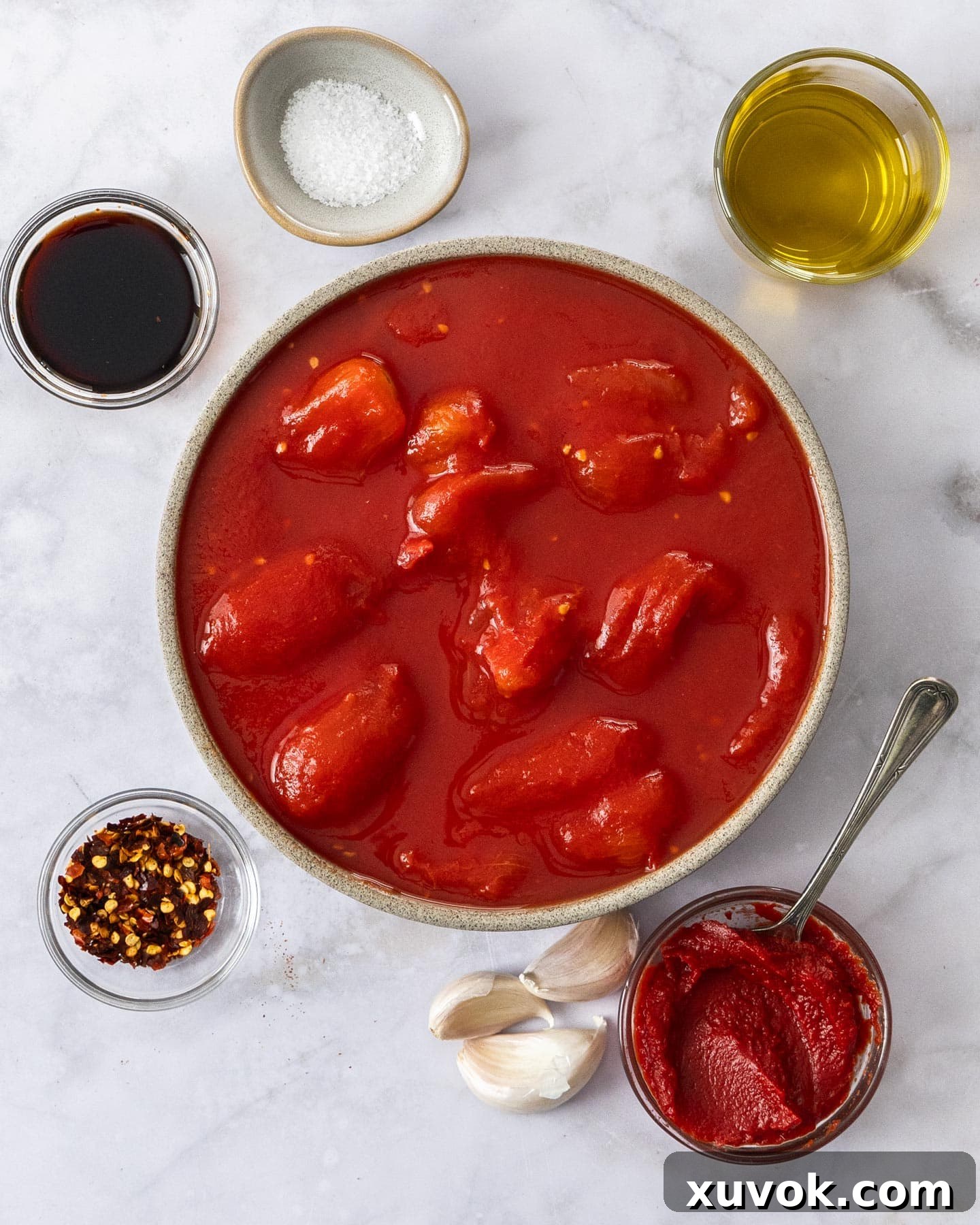
For the full list of ingredients with precise measurements and detailed instructions, please jump to the recipe card below.
- Tomatoes: The cornerstone of any great tomato sauce. For the best Arrabbiata, I highly recommend using tinned peeled whole San Marzano tomatoes. These prized Italian tomatoes are known for their naturally sweet flavor, low acidity, and meaty texture, which contribute to a superior sauce. If San Marzano tomatoes are unavailable, opt for the highest quality tinned whole peeled tomatoes you can find. Avoid diced tomatoes as they tend to be firmer and don’t break down as well.
- Tomato Paste: This concentrated paste is a secret weapon for adding deep, umami-rich tomato flavor without introducing excess liquid. It intensifies the overall tomato profile of the sauce, giving it a robust foundation that whole tomatoes alone might not achieve. A little goes a long way in delivering a powerful flavor punch.
- Garlic: Fresh garlic is indispensable for this sauce, providing a pungent, savory backbone that complements the tomatoes and chili. There truly is no adequate substitute for fresh garlic here. If absolutely necessary, you could use jarred minced garlic, but for optimal flavor, fresh cloves are paramount. Aim for a fine mince or thin slices to ensure even flavor distribution as it cooks.
- Dried Chilli Flakes / Red Pepper Flakes: These are the essential component for achieving Arrabbiata’s signature spicy kick. Depending on where you live, they might be called crushed red pepper flakes or simply red chili flakes. The amount you use can be adjusted to your personal preference for heat; Arrabbiata is meant to be spicy, but you’re in control of how fiery it gets.
- Extra Virgin Olive Oil: A good quality extra virgin olive oil is crucial for sautéing the garlic and chili, helping to release and infuse their flavors into the base of the sauce. It also contributes that classic, herbaceous Italian aroma and richness. Using extra virgin olive oil ensures the authentic taste and mouthfeel.
- Balsamic Vinegar: My special addition. Stirred in at the end, balsamic vinegar performs a critical role in balancing the heat from the chili and enhancing the natural sweetness of the tomatoes. It adds a subtle tang and depth that rounds out the entire flavor profile. If you prefer, red wine vinegar can be used, but since it is more acidic, I would suggest adding about ¼ teaspoon of sugar to achieve a similar balance.
How to Make Arrabbiata Sauce
Another compelling reason to fall in love with this Arrabbiata sauce recipe is its incredible speed and straightforward method. It comes together effortlessly, requiring minimal culinary expertise. Before you dive into cooking, there’s one small but important consideration, especially if you’re a seasoned tomato sauce maker: cleanup! Tomato sauces tend to be enthusiastic bubblers, often splattering during cooking.
To mitigate potential mess, I highly recommend using a deep saucepan. If you have a splatter guard, now is the perfect time to employ it. For those without this handy gadget, a simple trick works wonders: loosely cover the pan with a wire rack and place a single sheet of paper towel on top, securing it gently with a spoon. This allows steam to escape while catching most of the errant splatters, keeping your stovetop clean without needing extra kitchen equipment.
For the full list of ingredients with precise measurements and detailed instructions, please jump to the recipe card below.
1. Sauté Aromatics: Cook the Garlic & Chilli Flakes
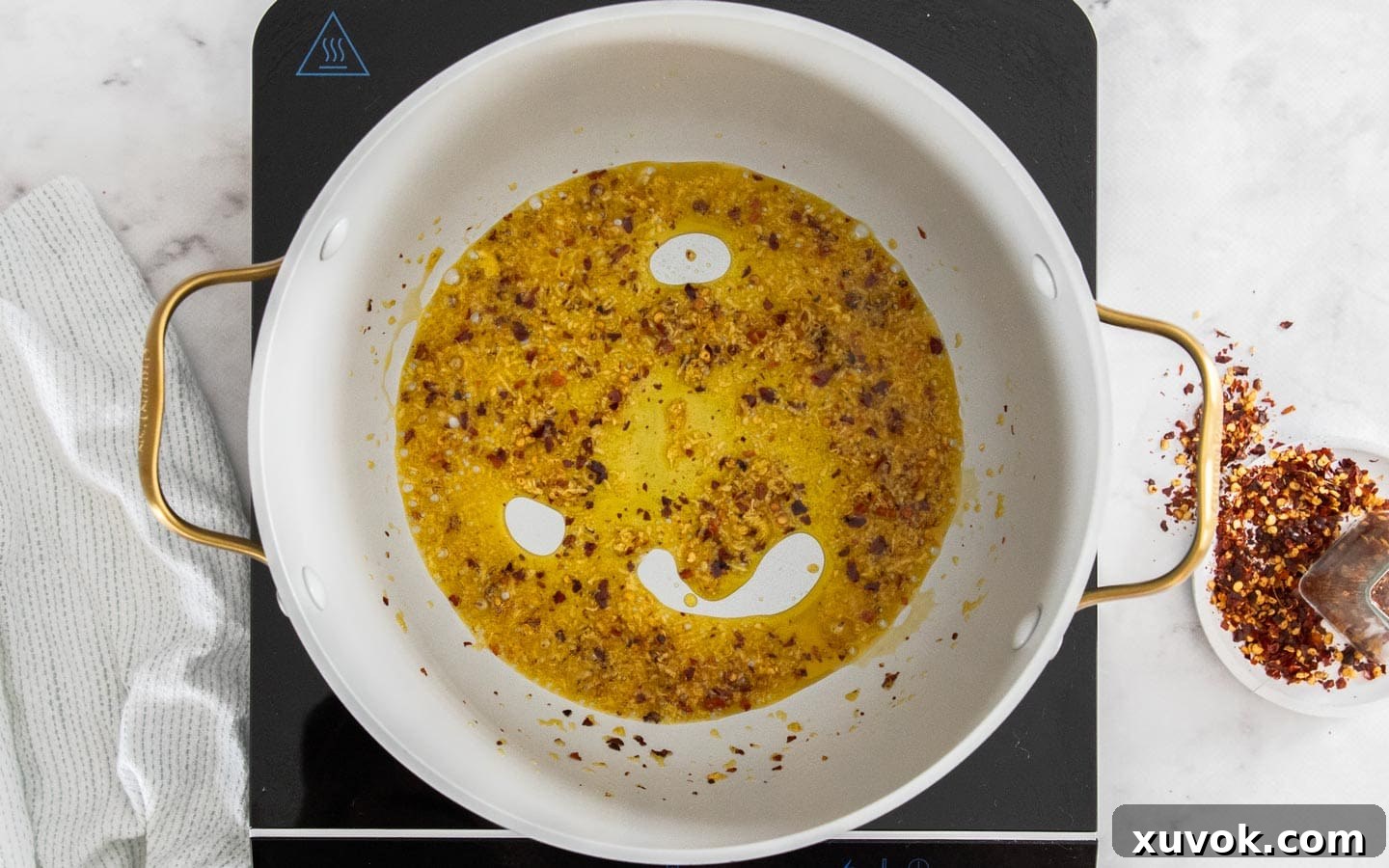
Begin by placing your deep saucepan over medium heat. Add the extra virgin olive oil and allow it to warm up. Once the oil is shimmering and hot, add the minced garlic and dried chili flakes. Cook gently for about 1-2 minutes, stirring frequently, until the garlic becomes fragrant and lightly golden. Be careful not to let the garlic brown too much, as it can quickly turn bitter.
2. Build the Base: Add the Tomatoes
Carefully add the tinned peeled whole tomatoes, tomato paste, and salt to the pan. Stir all the ingredients together to combine them well. Next, take a potato masher and gently mash the whole tomatoes directly in the pan. This helps to break them down into a chunkier, rustic sauce consistency. Alternatively, for a smoother sauce, you can briefly use an immersion blender later on.
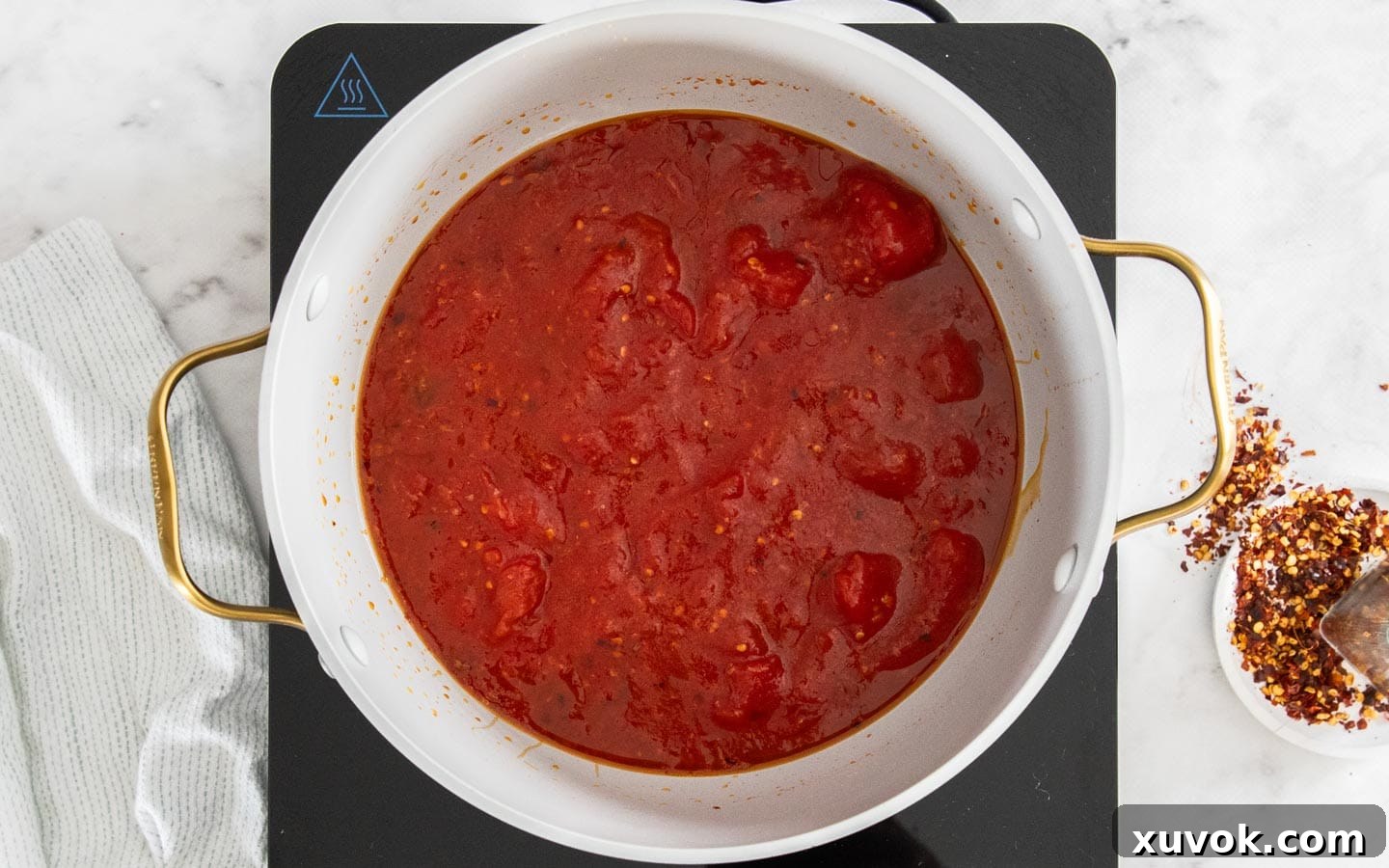
3. Simmer and Finish: Thicken and Flavor
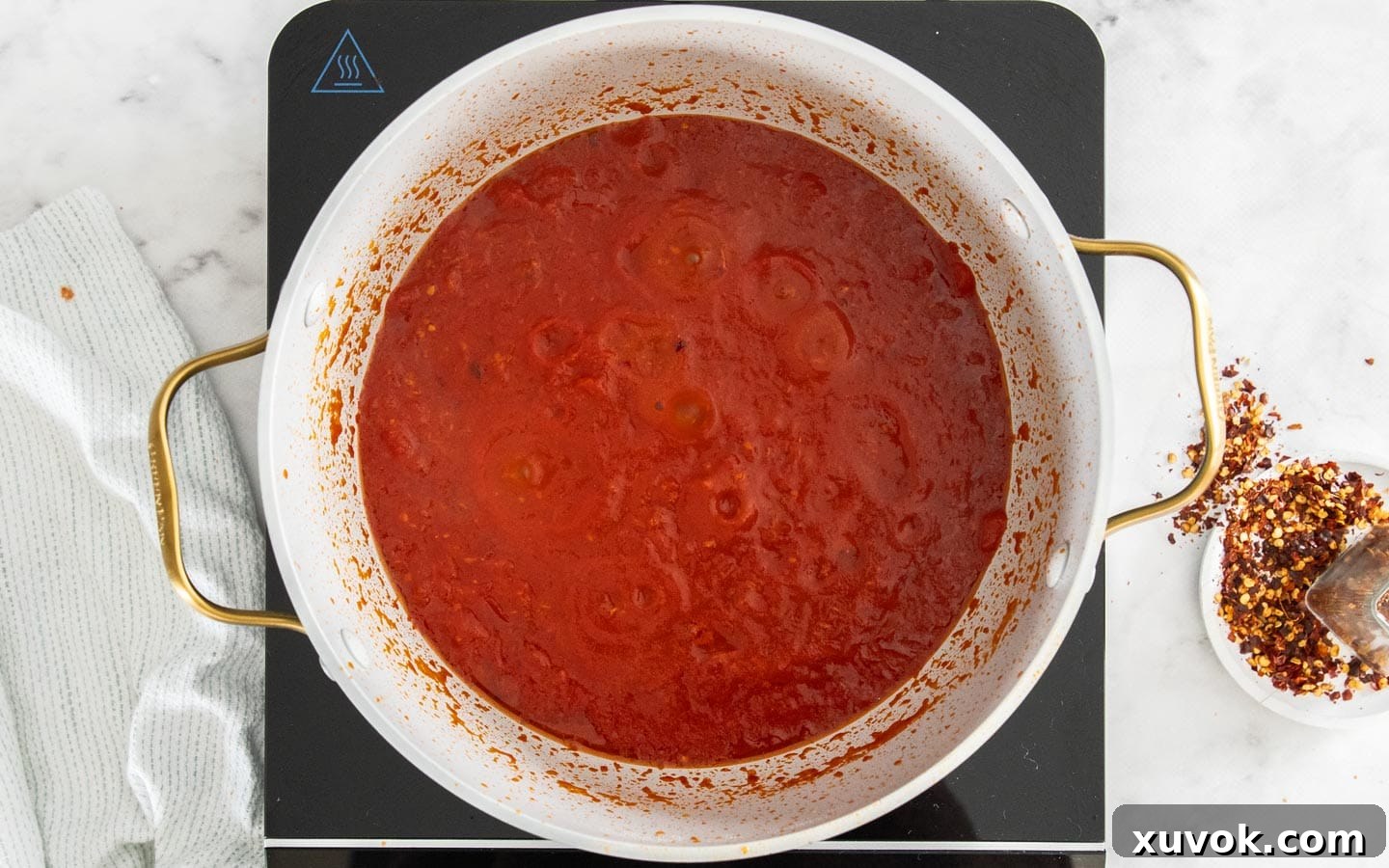
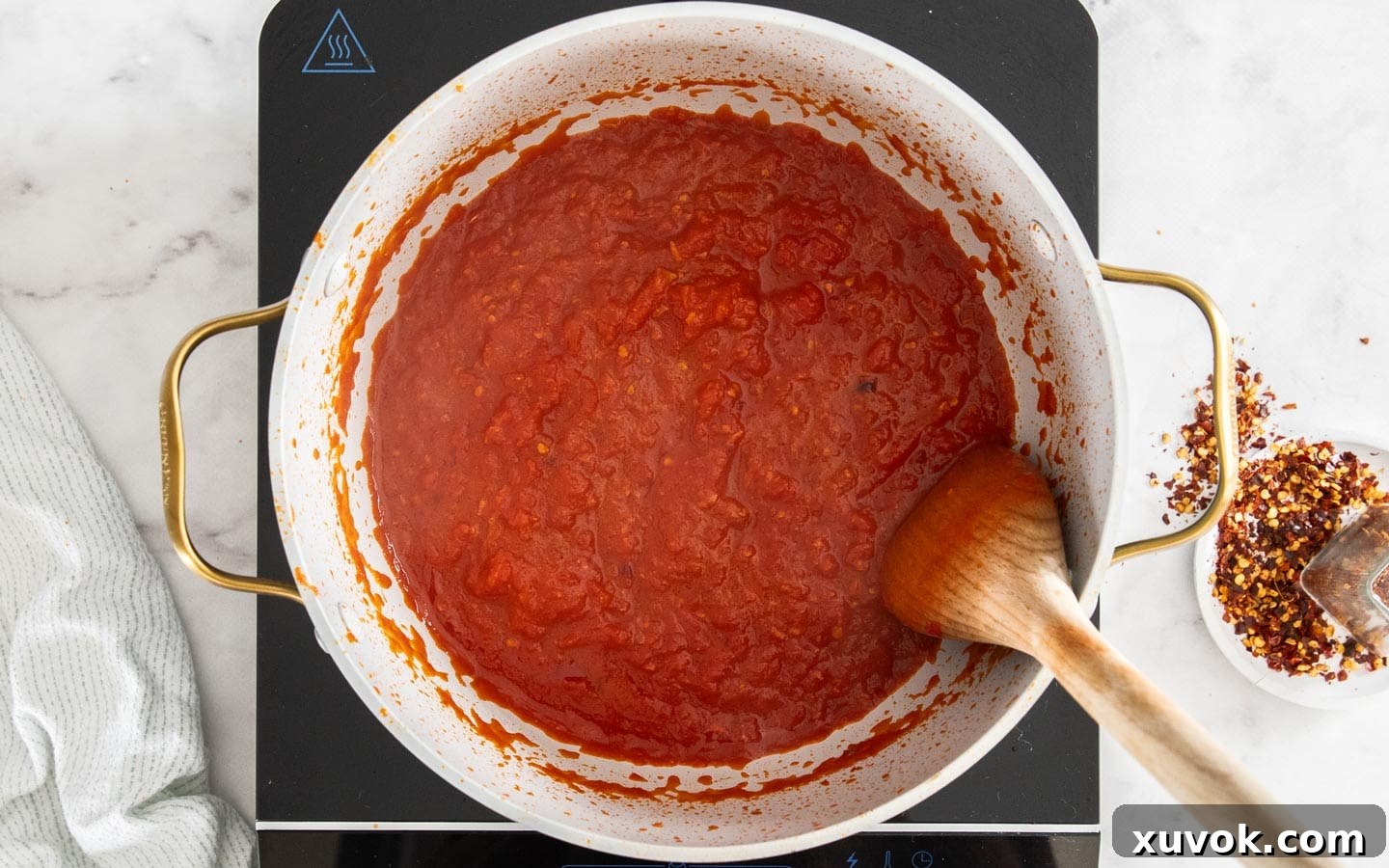
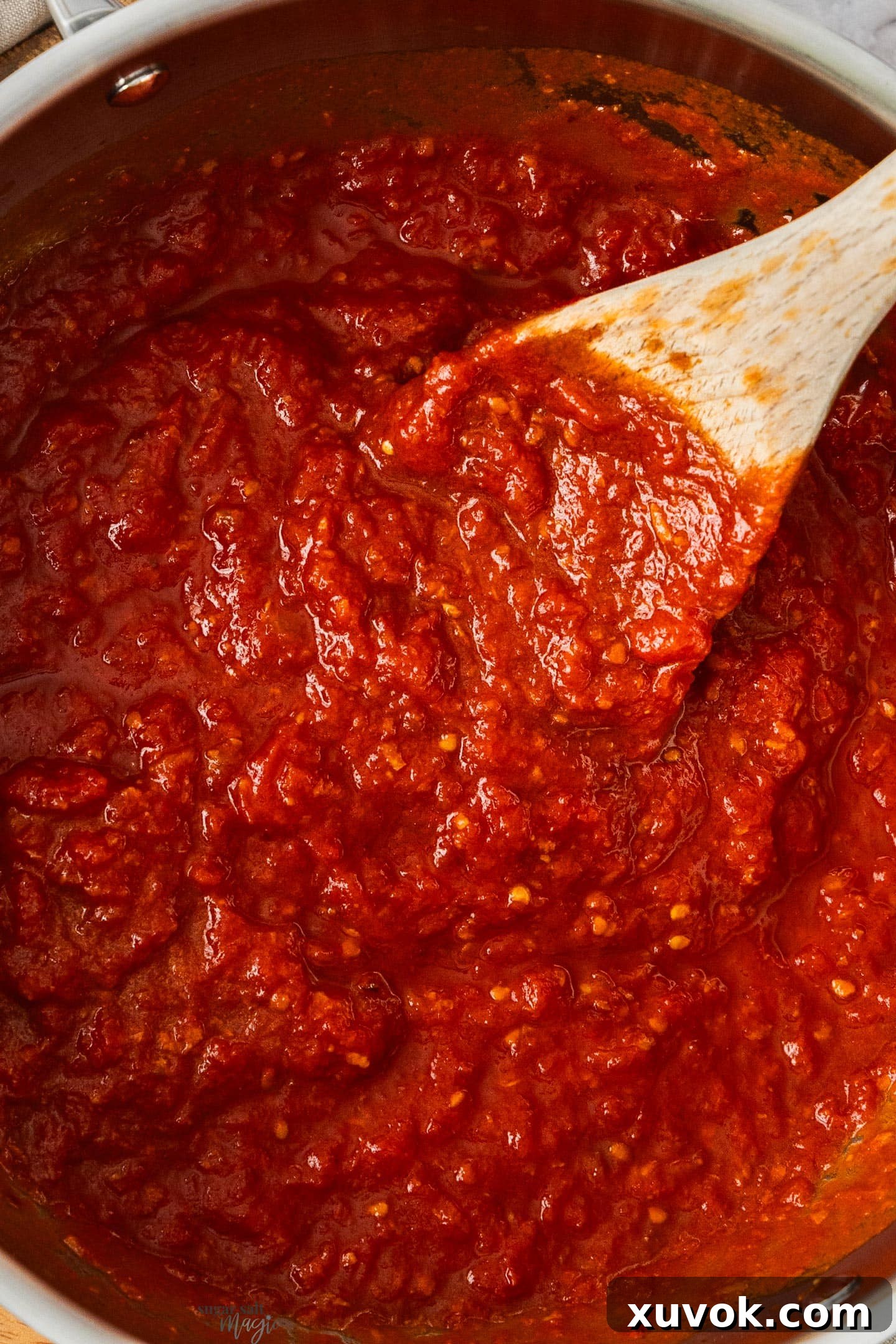
Reduce the heat to low-medium and let your spicy Arrabbiata sauce simmer uncovered for 15-20 minutes. This simmering time is crucial for the flavors to meld and deepen, and for the sauce to thicken to a desirable consistency. Stir occasionally to prevent sticking and ensure even cooking. By the end of the cooking time, the sauce should have visibly reduced and thickened. Finally, stir in the balsamic vinegar, which will add a wonderful depth and balance. Taste the sauce and adjust the seasoning if needed, adding more salt or a pinch of sugar to taste. Serve immediately and enjoy the vibrant flavors!
Expert Tips for the Perfect Arrabbiata
- Mind the Garlic: Garlic is key to Arrabbiata, but it can quickly turn from fragrant to bitter if overcooked. Keep a close eye on it when sautéing in olive oil. Cook it only until it’s aromatic and just begins to turn a very pale golden – typically 1 to 2 minutes. Avoid letting it brown significantly.
- Embrace or Adjust the Texture: This traditional Arrabbiata sauce recipe is intended to have a rustic, slightly chunky texture from the mashed tomatoes. This provides a delightful mouthfeel and helps the sauce cling to pasta. If you prefer a velvety smooth sauce, you can easily achieve this by puréeing it with an immersion blender directly in the pot after simmering, or carefully transferring it to a regular blender.
- Customise the Heat Level: Arrabbiata literally means “angry,” and its defining characteristic is its spicy kick. I generally recommend starting with ¾ to 1 teaspoon of dried chili flakes. However, feel free to adjust this to your personal heat tolerance. If you love a fiery sauce, add a bit more; if you prefer it milder, reduce the amount. Even without chili, it makes a wonderfully flavorful tomato pasta sauce.
- Choose Quality Tomatoes: As mentioned, San Marzano tomatoes are the gold standard due to their sweetness and low acidity. High-quality ingredients are paramount in simple sauces where each component plays a significant role. Good tomatoes make a noticeable difference in the final taste.
- Don’t Skimp on Simmer Time: While the hands-on time is short, allowing the sauce to simmer for the full 15-20 minutes is essential. This crucial step allows the flavors to deepen, meld, and intensify, transforming individual ingredients into a harmonious and complex sauce. It also allows the sauce to thicken to the perfect consistency.
- Taste and Adjust Seasoning: Always taste your sauce before serving. You may find it needs a little more salt, a grind of black pepper, or even a tiny pinch of sugar to balance any acidity from the tomatoes. The balsamic vinegar at the end is designed to achieve this balance, but personal preference always matters.
What to Serve with Arrabbiata Sauce
Arrabbiata sauce’s robust and spicy profile makes it an incredibly versatile companion for a wide range of dishes. Its thick consistency and clingy tomato chunks make it particularly well-suited for various pasta shapes that can hold the sauce beautifully.
- Pasta Perfection: This spicy tomato sauce is a natural match for almost any pasta. Try it with hearty shapes like gnocchi, which absorb the sauce wonderfully, or long strands like linguine and tagliatelle. Tubular pastas such as rigatoni or penne (often traditionally paired with Arrabbiata) are excellent for capturing every bit of flavor. My personal favorite is with spaghetti for a classic, comforting meal.
- Hearty Meat Dishes: Elevate your meat dishes by using Arrabbiata as a rich and flavorful base. It’s superb for coating a batch of classic Italian meatballs, serving them over a generous plate of spaghetti for an iconic pairing. It also works wonderfully as a simmering sauce for chicken, pork, or even firm white fish.
- Delightful Dipping: Move beyond pasta and enjoy Arrabbiata as a vibrant dipping sauce. It’s absolutely fantastic for crispy arancini, golden cheese straws, or anything you’d typically dip into a marinara sauce. Consider serving it alongside savory pastries like pizza scrolls or a ham and cheese tart soleil for an unforgettable appetizer.
- Flavorful Additions: To truly enhance your Arrabbiata experience, consider finishing your dish with a sprinkle of fresh, torn basil leaves – their sweet, anise-like aroma perfectly complements the spicy tomatoes. A generous grating of good quality Parmesan cheese, Pecorino Romano, or even a mix of both, adds a salty, umami depth that is simply irresistible.
Storage and Make-Ahead Tips
One of the many advantages of making a batch of homemade Arrabbiata sauce is its excellent shelf life and freezer-friendly nature. It’s perfect for meal prepping, allowing you to enjoy delicious, homemade Italian flavor even on your busiest days.
- Refrigeration: If you plan to use your Arrabbiata sauce within 3-4 days, simply allow it to cool completely before transferring it to an airtight container. Store it in the refrigerator, and it will be ready to use whenever you need it.
- Freezing for Longer Storage: This sauce freezes beautifully, making it an ideal candidate for long-term storage. Once the sauce has fully cooled to room temperature, portion it into freezer-safe containers or bags. I particularly love using souper cubes or similar silicone molds (like the Smash brand ones found in Australian supermarkets) for individual portions. These are a fantastic investment, lasting forever and providing perfectly sized blocks of sauce for quick weeknight meals. The sauce can be frozen for up to 3 months without compromising flavor or texture.
- Reheating Instructions: To reheat, the simplest method is on the stovetop. Transfer the desired amount of sauce to a saucepan and heat over medium-low heat, stirring occasionally, until it’s warmed through. While you technically can reheat it directly from frozen, allowing it to thaw first (either in the refrigerator overnight or by using the defrost setting on your microwave) will yield the best taste and texture, ensuring a smoother, more evenly heated sauce.
Frequently Asked Questions (FAQs)
Both Arrabbiata and marinara sauce are traditional Italian tomato-based sauces made with tomatoes, garlic, and olive oil. The fundamental difference lies in their flavor profile: Arrabbiata is distinctly spicy due to the inclusion of red chili peppers, while marinara sauce is typically non-spicy and often leans towards a sweeter, more herbaceous tomato flavor, with the natural sweetness of the tomatoes taking center stage.
As previously noted, “Arrabbiata” means “angry” in Italian. This evocative name is a direct and playful reference to the sauce’s characteristic fiery heat, which comes from the chili peppers. The intense spice is often described as “fiery” or “angry,” making the name a perfect and memorable descriptor for this robust and piquant sauce.
Absolutely, yes! Arrabbiata sauce is a truly traditional and authentic Italian recipe. It is a very popular and commonly enjoyed dish throughout Italy, particularly within Roman and Lazio cuisine, where it originated. Unlike some “Italian-American” sauces that diverge significantly from Italian culinary traditions (like Alfredo sauce, which is not traditionally Italian), Arrabbiata sauce holds a firm and respected place in genuine Italian cooking.
While the traditional Arrabbiata recipe focuses on the core elements of tomato, garlic, and chili, adding fresh herbs can certainly enhance its flavor. Fresh basil, torn or roughly chopped, is a wonderful addition, stirred in at the very end of cooking or as a garnish, as its sweetness complements the spice. Fresh parsley, finely chopped, also adds a touch of freshness and color. Avoid cooking delicate fresh herbs for too long, as their flavor can diminish or become bitter.
More Delicious Recipes You’ll Love
If you enjoyed making this homemade Arrabbiata sauce, explore these other fantastic recipes that celebrate fresh flavors and simple preparations:
- Tomato Chilli Jam
- Tomato Confit
- Homemade Pizza Sauce
- Easy Homemade Pasta Sauce
- Quick Sun-dried Tomato Pesto
⭐⭐⭐⭐⭐
Did you try this irresistible recipe for Arrabbiata sauce? Show it some love and share your thoughts in the comments below!
Hungry for more culinary inspiration? Subscribe to our newsletter for free recipes delivered straight to your inbox. Also, connect with us on Facebook, Pinterest, and Instagram for daily updates and delicious ideas!
Authentic Homemade Arrabbiata Sauce
3 cups
5 minutes
15 minutes
0 minutes
20 minutes
Rate
Pin
Ingredients
-
2 tablespoons extra virgin olive oil (notes 1) -
3 cloves garlic -
½-1 teaspoon dried chilli flakes -
800 g tinned peeled whole tomatoes (san marzano if you can get them) (28oz) -
2 tablespoons tomato paste (notes 1) -
½ teaspoon salt -
2 teaspoons balsamic vinegar
For best results, always weigh ingredients where a weight is provided
Equipment
-
Deep saucepan
Instructions
-
Heat the olive oil in a deep saucepan over medium heat.
-
Add the minced garlic and dried chilli flakes to the hot oil. Cook for 1-2 minutes, stirring frequently, until the garlic is fragrant and lightly golden. Be careful not to burn it.
-
Add the tinned whole tomatoes, tomato paste, and salt to the pan. Use a potato masher to gently break up the tomatoes into a chunky sauce.
-
Reduce the heat to medium-low and let the sauce simmer uncovered for 15-20 minutes, stirring occasionally, until it thickens to your desired consistency.
-
Remove from heat and stir in the balsamic vinegar. Taste the sauce and adjust seasoning with more salt, pepper, or a pinch of sugar if needed.
-
Please take a moment to leave a comment & rating. Your feedback is greatly appreciated and helpful!
Notes
- Tablespoons: I use a standard Australian 20ml tablespoon (equal to 4 teaspoons). Please check your measuring spoons for accuracy.
- Nutrition details are approximate only and per cup – scroll below the recipe to find the full nutritional information.
DISCOVER MORE SAUCES AND SEASONINGS!
145kcal
Have you tried this recipe?
Don’t forget to leave a rating and comment below and let me know how it was! I love hearing from you. Nutrition information is approximate and derived from an online calculator. The brands you use may cause variations.
Calories from Fat 90