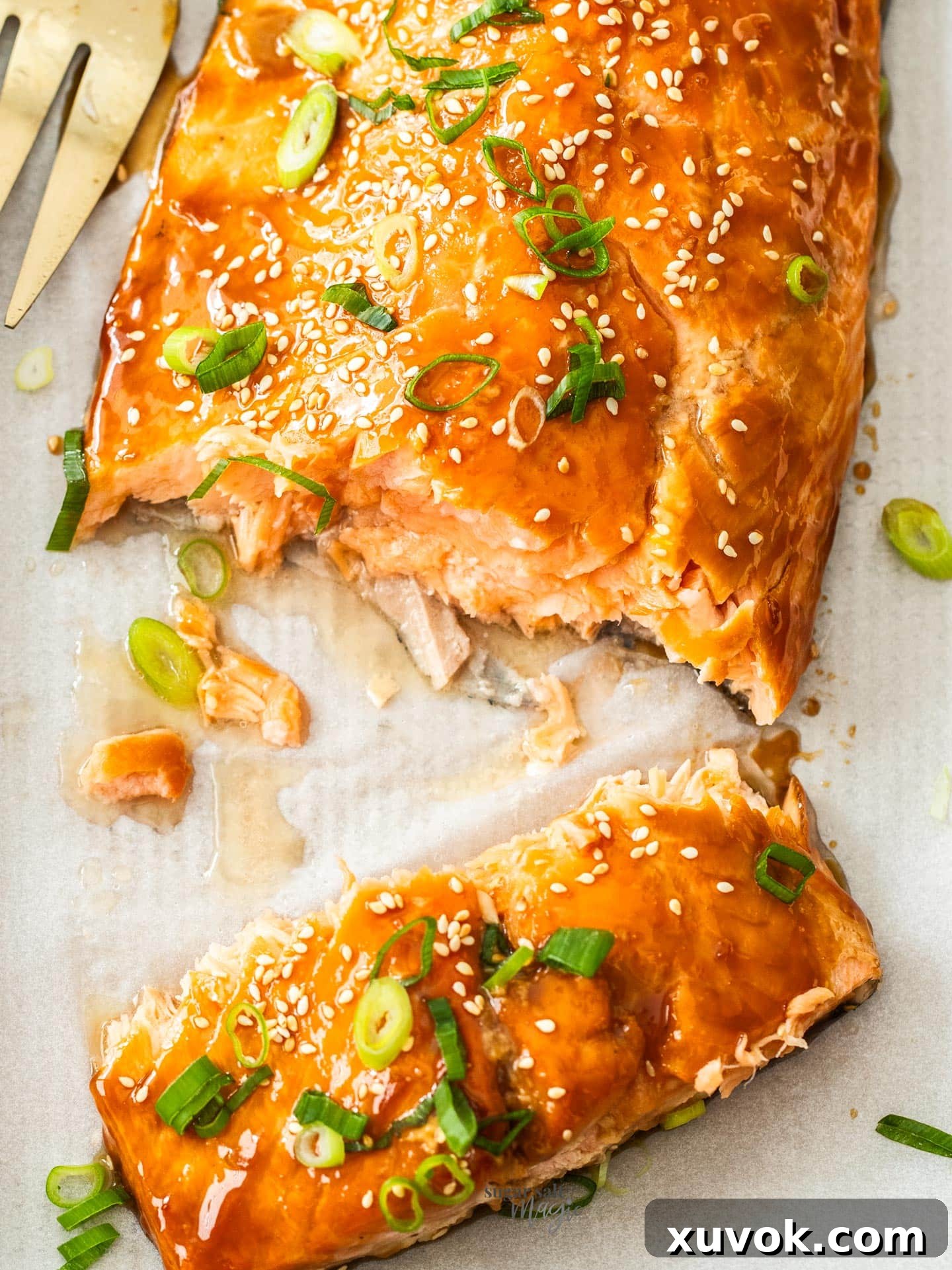
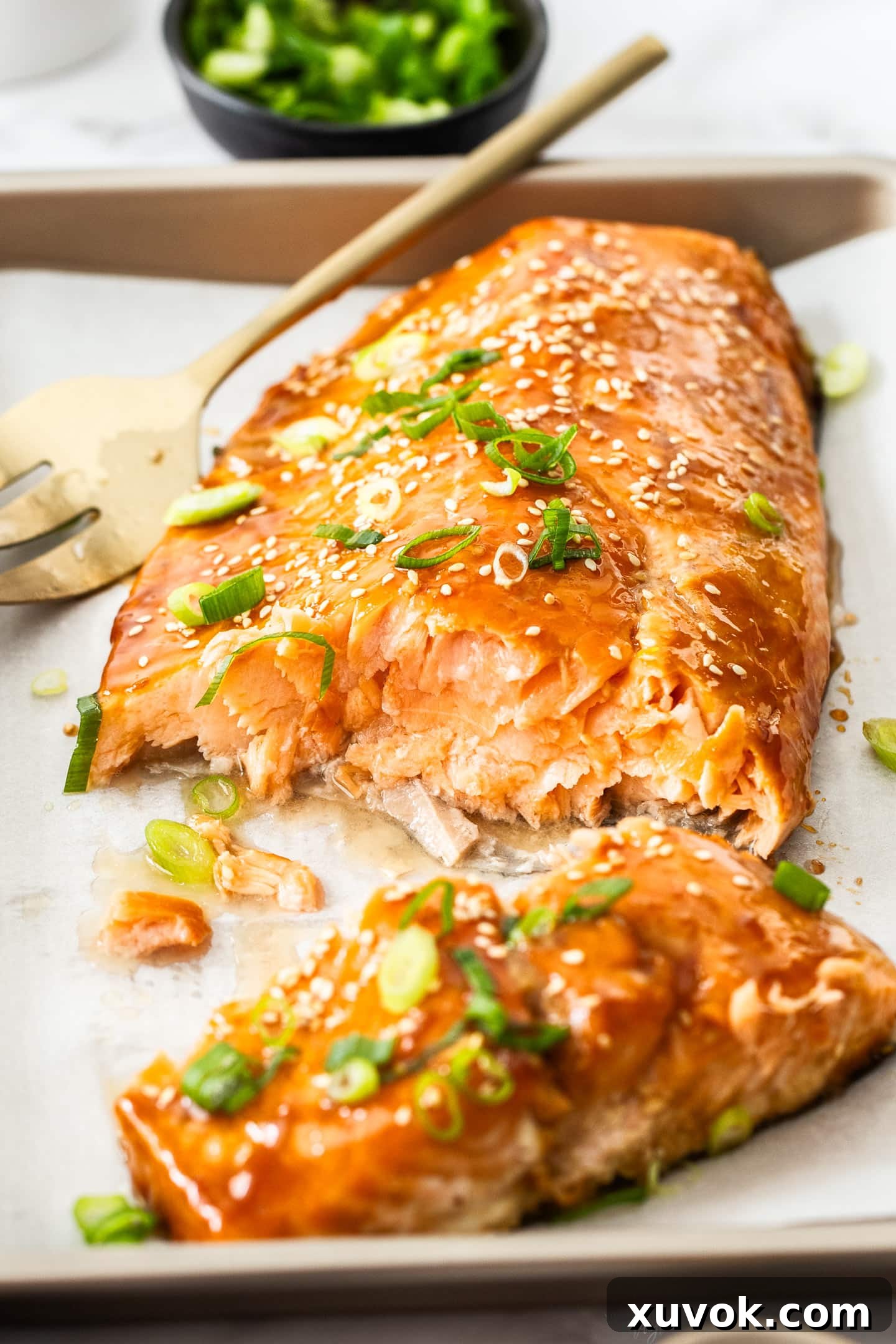
Prepare to embark on a culinary journey that brings the vibrant flavors of Japan right into your kitchen. This oven-baked teriyaki glazed salmon recipe is a true testament to effortless gourmet cooking, delivering a dish that is consistently moist, tender, and beautifully flaky. Each succulent piece of salmon is enveloped in a glossy, homemade teriyaki sauce that strikes the perfect balance between being wonderfully sticky, sweet, and savory. Whether you opt for elegantly portioned fillets for individual servings or a grand slab of salmon to impress a crowd, this recipe is incredibly versatile. Opting for a larger slab often proves to be more economical, making this restaurant-quality meal accessible for any budget.
Beyond its exquisite taste, this baked teriyaki salmon is a genuine weeknight hero. Its straightforward preparation means you can have it on the table in as little as 25 minutes, especially if you prepare the rich teriyaki sauce in advance. This efficiency makes it an ideal choice for busy evenings when you crave something special without spending hours in the kitchen. For those who adore Japanese cuisine, this recipe is a delightful addition to your repertoire. Pair it with other favorites like crispy Karaage Chicken or these mouthwatering Air Fryer Teriyaki Chicken Drumsticks for a truly authentic dining experience.
❤️ Why You’ll Love This Teriyaki Salmon Recipe
This oven-baked teriyaki salmon isn’t just a meal; it’s an experience that caters to both your taste buds and your busy schedule. Here’s why this recipe deserves a permanent spot in your rotation:
- Incredibly Quick and Easy: With only minimal preparation required, this recipe simplifies dinner. Make the teriyaki sauce ahead of time, and you’ll find yourself enjoying a gourmet meal in under half an hour. It’s perfect for those bustling weeknights when time is precious.
- Simple Ingredients, Maximum Flavor: You only need eight core ingredients to create this culinary masterpiece. Each component plays a crucial role in building the layered, authentic teriyaki flavor, proving that extraordinary meals don’t require an extensive shopping list.
- Irresistible Homemade Teriyaki Glaze: Forget store-bought sauces; our homemade teriyaki glaze is thick, shimmering, and bursting with the perfect blend of sweet and savory notes. It adheres beautifully to the salmon, creating a truly decadent coating that’s surprisingly easy to whip up from scratch.
- Healthy and Satisfying: Salmon is renowned for being a powerhouse of protein and omega-3 fatty acids, making this dish not only delicious but also incredibly nutritious. The light, balanced glaze complements the natural richness of the fish without overwhelming it, ensuring a meal that leaves you feeling satisfied and energized.
- A Family Favorite: The universally appealing sweet and savory profile of teriyaki is a guaranteed hit, even with the pickiest eaters. This recipe makes it easy to get everyone at the table excited about dinner.
- Elegantly Impressive: Whether you’re hosting a casual gathering or a formal dinner party, a beautifully glazed slab of teriyaki salmon makes for a stunning centerpiece. It looks incredibly elegant yet demands surprisingly little effort, allowing you to focus on your guests.
- Remarkably Versatile: This teriyaki salmon pairs wonderfully with a variety of side dishes. Serve it alongside fluffy steamed rice, delicate noodles, or a medley of fresh, crisp vegetables for a complete and balanced meal that can be customized to your preference.
This recipe was initially published on January 9th, 2022, and has been thoughtfully updated to include clearer step-by-step images and additional helpful tips for an even better cooking experience.
Contents
Never Miss a Recipe!
Get the latest recipes straight to your inbox by signing up for our newsletter!
(Sign-up form would go here)
What is Teriyaki? Exploring the Japanese Culinary Art
Teriyaki is a revered Japanese cooking technique that involves grilling or broiling meat or fish marinated in a rich, sweet, and savory sauce. The term “teriyaki” itself is a fusion of two Japanese words: “teri” (照り), which refers to the beautiful glossy sheen the sauce imparts, and “yaki” (焼き), meaning to grill or broil. This describes not just the sauce, but the traditional method of cooking, resulting in a dish that is visually appealing and deeply flavorful.
While teriyaki chicken is arguably the most globally recognized variation, beef and salmon teriyaki are equally cherished for their deliciousness. Traditionally, an authentic teriyaki sauce relies on a delicate balance of soy sauce, mirin (a sweet rice wine), sake, and sugar, which thickens naturally as it reduces during cooking. You’ll notice that many traditional recipes do not call for a thickening agent like cornflour (or cornstarch). In this particular recipe, however, we intentionally incorporate cornflour. This addition transforms the sauce into a luscious, thick glaze that perfectly coats the salmon, ensuring every bite is imbued with that irresistible sticky teriyaki goodness, rather than just running off the fish.
Does Teriyaki Sauce Traditionally Include Honey?
When considering the authenticity of teriyaki sauce, it’s interesting to note that traditional Japanese teriyaki recipes do not typically include honey. The characteristic sweetness in traditional teriyaki sauce comes primarily from mirin, a sweet Japanese rice wine, often complemented by a touch of sugar. Over time, as teriyaki recipes gained international popularity and underwent adaptation, some variations began to substitute or supplement mirin and sugar with honey, largely due to honey’s widespread availability compared to mirin in certain regions.
While using honey is generally acceptable and can still yield a delicious sauce, it’s important to recognize that honey imparts its own distinct floral flavor, which is not inherent in traditional teriyaki. If you’re aiming for the most authentic teriyaki taste, sticking to mirin and sugar is recommended. Thankfully, mirin is now widely available in most major grocery stores and Asian markets, making it easier than ever to achieve that classic flavor profile. The choice ultimately depends on your preference for flavor and how closely you wish to adhere to traditional Japanese culinary techniques.
Essential Ingredients for Your Teriyaki Salmon
You’ll truly appreciate a dinner recipe that requires only 8 key ingredients. With this simple list, plus some steamed rice and fresh vegetables, you can create a wonderfully easy and satisfying meal that the entire family will adore. Each ingredient is thoughtfully chosen to contribute to the rich, authentic flavor of our homemade teriyaki salmon.
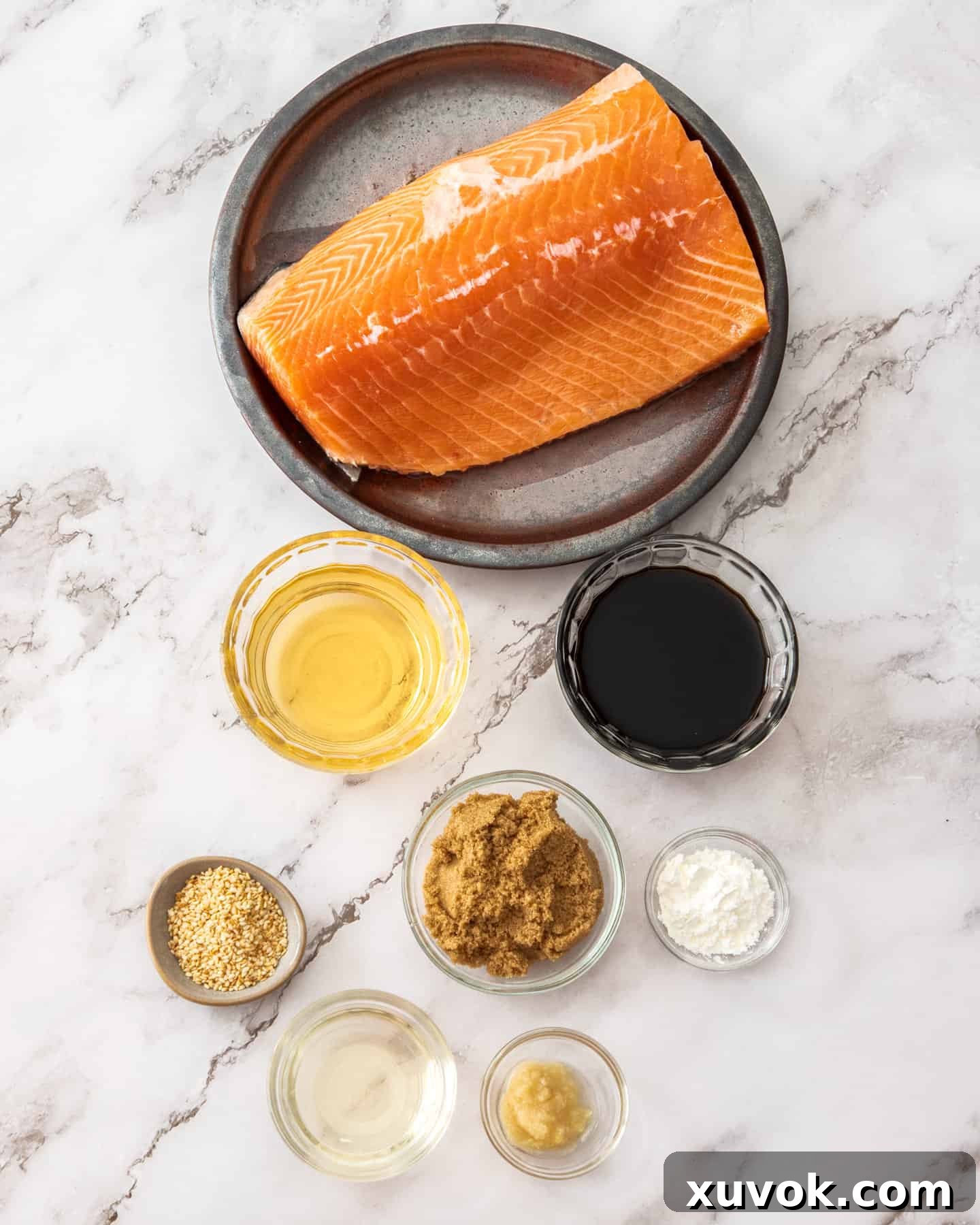
For precise quantities and detailed instructions, please refer to the recipe card below.
- Salmon: For this delightful sticky teriyaki salmon, I typically use a generous half-side of salmon, weighing approximately 675g (about 1 ½ pounds). This size is excellent for serving multiple people and ensures a uniform cooking experience. You can also use individual salmon steaks or fillets; just be sure to adjust your cooking time accordingly, as thinner cuts will cook much faster.
- Soy Sauce: As a fundamental seasoning, soy sauce provides the essential salty and umami depth to our teriyaki glaze. A good quality Japanese soy sauce, such as Kikkoman, is perfect for achieving an authentic flavor. While light soy sauce is saltier, it can still work if that’s what you have. For a gluten-free version, simply swap out the soy sauce for tamari.
- Mirin: This sweet Japanese rice wine is indispensable for true teriyaki flavor. It has a slightly syrupy consistency and offers a gentle, nuanced sweetness that balances the savory notes. I highly recommend making an effort to find mirin, as it contributes significantly to the authenticity. It’s now readily available in most large grocery stores. If you need a gluten-free option, be cautious, as some brands of mirin may contain soy sauce and thus gluten. Always check the label. As a substitute, you can gently heat a 1:1 mixture of cooking sake and sugar until the sugar completely dissolves.
- Brown Sugar: Brown sugar is crucial for rounding out the iconic sweetness that teriyaki sauce is known for. While white sugar can be used in a pinch, brown sugar imparts a richer, more complex caramel-like flavor that beautifully complements the other ingredients.
- Fresh Ginger: The pungent and aromatic notes of fresh ginger are a fantastic pairing for both salmon and teriyaki sauce, creating a vibrant flavor combination. Always use fresh minced ginger for the best results; if fresh isn’t an option, jarred minced ginger is an acceptable alternative. Avoid using powdered ginger, as its flavor profile is too different.
- Rice Wine Vinegar: This mild, subtly sweet vinegar, made from fermented rice, is a staple in many Asian cuisines and adds a bright tang to the sauce. If you don’t have rice wine vinegar, apple cider vinegar can serve as a suitable substitute. You’ll typically find rice vinegar in the Asian section of most well-stocked grocery stores.
- Cornflour (Cornstarch): While not a traditional component of authentic teriyaki, cornflour (known as cornstarch in the US) is intentionally included in this recipe. It acts as a thickening agent, creating that desired thick, glossy glaze that clings perfectly to the salmon, rather than running off. If you are preparing a gluten-free meal, ensure your cornflour is certified gluten-free.
- Sesame Seeds: A sprinkle of toasted sesame seeds provides a beautiful nutty flavor and a delightful textural contrast, making for the perfect finishing touch on your Japanese-inspired salmon.
To further enhance the freshness and visual appeal of the dish, I love to garnish it with a scattering of finely chopped spring onions (also known as scallions or green onions).
How to Make the Best Oven Baked Teriyaki Glazed Salmon
Despite its elegant appearance and rich flavor, this oven-baked teriyaki salmon recipe is incredibly straightforward, promising big rewards for minimal effort. You’ll be amazed at how quickly you can create such a memorable meal.
For comprehensive, detailed instructions, please see the recipe card located below.
Step 1: Crafting the Perfect Teriyaki Glaze
Begin by combining the soy sauce, mirin, rich brown sugar, and aromatic fresh ginger in a medium saucepan. Bring this mixture to a gentle boil over medium heat, stirring frequently to ensure the sugar fully dissolves. Allow it to simmer for a few minutes, which helps the flavors meld and the sauce to reduce slightly, intensifying its taste.
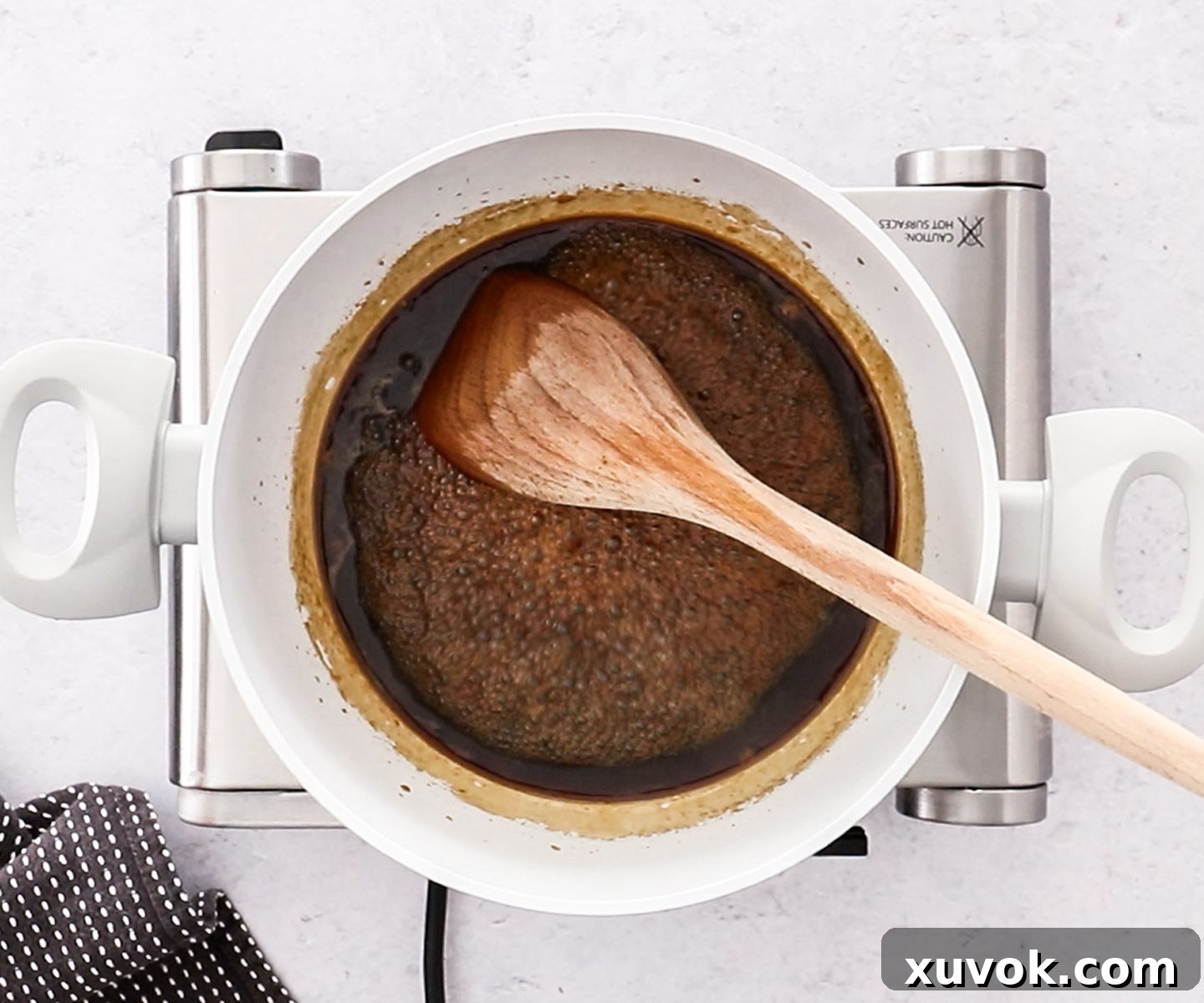
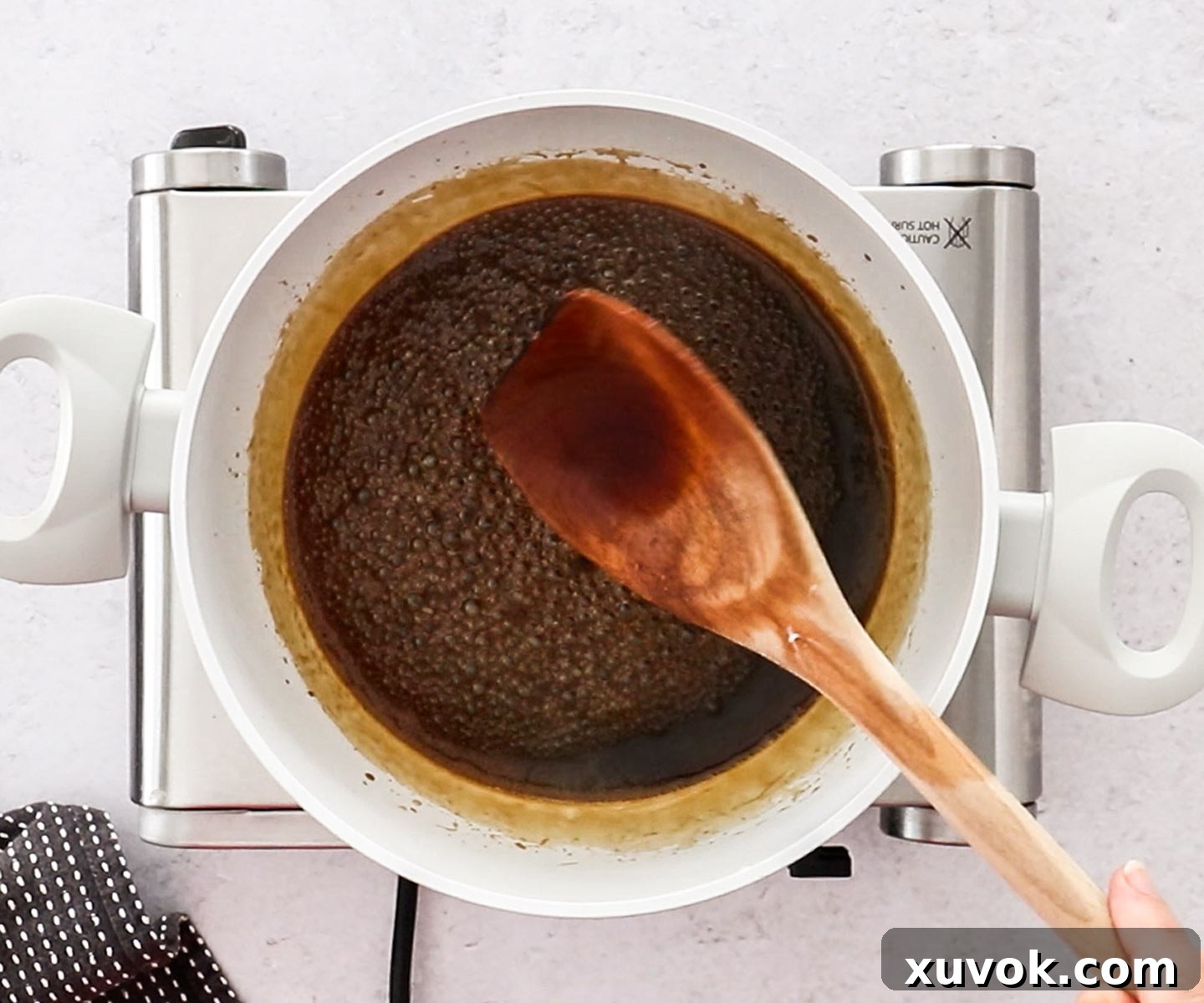
In a separate small bowl, whisk together the rice wine vinegar and cornflour (cornstarch) to create a smooth slurry. Gradually stir this slurry into the simmering teriyaki sauce. Continue to cook, stirring constantly, for about one minute more, or until the sauce visibly thickens into a beautiful, glossy glaze that will cling perfectly to your salmon.
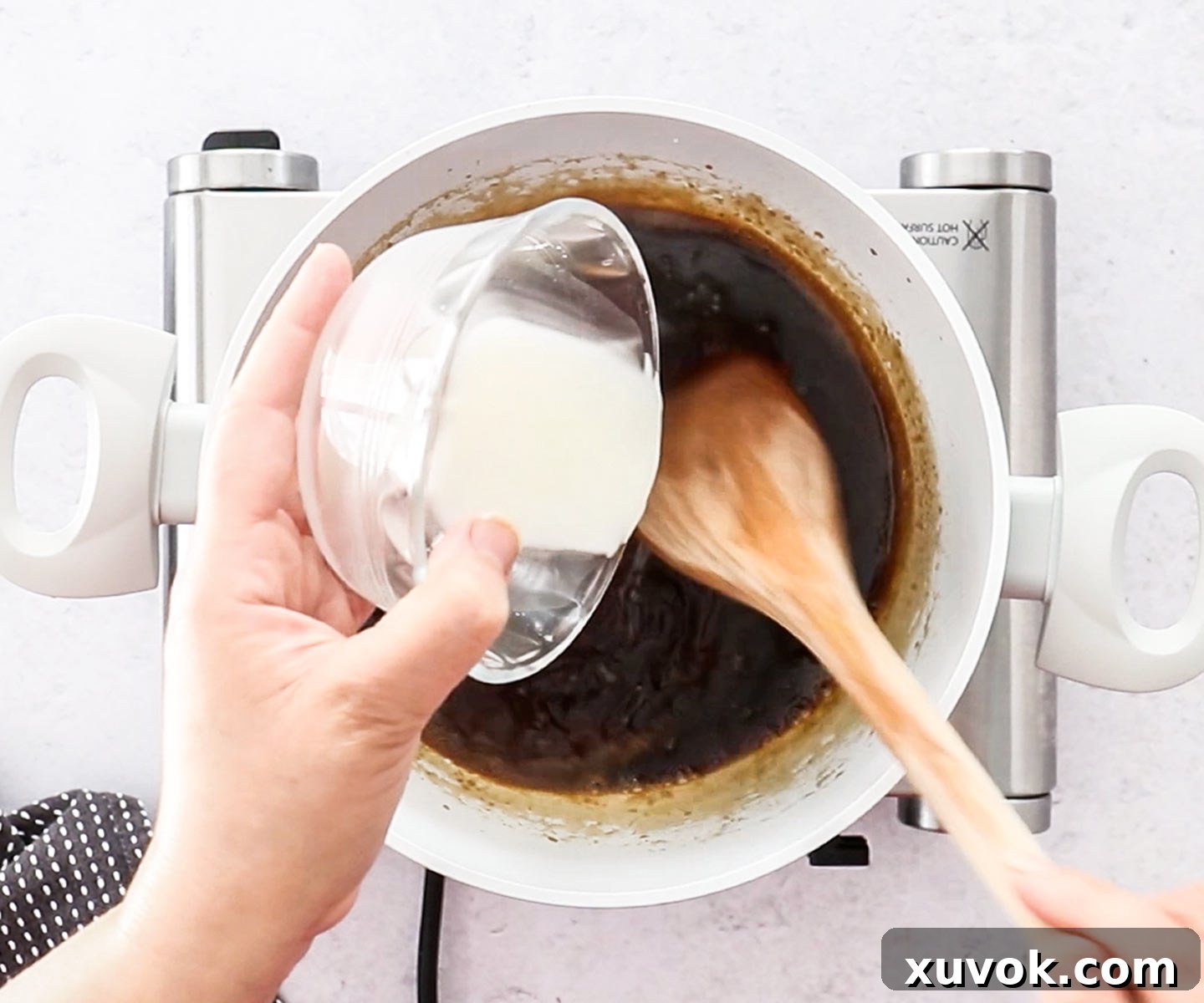
Once thickened, remove the sauce from the heat and allow it to cool to approximately room temperature before you use it on the salmon. This cooling step is essential to ensure the glaze adheres properly to the fish and doesn’t just run off during baking. You can even prepare the sauce a day or two in advance and store it in the refrigerator, making weeknight dinners even faster.
Step 2: Baking Your Salmon to Perfection
Preheat your oven to the recommended temperature. Line a baking tray or baking sheet with aluminum foil or parchment paper for easy cleanup, then lightly grease it with a little vegetable oil to prevent sticking. Pat your salmon dry with a paper towel – this crucial step helps achieve a crispier skin and allows the glaze to adhere better. Place the salmon, skin-side down, on the prepared baking tray.
Remember to set aside approximately ⅔ cup of your perfectly crafted teriyaki glaze for serving. This ensures you have fresh, untainted sauce for drizzling over the finished dish. Now, generously brush half of the remaining glaze over the salmon. Transfer the tray to your preheated oven and bake for 15-20 minutes. During the baking process, baste the salmon with the remaining glaze at least twice. This layering of sauce builds that beautiful, sticky, and deeply flavorful crust. Cook until your salmon reaches your preferred level of doneness, noting that thicker cuts will require a longer cooking time. Once baked, allow the salmon to rest for 5 minutes before serving to let the juices redistribute, ensuring maximum tenderness and flavor.
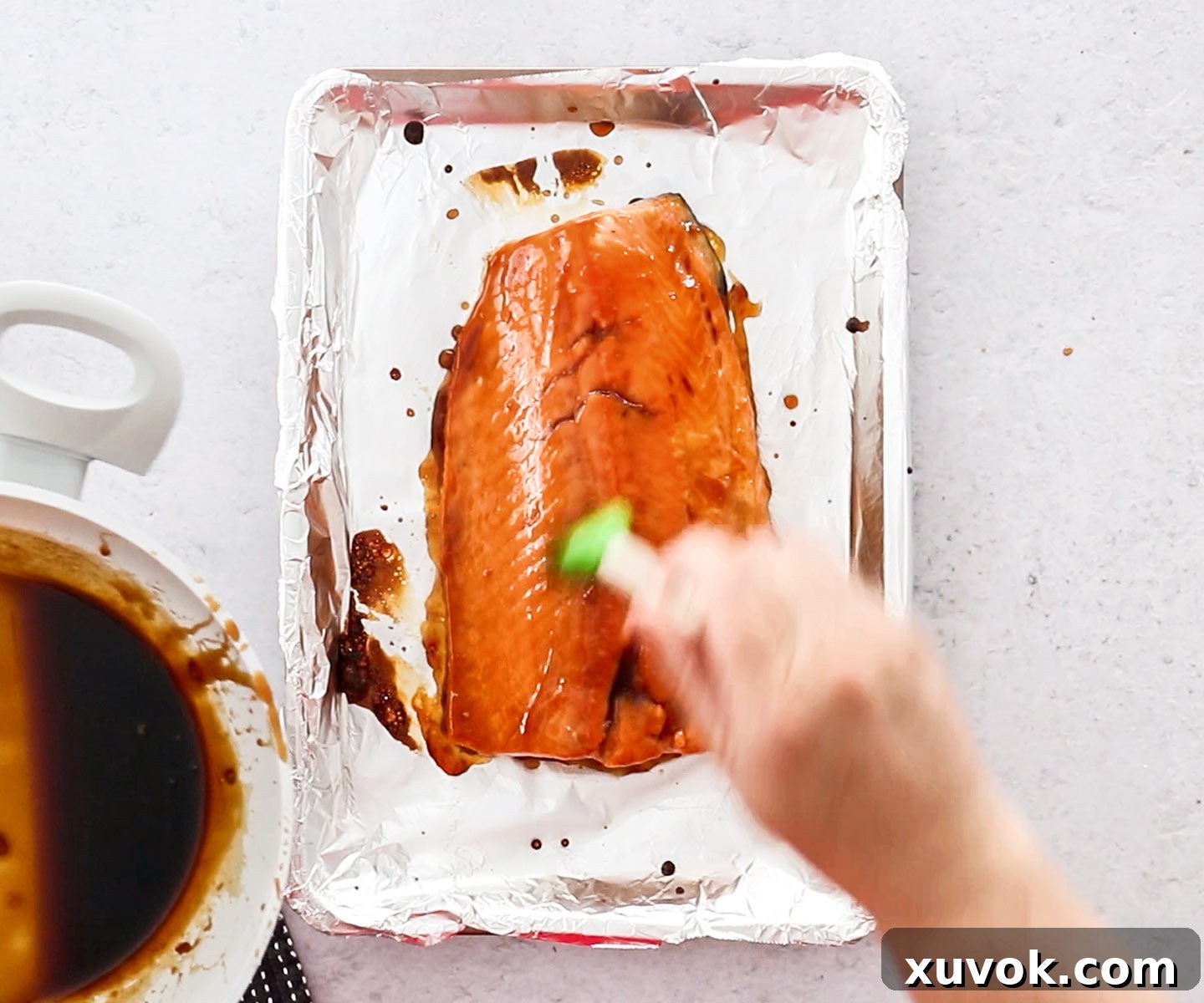
This truly is an incredibly simple yet rewarding meal. The teriyaki sauce can be prepared 3-4 days in advance and stored in a preserving jar or an airtight container in the refrigerator, making it a fantastic meal prep component for busy schedules.
Moreover, this versatile glaze isn’t limited to just salmon. Feel free to experiment by using it on other types of fish, plump prawns, succulent steak, or tender chicken for a varied culinary experience.
Expert Tips for Baking Flawless Teriyaki Salmon
Achieving perfectly baked teriyaki salmon is simple with these expert tips, designed to ensure your dish is moist, flavorful, and beautifully glazed every time:
- Always Check for Bones: Before you begin the cooking process, take a moment to run your fingers gently over the surface of the salmon. If you encounter any small, sharp, spiky protrusions, these are pin bones that need to be removed. Don’t worry, it’s a straightforward task. Simply grab a pair of clean kitchen tweezers (I keep a dedicated pair for this purpose!) and gently but firmly pull the end of each bone. They should slide out easily. Deboning a large piece of salmon usually takes only a few minutes.
- Allow the Teriyaki Glaze to Cool: It’s crucial that your homemade teriyaki glaze cools down slightly, ideally to around room temperature, before you brush it onto the salmon. Applying hot glaze to cold fish can cause it to be too runny and slide right off, preventing that desirable sticky coating. Prepare your glaze at least 30 minutes in advance, or even the day before, to ensure it’s at the perfect temperature when you’re ready to bake.
- Separate Glazes for Safety and Flavor: For food safety and optimal flavor, it is essential to keep the glaze you’ll use for basting separate from the glaze you’ll serve at the table. Set aside approximately ⅔ cup of the freshly made teriyaki sauce as your “serving glaze.” The remaining sauce will be used to brush onto the salmon before and during the cooking process. This prevents any cross-contamination and ensures a fresh, clean flavor for your final drizzling.
- Understanding Salmon Doneness: The ideal doneness for salmon is a matter of personal preference, but food safety guidelines are important. According to the USDA, salmon is safe to eat when its internal temperature reaches 63°C (145°F). Food Safety Australia suggests fish fillets should be cooked to around 69°C (155°F) or until the flesh flakes easily. However, many find salmon cooked to these temperatures can be quite dry and overdone. Personally, I prefer my salmon cooked to about 57°C (135°F), which results in a medium doneness – the fish will still flake but remains incredibly moist and buttery. Many gourmands even enjoy it medium-rare. Remember that salmon will continue to cook slightly (carryover cooking) for a few minutes after it’s removed from the oven. As I am not a nutrition expert, please make an informed decision about what cooking temperature works best for you and your family.
- Pat the Salmon Dry: Always pat the salmon dry thoroughly with paper towels before applying the glaze and baking. A dry surface allows the glaze to adhere better, promoting a more even and beautiful caramelization, and contributes to a crispier skin if you leave it on.
- Consider a Wire Rack: For even cooking and to prevent the bottom of the salmon from getting soggy, consider placing your salmon on a wire rack set inside your baking tray. This allows air to circulate around the entire piece of fish.
Delicious Variations to Customize Your Teriyaki Salmon
This teriyaki salmon recipe is wonderfully versatile, allowing for easy customization to suit your taste preferences. Here are a few ideas to inspire your culinary creativity:
- Add a Garlic Kick: For garlic lovers, mince one or two cloves of fresh garlic and add them to the teriyaki glaze mixture when you’re simmering it. The garlic will infuse the sauce with a delightful aromatic depth that pairs beautifully with the salmon.
- Spice it Up: If you enjoy a touch of heat, incorporate a pinch or two of dried chili flakes into the teriyaki glaze. Alternatively, a dash of black pepper or a tiny amount of sriracha can add a pleasant kick without overpowering the classic teriyaki flavors.
- Broil for Extra Char: For a more intense caramelization and slightly crisper edges, you can finish the baked salmon under a broiler for the last 2-3 minutes of cooking. Keep a very close eye on it, as the sugar in the glaze can burn quickly. This technique adds a fantastic smoky depth.
- Citrus Brightness: A squeeze of fresh lime or lemon juice over the cooked salmon just before serving can add a wonderful bright, zesty contrast that cuts through the richness of the glaze.
- Vegetable Medley: Turn this into a one-pan meal by adding quick-cooking vegetables like broccoli florets, asparagus spears, bell pepper strips, or snow peas directly to the baking tray during the last 10-15 minutes of the salmon’s cooking time. Toss them with a little olive oil and salt before adding to the tray.
The Inspiration Behind This Recipe
The journey to perfecting this oven-baked teriyaki salmon was inspired by a blend of treasured culinary experiences and thoughtful adaptations. I was initially captivated by the idea of baking a large slab or side of salmon, a technique beautifully showcased by my friend Ari at Well Seasoned Studio. Her approach to slow-baked salmon provided the foundational concept for the baking method, and without her initial inspiration, this recipe might never have come to fruition.
For the teriyaki sauce itself, I drew upon a classic recipe I’ve admired for years, which was originally adapted from this version by Serious Eats. Over time, I’ve further refined and adapted that base recipe specifically for this salmon dish. My goal was to create a glaze that not only delivered a classic teriyaki flavor but also possessed the perfect viscosity to truly cling to the salmon, resulting in that desirable thick, shimmering coating. The careful addition of cornflour, while a deviation from traditional methods, was key to achieving this specific textural perfection, ensuring every bite is fully immersed in flavor.
What to Serve with Your Teriyaki Salmon: Perfect Pairings
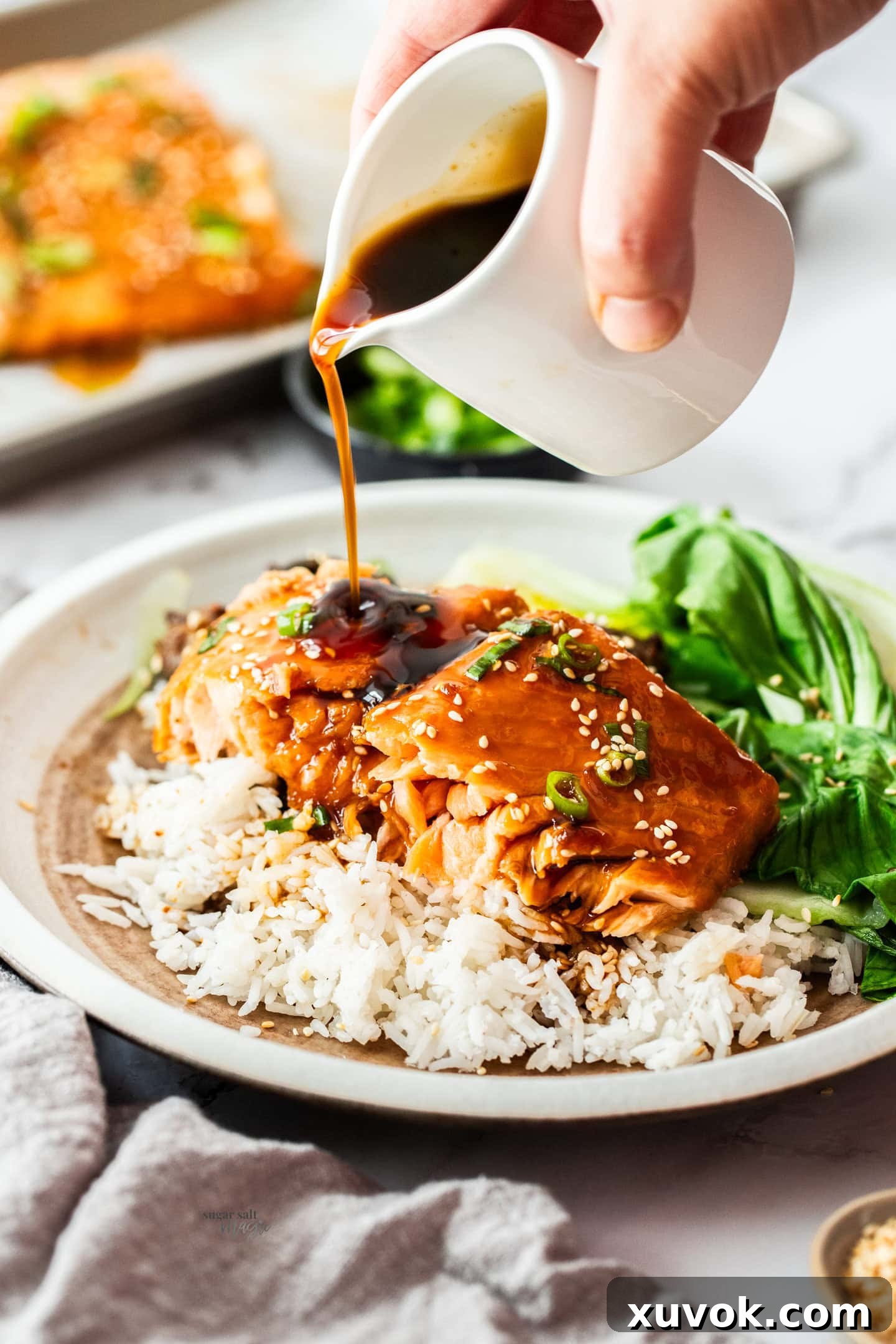
Serving a glorious side of salmon like this, placed invitingly in the center of your table, creates a truly special dining atmosphere. I enjoy using a larger serving fork to gently flake and portion the salmon, or you could simply allow your guests the pleasure of serving themselves. To complement the rich, sticky teriyaki glazed salmon, here are some perfect side dishes:
- Steamed Rice: A classic choice, fluffy white steamed rice is ideal for creating a complete and balanced meal. Its subtle flavor allows the star of the show – the salmon – to truly shine, and it’s absolutely perfect for soaking up every last drop of that delectable teriyaki sauce. Brown rice, cauliflower rice, or even quinoa are excellent alternatives for varying textures and nutritional benefits.
- Sliced Fresh Cucumber: Offering a delightful contrast, thinly sliced fresh cucumber provides a cool, crisp, and refreshing counterpoint to the rich, warm salmon. Its light flavor won’t compete with the bold teriyaki, instead providing a palate cleanser between bites.
- Pickled Delights: A small side of vibrant pink pickled onions (homemade or store-bought) adds a fantastic tangy bite. Alternatively, traditional Japanese pickled vegetables or even a modest heap of pickled ginger can elevate the dish with their distinctive sour and spicy notes.
- Fresh Steamed Vegetables: For a healthy and vibrant accompaniment, consider serving simple steamed vegetables. Options like tender steamed broccoli, crisp asparagus spears, vibrant pak choy, or sweet snow peas are all excellent choices that add freshness and color to your plate.
- Roasted Miso Mushrooms: Though subtly tucked behind the salmon in the accompanying photo, these umami-rich miso mushrooms are a personal favorite and pair exquisitely with the teriyaki. Their earthy flavor and savory depth create a harmonious balance with the sweet and salty salmon.
For those seeking slightly less traditional but equally satisfying side dishes, you might consider pairing your teriyaki salmon with a colorful rainbow vegetable tray bake for a roasted delight, or a refreshing creamy cucumber salad for a cool and tangy contrast.
Storing and Reheating Leftover Teriyaki Salmon
While this baked salmon is undoubtedly at its peak when enjoyed fresh from the oven, any leftovers can be safely stored and savored later. Simply place the cooled salmon in an airtight container and refrigerate for 2-3 days. For reheating, gently warm the salmon in the oven at a low temperature (around 150°C/300°F) for 10-15 minutes, or until it’s heated through, to help preserve its moisture. Alternatively, you can use a microwave on a lower power setting, heating in short bursts, to avoid drying out the fish. Adding a little extra reserved teriyaki sauce during reheating can also help maintain its delicious flavor and moisture.
Teriyaki Salmon Frequently Asked Questions
Is teriyaki salmon gluten-free?
Traditional soy sauce contains wheat, so it is not gluten-free. To make this teriyaki salmon recipe gluten-free, you must substitute standard soy sauce with tamari, which is a gluten-free alternative. Additionally, some brands of rice wine vinegar may contain gluten, so it’s advisable to check labels or substitute with apple cider vinegar. For mirin, always check the packaging carefully, as some brands might include soy sauce or other gluten-containing ingredients.
Can I use salmon fillets instead of a slab?
Absolutely! You can certainly use individual salmon fillets or salmon steaks for this recipe. The primary difference will be the cooking time, which will be shorter due to their smaller size and thickness. Generally, individual fillets will cook in approximately 10-15 minutes, so keep a close eye on them to prevent overcooking and ensure they remain moist and tender.
Can I cook this teriyaki salmon on the stovetop?
While baking offers a more tender and evenly cooked result, this teriyaki salmon can indeed be cooked on the stovetop, especially if you’re using individual salmon fillets or steaks, as they are easier to manage in a pan. To cook on the stovetop, pan-sear the salmon fillets until they are almost cooked through. Then, pour in the prepared (and cooled) teriyaki sauce, allowing it to simmer and thicken for another 2-3 minutes while turning the salmon occasionally to coat it thoroughly. This method yields a delicious, slightly crispy exterior.
Can I use bottled teriyaki sauce?
While convenient, most bottled teriyaki sauces are typically thinner in consistency than the homemade glaze required for this recipe and will not adhere to the salmon as effectively. They might also lack the fresh, vibrant flavor of a scratch-made sauce. If you must use bottled sauce, you could attempt to thicken it with a cornflour slurry first. However, our homemade teriyaki sauce is incredibly simple and quick to prepare, offering a superior flavor and texture that is well worth the minimal effort.
What is the best way to tell if salmon is cooked?
The easiest way to tell if salmon is cooked through is by gently pressing down on the thickest part of the fillet with a fork. If the flesh flakes easily, it’s ready. For a more precise measure, use an instant-read thermometer inserted into the thickest part. As noted in our tips, preferences vary, but aiming for an internal temperature between 57°C (135°F) for medium and 63°C (145°F) for well-done is common.
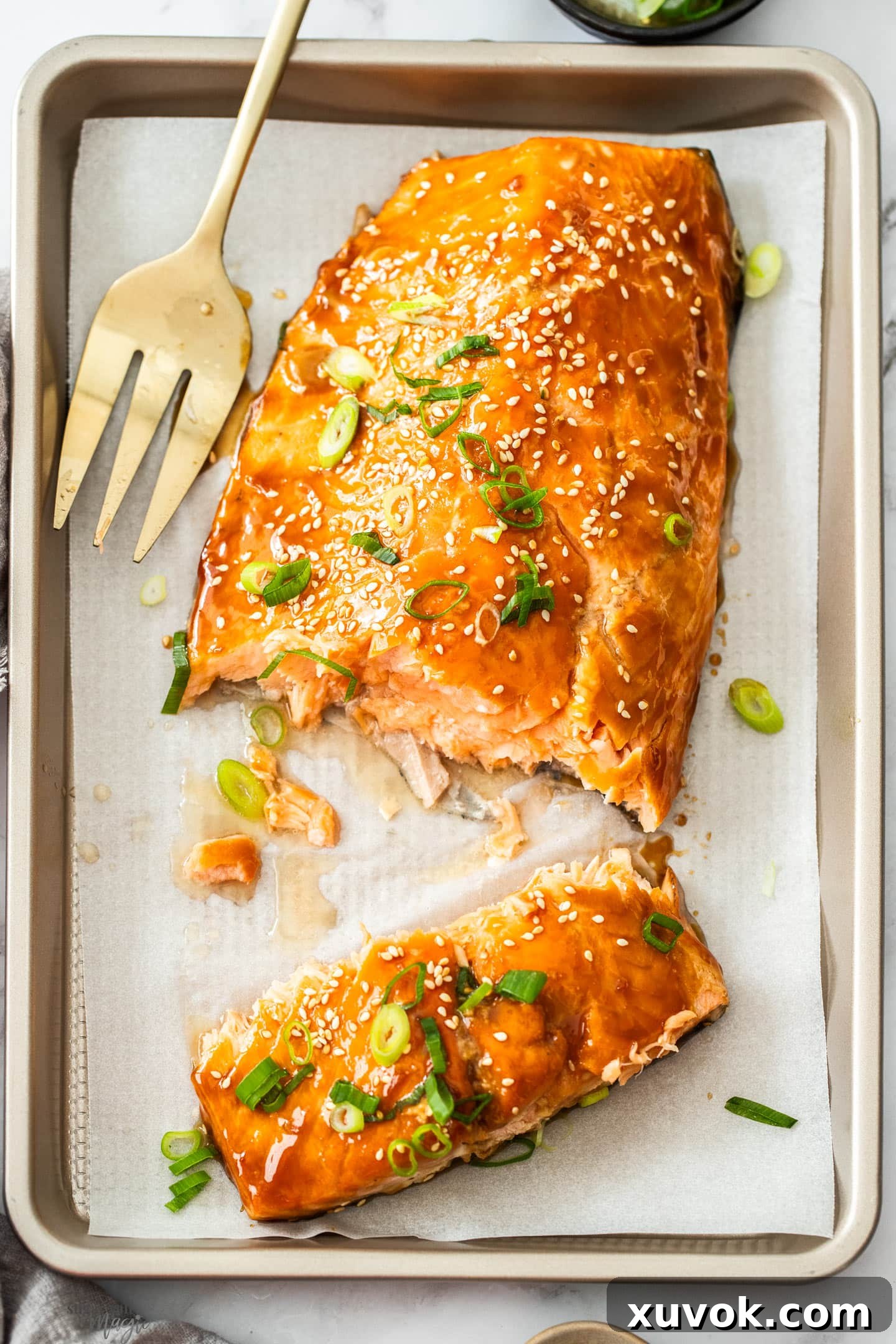
This sticky, sweet, and savory oven-baked teriyaki glazed salmon is an undeniable triumph, perfect for any night of the week or whenever you wish to impress guests with minimal stress. Its delightful flavors also make it a wonderful addition to any Asian-inspired feast, such as a Lunar New Year celebration. You don’t need any special tools or advanced culinary knowledge to create this incredibly special and utterly delicious dish.
More Asian-Inspired Recipes You’ll Love
- Flavorful Beef Teriyaki Bowls
- Elegant Salmon Wellington
- Sweet & Tangy Honey Mustard Salmon
- Umami-Rich Furikake Salmon
- Authentic Pork Gyoza (Japanese Pork Dumplings)
- Crispy Sesame Prawn Toast
⭐⭐⭐⭐⭐
Did you try this easy teriyaki glazed salmon recipe?
We’d love to hear your thoughts! Share your experience and show it some love in the comments below.
Hungry for more? Subscribe to our newsletter for free recipes straight to your inbox. Also, follow along on Facebook, Pinterest and Instagram for daily inspiration!
Teriyaki Glazed Salmon
Tip: To get this meal on the table efficiently on a busy weeknight, prepare the teriyaki sauce a few days in advance and store it in the refrigerator. This way, it’s ready to use as soon as you are.
Rate
Pin
Video
Ingredients
- 1 tablespoon toasted sesame seeds (or untoasted) (see notes)
- ½ cup Japanese soy sauce (like Kikkoman) (125ml)
- ½ cup mirin (125ml)
- ⅓ cup brown sugar (70g / 2 ½oz)
- 1 teaspoon fresh minced ginger
- 2 tablespoons rice wine vinegar (see notes)
- 3 teaspoons cornflour (US cornstarch)
- 675 g slab of salmon (1 ½ lb)
- 2 spring onions (green onions / scallions), finely chopped for garnish
For best results, always weigh ingredients where a weight is provided
Equipment
-
A baking tray, half sheet pan or baking dish just larger than the salmon
-
Saucepan
Instructions
-
PREPARING THE TERIYAKI SAUCE: For convenience on a busy night, this sauce can be made 3-4 days in advance and stored in the refrigerator. Ensure the teriyaki sauce is prepared at least 30 minutes ahead of time so it has ample opportunity to cool slightly before use.
-
In a medium saucepan, combine the soy sauce, brown sugar, mirin, and minced ginger. Bring the mixture to a gentle simmer over medium heat, stirring frequently until the brown sugar has fully dissolved. Continue to let it simmer for about 5 minutes, allowing the sauce to reduce and its flavors to concentrate slightly.
-
In a small bowl, whisk together the rice wine vinegar and cornflour to form a smooth slurry. Gradually add this slurry to the simmering sauce while stirring continuously. Cook for another minute, or until the sauce thickens into a beautiful, glossy glaze. Remove from heat and let cool to room temperature.
-
PREPARING THE SALMON:
Take your salmon out of the refrigerator 15-30 minutes before you plan to cook it. Allowing it to come closer to room temperature helps ensure more even cooking.
-
Preheat your oven to 200°C (180°C fan forced) / 395°F. Line a rimmed baking tray (one that is just slightly larger than your salmon) with baking paper or aluminum foil. Lightly rub a little vegetable oil over the lined tray to prevent the salmon from sticking.
-
Pat the salmon thoroughly dry with a paper towel. This step is crucial for achieving a beautiful sear and allowing the glaze to adhere well. Place the dried salmon, skin side down, onto the prepared baking tray.
-
Reserve ⅔ cup of the prepared teriyaki sauce for serving. This portion will be drizzled over the cooked salmon. Brush half of the remaining sauce generously over the salmon. Place the tray in the preheated oven and bake for 15-20 minutes (cooking time will vary depending on the thickness and size of your salmon, see notes for guidance). During baking, baste the salmon with the remaining sauce two more times to build up that delicious glaze. Cook until your salmon reaches your preferred doneness (see notes on internal temperatures).
-
Once cooked, remove the salmon from the oven and let it rest for 5 minutes before serving. This allows the juices to redistribute, ensuring a moist and tender result.
-
Garnish your beautiful teriyaki salmon with toasted sesame seeds and the finely chopped spring onions. Serve it alongside fluffy steamed rice and your favorite steamed vegetables, with the reserved teriyaki sauce available for extra drizzling. Enjoy!
-
Please take a moment to leave a comment & rating. Your feedback is greatly appreciated and incredibly helpful to other home cooks.
Notes
- Tablespoon Measurement: Please note that I use a standard Australian 20ml tablespoon in this recipe (which is equivalent to 4 teaspoons). It’s always a good idea to check the size of your measuring spoons before you begin, as tablespoon sizes can vary internationally.
- Checking for Bones: Before cooking, always run your fingers over the salmon to detect any pin bones. These small, pointy bones are easily removed with clean kitchen tweezers. Gently pull them out, and they should slip right away.
- Cool the Glaze: For the best results, ensure your homemade teriyaki glaze has cooled to at least room temperature before applying it to the salmon. This prevents the glaze from running off the fish, allowing it to form a beautiful, sticky coating. Making the glaze ahead of time (even the day before) is an excellent way to ensure it’s perfectly cooled and ready when you are.
- Separate Glazes for Serving and Basting: It’s crucial for food safety to keep the glaze intended for serving separate from the glaze used for basting the salmon during cooking. Set aside approximately ⅔ cup of the sauce to pour over the finished dish, and use the rest for brushing onto the raw and cooking salmon.
- Adjusting Cooking Time: If you are using individual salmon fillets or salmon steaks instead of a large slab, their cooking time will be shorter, typically around 10-15 minutes, depending on their thickness. Always adjust your cooking duration accordingly to prevent overcooking.
- Salmon Doneness Guidelines: According to the USDA, salmon is safely cooked when it reaches an internal temperature of 63°C (145°F). Food Safety Australia suggests cooking fish fillets to approximately 69°C (155°F) or until the flesh flakes easily. However, many find salmon cooked to these temperatures to be dry. Personally, I prefer a medium doneness, around 55°C (130°F), which results in a very moist, flaky fish. Many also enjoy it medium-rare. Remember that fish continues to cook for a few minutes after being removed from the oven (carryover cooking). Please choose the doneness that best suits your preferences and food safety comfort level.
- Toasted Sesame Seeds: You can purchase pre-toasted sesame seeds from most Asian grocery stores for convenience. Alternatively, you can toast untoasted sesame seeds yourself in a dry pan over medium heat, shaking frequently until they turn a light golden color and become fragrant. If you prefer, you can also leave them untoasted; they will still add a subtle nutty flavor.
DISCOVER MORE ASIAN-INSPIRED RECIPES!
Calories from Fat 81