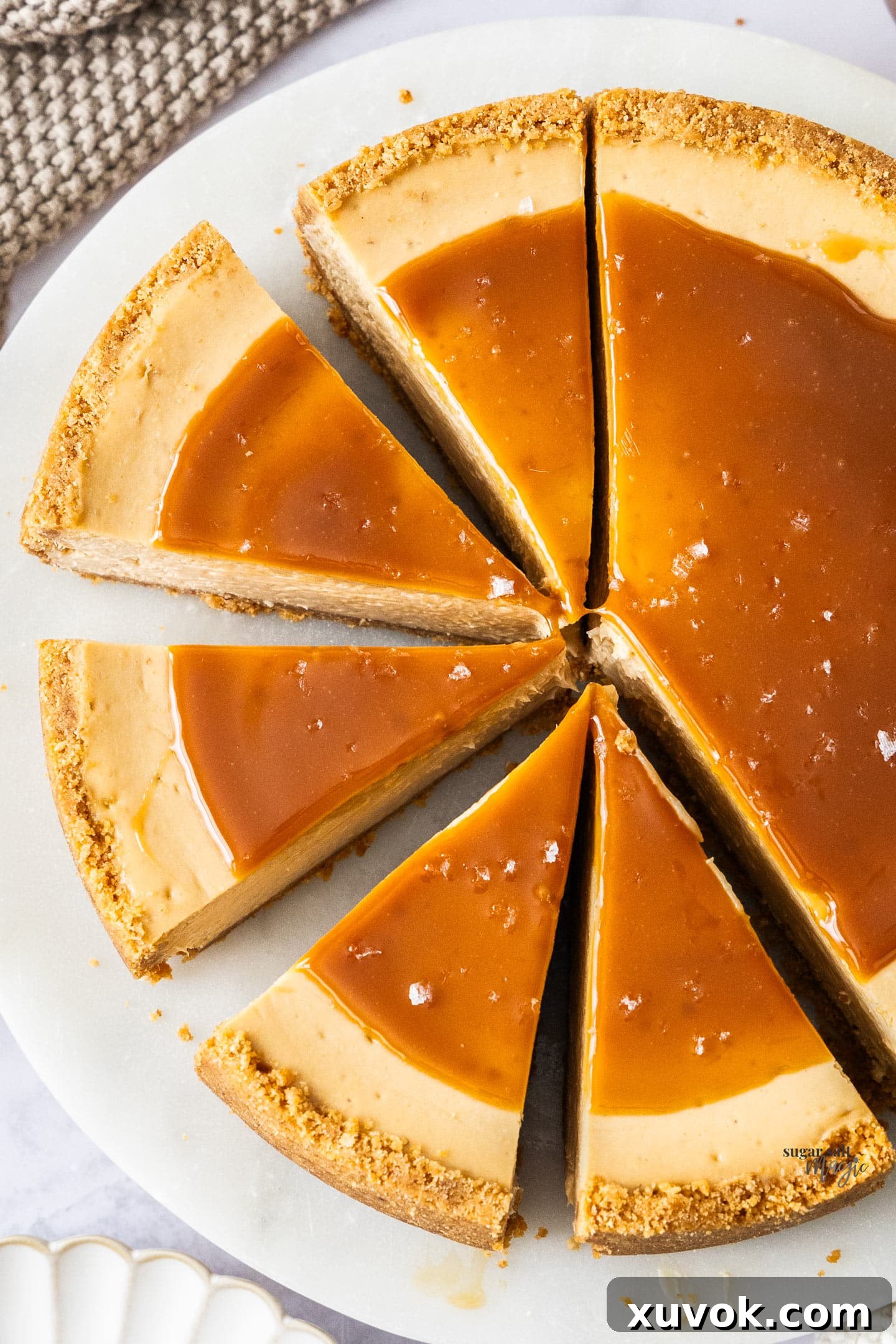
Indulge in the Ultimate Homemade Caramel Cheesecake: No Water Bath Needed!
Prepare to be enchanted by this caramel cheesecake – a truly rich, exquisitely indulgent, and incredibly silky-smooth baked dessert that is surprisingly **easy to make**. Forget complicated techniques; this recipe simplifies the art of cheesecake creation, delivering a show-stopping dessert without the need for a water bath. It’s not just simple; it’s utterly delicious, promising a deeply satisfying caramel flavor in every bite.
Unlike many no-bake varieties, a classic baked cheesecake offers a distinctively firmer yet wonderfully **creamy and smooth texture**. This easy caramel cheesecake recipe is perfect for any special occasion, a true crowd-pleaser that exudes celebration. A small slice goes a long way, offering intense flavor that will impress even the most discerning palates. The secret to its profound caramel taste lies in using either a simple homemade caramel sauce or a high-quality store-bought option. For an elevated experience, consider adding a touch of sea salt to transform it into an irresistible **salted caramel cheesecake**.
Drawing inspiration from my beloved easy baked cheesecake with fresh cherry sauce, this recipe is crafted for true caramel aficionados. If you’re craving caramel but prefer a no-bake option, you might also enjoy my Caramilk cheesecake.
This recipe was originally published on March 15th, 2016, and has since been thoroughly updated with enhanced information and step-by-step imagery to ensure your baking success.
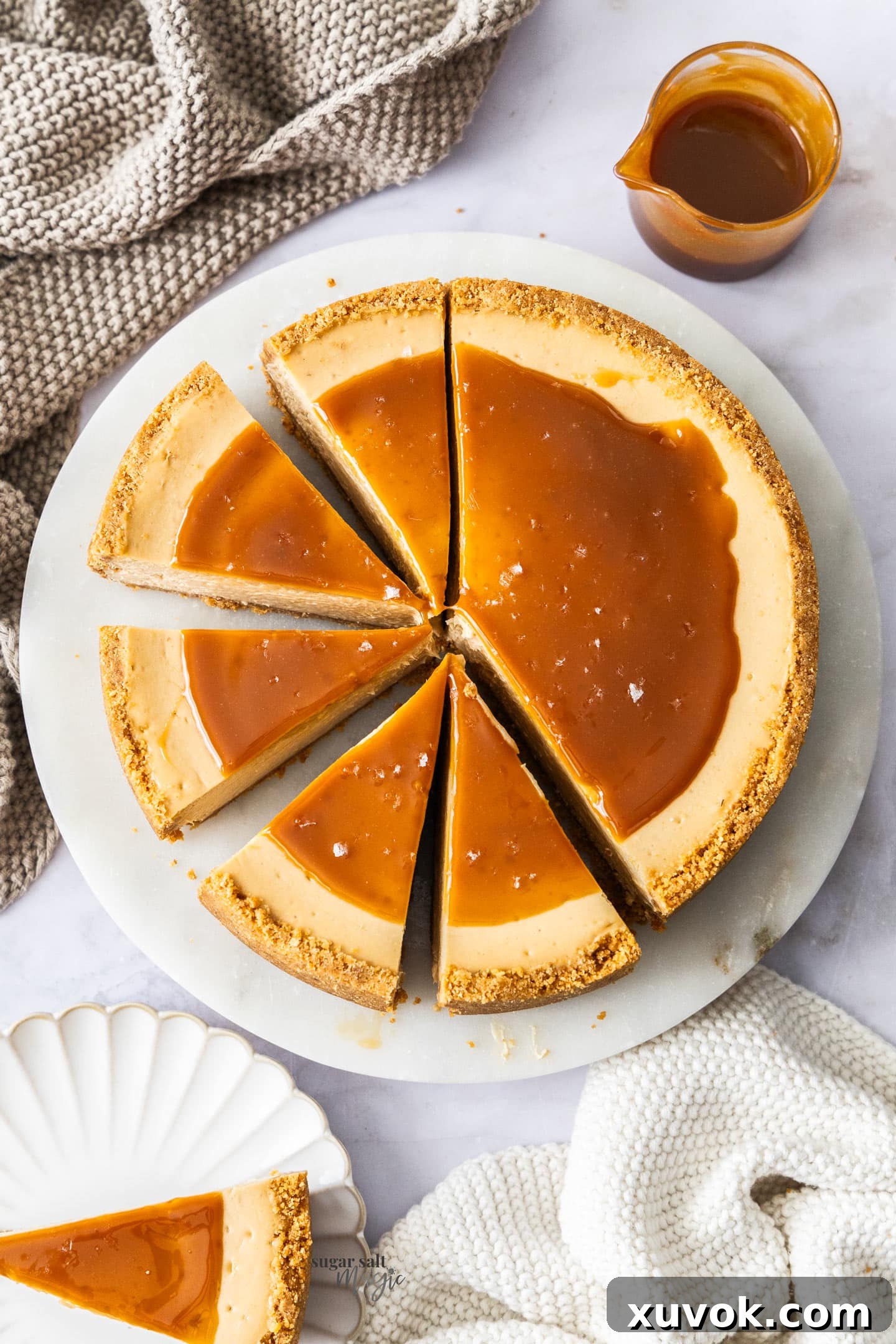
Table of Contents
- Ingredients for Perfection
- Essential Tools for Baking
- Step-by-Step: Crafting Your Caramel Cheesecake
- Pro Tips for Cheesecake Success
- Troubleshooting: Preventing Cheesecake Cracks
- Storage & Make-Ahead Guide
- Serving Suggestions & Customization
- More Delicious Cheesecake Recipes
Never Miss a Recipe!
Get the latest, most delectable recipes delivered straight to your inbox. Join our community of food lovers!
Please enter your email to subscribe:
Ingredients for Perfection
Crafting this irresistible baked caramel cheesecake begins with a curated list of quality ingredients. The beauty of this recipe lies not only in its sensational taste but also in the simplicity and accessibility of its components, coming together effortlessly for a truly magnificent dessert.
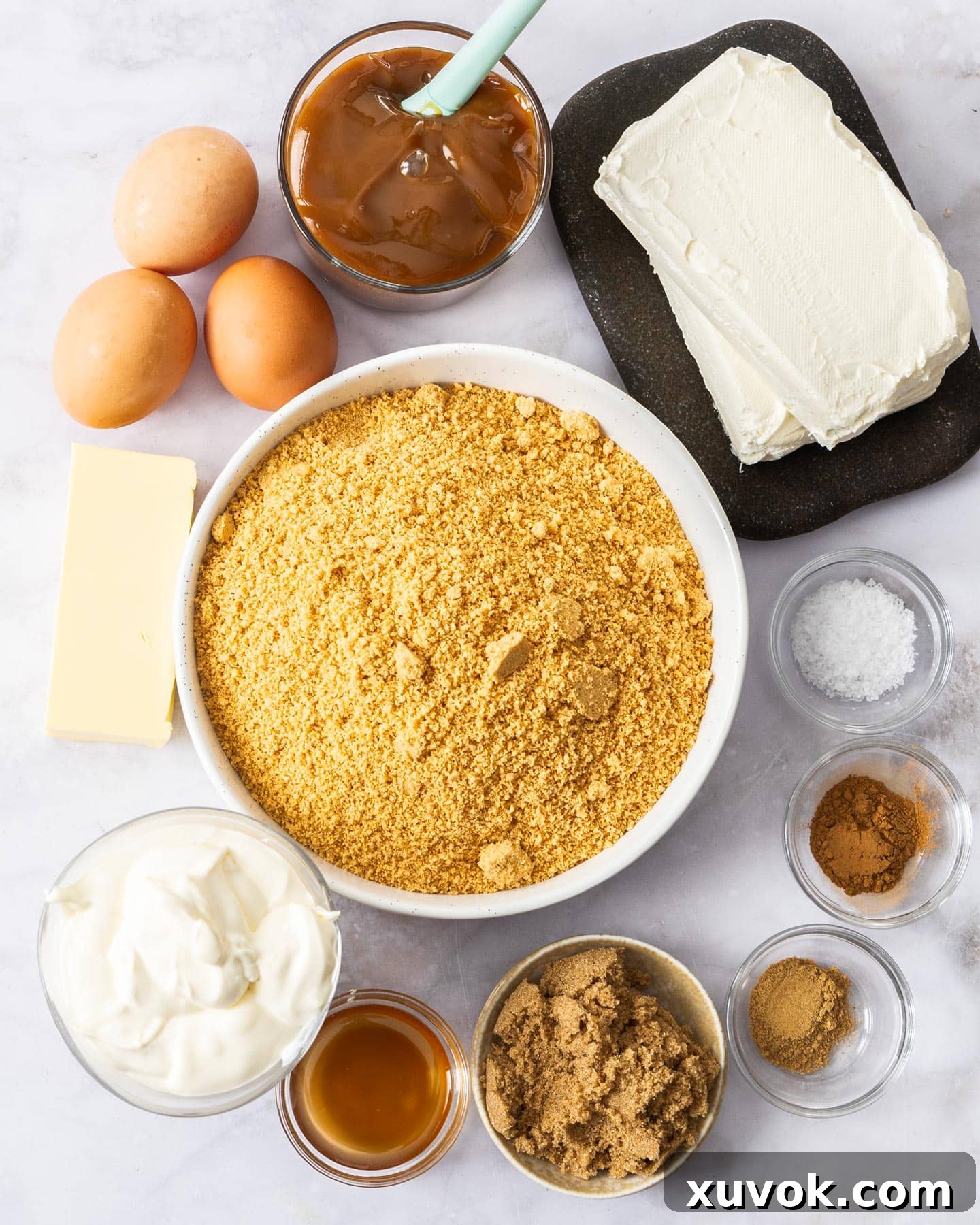
Jump to the full recipe card for precise measurements and detailed instructions.
- Cookie Crumbs: The foundation of any great cheesecake starts with a perfect crust. Opt for a lightly sweet biscuit or cookie, such as digestive biscuits (Arnotts Granita are a personal favorite) or classic Graham Crackers. These provide a delicate flavor balance that complements the rich caramel. For best results, blitz them into fine, even crumbs using a food processor. If pre-made graham cracker crumbs are available, they make an excellent shortcut.
- Spices: A subtle blend of ground ginger and cinnamon elevates the cookie base, adding an aromatic warmth that enhances the caramel without overpowering it. This small addition makes a significant difference in flavor depth.
- Butter: Unsalted butter is ideal for the crust, allowing you to control the overall saltiness of your cheesecake. However, if salted butter is all you have, it can certainly be used; just be mindful of any additional salt you might add to the caramel.
- Cream Cheese: For a truly luxurious, smooth, and crack-free cheesecake, always choose a full-fat, brick-style cream cheese. Brands like Philadelphia are consistently reliable. Low-fat or whipped cream cheeses contain too much moisture or air, which can compromise the texture and stability of your baked cheesecake. Ensure it’s at room temperature for seamless mixing.
- Caramel Sauce: This is where the magic happens! While a good quality store-bought caramel sauce, such as Bonne Maman, offers convenience, I highly recommend making your own homemade caramel sauce. If opting for homemade, prepare it the day before to allow it to cool completely and achieve the perfect consistency. Whichever you choose, ensure it’s at room temperature before incorporating it into the filling. The recipe notes also detail how to easily transform this into a luscious salted caramel sauce.
- Sugar: A touch of brown sugar in the filling not only provides the ideal level of sweetness but also contributes a nuanced, deeper caramel note. Its slight moisture content is carefully balanced within the recipe to avoid affecting the cheesecake’s structure.
- Eggs: Eggs are crucial for the structure and richness of a baked cheesecake, providing the necessary binding and creamy texture. Always use large eggs and ensure they are at room temperature. Cold eggs can cause the cream cheese mixture to curdle or become lumpy.
- Vanilla Extract: A dash of good quality vanilla extract beautifully balances the richness of the caramel and cream cheese, adding a classic, comforting aroma and flavor.
- Sour Cream: Full-fat sour cream is a game-changer, lending a delightful tang and an unparalleled creaminess to the cheesecake filling. It also helps to tenderize the texture, contributing to that coveted smooth finish. Make sure it’s at room temperature.
- Sea Salt Flakes: To truly elevate this dessert into a **salted caramel cheesecake**, flaky sea salt (like Maldon) is essential. Its coarse texture and clean salinity provide a perfect counterpoint to the sweet caramel. Avoid using fine table salt or kosher salt, as their flavor and melting properties are different. The measurements in this recipe are specifically calibrated for sea salt flakes.
Essential Tools for Baking This Caramel Cheesecake
Having the right tools can make your cheesecake baking experience even smoother and more enjoyable. While some items are essential, others simply make the process more efficient.
- Food Processor or Rolling Pin: To achieve finely crushed cookie crumbs for your crust, a food processor is incredibly efficient. However, if you don’t have one, a sturdy plastic bag and a rolling pin work perfectly for gently crushing the biscuits.
- Electric Mixer (Handheld or Stand Mixer): For blending your creamy filling ingredients, an electric mixer is highly recommended. A stand mixer with a paddle attachment offers hands-free convenience, but a handheld electric mixer will work just as well. The key is to use a low-medium speed to avoid incorporating too much air into the mixture, which can lead to cracks.
- 8-inch Springform Pan: This is a non-negotiable for cheesecakes. An 8-inch springform pan allows for easy removal of the finished cheesecake without damaging its delicate structure. Always grease and line it properly to ensure a clean release.
Step-by-Step: Crafting Your Caramel Cheesecake
Baked cheesecakes often carry a reputation for being challenging, but I’m here to demystify the process. While they do require a specific, slow cooling method to prevent cracks, this is far from tricky—it simply involves adjusting the cheesecake’s position a few times as it cools to ensure an even temperature descent. The biggest win with this particular recipe? You absolutely do **not need a water bath** (or bain-marie), making it significantly less fuss!
Jump to the recipe card for the complete list of ingredients and detailed instructions.
1. Prepare Your Caramel Sauce
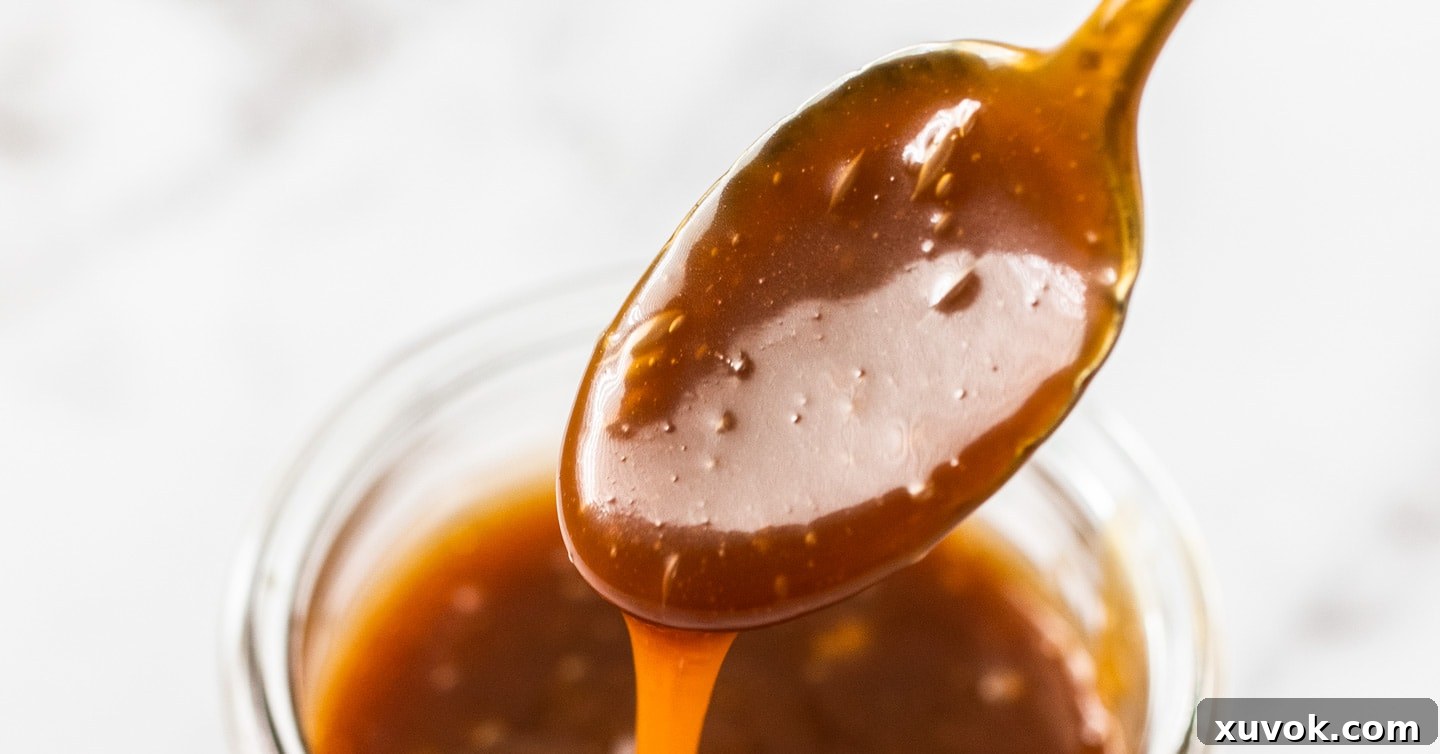
The caramel sauce is the heart of this cheesecake, and you have options! For ultimate convenience, a good quality store-bought caramel sauce is perfectly acceptable, and it’s my go-to when time is short. However, for a truly exceptional flavor experience, making your own caramel sauce from scratch is incredibly rewarding. Just a word of caution: avoid making caramel from scratch on a very humid day, as humidity can interfere with the crystallization process. Alternatively, you can use my simple “cheats” version, the recipe for which is provided in the recipe card notes below. Whichever method you choose, it is crucial that your caramel sauce is at room temperature before you begin mixing it into the cheesecake filling. This prevents lumps and ensures smooth incorporation. In the recipe card, I also provide clear instructions on how much salt to add to turn it into a divine salted caramel sauce, perfect for those who love that sweet and salty balance.
2. Create the Perfect Cheesecake Crust
While a simple blend of crushed cookies and melted butter makes a fine crust, I believe in adding a little extra sparkle. Incorporating a hint of cinnamon and ground ginger into the cookie base introduces a warm, subtly spiced note that complements the caramel beautifully, without making it overtly spicy. This small detail truly makes the crust special. If you can find pre-crushed cookie crumbs, that’s a great time-saver. Otherwise, gather your favorite sweet biscuits or cookies, such as digestives or graham crackers, and pulverize them into fine crumbs using a food processor. A low-tech alternative is to place them in a sturdy plastic bag and gently bash them with a rolling pin until finely crushed.
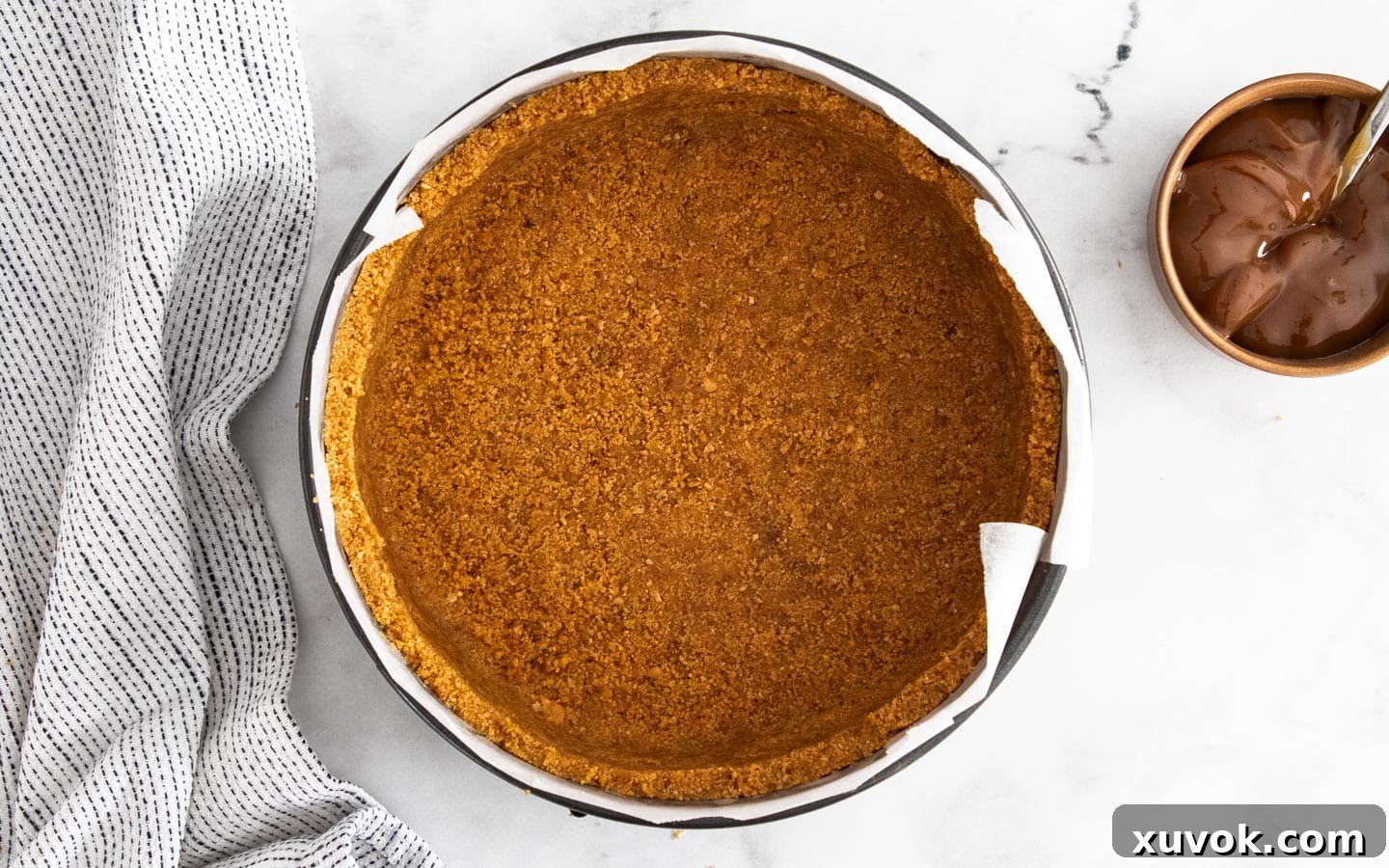
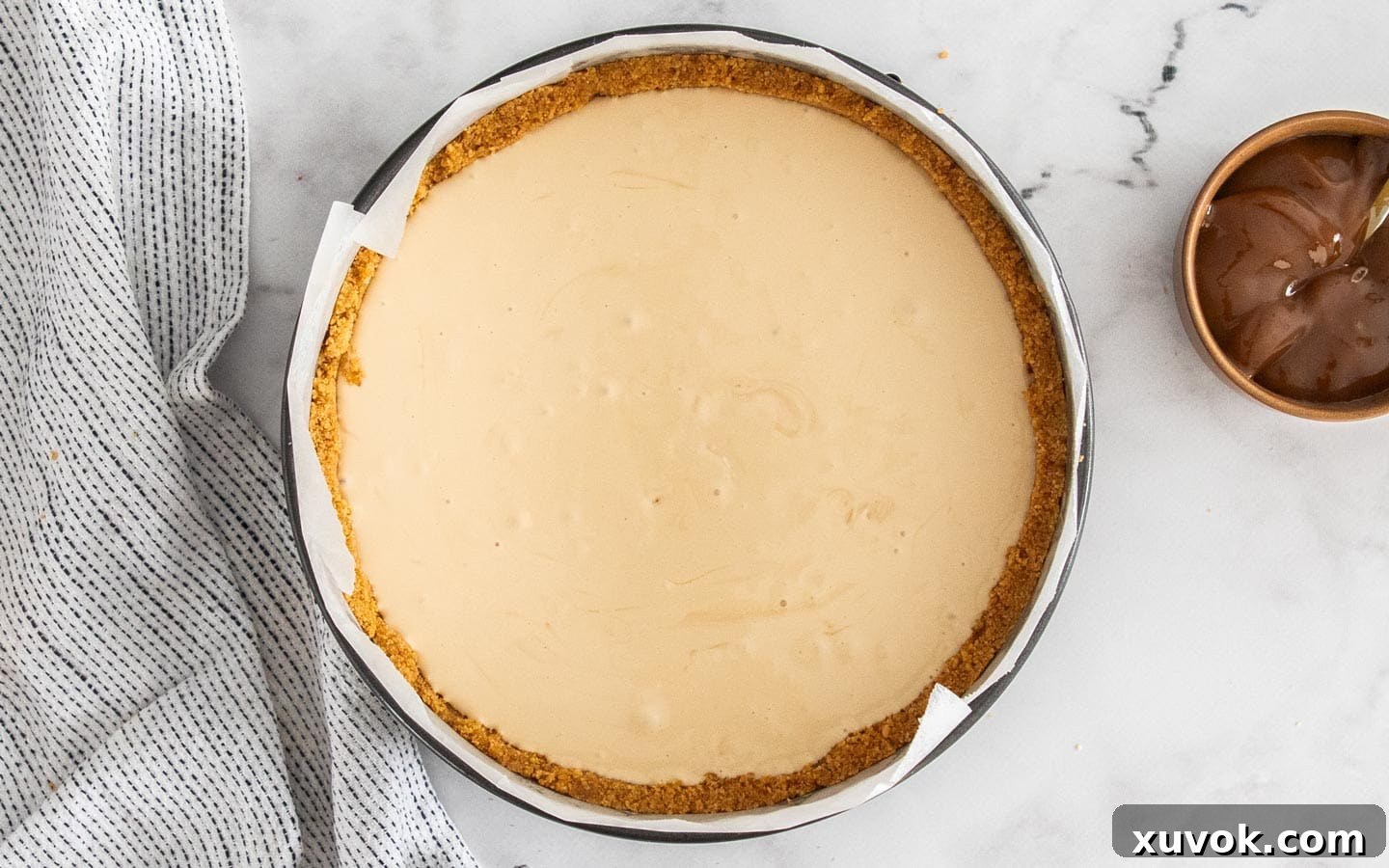
Once your crumbs are ready, combine them thoroughly with the melted butter and spices. Then, transfer this mixture into your prepared springform baking pan. Use the bottom of a flat-bottomed glass or a measuring cup to firmly press the mixture across the base and about 2 inches up the sides of the pan. This creates a solid, even crust that will beautifully contain your cheesecake filling. Chilling the crust in the fridge while you prepare the filling helps it set and become extra firm.
3. Prepare the Velvety Caramel Cheesecake Filling
While your spiced cookie crust chills in the refrigerator, it’s time to whip up the star of the show: the creamy caramel cheesecake filling. This process is remarkably straightforward. You can use a stand mixer with the paddle attachment or simply a large mixing bowl with a handheld electric beater.
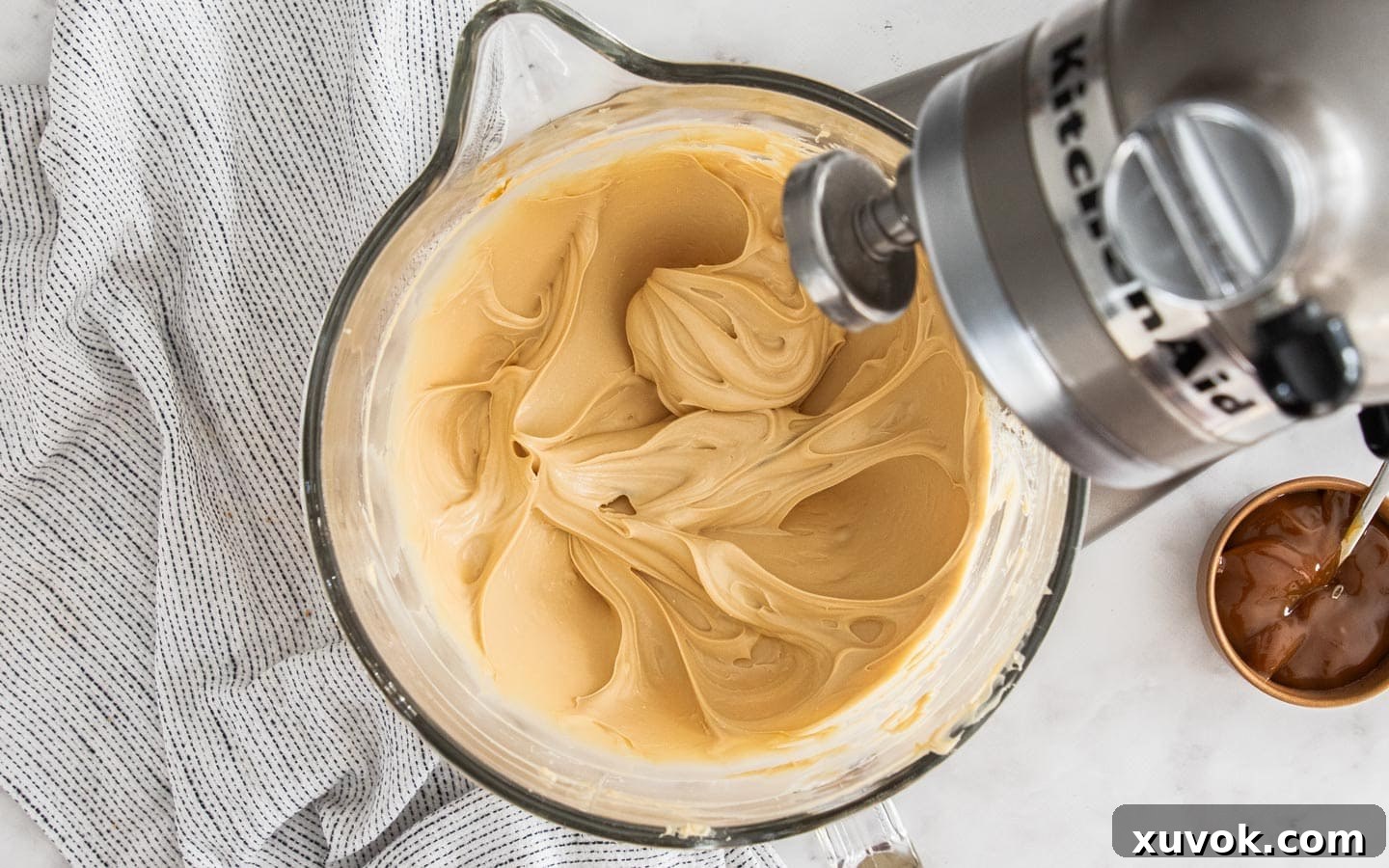
Begin by combining the room-temperature cream cheese, brown sugar, and your luscious caramel sauce. Beat these ingredients together on a low to medium speed until the mixture is utterly smooth and creamy. This step is critical: ensure there are absolutely no lumps or unmixed blobs of cream cheese remaining. Any lumps present at this stage will unfortunately remain in your finished cheesecake. Take your time, stopping occasionally to scrape down the sides of the bowl with a spatula to ensure everything is thoroughly incorporated.
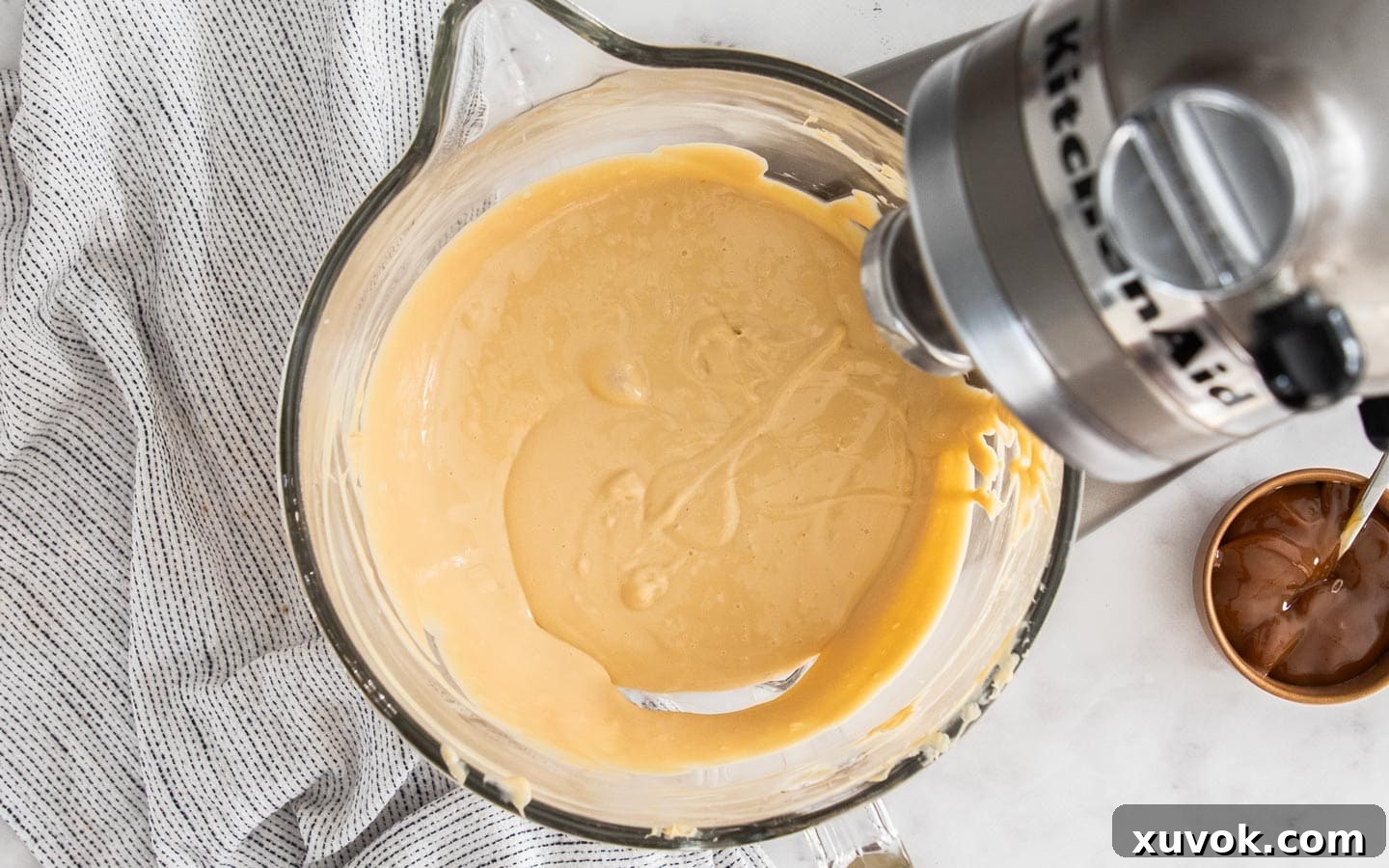
Next, introduce the large eggs, one at a time. Beat on a very low speed, just until each egg is fully incorporated into the mixture. The goal here is to blend, not to aerate. Over-beating at this stage can incorporate too much air, which is a common culprit for cheesecake cracks.
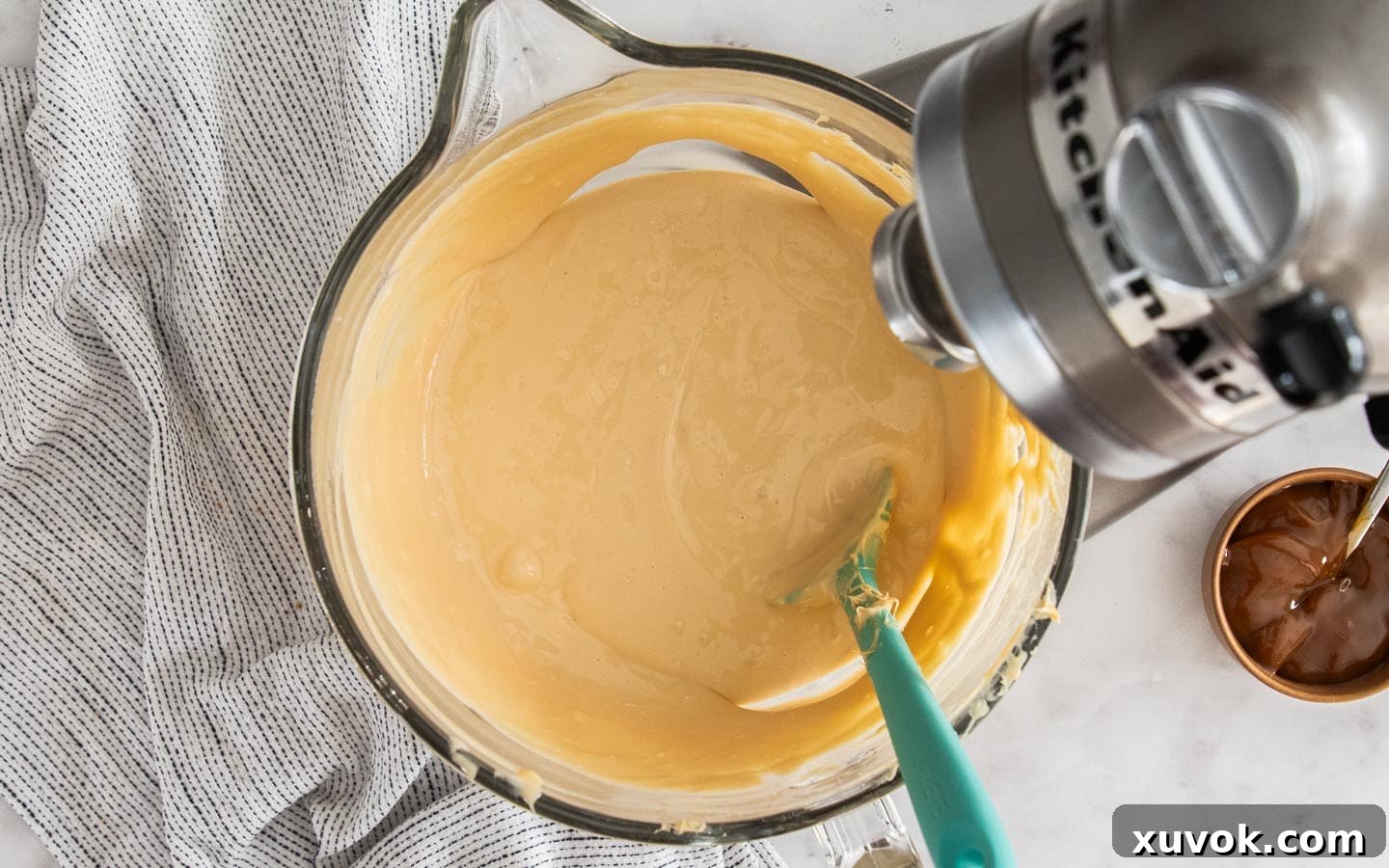
Finally, gently fold in the room-temperature sour cream and vanilla extract using a rubber spatula. Stir just until combined. This careful, minimal mixing at the end ensures the perfect creamy texture without adding unnecessary air. And that’s it—your velvety caramel cheesecake filling is ready!
4. Fill, Bake, and Cool to Perfection
Carefully pour your silky caramel cheesecake batter into the chilled cookie base in your springform pan. Once filled, gently tap the pan on your countertop a few times to release any trapped air bubbles. This small step helps ensure an even, smooth texture in your finished cheesecake. Place the cheesecake on the middle rack of your preheated oven and bake for approximately 1 hour. The cheesecake is done when the edges are set, but the very center still has a slight, delicate wobble. Resist the urge to open the oven door and check too early; wait until at least 55 minutes have passed to avoid rapid temperature changes that can cause cracks.
The cooling process is just as vital as the baking itself for achieving a crack-free, perfectly set cheesecake:
- Slow Cool in the Oven: Once baking is complete, turn off your oven but leave the cheesecake inside with the door closed for a full 45 minutes. This gentle, gradual temperature reduction prevents the cheesecake from shrinking too quickly and cracking.
- Door Ajar Cool: After 45 minutes, slightly prop open the oven door (using a wooden spoon is a great trick) and allow the cheesecake to cool for another 30 minutes. This continues the slow cooling process, easing it out of the oven’s warmth.
- Room Temperature Finish: Finally, remove the cheesecake from the oven and let it cool completely at room temperature for at least 1 hour. Only then is it ready to be transferred to the refrigerator. This staged cooling method is the key to preventing those dreaded cracks and ensuring an impeccably smooth top.
Pro Tips for Cheesecake Success
Achieving a perfectly smooth, crack-free caramel cheesecake is simpler than you think with these expert tips:
- Room Temperature Ingredients are Non-Negotiable: This is arguably the most crucial tip. Your cream cheese, caramel sauce, eggs, and sour cream must all be at room temperature. Cold ingredients will cause the cream cheese to seize up, preventing it from blending smoothly. The result? A lumpy mixture with stubborn white flecks that will persist in your final cheesecake. Plan ahead and take your ingredients out of the fridge at least an hour or two before you start mixing.
- Avoid Over-Beating the Mixture: While you want a smooth filling, vigorous or prolonged beating, especially after adding the eggs, incorporates too much air. This excess air expands during baking and then contracts rapidly during cooling, leading to unsightly cracks on the surface of your cheesecake. Mix on a low speed, just until ingredients are combined.
- Resist Opening the Oven Door Prematurely: Baked cheesecakes are sensitive to sudden temperature changes. Opening the oven door before the cheesecake is nearly fully baked allows cool air to rush in, shocking the delicate custard and increasing the likelihood of cracks. Be patient and wait until at least 55 minutes into the baking time before peeking.
- Cool it Slowly and Gradually: The gradual cooling process is paramount for a flawless finish. Ideally, follow this sequence: after baking, turn off the oven and leave the cheesecake inside with the door closed for 45 minutes. Then, crack the oven door slightly (you can use a wooden spoon to keep it ajar) for another 30 minutes. Finally, remove it to cool completely at room temperature for at least an hour before chilling in the fridge. While this method yields the most perfect texture, a slightly quicker approach (45 minutes in a cracked-door oven, then 30 minutes at room temperature before refrigerating) has also worked well for me without cracking.
Troubleshooting: Why Did My Cheesecake Crack?
Despite their robust appearance, baked cheesecakes are surprisingly delicate. Cracks are a common frustration for bakers, but understanding their causes can help you prevent them. Here’s why your cheesecake might develop cracks:
- Incorrect Ingredient Ratios: An imbalance in the recipe, particularly too much liquid or not enough fat, can affect the cheesecake’s structure and elasticity, making it prone to cracking as it cools.
- Overmixing or Overbeating the Batter: Incorporating excessive air into the cheesecake mixture, especially after adding eggs, is a leading cause of cracks. The air bubbles expand during baking and then collapse and contract too quickly during cooling, pulling the surface apart.
- Using the Wrong Attachment: Opt for a paddle attachment on your stand mixer, or a handheld beater on a low setting. A whisk attachment is designed to aerate and can introduce too much air, leading to the same cracking issue as overmixing.
- Opening the Oven Door Too Early: Sudden changes in temperature are a cheesecake’s enemy. Opening the oven door before the cheesecake is sufficiently set disrupts the gentle baking process and can cause the surface to crack.
- Vigorous Checking for Doneness: Being too heavy-handed when checking if your cheesecake is baked can also lead to cracks. A gentle shake of the pan to check for a slight wobble in the center is all that’s needed.
- Rapid Cooling: The most frequent culprit! Cooling a baked cheesecake too quickly causes the outer edges to cool and contract faster than the center, creating tension that results in cracks across the top.
Contrary to a popular misconception, a water bath is not always essential to prevent cracking. This caramel cheesecake recipe is a perfect example, achieving a beautiful, crack-free finish without one.
Storage & Make-Ahead Guide for Your Caramel Cheesecake
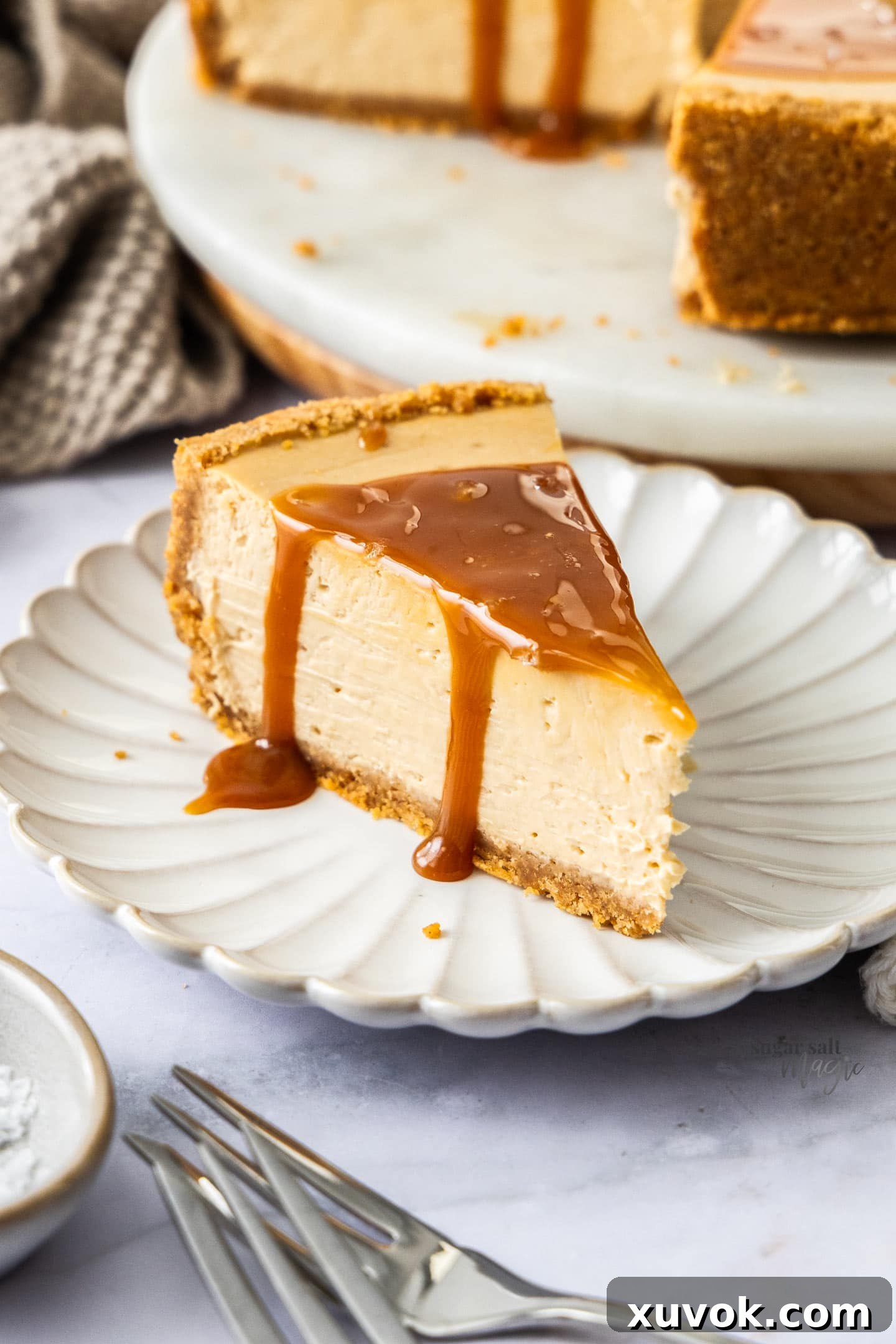
Proper storage is key to enjoying your delicious caramel cheesecake for days to come. Store any leftover cheesecake in an airtight container in the refrigerator for 3-4 days. For the absolute best texture, I highly recommend bringing the cheesecake out to room temperature for at least 30 minutes (or even up to an hour) before serving. This allows the cream cheese to soften slightly, creating a wonderfully luscious and melt-in-your-mouth texture, rather than the firmer consistency it has directly out of the fridge. Both ways are delightful, but the room temperature approach truly enhances its indulgence.
The slice in the photo below, for instance, had been out of the fridge for about 45 minutes, and you can see how perfectly soft and alluring its texture is, while still maintaining its elegant shape.
Can this cheesecake be made ahead?
Absolutely, and in fact, it’s often preferred! This baked cheesecake benefits greatly from being made at least a day in advance. This allows the flavors to fully meld and the cheesecake to firm up perfectly, making it easier to slice and even more delicious. It will keep beautifully in the fridge for 3-4 days, making it an ideal dessert for entertaining.
Can you freeze cheesecake and how to freeze cheesecake?
Yes, baked cheesecake freezes remarkably well! If you find yourself with abundant leftovers (a rare but wonderful problem to have!), or if you want to prepare it far in advance, here’s how to properly freeze your caramel cheesecake so you can enjoy a slice whenever the craving strikes:
- Slice First: For maximum convenience, cut the cheesecake into individual slices before freezing. This allows you to thaw only what you need, preventing waste.
- Wrap Securely: Wrap each slice (or the whole cheesecake, if freezing unsliced) tightly in at least two layers of plastic wrap. Ensure no air pockets remain, as these can lead to freezer burn.
- Add an Extra Layer: Place the wrapped slices or whole cheesecake inside an airtight container or a heavy-duty freezer bag. This provides an additional layer of protection against freezer odors and temperature fluctuations.
- Thaw Gently: To enjoy a frozen slice, simply place it on your kitchen counter to thaw for 3-4 hours. If thawing a whole cheesecake, transfer it to the refrigerator and allow it to thaw slowly overnight (approximately 24 hours).
Serving Suggestions & Customization
While this caramel cheesecake is utterly divine on its own, a few additions can elevate it even further, making it perfect for any occasion or simply to spoil yourself. Here are some ideas to customize and serve your masterpiece:
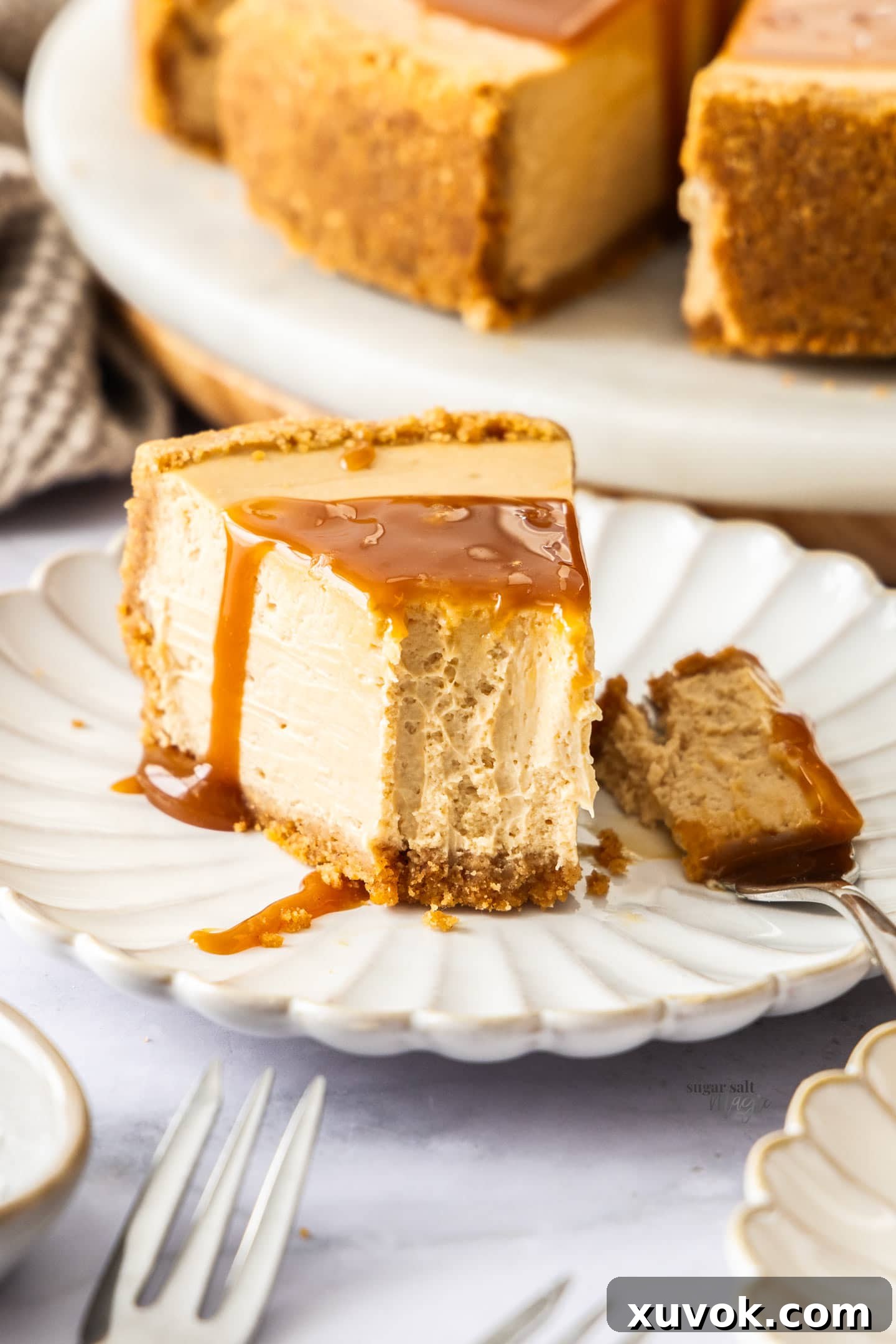
- Extra Caramel Drizzle: A generous extra drizzle of warm caramel sauce just before serving is always a good idea. You can even warm the reserved caramel slightly in the microwave until pourable.
- Whipped Cream: A dollop of freshly whipped cream adds a light, airy contrast to the rich density of the cheesecake. A hint of vanilla or a touch of caramel flavoring in the cream can make it even more special.
- Chocolate Shavings or Drizzle: For chocolate lovers, a sprinkle of dark chocolate shavings or a delicate chocolate drizzle provides a delightful bitter-sweet balance.
- Toasted Nuts: Finely chopped toasted pecans, walnuts, or almonds sprinkled over the top add a lovely crunch and nutty depth that pairs beautifully with caramel.
- Fresh Berries: A scattering of fresh raspberries or sliced strawberries can introduce a burst of freshness and a touch of tartness, cutting through the richness of the caramel.
- Different Salts: While sea salt flakes are recommended, experiment with smoked sea salt for a unique smoky dimension, or even a sprinkle of pink Himalayan salt for a milder salinity.
- Bourbon or Rum Caramel: For an adult twist, add a splash of bourbon or rum to your homemade caramel sauce (or heat store-bought caramel with a hint of alcohol).
If you’re searching for a truly decadent dessert to impress your family and friends, you simply cannot go past this scrumptious baked caramel cheesecake. It’s simple to make, incredibly delicious, and guaranteed to be a hit. Is there anything better?
More Recipes You’ll Love
If you’ve fallen in love with cheesecake, here are more delightful recipes to explore:
- Baked Chocolate Cheesecake – Rich, decadent, and perfect with blackberry compote.
- Baked Lemon Cheesecake – Zesty, bright, and wonderfully creamy.
- Baked Ricotta Cheesecake – A lighter, yet equally flavorful option.
- No-Bake Strawberry Cheesecake – A refreshing and easy summer treat.
- No-Bake Lemon Meringue Cheesecake – All the flavors of the classic pie, in cheesecake form.
- Dulce de Leche White Chocolate Cheesecake – An incredibly indulgent, sweet combination.
- Or if you’re looking for fantastic holiday ideas, check out my collection of Thanksgiving Desserts That Aren’t Pie 😉
⭐⭐⭐⭐⭐
Did you try this recipe for caramel cheesecake? We’d love to hear your thoughts! Share your experience in the comments below.
Hungry for more? Subscribe to our newsletter for free, delicious recipes delivered straight to your inbox. Also, connect with us on Facebook, Pinterest and Instagram for daily inspiration!
Caramel Cheesecake
12
serves
25 minutes
55 minutes
2 hours
1 hour
20 minutes
Make sure to leave enough time for this cheesecake to cool completely. Even overnight for best results.
Rate
Pin
Ingredients
- 250 g sweet biscuit/cookie crumbs (~9oz/2 cups) (notes 2)
- 100 g unsalted butter melted (3 ½oz)
- ½ teaspoon ground cinnamon
- ½ teaspoon ground ginger
- 500 g brick-style full-fat cream cheese (like Philadelphia) room temperature (~17 ½oz / 1.1lb)
- 2 tablespoons brown sugar (notes 1)
- 2 teaspoons vanilla extract
- 3 large eggs room temperature
- 200 ml sour cream (¾ cup +1 Tbsp / 6.8 fl oz)
- 1 cup caramel sauce (divided ¾ / ¼) (330g / ~11 ½oz)
- 1 teaspoon sea salt flakes optional (divided ¾ / ¼)
For best results, always weigh ingredients where a weight is provided
Equipment
-
A handheld beater or stand mixer
-
An 8 inch springform tin
Instructions
-
Preheat your oven to 160°C (140°C fan forced) / 320°F.
-
Lightly grease and line the base and sides of an 8-inch round springform pan with baking parchment.
-
In a medium mixing bowl, thoroughly combine the melted butter, cookie crumbs, ground cinnamon, and ground ginger.
-
Press the crumb mixture firmly and evenly across the base and about 2 inches up the sides of the prepared pan. A flat-bottomed glass or a ¼ cup measuring cup works perfectly for this task. Chill the crust in the refrigerator while you prepare the filling.
-
Using a stand mixer with the paddle attachment (or a handheld beater), beat the room-temperature cream cheese, ¾ cup of the caramel sauce, the brown sugar, and ¾ teaspoon of sea salt flakes (if using) on a low-medium speed until the mixture is completely smooth and creamy. Ensure there are no lumps by scraping down the sides of the bowl as needed.
-
Set aside the remaining ¼ cup of caramel sauce and ¼ teaspoon of sea salt flakes, separately, for serving.
-
Add the room-temperature eggs to the cream cheese mixture, one at a time, beating on a very low speed just until each egg is fully incorporated. Then, beat in the vanilla extract on low speed until combined. Avoid over-mixing.
-
Gently fold in the room-temperature sour cream by hand using a rubber spatula until just combined. Again, do not overmix.
-
Pour the velvety cheesecake filling into the chilled biscuit base. Gently tap the pan on your worktop 3-4 times to release any trapped air bubbles, ensuring a smooth finish.
-
Place the springform tin onto the middle shelf of your preheated oven. Bake for approximately 55-65 minutes, or until the edges are set and the center has a very slight, delicate wobble (it should not be liquid). Resist the urge to open the oven door before 55 minutes.
– Once baked, turn off the oven and leave the cheesecake inside with the door closed for 45 minutes, undisturbed.
– After 45 minutes, prop the oven door ajar and allow the cheesecake to cool for another 30 minutes.
– Finally, remove the cheesecake from the oven and let it cool completely at room temperature for at least 1 hour before transferring it to the refrigerator to chill for a minimum of 4 hours, or ideally, overnight.
This slow, gradual cooling process is essential for preventing cracks and achieving the perfect, creamy set.
-
TO SERVE:
Take the chilled cheesecake out of the fridge 20-30 minutes prior to serving to allow it to soften slightly and enhance its creamy texture. Gently warm the reserved caramel sauce in the microwave for about 15 seconds (or in a small saucepan over low heat) until it’s pourable but not hot. Drizzle the warm caramel generously over the top of the cheesecake, then sprinkle with the remaining sea salt flakes, if using. Slice and serve!
-
Please take a moment to leave a comment & rating if you tried this recipe. Your feedback is greatly appreciated and incredibly helpful!
Notes
- Tablespoon Measurement: Please note that I use a standard Australian 20ml tablespoon in my recipes, which is equivalent to 4 teaspoons. It’s a good idea to check the capacity of your own tablespoon measure before you begin, to ensure accuracy.
- Biscuits/Cookies for Crust: For the cheesecake crust, my go-to choice is a digestive biscuit, such as Arnotts Granita, which provides a lovely, mild flavor. Graham Crackers are also an excellent alternative and work perfectly. Whichever you choose, ensure they are blitzed into very fine crumbs in a food processor for the best crust texture.
- Caramel Sauce Options: If high-quality store-bought caramel sauce is unavailable or if you prefer to make your own, there are several methods. You can follow my detailed homemade caramel sauce recipe for a truly authentic flavor. Alternatively, for a quick “cheats” version, simply combine:
- 270 g (9.5 oz) soft caramels (shop-bought, like Werther’s)
- ¼ cup thickened (or heavy) cream
- Melt these two ingredients together in a saucepan over low-medium heat, stirring constantly, until fully melted and smoothly combined. Allow it to cool completely before using in the cheesecake.
- Nutritional Information: Please remember that the nutrition details provided are approximate estimates only and have been derived from an online calculator. The specific brands and types of ingredients you use may cause variations in the final nutritional values. Scroll below the recipe card to find the full nutritional breakdown.
DISCOVER MORE CHEESECAKE RECIPES!
392
kcal
Marie Roffey
Dessert, Sweets
Various
Have you tried this recipe?
Don’t forget to leave a rating and comment below and let me know how it was! I love hearing from you. Nutrition information is approximate and derived from an online calculator. The brands you use may cause variations.
Calories from Fat 243